
How Plants Grow and Reproduce and the Role of Pollinators
$12.78
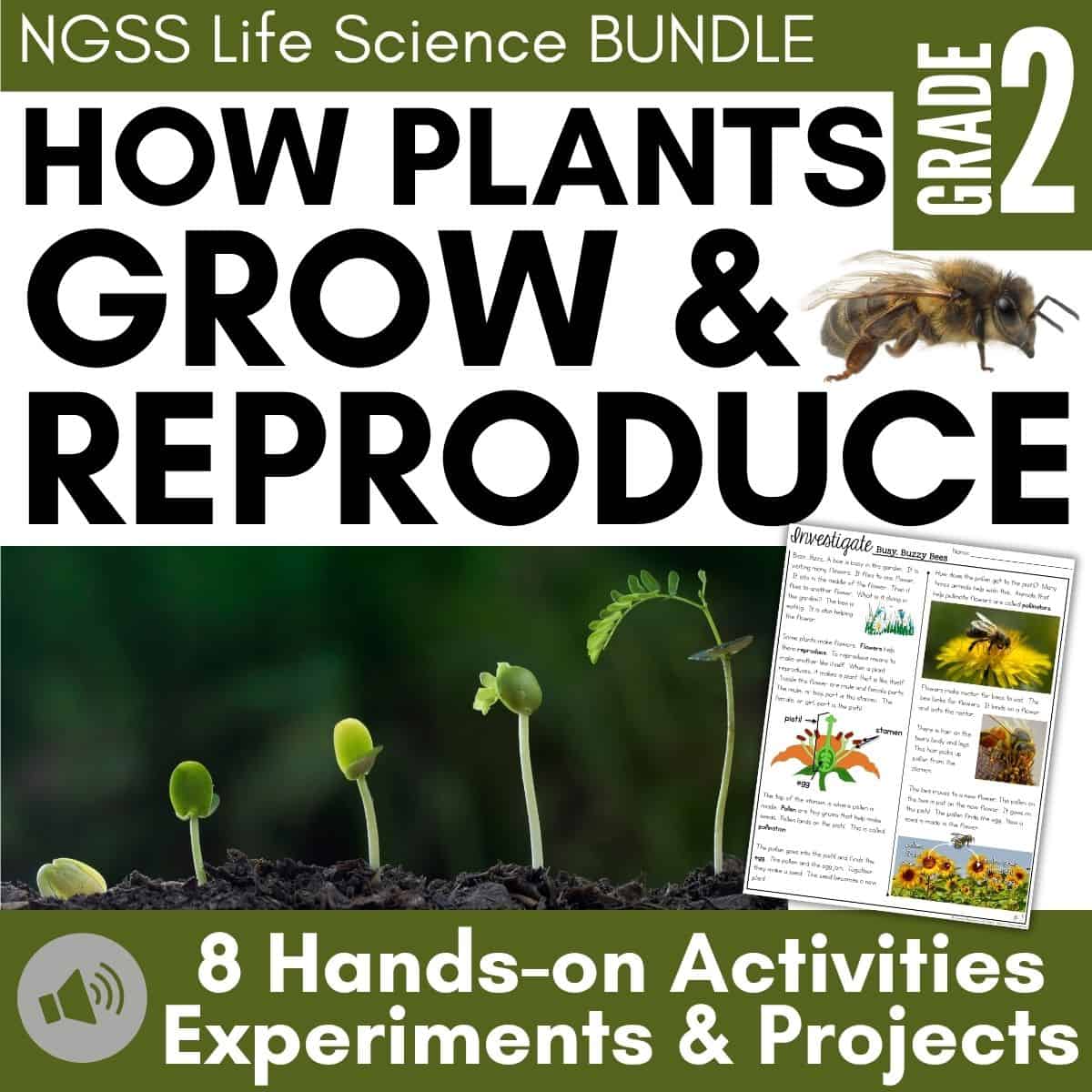
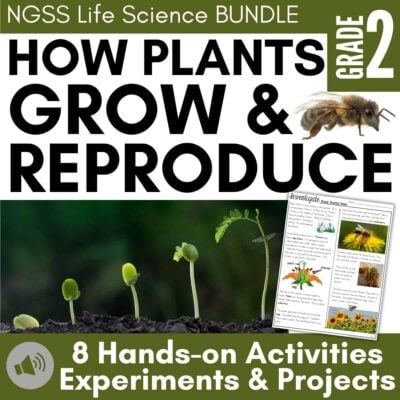
Engage your students with this hands-on plant science unit featuring 8 interactive science stations focused on plant growth, pollination, reproduction, and seed dispersal! Designed for 2nd-grade NGSS alignment, these stations help students explore what plants need to survive and how plants depend on animals in their life cycle. Includes differentiated response sheets, vocabulary cards, posters, and interactive activities, perfect for science centers or small-group instruction.
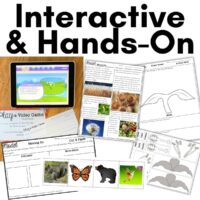
Bring plant science to life with this engaging set of 8 interactive science stations designed to help students explore the biology and ecology of plants through hands-on learning, reading, modeling, games, and investigations. Students discover how plants grow, reproduce, and interact with pollinators while strengthening science vocabulary and critical thinking skills.
Perfect for 2nd grade NGSS-aligned science instruction, these stations provide meaningful opportunities for students to investigate plant structures, pollination, seed dispersal, and the conditions plants need to survive.
What’s Included
- Big Idea Posters to introduce and explain key concepts
- Vocabulary Cards in two formats:
- With pictures
- Without pictures
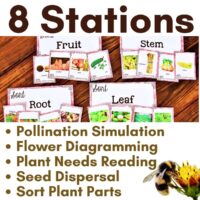
- 8 Interactive Science Stations
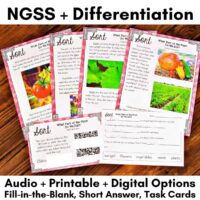
- Differentiated response formats for every station
- Student worksheets and task cards
- Science journal response options
Science Stations Included
Watch
Students watch engaging videos about:
- Plant parts and functions
- Pollination and pollinators
- Students answer comprehension questions to reinforce learning.
Play
Students participate in interactive games to learn:
- What plants need to grow
- Plant structures and functions
Follow-up questions help students apply understanding.
Investigate
Students read about:
- Pollination
- Plant reproduction
Students then simulate pollination by pretending to be bees transferring pollen between flowers.
Diagram
Students learn about flower structures and functions while creating labeled flower diagrams.
Read a Passage
Students read informational text about the needs of plants and answer comprehension questions.
Model
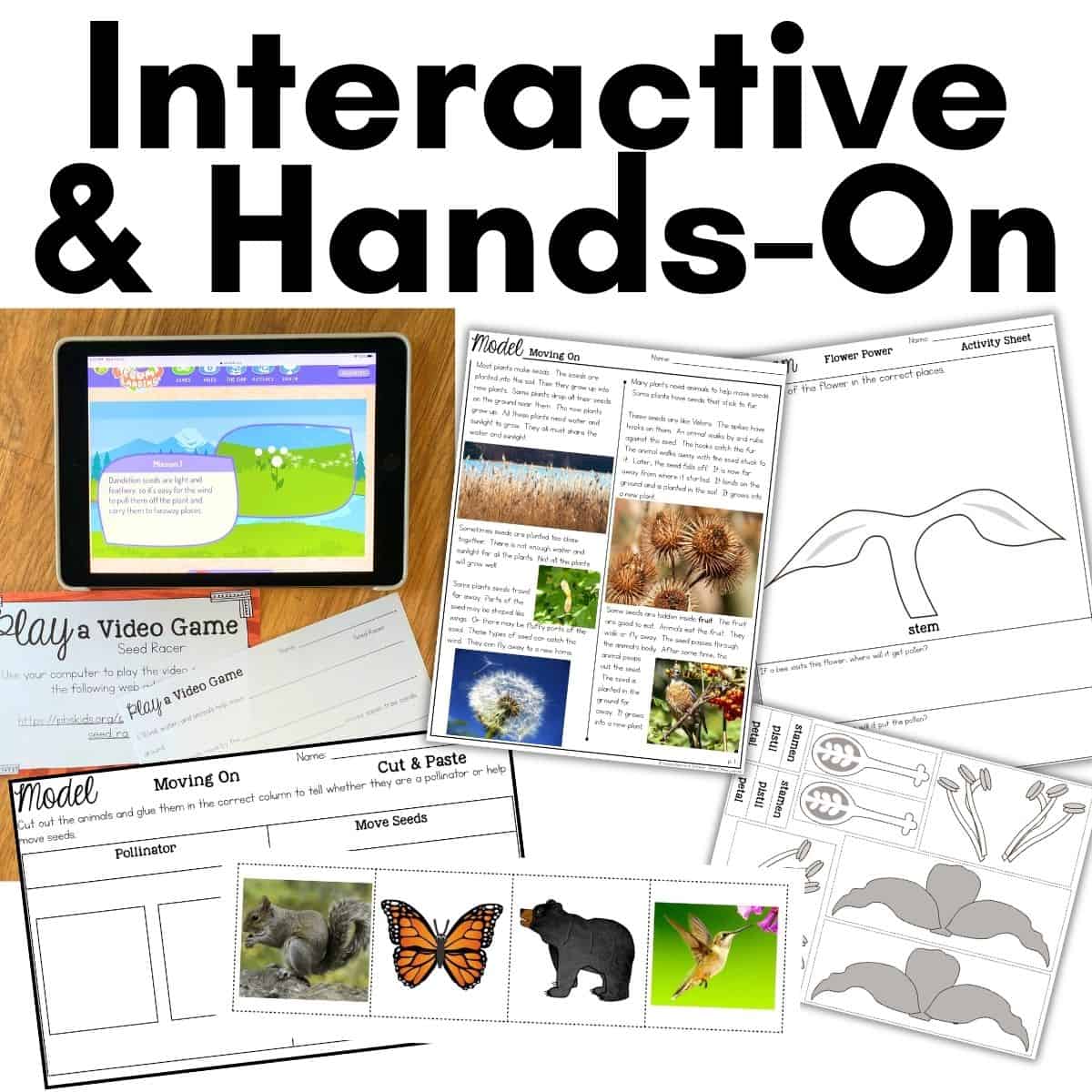
Students investigate seed dispersal through a hands-on modeling activity.
Explore
Students examine and compare different seeds to explore how seeds travel and disperse.
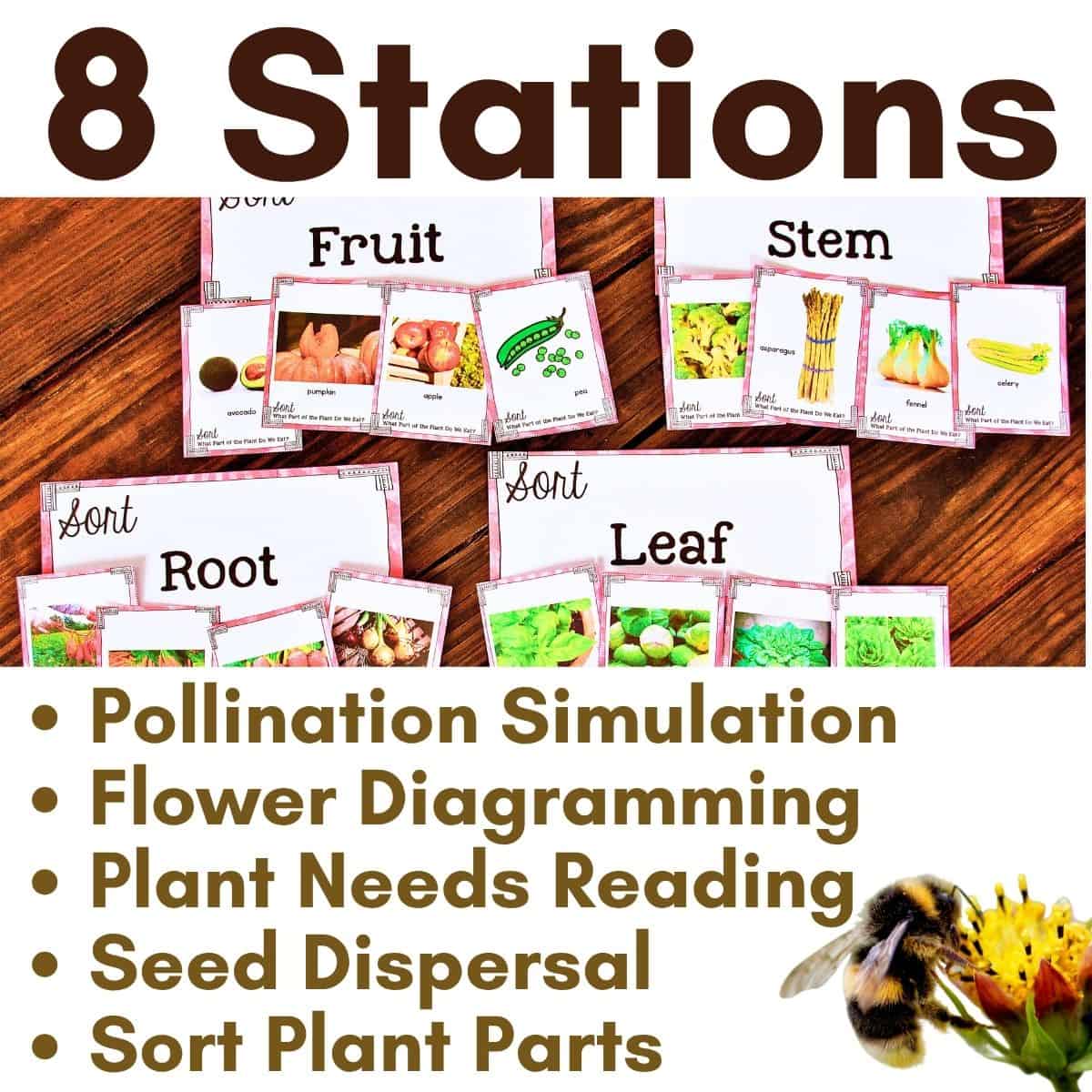
Sort
Students sort foods into plant part categories to better understand how humans use plants in everyday life.
Differentiated Response Options
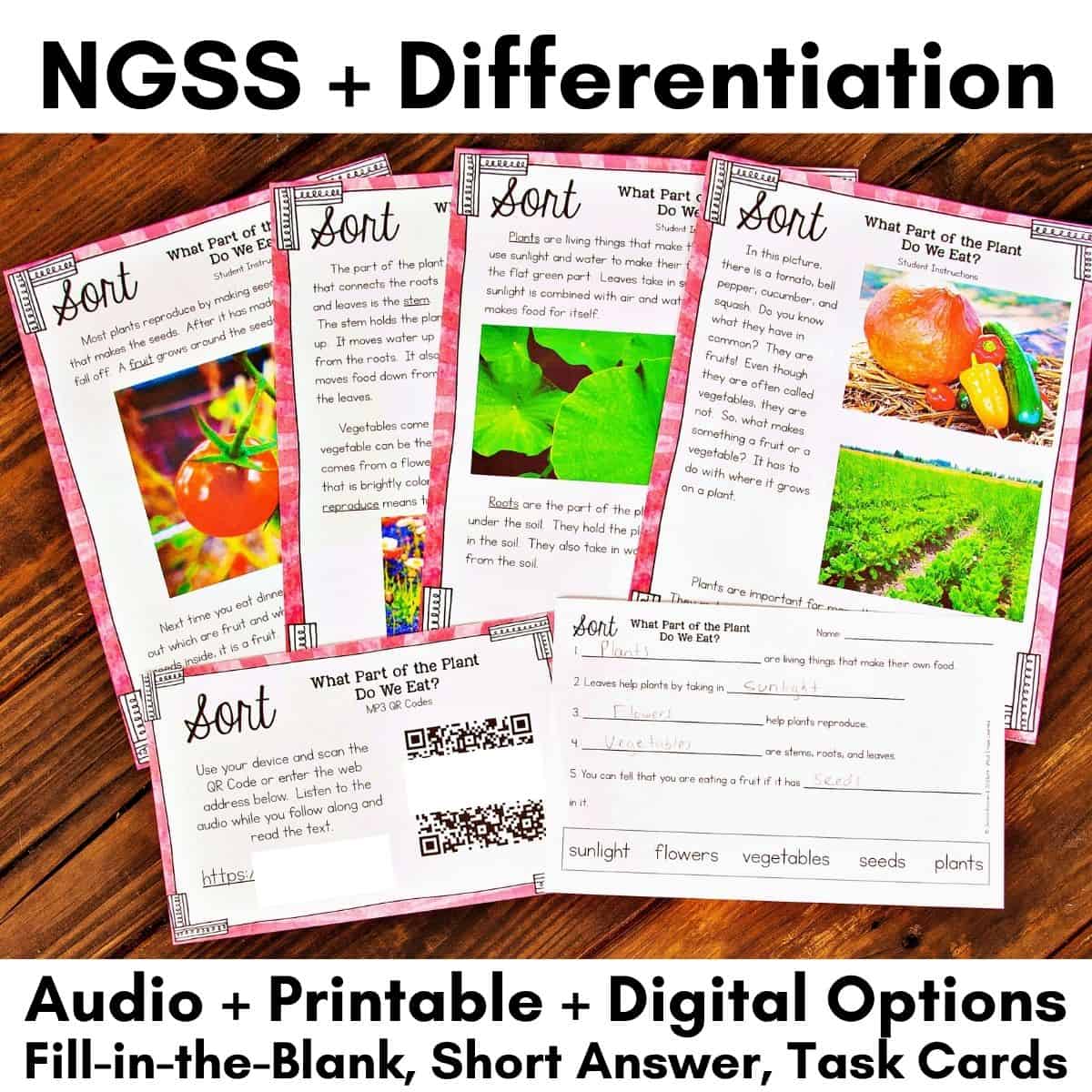
Every station includes 4 differentiated response formats so you can easily meet the needs of all learners:
- Short Answer Questions
- Fill-in-the-Blank Questions
- Task Cards with Short Answers
- Multiple Choice Task Cards
Students may respond in:
- Science journals
- Included worksheets
- Task card formats
These flexible options make differentiation simple for whole group, small group, intervention, or independent work.
Skills Covered
Students will practice and explore:
- Plant needs and survival
- Plant structures and functions
- Pollination
- Seed dispersal
- Plant reproduction
- Observation and modeling
- Scientific vocabulary
- Cause and effect relationships
- Engineering design thinking
NGSS Alignment
This resource supports the following Next Generation Science Standards for 2nd Grade:
2-LS2-1
Plan and conduct an investigation to determine if plants need sunlight and water to grow.
2-LS2-2
Develop a simple model that mimics the function of an animal in dispersing seeds or pollinating plants.
DCI 2-LS2.A
- Plants depend on water and light to grow.
- Plants depend on animals for pollination or seed dispersal.
ETS1.B – Developing Possible Solutions
The Investigate, Diagram, and Explore stations support engineering design through:
- Sketches
- Drawings
- Physical models
- Communicating ideas and solutions
Crosscutting Concepts
Cause and Effect
Students observe how plant growth and reproduction are influenced by environmental conditions and pollinators.
Structure and Function
Students explore how plant structures help plants survive, reproduce, and disperse seeds.
Why Teachers Love This Resource
- Hands-on and interactive learning
- Easy-to-manage science centers
- NGSS-aligned instruction
- Built-in differentiation
- Flexible pacing options
- Encourages student engagement and inquiry
- Perfect for independent work, partner work, or small groups
Each station is designed to last approximately 15–20 minutes, making this resource easy to fit into a variety of classroom schedules.
Use:
- 1 station per day for 8 days
- 2 stations per day for 4 days
- Rotating science center schedules
- Early finisher activities
Perfect For
- 2nd Grade Science
- Plant Life Cycle Units
- NGSS Science Instruction
- Science Centers
- STEM Activities
- Small Group Instruction
- Independent Learning
- Sub Plans
- Homeschool Science
Amanda G. –
Thank you for this easy to use and engaging resource.
Megan Cyrus –
Perfect resource for finding multiple ways to teach the new science standards
Aaron G. –
This was a great supplement to our EL Education curriculum. It gave the kids some more exposure and they enjoyed it.
Salvador in 2nd –
I am obsessed and my class is obsessed! Thank you for creating a wonderful resource that makes my classroom a stronger and more engaged place to learn! You are so talented!
The Elementary Reader –
This resource is great to use with my 2nd graders!