
Ancient Animals Sort: Carnivore, Herbivore, Omnivore Science Activity
Teaching students about what ancient animals ate is one of those topics that instantly grabs attention. Dinosaurs? Teeth? Hunting? Plants? You already have their interest.
The challenge is helping students move beyond just naming dinosaurs and into understanding why animals are classified as carnivores, herbivores, or omnivores. That’s where this Ancient Animals Sort science station comes in. It gives students a hands-on way to analyze traits, read closely, and apply what they learn.

If you’ve ever had students confidently call a T. rex a plant-eater (it happens), this activity helps clear that up pretty quickly.
What Students Learn in This Ancient Animals Activity
This science station focuses on helping students:
- Identify characteristics of carnivores, herbivores, and omnivores
- Analyze physical traits like teeth, diet, and behavior
- Apply reading comprehension skills to science content
- Sort and classify animals based on evidence
Instead of memorizing definitions, students interact with descriptions and make decisions based on what they read. That shift makes a big difference in retention.
What is Included in the Ancient Eater Science Station
his resource is designed to give you flexibility depending on your classroom setup and student needs.
You’ll find:
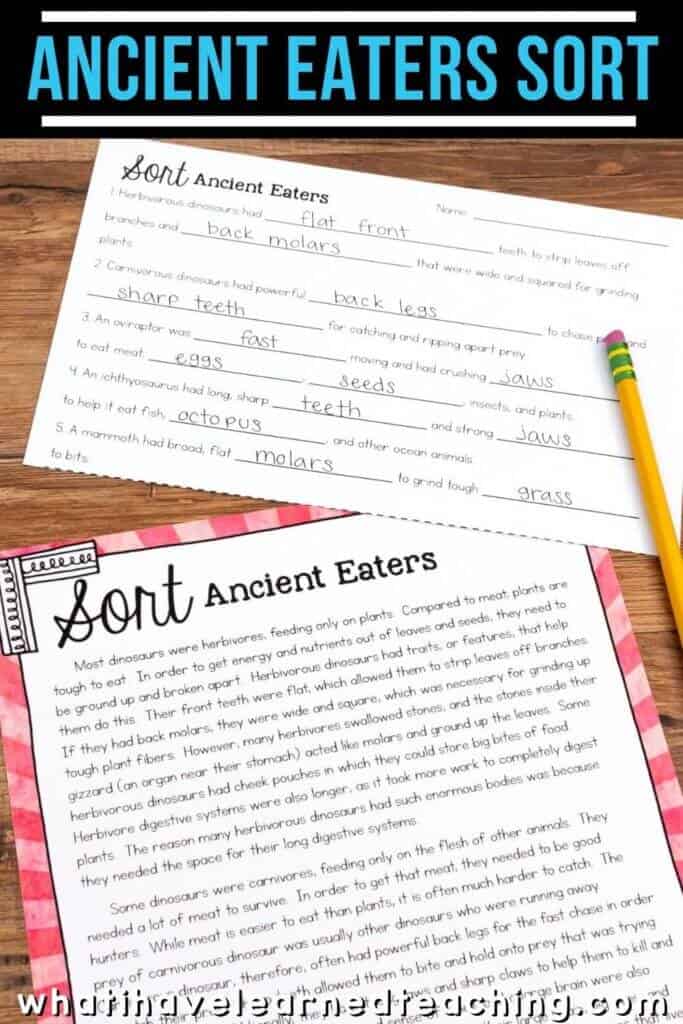
- Informational text explaining carnivores, herbivores, and omnivores
- Differentiated response options:
- Short answer
- Fill-in-the-blank
- Multiple choice
- Task cards and worksheet formats
- Large, color sorting cards for group work
- Black-and-white cut-and-paste version for individual practice
- Answer key
Everything is ready to print and use, whether you’re running centers or teaching whole group.
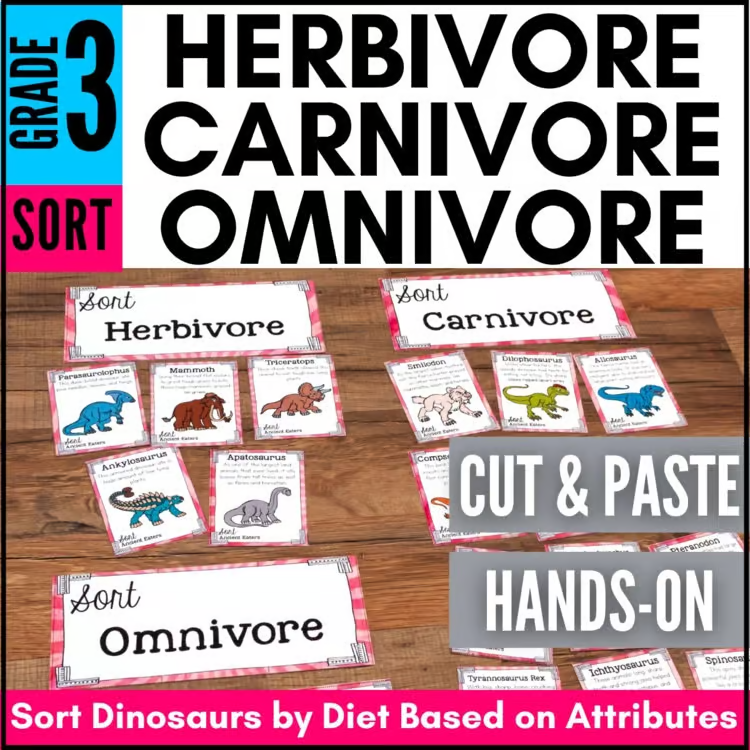
Students sort dinosaurs and other extinct animals into one of three categories based on the traits of the animal: carnivore, herbivore, and omnivore.
Informational Text and Differentiation Options
At the core of this station is a short informational article that explains how scientists classify animals based on what they eat.
Students then apply that knowledge using differentiated formats. You can choose what works best for your class or mix and match:
- Use multiple choice for quick checks
- Use fill-in-the-blank for guided support
- Use short answer for deeper thinking
This makes it easy to scaffold the activity without needing separate resources.
Ancient Animals Sorting Activity (Group Option)
For collaborative learning, use the large color sort with table groups.
Students:
- Read a description card
- Identify key traits (teeth, diet, behavior)
- Decide if the animal is a carnivore, herbivore, or omnivore
- Place it in the correct category
The descriptions encourage close reading. For example:
- Pachycephalosaurs: Small, pointed teeth used to eat seeds, berries, and insects
- Triceratops: Thick cheek teeth for chewing tough plants
Students have to think about what those traits mean, not just guess based on the dinosaur’s name.

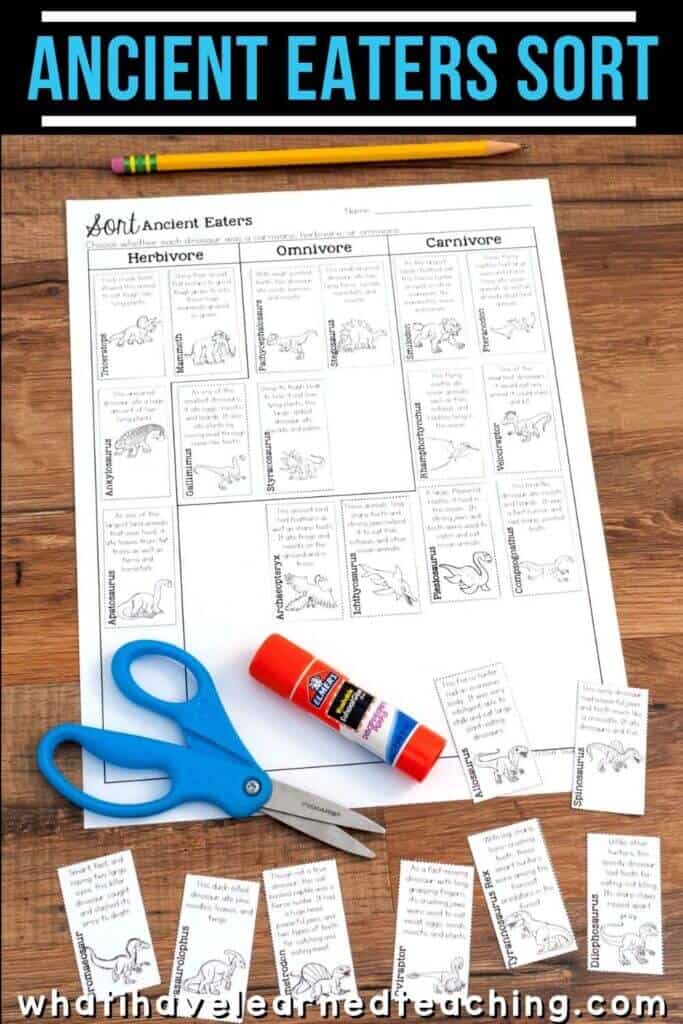
Cut-and-Paste Sorting Option (Independent Work)
The black-and-white cut-and-paste version is perfect for:
- Independent practice
- Assessment
- Science notebooks
Students read each description and glue it into the correct category. It’s straightforward, but still requires them to apply what they’ve learned.
Many teachers use both versions: group work first, then independent practice to reinforce learning.
How This Fits Into Your 3rd Grade Science Curriculum
This activity aligns with NGSS standards focused on:
- Analyzing traits of organisms
- Understanding how physical characteristics relate to survival
- Classifying living things based on observable features
It works well as:
- A science station during an ancient life or fossils unit
- A review activity before assessment
- A hands-on alternative to a worksheet-heavy lesson
You can also connect it to reading by having students justify their answers using evidence from the text.
Students sort dinosaurs and other extinct animals into one of three categories based on the traits of the animal: carnivore, herbivore, and omnivore.
Get the Ancient Animals Science Station
This Ancient Animals Sort: Carnivore, Herbivore, Omnivore resource is available on Teachers Pay Teachers.
You can purchase it:
- Individually
- As part of the Ancient Animals / Animals Long Gone science stations set
- Inside the 3rd Grade NGSS Science Stations Bundle
There is also a full 5E Unit on Ancient Life that takes this topic even further with inquiry-based lessons.
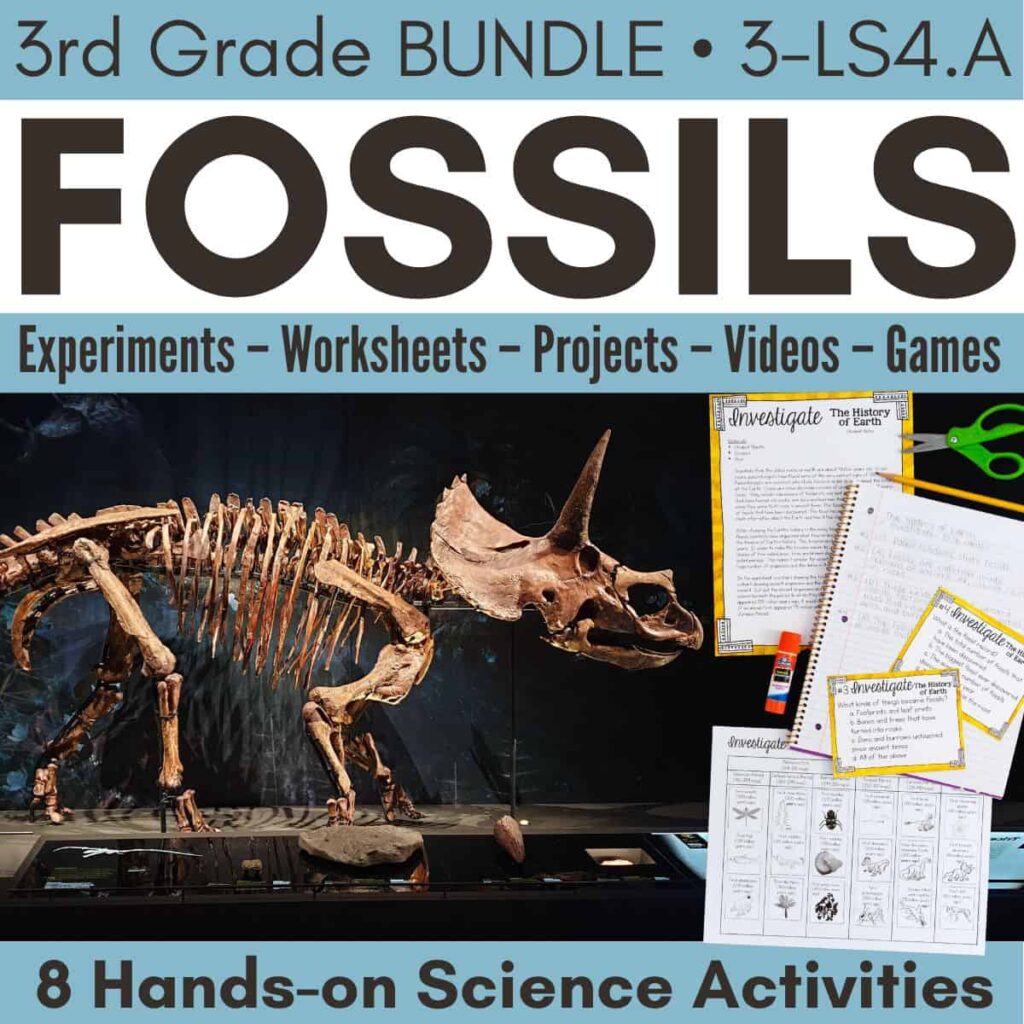
Plants and Animals Long Gone Third Grade Science Stations
The focus is on NGSS 3-LS4.A and includes concepts such as fossils, the history of Earth, comparing the mammoth and elephants, paleontologists, and physical traits of dinosaurs.
Grab a Free Science Station
Want to try a science station with your students before committing?
I have a set of free science stations for 2nd, 3rd, and 4th grade that you can use right away. Click below to access them and see how they work in your classroom.

When students sort, discuss, and justify their thinking, they move past surface-level understanding and start thinking like scientists.
This Ancient Animals Sort gives them that opportunity in a way that’s structured, engaging, and easy to implement. It works whether you have 20 minutes for centers or need something meaningful for your entire science block.
And bonus: fewer students insisting that every dinosaur ate meat.
Jessica BOschen
Jessica is a teacher, homeschool parent, and entrepreneur. She shares her passion for teaching and education on What I Have Learned. Jessica has 16 years of experience teaching elementary school and currently homeschools her two middle and high school boys. She enjoys scaffolding learning for students, focusing on helping our most challenging learners achieve success in all academic areas.