
Animals in Biomes Activity: Sort Plants & Animals (3rd Grade)
Teaching ecosystems and biomes can feel abstract for students until they actually work with real examples. This sort animals and plants into biomes activity helps students make sense of animals in biomes and how animals live in different biomes by giving them a hands-on way to explore how living things survive in different environments.
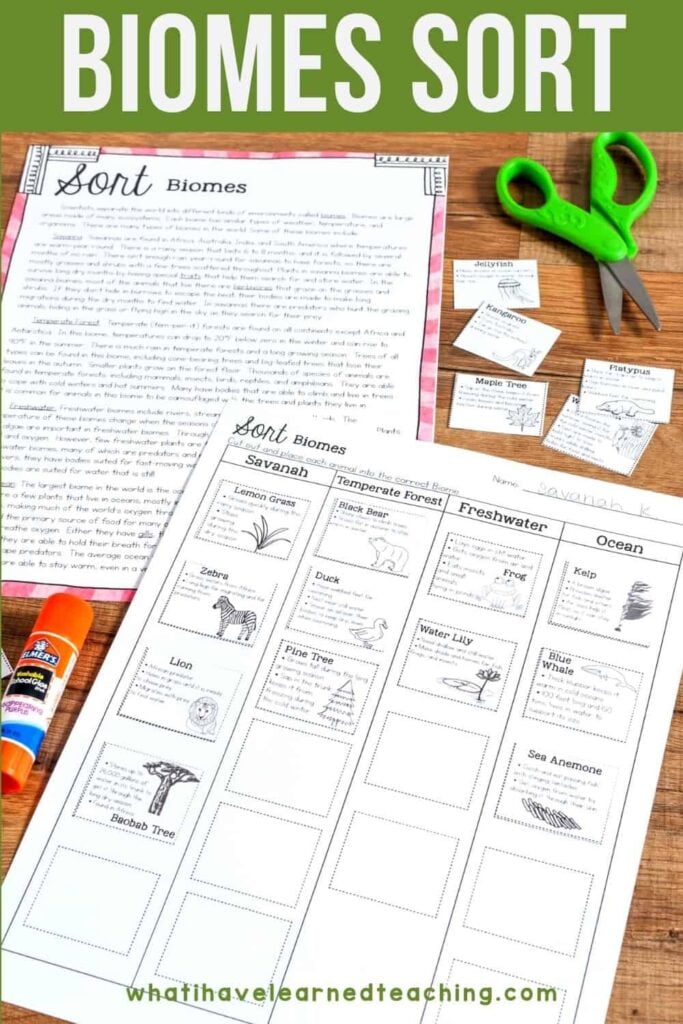
In this ecosystem sort station, students analyze plants and animals and place them into one of four biomes: savanna, temperate forest, freshwater, and ocean. As they sort, they begin to see patterns in climate, location, and adaptations, without it feeling like a worksheet-heavy lesson.
What is Included in the Ecosystems Sort Station
This ecosystem science station includes everything you need to help students understand how plants and animals fit into different biomes:
- A reading passage about biomes (written at a third-grade level)
- Large, colorful sorting cards for table groups with images, names, and descriptions
- A cut-and-paste sort option for individual practice
- Differentiated response activities (short answer, fill-in-the-blank, and multiple choice)
- Task cards for added flexibility
- An answer key
This station helps students identify animals in different biomes and understand how biomes and animals are connected. Each piece is designed to build understanding step by step while keeping students actively engaged.
If you’re looking for more activities like this, you can see the full set of ecosystems and biodiversity science stations for third grade here.
Read about Plants and Animals in Biomes
The station begins with a reading passage that introduces the four biomes: savanna, temperate forest, freshwater, and ocean.
Students use this passage along with the clues on each sorting card to determine where each plant or animal belongs. Instead of guessing, they are using evidence from both the text and the descriptions.
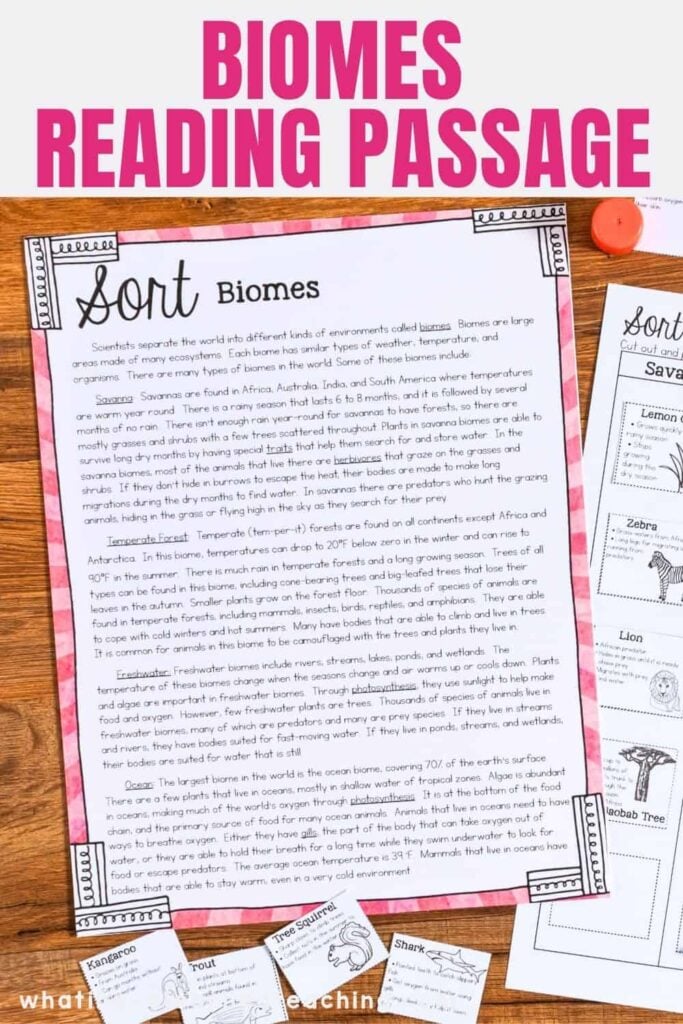
For example, the baobab tree includes clues like:
- Stores up to 26,000 gallons of water
- Found in Africa
After reading about the savanna biome, students can connect those details to a dry climate and geographic location, helping them correctly place the baobab tree. This helps students understand how animals in different biomes develop traits that enable them to survive in those environments.
You can also pair this activity with read-alouds. Here are some of my favorite picture books about ecosystems and biodiversity to build background knowledge before students begin sorting.
Collaboratively Sort Plants and Animals into Biomes
Students can complete this sort as a group activity, which naturally encourages discussion and reasoning.
Working together, students:
- Read descriptions
- Analyze images
- Justify their choices
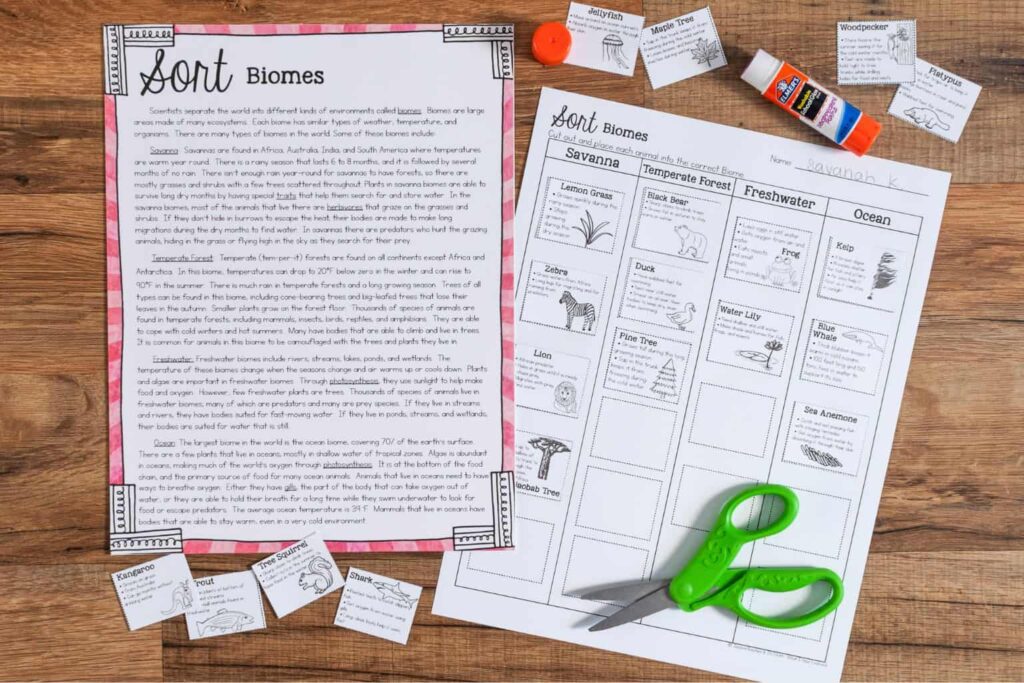
Students organize plants and animals in biomes such as freshwater, savanna, temperate forest, and ocean.

Examples included in the sort are:
- Baobab tree
- Sea anemone
- Platypus
- Woodpecker
The combination of visuals and short descriptions helps students think about how each organism survives in its environment.
If your students enjoy this type of activity, you can find more hands-on ecosystem activities that build on these concepts.
Cut and Paste Sort Option
For independent practice, students can complete a cut-and-paste version of the activity.
This version:
- Is in black and white
- Uses a worksheet format
- Requires students to read, analyze, and classify on their own
You can use this as:
- A follow-up to the group activity
- Independent work
- Homework
Some teachers use both versions, group first, then individual, to reinforce learning. This reinforces students’ understanding of animal biomes as they independently classify each organism.
Differentiated Responses
Students can demonstrate their understanding in multiple ways, making this station easy to use with a range of learners.
Response options include:
- Short answer
- Fill-in-the-blank
- Multiple choice
- Task cards
These options give students multiple ways to demonstrate their understanding of animals in biomes. By the end of the activity, students have a clearer understanding of how animals in different biomes survive and interact with their environment.
Once students understand where organisms live, you can extend their thinking by teaching how environments change over time. This guide on teaching changes in ecosystems walks through the next step.
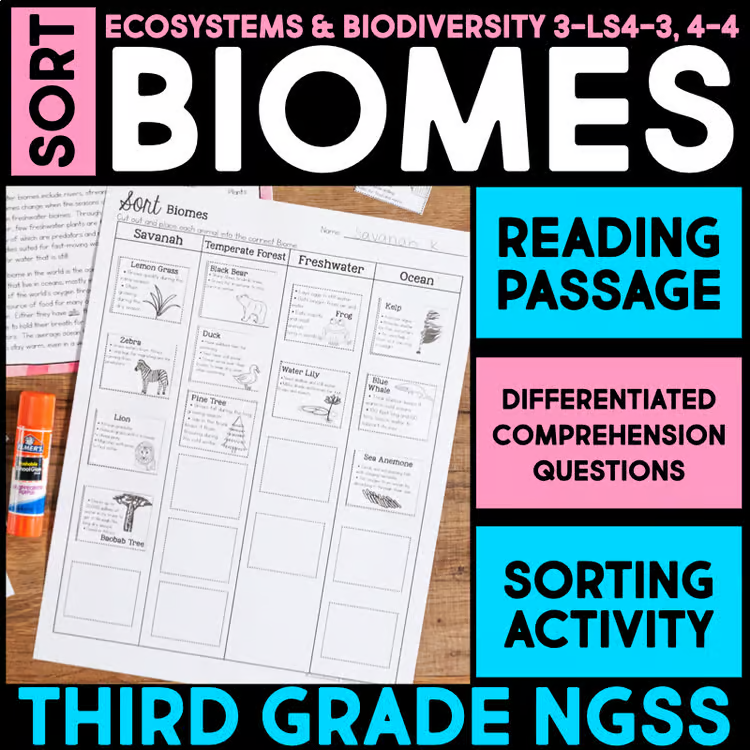
Students learn about biomes by sorting organisms into their natural biomes. Biomes include savanna, temperate forest, freshwater, and ocean.
How to Purchase the Ecosystems Science Station
This ecosystem sort station is available on Teachers Pay Teachers. It can be purchased:
- As an individual resource
- As part of the Ecosystems: Biomes and Biodiversity Science Stations set
- Inside a Third Grade NGSS Science Stations Bundle
There is also a full 5E Unit on Ecosystems and Biodiversity that takes these concepts even further using the 5E instructional model.
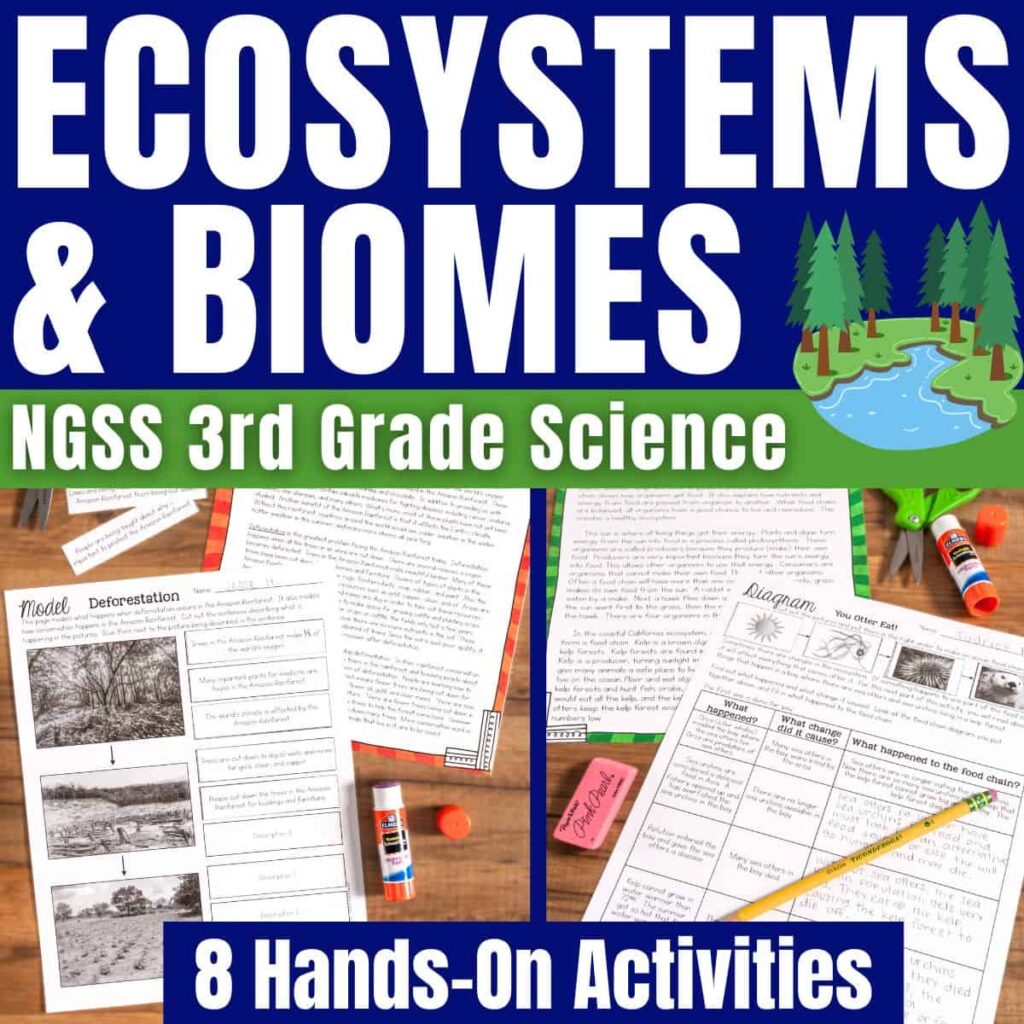
Ecosystems and Biodiversity Science Stations for Third Grade
The focus is on NGSS 3-LS2.C and 3-LS4.D and includes concepts such as food chains, food webs, traits of organisms that change due to environmental changes, how animals affect their environment, invasive species, and biomes.
Would you like a Free Science Station?
If you want to try out a similar activity before purchasing, here is a free 3rd-grade science.

Continue Teaching Ecosystems and Biomes
If you’re planning a full ecosystems unit, these posts can help you build out your lessons:

Hi Jessica,
I like your ideas and the way you set it up in an organized way and easy to understand. Do you sell cards are what are the protocols to purchase some of the materials that helps with Montessori kindergartners.
Thank you! I sell the units on my website and the individual stations on TpT: https://www.teacherspayteachers.com/Store/What-I-Have-Learned