
What is the Explanation Phase of the 5E Instructional Model
During the Explanation phase of the 5E instructional model, students connect their observations to scientific concepts and vocabulary. After investigating a phenomenon during the Explore phase, students are ready to interpret their findings and explain what they observed.
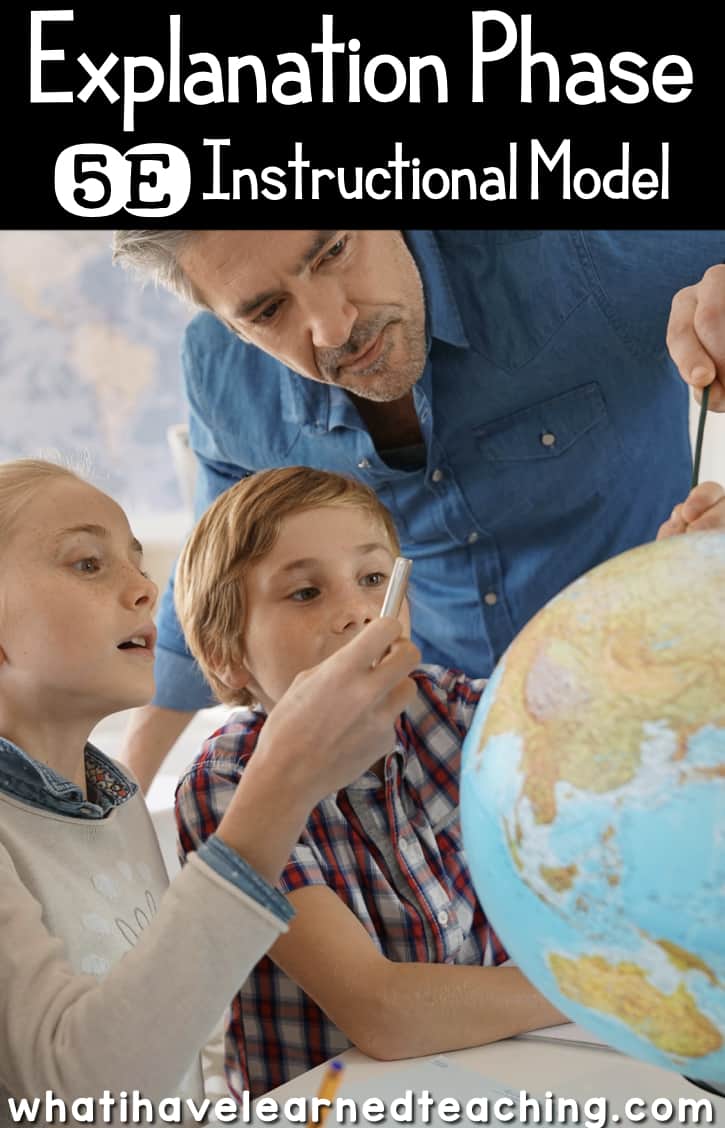
This is the stage where teachers guide students toward accurate scientific understanding. Through discussion, analysis, and direct instruction, misconceptions are addressed, and key ideas become clear.
In this article, you’ll learn what happens during the 5E Explain phase, along with examples of activities and questions that help students develop scientific explanations.
5E Instructional Model Recap
The 5E instructional model is a framework for inquiry-based science instruction. Students build understanding through five phases of learning:
This article focuses on the Explanation phase, where students interpret their observations and connect them to scientific ideas.
If you are new to the model, you may want to begin with this article:
What Happens During the 5E Explain Phase
Students Explain Their Observations
By the time students reach the Explanation phase, they have already explored the concept through investigations and activities.
Students now begin describing what they observed and interpreting the patterns they noticed. They analyze their data, share ideas with their group members, and work toward developing conclusions.
Students often refine their thinking as they listen to the reasoning of others. A student may adjust their explanation after hearing new evidence or a different interpretation from a classmate.
Students Use Evidence to Support Their Ideas
During the Explore phase, students practiced using elements of the scientific method such as observation and data collection.
In the Explanation phase, those skills are used to support their conclusions. Students begin using evidence from their investigations to justify their ideas.
Teachers guide this process by asking questions that help students analyze their observations and think critically about what they discovered.
Teachers Introduce Scientific Concepts and Vocabulary
The Explanation phase is where direct instruction takes place.
Teachers provide the scientific concepts and vocabulary needed for students to fully understand the topic. This instruction may come through discussion, reading materials, videos, or short explanations from the teacher.
Students connect this new information to the observations they made earlier in the lesson. As these connections form, the concept begins to make sense.
Misconceptions Are Addressed
Another important goal of the Explanation phase is correcting misconceptions.
Students may have developed inaccurate ideas during earlier discussions or investigations. Teachers use this stage of the lesson to clarify misunderstandings and guide students toward accurate scientific explanations.
By revisiting ideas students expressed earlier, teachers can help students see how their thinking has evolved.
Types of Activities for the 5E Explanation Phase
There are many ways teachers can help students interpret their observations and develop explanations. Below are several common activities used during the Explanation phase.
Analyze findings
Students analyze their results from the investigations completed during the Explore phase.
Working with their group members, students interpret their observations and discuss possible explanations for the patterns they noticed.
Oral or Video Presentation
Students may present their conclusions through an oral presentation or a short recorded video.
During the presentation, students explain their findings and support their ideas with evidence from their investigation.
Laboratory Report
Students write a laboratory report describing their investigation.
The report typically includes observations, data analysis, and a conclusion explaining what the results show about the concept.
Teacher Explanation
This may take place as a class lecture, guided question-and-answer session, or other oral presentation.
Read an Informational Text
The teacher provides sources for students to read. Students may read selections from a textbook, web page, or article. They may take notes or answer comprehension questions in order to direct their attention to the important concepts and vocabulary.
WebQuest
The students go on a Web Quest. The teacher provides a selection of previewed web pages for students to find the information. Students synthesize the information, which provides them with key concepts and vocabulary for the topic.
Video Clip
The teacher shows a video or YouTube clip. Students listen to the information presented in the video. There may also be visual demonstrations of the concept to observe. Students may answer comprehension questions with their group members, as well as questions that help them to connect what they have learned in the video with their experiences and prior knowledge.
Complete the KWHL Chart
Students revisit the KWHL chart they created earlier in the lesson.
They now complete the “Learned” column using the explanations developed during this phase.
Revise a Concept Map
Students revisit concept maps they created during the Engage phase.
They expand the map by adding new vocabulary, concepts, and connections.
Questions Teachers Ask During the Explanation Phase
The 5E instructional model relies on thoughtful questioning to guide student thinking.
During the Explanation phase, teachers begin asking more focused questions that help students interpret their observations.
Examples include:
- What patterns did you notice?
- Why do you think that ___________________ ? What evidence do you have of this? Can you think what else might have caused it to happen?
- Why do you think ____________?
- What did you expect to find? Why? Why do you think your observations were different from your expectations?
- How can you explain _________________ ? Do you think that there might be another explanation for it?
These questions help students develop stronger reasoning and connect their observations to scientific ideas.
Why Group Discussion Matters During the Explanation Phase
Group discussion continues to play an important role during the Explanation phase.
Even when students read an article or watch a video, discussing the material with classmates helps them process and understand the information more deeply.
Students explain their reasoning, ask questions, and challenge each other’s ideas. This process strengthens their understanding and encourages deeper thinking.
Teachers also provide formal explanations of the concept, introducing vocabulary and scientific definitions. When students discuss this information within their group, the new ideas become integrated into their existing understanding.
By the end of this phase, students have:
- analyzed their observations
- developed conclusions
- learned key vocabulary
- connected their experiences to scientific concepts
Students are now ready to apply their new understanding during the Extension phase.
Example of a 5E Explain Lesson
Here is a quick example of a 5E Explain lesson.
Imagine students have been investigating friction during the Explore phase by sliding objects across different surfaces.
During the Explanation phase, students analyze their results and discuss which surfaces slowed the object the most.
The teacher introduces the term friction and explains how friction occurs when two surfaces rub against each other.
Students then connect the new vocabulary to their investigation results and explain why some surfaces created more friction than others.
5E Instructional Model Series
This article is part of a series about the 5E instructional model for science teaching.
Here are links to the other articles in this series:
- Part 1: Why I Love the 5E Model of Science Instruction
- Part 2: Why Use the 5Es?
- Part 3: What are the 5Es?
- Part 4: Engage Lessons
- Part 5: Explore Lessons
- Part 6: Explain Lessons
- Part 7: Extend Lessons
- Part 8: Evaluate Lessons
- Part 9: Our 5E Science Lessons
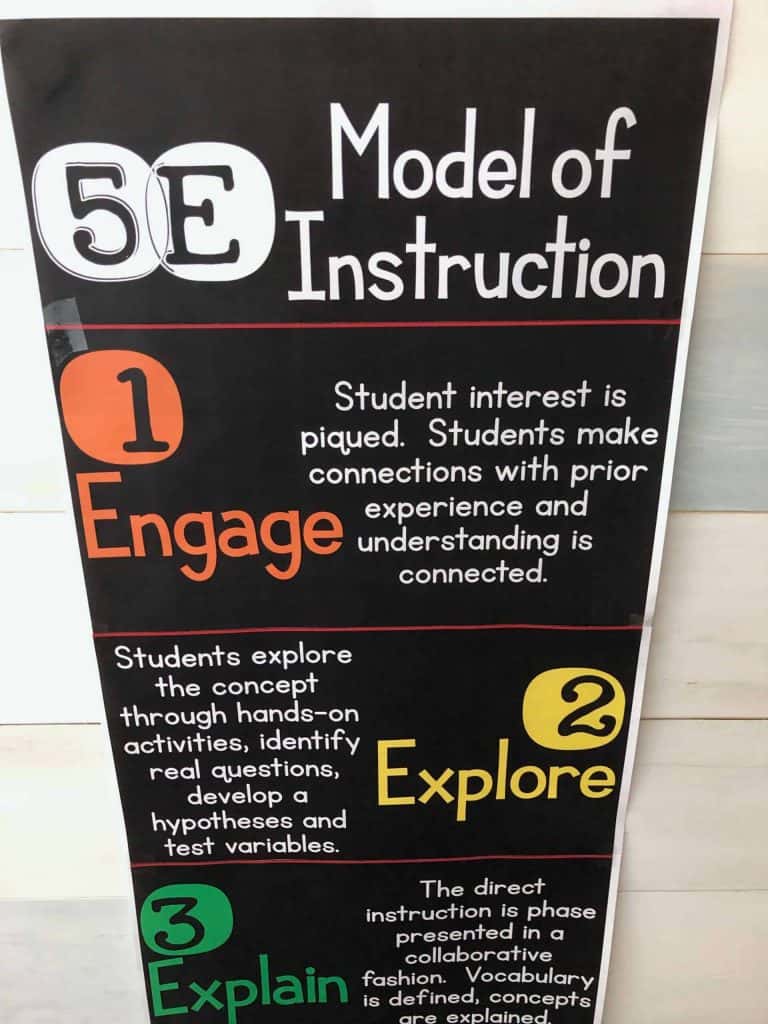
Free 5E Instructional Model Posters
Want a simple way to help students understand the 5E learning cycle?
These free classroom posters highlight the five phases of the model:
5E Lesson Plans
We have created NGSS-aligned 5E Unit Plans for third and fourth grades. In these lessons, students are led through each NGSS Performance Expectation using the 5E Model of Instruction.
3rd Grade 5E Units
Here are our 5E units for third grade.





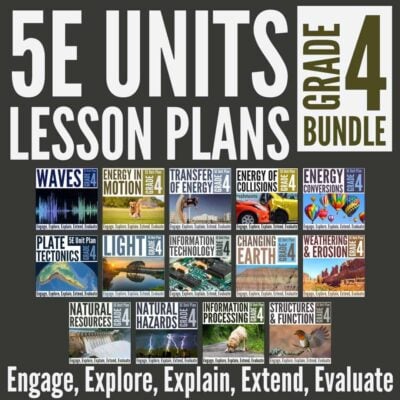
4th Grade 5E Units
Here are the 4th grade units:
-

-
-
-
-
-
-
-
-
-
Product on sale4th Grade 5E NGSS Science Unit Plan BUNDLEOriginal price was: $138.60.$99.00Current price is: $99.00.
-
-
-
-
-

Jessica BOschen
Jessica is a teacher, homeschool parent, and entrepreneur. She shares her passion for teaching and education on What I Have Learned. Jessica has 16 years of experience teaching elementary school and currently homeschools her two middle and high school boys. She enjoys scaffolding learning for students, focusing on helping our most challenging learners achieve success in all academic areas.