
Why Use the 5E Model for Science Instruction?

Many science lessons follow a familiar pattern: read the textbook, complete a worksheet, and take a quiz. While this approach can introduce information, it doesn’t always help students develop a deep understanding of scientific ideas.
The 5E instructional model offers a different approach.

Instead of beginning with explanations, the 5E model guides students through a learning cycle that encourages curiosity, investigation, and reflection.
By moving through the phases of Engage, Explore, Explain, Extend, and Evaluate, students actively participate in the learning process and develop stronger scientific reasoning skills.
In this article, we’ll look at why many teachers use the 5E model for science instruction and how it differs from more traditional teaching approaches.
What is 5E Model for Science Instruction?
The 5E instructional model is an inquiry-based framework that organizes science lessons into five phases:
Each stage builds on the previous one, helping students develop understanding through investigation and discussion rather than memorization.
If you’d like a full explanation of the model, you can read What Is the 5E Model of Science Instruction?
Traditional Science Instruction
Traditional science lessons often begin with the teacher explaining the concept. Students may read a textbook section, listen to a lecture, and complete practice questions.
Sometimes an experiment follows, but students typically follow a set of instructions rather than designing an investigation themselves.
In this model, students primarily receive information rather than discovering it through inquiry.
While this approach can introduce concepts quickly, it may not always lead to deep understanding.
Inquiry-Based Science Instruction
Inquiry-based learning places students at the center of the learning process.
Instead of beginning with explanations, students investigate a question or phenomenon. Through discussion, observation, and experimentation, they begin developing their own ideas about how the concept works.
The teacher acts as a guide by asking questions, providing materials, and helping students analyze their findings.
Research has shown that guided inquiry, where teachers provide structure and support, can lead to stronger understanding than instruction based entirely on lectures.
Traditional Science Instruction vs Inquiry-Based Science Instruction
| Traditional Science Instruction | Inquiry-Based Science Instruction |
|---|---|
| Teacher begins the lesson by explaining the concept. | Students begin by investigating a question or phenomenon. |
| Students read a textbook passage or listen to a lecture. | Students observe, discuss, and explore the concept. |
| Activities often follow step-by-step instructions. | Students design investigations or test ideas. |
| The teacher provides most of the information. | The teacher guides learning by asking questions and providing support. |
| Students focus on memorizing definitions and facts. | Students build understanding through experience and discussion. |
| Assessments often focus on recalling information. | The teacher begins the lesson by explaining the concept. |
The 5E instructional model provides a structure that helps teachers move from traditional instruction toward an inquiry-based approach without losing important content knowledge.
How the 5E Model Supports Inquiry-Based Learning
While inquiry-based learning can be highly effective, it can also be difficult for teachers to plan.
Teachers must decide when to introduce investigations, when to provide explanations, and how to guide students without simply giving them the answers.
The 5E instructional model provides a structure that makes this process easier.
The Five Phases of the 5E Model
By organizing instruction into five phases, the model helps teachers guide students through inquiry while still ensuring that important scientific concepts are clearly explained.
Following is a short explanation of the 5 E’s of this method. To find out more information about the 5E Model, read What are the 5Es?
Engagement
Students become curious about the topic and share what they already know.
Exploration
Students investigate the concept through hands-on activities and discussions.
Explanation
Teachers introduce scientific vocabulary and concepts that help students understand their observations.
Extension
Students apply their new knowledge to new situations and deeper investigations.
Evaluation
Teachers and students assess understanding through discussion, projects, and assessments.
How the 5E Model Shifts the Role of Teacher and Student
| Phase | Student Role | Teacher Role |
|---|---|---|
| Engagement | Share prior knowledge, ask questions, and show curiosity about the topic | Spark interest, ask guiding questions, and identify misconceptions |
| Exploration | Investigate through hands-on activities, collect data, and discuss observations | Provide materials, encourage investigation, and guide student thinking |
| Explanation | Discuss findings, explain ideas, and connect experiences to concepts | Introduce vocabulary, clarify misconceptions, and guide discussion |
| Extension | Apply knowledge to new situations and deeper investigations | Provide new challenges and opportunities for applying concepts |
| Evaluation | Reflect on learning and demonstrate understanding | Assess student learning through discussions, projects, or assessments |
The 5E instructional model helps teachers shift from delivering information to guiding students through scientific investigation and discovery.
Benefits of the 5E Model for Science Instruction
Many teachers choose the 5E model because it:
- encourages student curiosity and questioning
- supports a deeper understanding of scientific concepts
- helps students connect investigations to explanations
- provides a clear structure for planning inquiry lessons
- allows teachers to address misconceptions at the right time
The model also balances student exploration with teacher guidance, which helps students stay focused on the scientific concepts being taught.
5E Instructional Model Blog Series
This blog post is part of a series of posts on the 5E Instructional Model for teaching science.
Here are links to the other articles in this series:
- Part 1: Why I Love the 5E Model of Science Instruction
- Part 2: Why Use the 5Es?
- Part 3: What are the 5Es?
- Part 4: Engage Lessons
- Part 5: Explore Lessons
- Part 6: Explain Lessons
- Part 7: Extend Lessons
- Part 8: Evaluate Lessons
- Part 9: Our 5E Science Lessons
5E Lesson Plans
We are creating NGSS-aligned 5E Unit Plans for elementary classrooms. We started with third grade and are now creating units for fourth grade. The 5E Unit Plans are available for purchase on Teachers Pay Teachers. In these lessons, students are led through each NGSS Performance Expectation (not the DCI) using the 5E Model of Instruction.
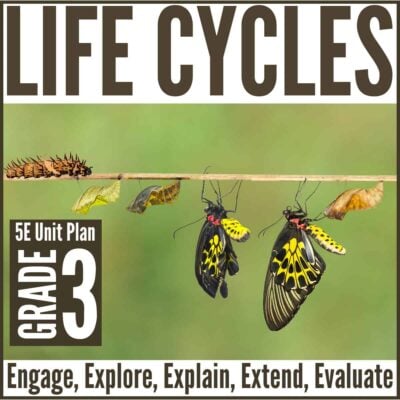
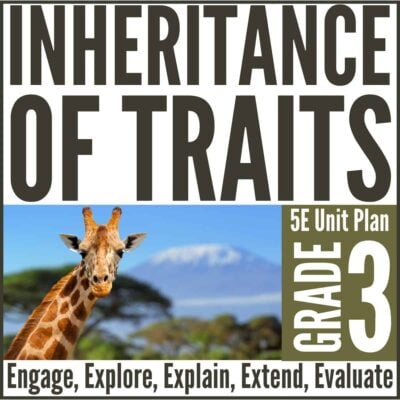
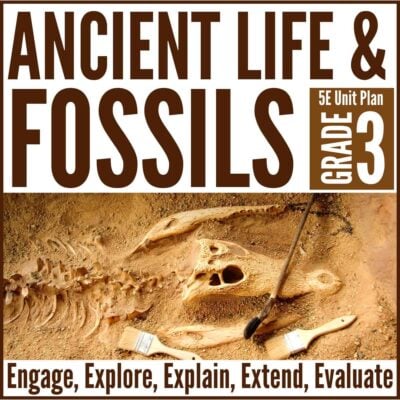
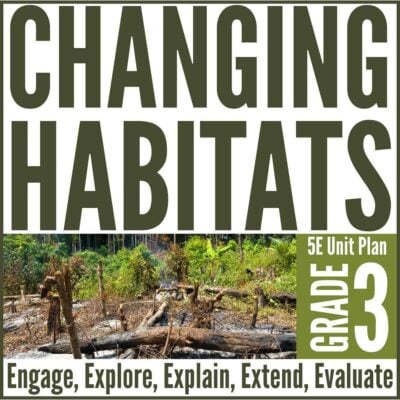
3rd Grade 5E Units
Here are our 5E units for third grade.







4th Grade 5E Units
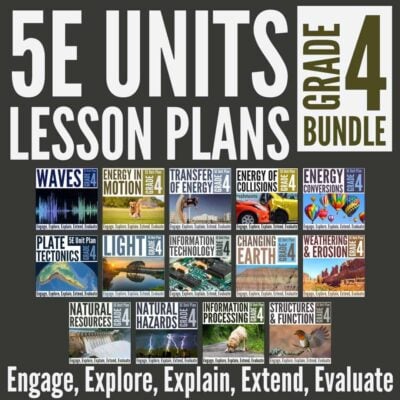
We are in the process of developing 5E Units for 4th grade. Here are the units we have completed so far.
-

-
-
-
-
-
-
-
-
-
Product on sale4th Grade 5E NGSS Science Unit Plan BUNDLEOriginal price was: $138.60.$99.00Current price is: $99.00.
-
-
-
-
-









Free 5E Instructional Model Posters
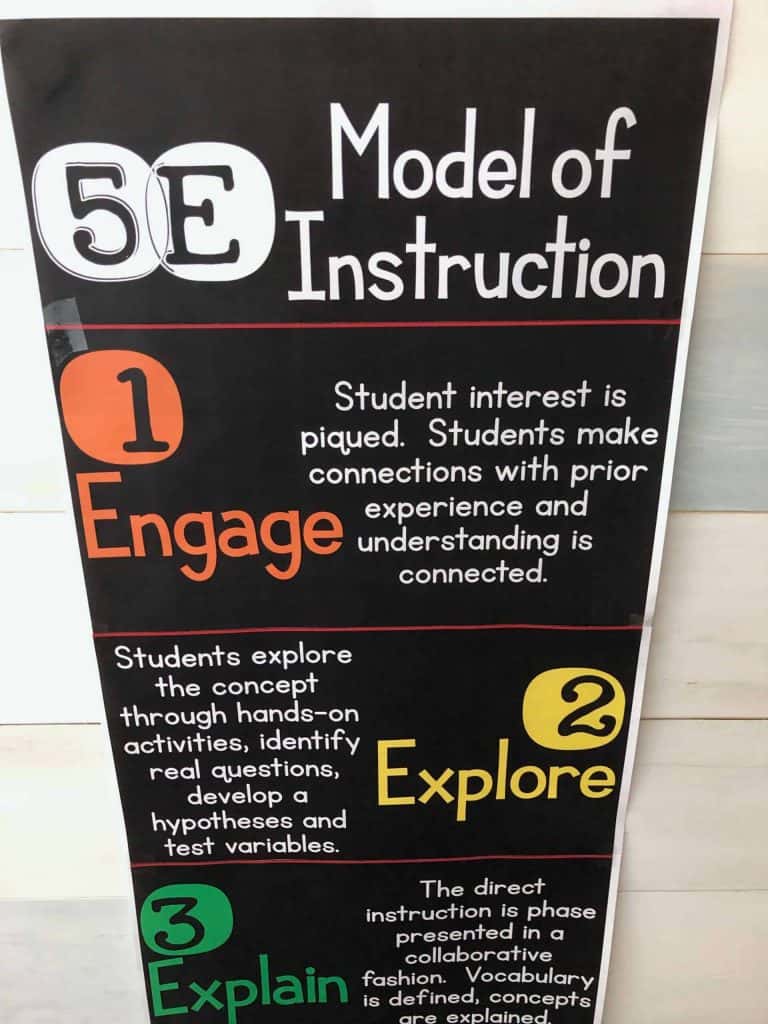
Looking for a simple way to help students understand the 5E learning cycle? These free classroom posters highlight the five phases of the 5E instructional model.
You can display the posters individually during lessons or tape them together to create a visual chart of the entire learning cycle.
Enter your email below, and I’ll send the free 5E posters straight to your inbox so you can start using them in your classroom.

I thought this article was fantastic. I learned a great deal about the 5-E model.
Thanks,
John