




4th Grade 5E NGSS Science Unit Plan BUNDLE
Original price was: $138.60.$99.00Current price is: $99.00.
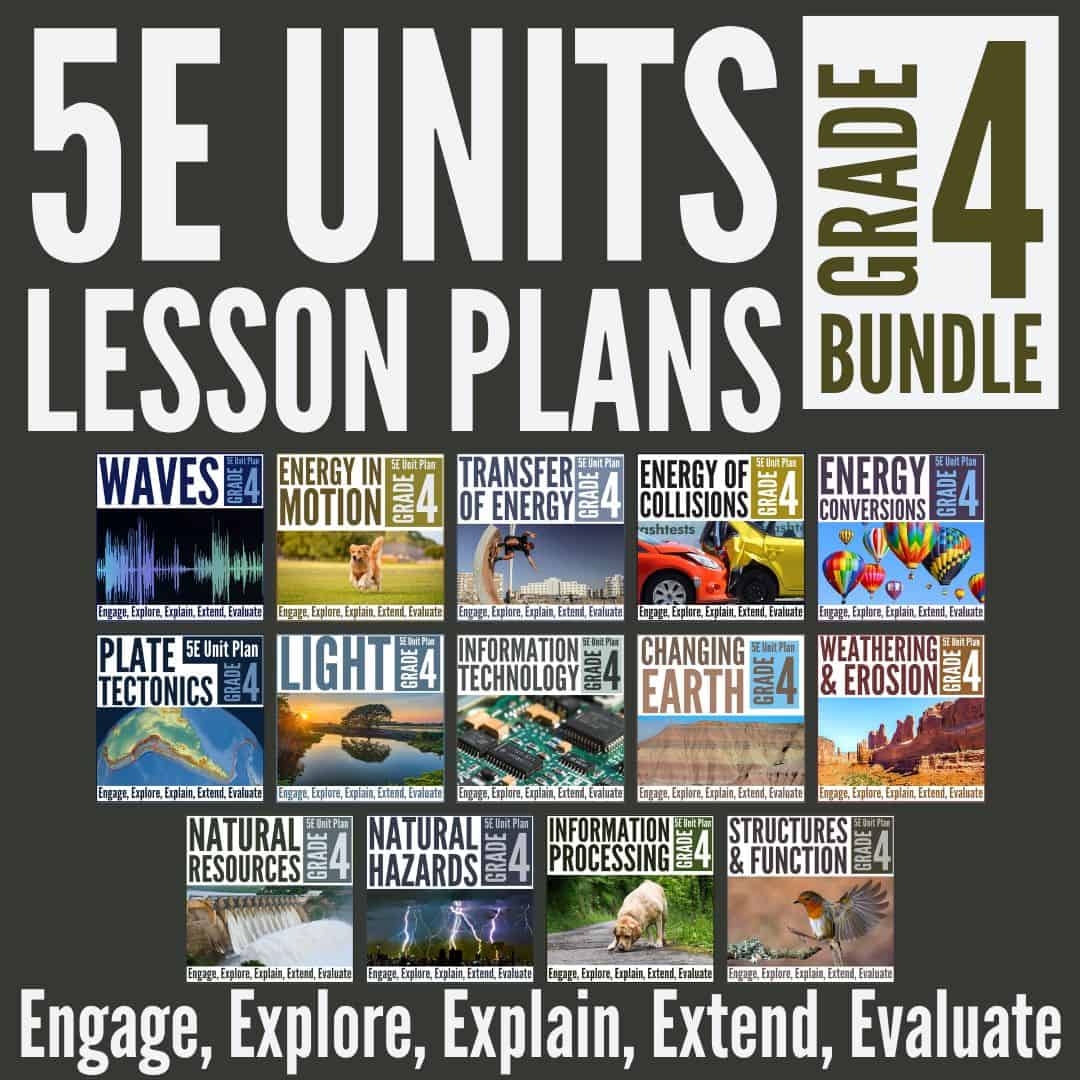
This is a BUNDLE of all the 5E Unit Plans for Fourth Grade. The 5E Instructional Model walks students through the five components of inquiry-based learning. Each unit includes multiple lessons for each of the 5Es and provides a structure for your science instruction.
This is a BUNDLE of all the 5E Unit Plans for Fourth Grade. The 5E Instructional Model walks students through the five components of inquiry-based learning. Each unit includes multiple lessons for each of the 5Es and provides a structure for your science instruction.
See this blog post to find out more information about the 5E Instructional Model.
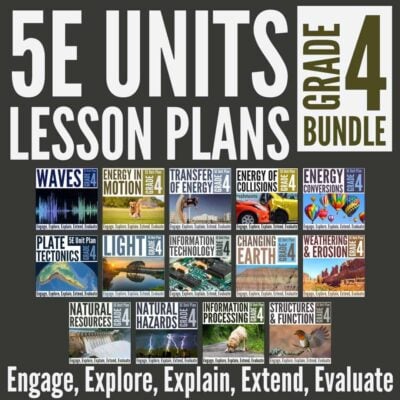
There are 14 5E Units for Fourth Grade:
Physical Science
- Energy in Motion
- Transfer of Energy
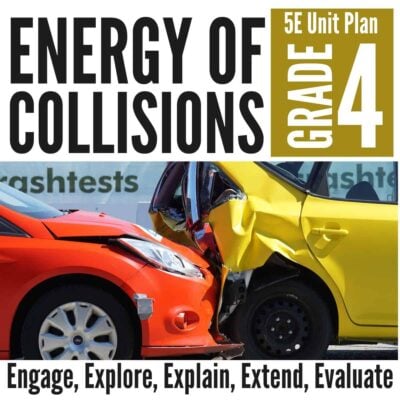
- Energy of Collisions
- Energy of Conversions
- Properties of Waves
- Light Energy
- Information Technology
Life Science
- Information Processing
- Structures and Functions
Earth Science
- Changing Earth
- Weathering and Erosion
- Plate Tectonics
- Natural Resources
- Natural Hazards
This 5E Unit Plan BUNDLE includes the following 5e Model units:
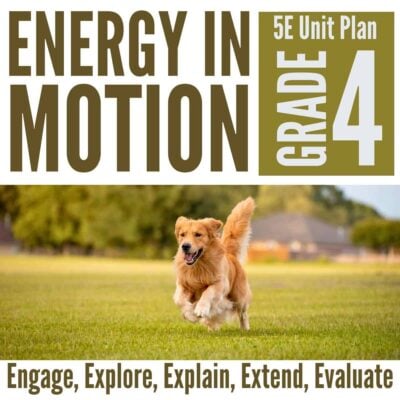
Energy in Motion (4-PS3-1)
The Energy in Motion 5E Science Unit Plan is an inquiry-based unit where students learn about how energy affects motion. Students explore how energy and speed are related, observe the motion of different objects, analyze and interpret data to explore the relationship of energy and motion, and more.
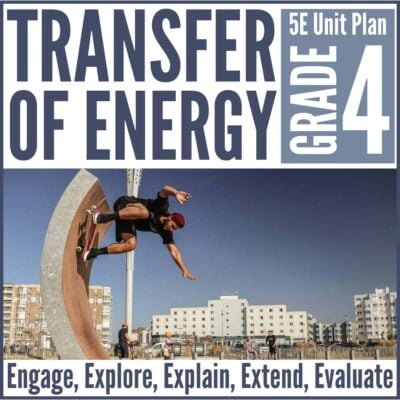
Transfer of Energy Unit (4-PS3-2)
The Transfer of Energy 5E Science Unit Plan is an inquiry-based unit where students learn about how energy can be transferred from place to place by sound, light, bath, and electric current. Students move object to explore the movement of energy. They explore the collision of objects, transfer of energy, change in motion, light energy, and electric currents.
Energy of Collisions (4-PS3-3)
The Energy of Collisions 5E Science Unit Plan is an inquiry-based unit where students learn about the changes in energy that occur when objects collide. Students learn that energy can be moved from place to place by moving object, that when objects collide energy can be transferred and an object’s motion changes, and more.
Energy of Conversions (4-PS3-4)
The Energy Conversions 5E Science Unit Plan is an inquiry-based unit where students learn about how energy is converted from one form to another. Students are asked to think about the factors that affect how energy is converted and how that conversion affects is affected by the components of a system. Students will design, test and refine a device that converts energy from one form into another.
Properties of Waves
The Waves 5E Science Unit Plan is an inquiry-based unit where students learn about how wave patterns in terms of amplitude and wavelength and that waves can cause objects to move. Students learn how regular patterns of motion can be made by water and how waves differ in amplitude and wavelength.
Light Energy (4-PS4-2)
The Environment and Traits 5E Unit Plan is an inquiry-based unit that focuses investigating acquired and learned traits from the environment. Throughout the unit, students use evidence to explain how traits can be influenced by the environment, including diet and learning. Students explore the cause and effect relationship of environmental factors on animal and plant traits. The unit includes three parts for each of the 5E’s (Engage, Explore, Explain, Extend, and Evaluate) and more.
Information Technology (4-PS4-3)
The Information Technology 5E Science Unit Plan is an inquiry-based unit where students learn about technology and how people transmit information, communicate over distance, digital and analog technology and more.
Information Processing
The Information Processing 5E Science Unit Plan is an inquiry-based unit where students learn about how animals receive different types of information through their senses, process the information in their brain, and respond to the information in different ways.
Structure and Function
The Structures and Functions 5E Science Unit Plan is an inquiry-based unit where students learn about how plant and animal parts (structures) help it survive, grow, and reproduce.
Changing Earth 4-ESS1-1
This Changing Earth 5E Science Unit Plan is an inquiry-based unit where students learn about the movement of the Earth and how it affects physical features over time.
Weathering and Erosion (4-ESS2-1)
This Weathering and Erosion 5E Science Unit Plan is an inquiry-based unit where students learn about the effects of weathering or the rate of erosion by water, ice, wind, or vegetation.
Plate Tectonics (4-ESS2-2)
This Plate Tectonics 5E Science Unit Plan is an inquiry-based unit where students learn about how the processes that cause plate movement and resulting features.
Natural Resources (4-ESS3-1)
This Natural Resources 5E Science Unit Plan is an inquiry-based unit where students learn about renewable and nonrenewable resources.
Natural Hazards (4-ESS3-2)
The Natural Hazards 5E Science Unit Plan is an inquiry-based unit where students learn about solutions to reduce the impact of natural Earth processes on humans.
ALL 5E Unit Plans Include
- Teacher Notes that provide an overview of the resource and an explanation of the NGSS standards
- Common Misconceptions about the Topic
- Teaching Timeline available with four different options, including a correlation with the Fourth Grade Science Stations
- Vocabulary Cards to reinforce the topic’s key terms throughout the unit. These are the same vocabulary cards available in the Fourth Grade Science Stations
- Big Idea Posters for the topic that illustrate the main concepts students will learn
- Exit Tickets in three formats: short answer, fill-in-the-blank, and multiple choice
- Google Drive and Powerpoint Teacher Presentation that supports the student resources (some units)
- Google Drive Student Resources for a paperless option
What is the 5E Instructional Model?
The 5E Model is student-led, with the teacher acting mainly as the facilitator. Through open-ended questions, real-life experiences, guided investigations, and research, the students gain a deep understanding of the scientific topics that are covered in the lessons. Each stage of the model serves as a foundation for the next, creating a coherent model that frames lessons, activities, and units.

Melissa Perry –
Wow! This is a great resource and my students love it!
Crystal J. –
Very helpful as our science block has been cut to 30 minutes.
Ahna F. –
I mostly use the readings due to time constraints. I particularly love the readings with questions along the side. Great information and easy to use.
Third Grade Think Tank –
This product is so well done! I especially appreciate the vocabulary cards. Thank you!
Sunshine V. –
Thank you! This is great! My students love all the activities.