
What Is the 5E Model of Science Instruction?
The 5E Model of Science Instruction is an inquiry-based teaching framework that guides students through five phases of learning: Engage, Explore, Explain, Extend, and Evaluate.
Instead of beginning with a lecture or textbook reading, the 5E model begins with student curiosity. Students investigate questions, explore ideas through hands-on experiences, and build explanations based on evidence.

Teachers act as facilitators who guide the learning process through questions, investigations, and discussion. Each phase builds on the previous one, helping students develop a deeper understanding of scientific concepts.
The five phases of the 5E instructional model are:
Each phase builds on the previous one, helping students develop a deeper understanding of scientific concepts.
What Is the 5E Instructional Model?
The 5E instructional model is a student-centered approach to science instruction. Learning happens through inquiry, investigation, and discussion rather than through direct lecture.
Students explore ideas through hands-on experiences and guided questioning. The teacher supports the learning process by facilitating investigations, encouraging discussion, and helping students connect their observations to scientific concepts.
The 5E model was developed by the Biological Sciences Curriculum Study (BSCS) in 1987 and has become one of the most widely used frameworks for inquiry-based science instruction.
Because each phase builds on the previous one, the model creates a clear structure that teachers can use to design lessons, activities, and entire science units.
The 5 Phases of the 5E Instructional Model
| Phase | What Students Do | Teacher Role |
|---|---|---|
| Engage | Share prior knowledge and ask questions about the topic | Spark curiosity and identify misconceptions |
| Explore | Investigate through hands-on activities and experiments | Guide inquiry and encourage discussion |
| Explain | Discuss findings and connect ideas to scientific concepts | Introduce vocabulary and clarify understanding |
| Extend | Apply learning to new situations or investigations | Challenge students to deepen their thinking |
| Evaluate | Demonstrate understanding through discussion, writing, or assessment | Assess student learning and reflect on instruction |
Below is a brief overview of each phase of the 5E instructional model.
Stage 1: Engagement Phase
In the Engage phase, the teacher introduces the topic and connects it to students’ prior knowledge.
Students begin asking questions and sharing what they already know about the topic. During this stage, teachers often uncover misconceptions that students may have about the concept.
The goal of the engagement phase is to spark curiosity and prepare students for investigation.
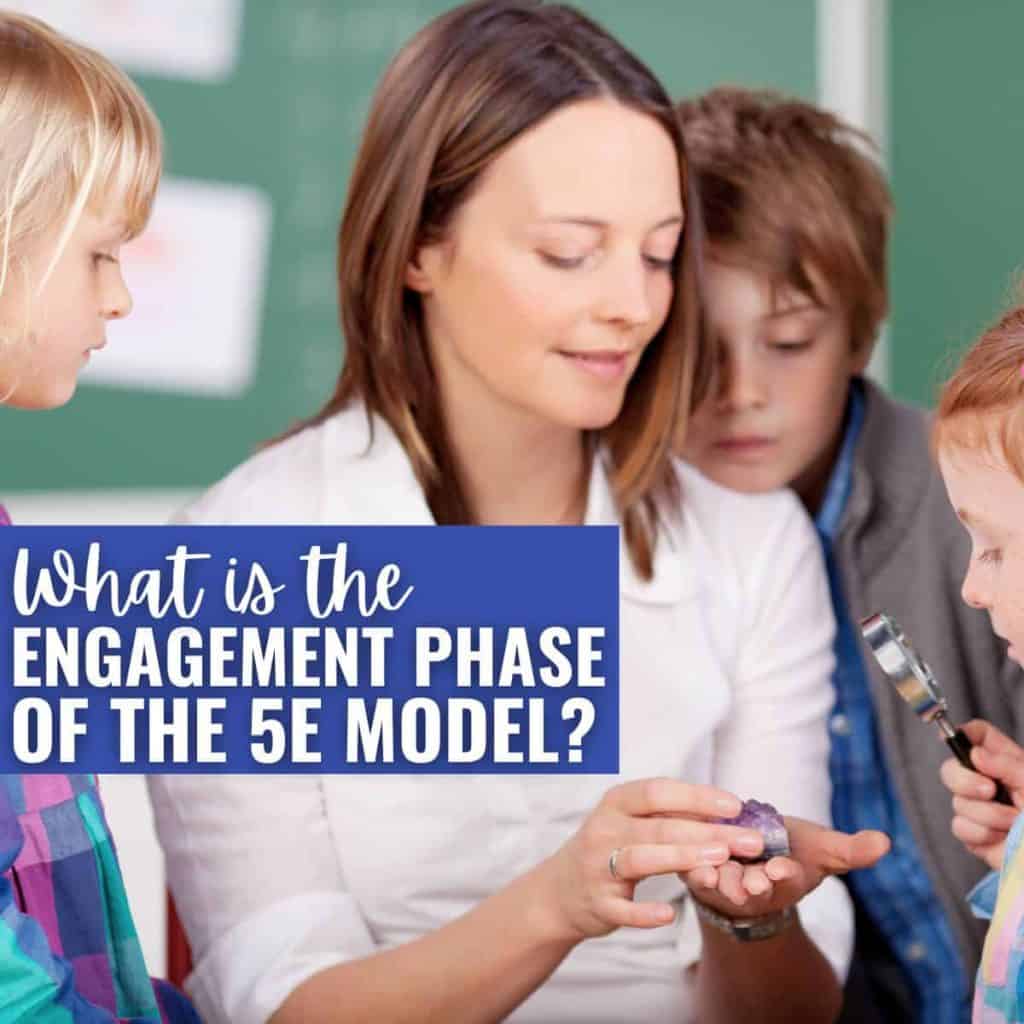
Students connect the new topic to what they already know. Teachers spark curiosity with questions, images, demonstrations, or short activities.
Stage 2: Exploration Phase
During the Explore phase, students investigate the concept through hands-on activities.
Students work collaboratively to observe, collect data, and test ideas. They begin developing questions and possible explanations based on their experiences.
The teacher provides materials and guidance but avoids direct instruction during this stage.
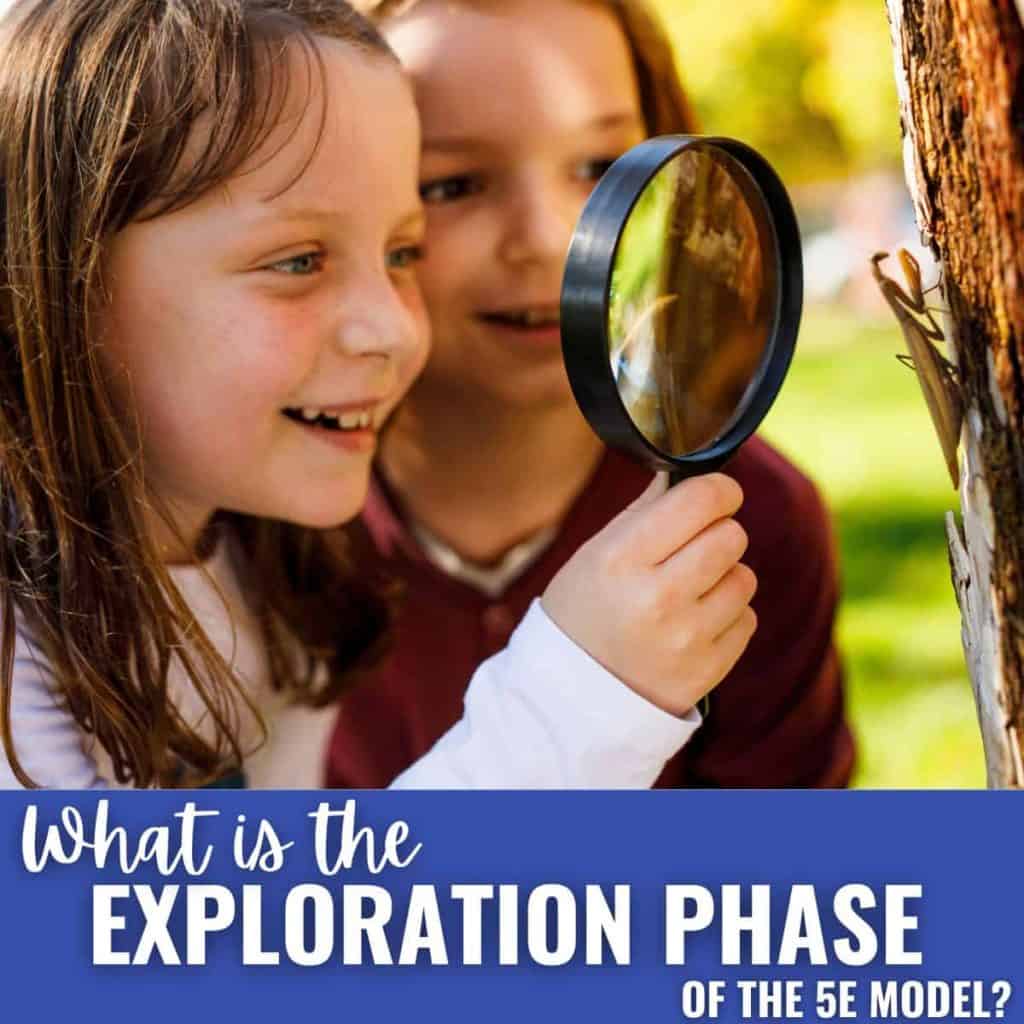
Students explore the concept through hands-on activities. They observe, discuss ideas, and begin forming explanations.
Stage 3: Explanation Phase
In the Explain phase, students discuss what they observed during their investigations.
The teacher introduces scientific vocabulary and helps students connect their findings to key concepts.
This is the point where direct instruction occurs, but it builds on the experiences students already had during the exploration stage.
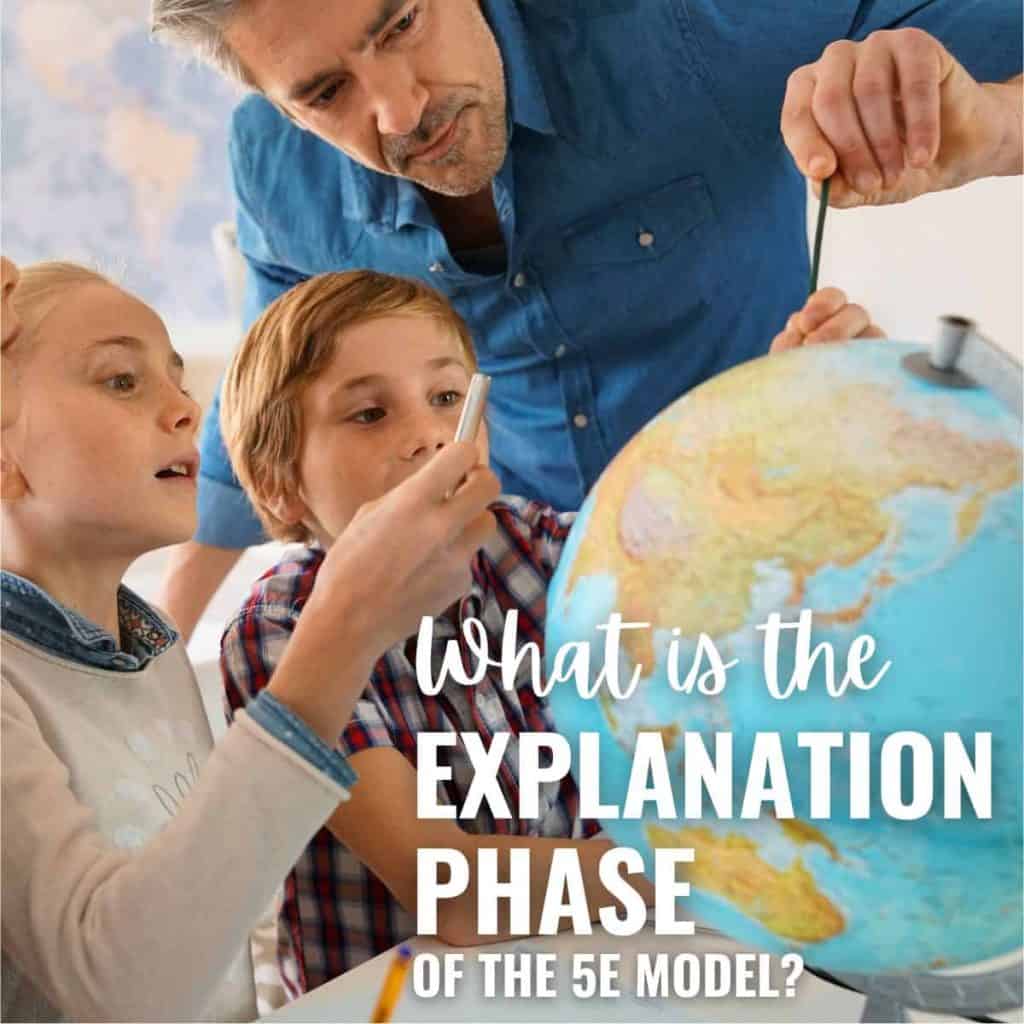
Students explain what they observed. Teachers introduce vocabulary and guide discussion to clarify the concepts.
Stage 4: Extension Phase
During the Extend phase, students apply what they learned to new situations.
They may conduct additional investigations, compare related concepts, or apply the idea to real-world examples.
This stage strengthens understanding and helps students generalize scientific concepts.
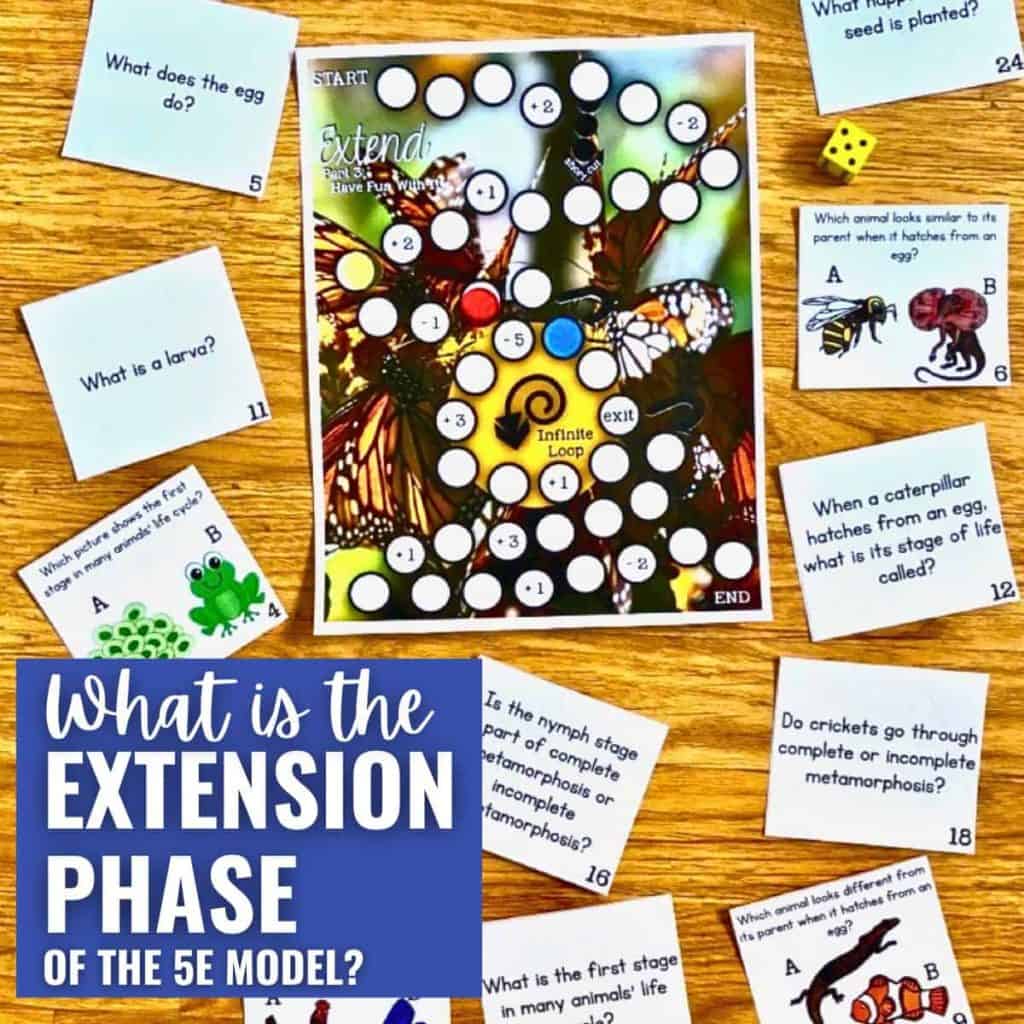
Students apply what they learned to new situations, investigations, or real-world examples.
Stage 5: Evaluation Phase
In the Evaluate phase, students demonstrate their understanding of the concept.
Evaluation can include discussions, written responses, projects, investigations, or traditional assessments.
Students may also reflect on how their understanding has changed since the beginning of the unit.
Students demonstrate their understanding through discussion, writing, projects, or assessments.
Why the 5E Model Works for Science Instruction
The 5E instructional model helps students move beyond memorizing science facts. Instead, they learn to think like scientists.
By investigating questions, discussing ideas, and applying knowledge to new situations, students build a deeper understanding of scientific concepts.
The model aligns closely with Next Generation Science Standards (NGSS) because students learn through inquiry, investigation, and evidence-based reasoning.
Why Teachers Use the 5E Model
Many science lessons follow a traditional pattern: read the textbook, listen to an explanation, and complete a worksheet or lab activity.
The 5E model changes that structure. Instead of starting with information, it starts with curiosity and investigation.
Teachers use the 5E instructional model because it:
- encourages inquiry and problem solving
- builds a deeper understanding of science concepts
- helps students connect new ideas to prior knowledge
- supports NGSS science practices
- increases student engagement during science lessons
Traditional Science Instruction vs Inquiry-Based Science Instruction
| Traditional Science Instruction | Inquiry-Based Science Instruction |
|---|---|
| Teacher begins the lesson by explaining the concept. | Students begin by investigating a question or phenomenon. |
| Students read a textbook passage or listen to a lecture. | Students observe, discuss, and explore the concept. |
| Activities often follow step-by-step instructions. | Students design investigations or test ideas. |
| The teacher provides most of the information. | The teacher guides learning by asking questions and providing support. |
| Students focus on memorizing definitions and facts. | Students build understanding through experience and discussion. |
| Assessments often focus on recalling information. | Assessments focus on demonstrating understanding through application and explanation. |
The 5E instructional model provides a structure that helps teachers move from traditional instruction toward an inquiry-based approach without losing important content knowledge.
Free 5E Instructional Model Posters
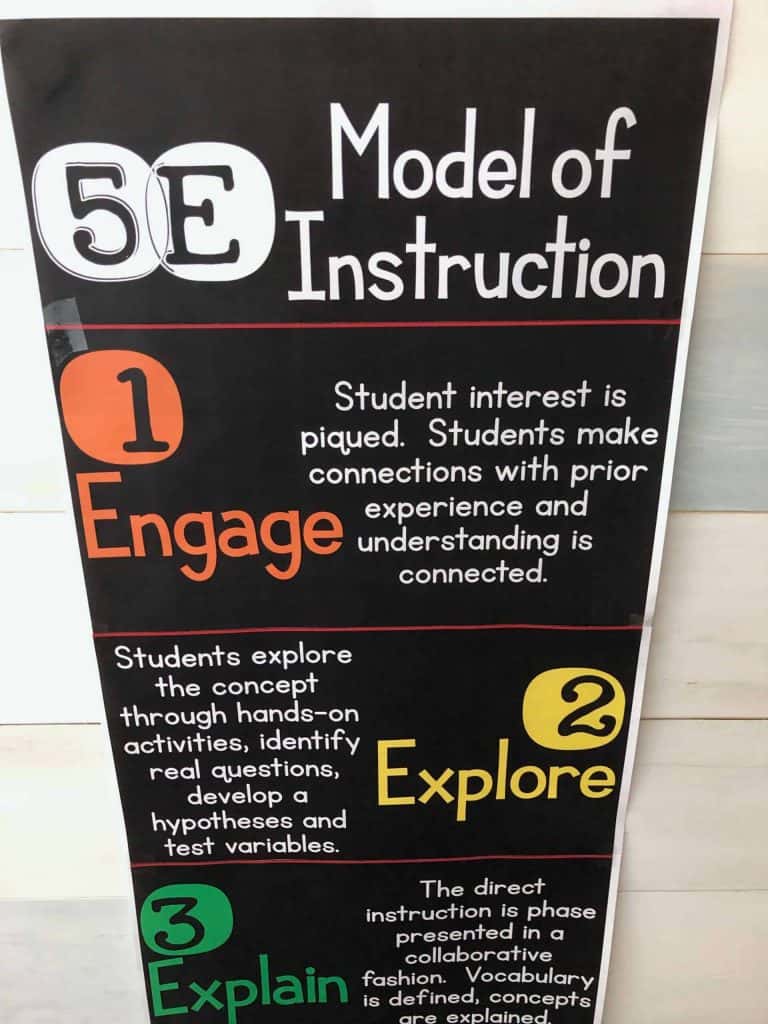
If you teach science using the 5E instructional model, visual reminders can help students understand how the learning process works.
These printable posters show each phase of the inquiry cycle so students can see where they are during a lesson.
Many teachers display the posters on a classroom wall or near their science area so students can refer to them throughout the unit.
Students begin to recognize how each phase connects to the next and how their investigations fit into the overall learning cycle.
You can download the free printable posters below.
5E Instructional Units
We have created NGSS-aligned 5E Unit Plans for third and fourth grades. In these lessons, students are led through each NGSS Performance Expectation using the 5E Model of Instruction.
Third Grade 5E Units
Below are our third grade 5E units. There are 15 units for each of the NGSS 3rd grade standards.
-

-
Product on sale5E Unit Plans for Third Grade BUNDLEOriginal price was: $148.10.$95.00Current price is: $95.00.
-
-
-
-
-
-
-
-
-
-
-
-
-




5E Fourth Grade Units
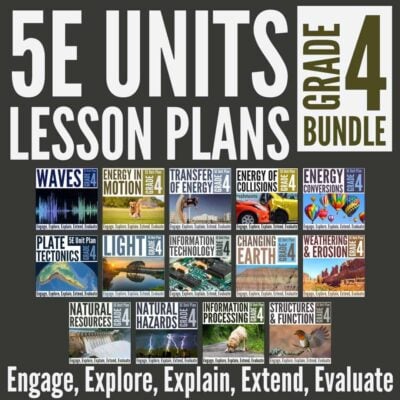
Here are the 4th grade 5E Units:
-
Product on sale4th Grade 5E NGSS Science Unit Plan BUNDLEOriginal price was: $138.60.$99.00Current price is: $99.00.
-
-
-
-
-
-
-
-
-
-
-
-
-
-



Frequently Asked Questions About the 5E Model
Teachers often ask these common questions about the 5E instructional model.

I am a Teacher on Assignment- Instructional Specialist k-8. I really appreciate your website