

Information Processing 5E NGSS Science Unit Plan
$9.90
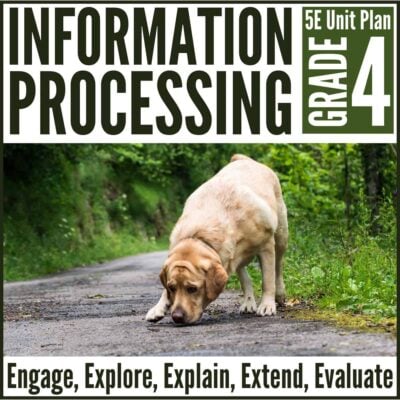
This 5E science unit plan on Information Processing is an inquiry-based approach where students explore how animals receive sensory stimuli, interpret the information in their brains, and respond accordingly.
This Information Processing 5E Science Unit Plan is an inquiry-based unit where students learn about how animals receive different types of information through their senses, process the information in their brain, and respond to the information in different ways.
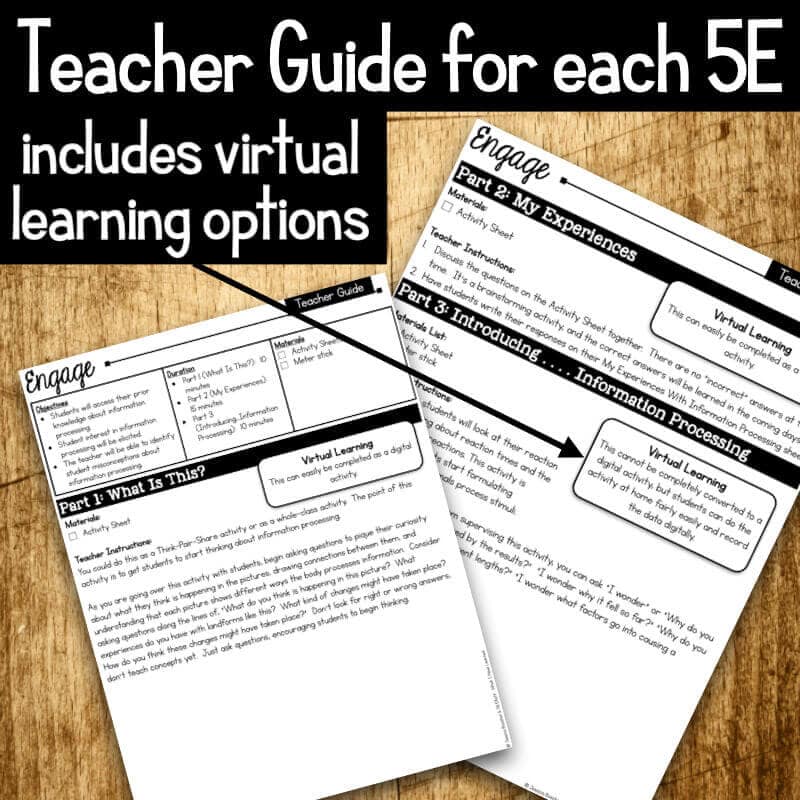
The unit is divided into three segments for each of the 5 Es: Engage, Explore, Explain, Extend, and Evaluate, providing a comprehensive approach to learning.
KEY CONCEPTS IN THIS 5E INFORMATION PROCESSING UNIT INCLUDE
- How animals receive different types of information through their senses
- How animals process information in their brain
- How animals respond to information in different ways
- How different receptors are specialized for specific information
- How animals use their sense to guide their actions
FREE UPGRADE TO GOOGLE DIGITAL COMPONENTS:
- Google Slides Student Resources for a paperless option
- Google Form Exit Cards to monitor student understanding
Included in this Information Processing Science Resource
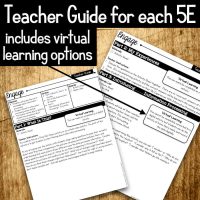
- Teacher Notes that provide an overview of the resource and an explanation of the NGSS standard for Information Processing 4-LS1-2
- Common Misconceptions about Information Processing
- Teaching Timeline available with four different options, including a correlation with the Fourth Grade Science Stations
- Vocabulary Cards to reinforce key terms throughout the unit. These are similar vocabulary cards available in the Fourth Grade Science Stations
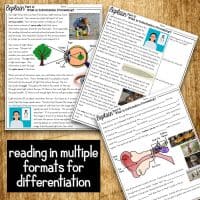
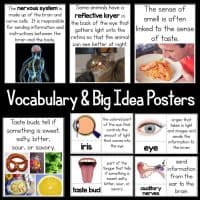
- Big Idea Posters that illustrate the main concepts students will learn
- Exit Tickets in three formats: short answer, fill-in-the-blank, and multiple choice
- Google Slides Teacher Presentation that supports the student resources
- Google Slides Student Resources for a paperless option
- Google Form Exit Cards
What is the 5E Instructional Model?
The 5E Model is student-led, with the teacher acting mainly as the facilitator. Through open-ended questions, real-life experiences, guided investigations, and research, the students gain a deep understanding of the scientific topics that are covered in the lessons. Each stage of the model serves as a foundation for the next, creating a coherent model that frames lessons, activities, and units.
Find out more about the 5E Unit Plans in this blog post.
Objectives and Timeline for Each Section of the 5E Information Processing Unit
ENGAGE
Objectives:
- Students will access their prior knowledge about information processing.
- Student interest in information processing will be elicited.
- The teacher will be able to identify student misconceptions about information processing.
Parts and Duration:
- Part 1 (What Is This?): 10 minutes
- Part 2 (My Experiences): 15 minutes
- Part 3 (Introducing…Information Processing): 10 minutes
EXPLORE
Objectives:
- Students will gather general information about information processing.
- Students will begin to think about how animals take in information and the structures that help them to do so.
- Students will analyze and interpret data to provide evidence that animals have specialized structures that help them take in information from the environment.
Parts and Duration:
- Part 1 (Check It Out): 15 minutes
- Part 2 (Read This): 15 minutes
- Part 3 (You Try It): 15 minutes
EXPLAIN
Objectives:
- Students will work collaboratively to observe how animals take in information from their environment.
- Students will listen to the teacher’s explanation about information processing.
- Students will use the new information to revise their explanations about how organisms sense the environment to help them live and grow.
Parts and Duration:
- Part 1 (What Does It Mean?): 20 minutes
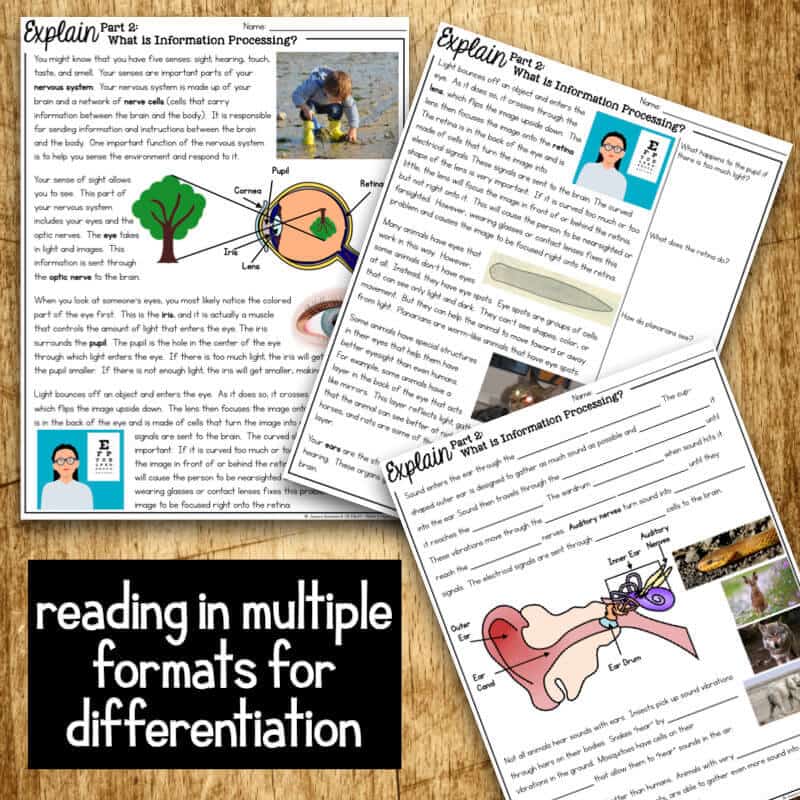
- Part 2 (What Is Information Processing?): 20 minutes
- Part 3 (Putting It All Together): 20 minutes
EXTEND
Objectives:
- Students will apply what they have learned about information processing to a new situation.
- Students will deepen their understanding of information processing, gaining a more generalized knowledge of this specific scientific concept.
- The teacher will resolve all persisting student misconceptions about information processing.
Parts and Duration:
- Part 1 (Where Is Information Processing?): 20 minutes
- Part 2 (Show What You Know): 15 minutes
- Part 3 (Have Fun With It): 20 minutes
EVALUATE
Objectives:
- Students will evaluate their own understanding of information processing in living things.
- Students will be able to demonstrate knowledge of information processing.
- The teacher will encourage students to ask questions that could lead to future investigations.
Parts and Duration:
- Part 1 (What I Know): 15 minutes
- Part 2 (Showing Information Processing): 30 minutes
- Part 3 (Going Forward): 15 minutes


Teach Like A Wildflower –
Thank you so much for this , it was so helpful in our unit.
Kristy M. –
I used this with my 4th graders. It helped them to be engaged and pull from previous knowledge of their 5 senses
Third Inning –
Great resource! I will defiantly use this again.
Jayne M. –
Another well designed and engaging science unit! My science lessons have never been better!
Alissa Collier –
Great resource! Great reading material-- it was what I had envisioned to create myself but didn't have the time. Thank you!