
Why I Love the 5E Model of Inquiry-Based Science Instruction

After many years of teaching science, I’ve tried many different approaches to lesson planning. Some worked well, while others left students disengaged or struggling to understand the concepts.
The approach that has consistently worked best in my classroom is the 5E instructional model.
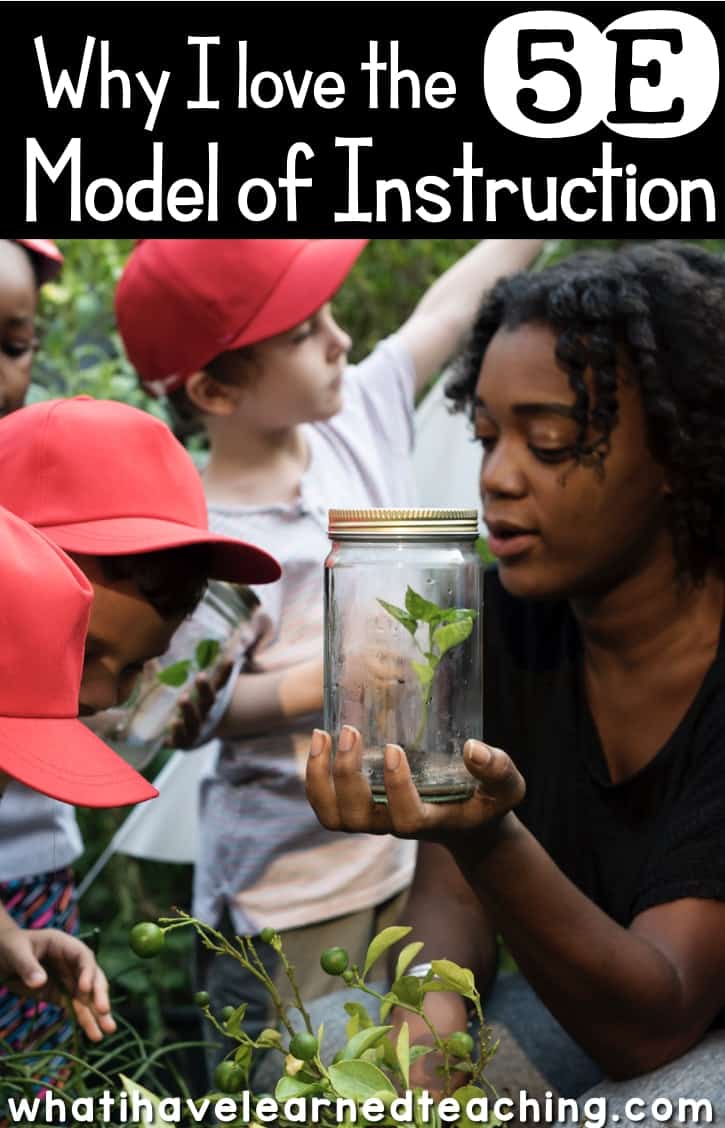
The 5E model provides a structure for inquiry-based science learning, where students actively investigate ideas instead of simply listening to explanations.
Over time, I’ve found that this model not only helps students understand science concepts more deeply, but it also makes science lessons far more engaging.
If you’re new to the model, you may want to start with this overview of what the 5E instructional model is.
What Inquiry-Based Science Looks Like in the Classroom
Inquiry-based learning shifts the focus of science instruction from teacher explanations to student investigation.
Instead of beginning with definitions or vocabulary, students explore a phenomenon and try to make sense of what they observe.
Students ask questions, analyze results, and discuss their ideas with classmates. Through this process, they gradually build an understanding of the scientific concept.
The teacher’s role is to guide the investigation and help students make connections between their observations and scientific explanations.
The First Time I Saw Inquiry-Based Learning
I remember the day I observed a teacher lead her students through an inquiry-based approach. I was transfixed. The students were engaged. They were learning. More than that, they wanted to learn.
These students were actively participating in their own learning, and it was the type of learning that would stick. Students were talking to each other in the language of science. They were using key terms and vocabulary words to explain what they were experiencing during the investigations.
Students were not sitting at their desks listening to a teacher give a lecture. They were not following a list of instructions in a laboratory activity, checking in boxes and filling in blanks.
They were doing what they were learning. There was nothing passive about it. I was in awe of how the teacher guided students in such a rich learning environment.
When I got back to my own classroom, I wanted to do the same. But there was a problem:
I had no idea how to begin.
The Challenge of Planning Inquiry Lessons
When I tried to recreate that type of learning in my own classroom, I quickly realized how difficult it could be.
I could repeat the lesson I had observed, but I struggled to design inquiry-based lessons for other topics like magnetism, the rock cycle, or photosynthesis.
Questions kept coming up:
- What type of activity should come first?
- When should I introduce vocabulary?
- Should students begin with an experiment or a reading?
With limited planning time, it was easy to fall back on the textbook and more traditional lessons.
Introduce the 5E Model
Discovering the 5E Model of Instruction
Eventually, I discovered the 5E instructional model, and it completely changed the way I approached science instruction.
The 5E model provides a structure for planning inquiry-based lessons.
Instead of guessing what activity should come next, teachers guide students through five phases:
Each stage helps students build understanding step by step.
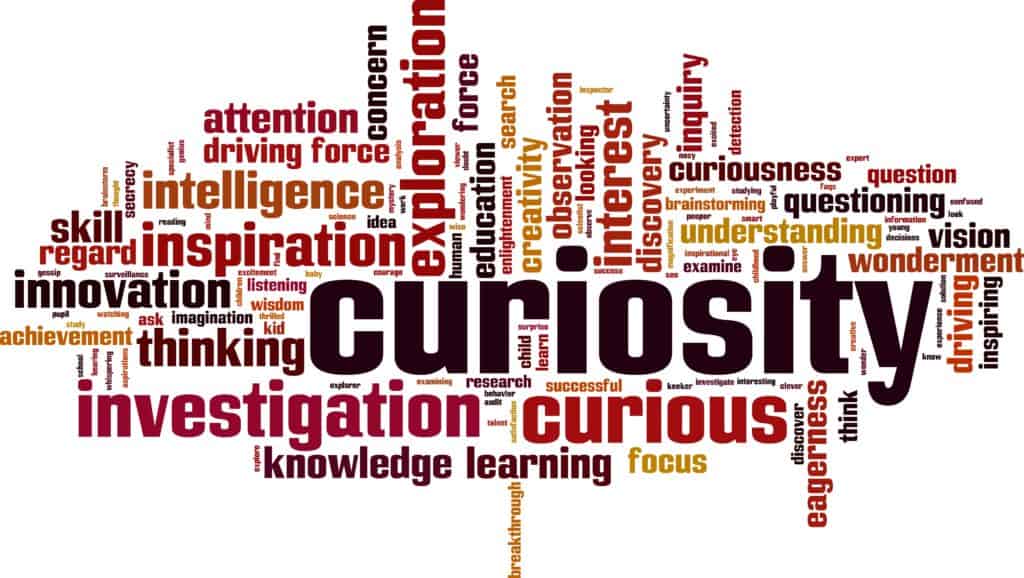
Why the 5E Model Works in My Classroom
What I appreciate most about the 5E model is that it balances student investigation with teacher guidance.
Students are given opportunities to explore and ask questions, but they also receive clear explanations of the scientific concepts.
This combination helps students develop both curiosity and understanding.
Over time, I’ve also noticed that students become more confident discussing scientific ideas and explaining their thinking.
Another benefit is that the 5E model provides a consistent structure for planning lessons, which makes science instruction easier to organize.
5E Instructional Model Blog Series
This blog post is part of a series of posts on the 5E Instructional Model for teaching science.
Here are links to the other articles in this series:
- Part 1: Why I Love the 5E Model of Science Instruction
- Part 2: Why Use the 5Es?
- Part 3: What are the 5Es?
- Part 4: Engage Lessons
- Part 5: Explore Lessons
- Part 6: Explain Lessons
- Part 7: Extend Lessons
- Part 8: Evaluate Lessons
- Part 9: Our 5E Science Lessons
5E Lesson Plans
We have created NGSS-aligned 5E Unit Plans for third and fourth grades. In these lessons, students are led through each NGSS Performance Expectation using the 5E Model of Instruction.
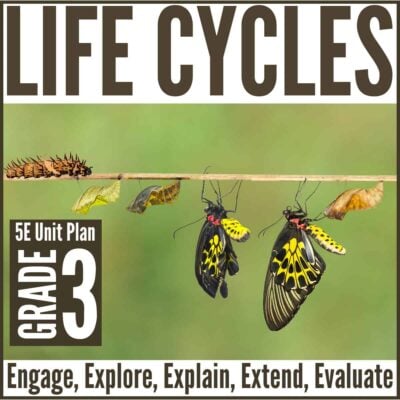
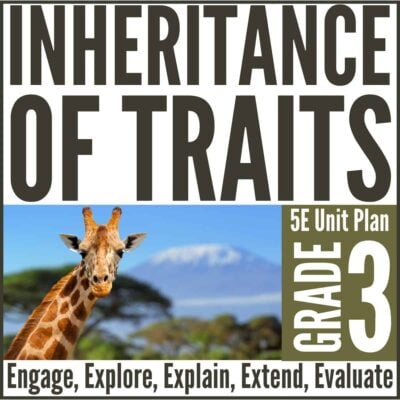
3rd Grade 5E Units
Here are our 5E units for third grade.






4th Grade 5E Units
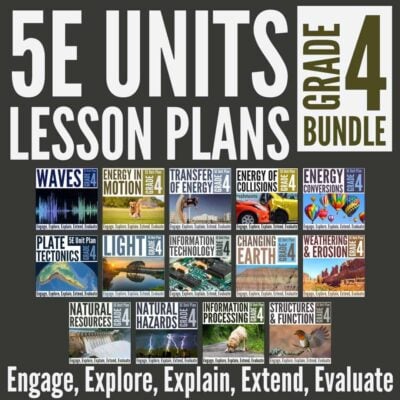
We are in the process of developing 5E Units for 4th grade. Here are the units we have completed so far.
-

-
-
-
-
-
-
-
-
-
Product on sale4th Grade 5E NGSS Science Unit Plan BUNDLEOriginal price was: $138.60.$99.00Current price is: $99.00.
-
-
-
-
-





References for Inquiry-Based Instruction
Scholarly articles on the proven benefits of inquiry-based learning:
- BookmarkPowerful Learning: Studies Show Deep Understanding Derives from Collaborative Methods
- Inquiry-Based Learning: A Review of the Research Literature
Free 5E Instructional Model Posters
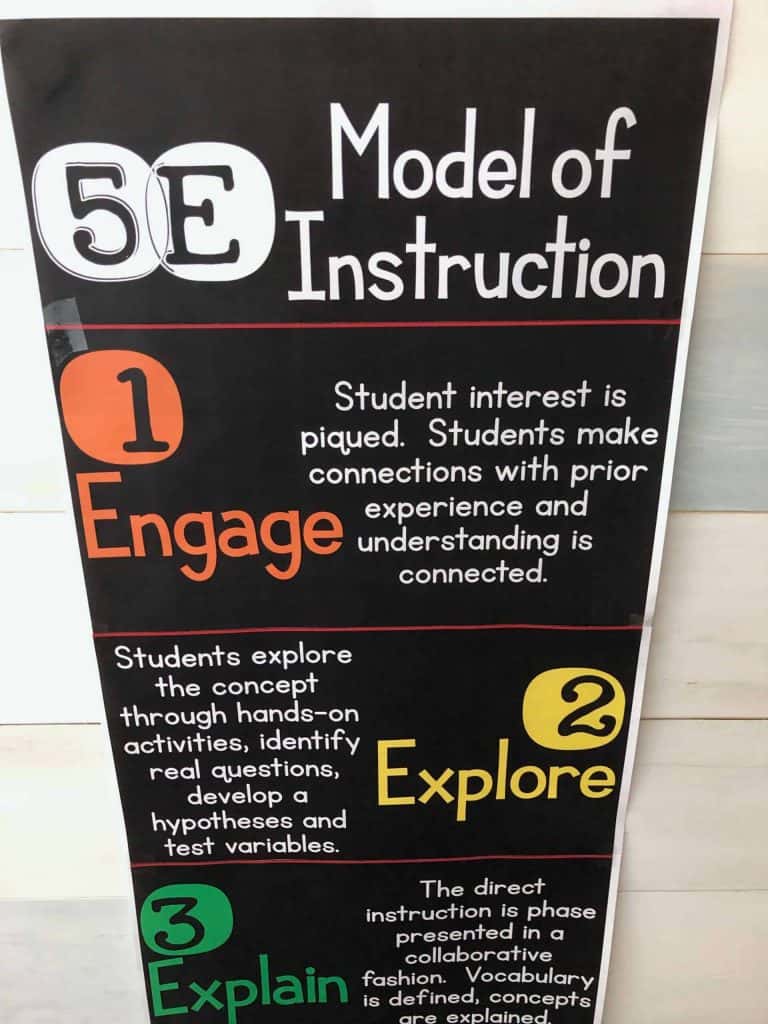
Looking for a simple way to help students understand the 5E learning cycle? These free classroom posters highlight the five phases of the 5E instructional model.
You can display the posters individually during lessons or tape them together to create a visual chart of the entire learning cycle.
Enter your email below, and I’ll send the free 5E posters straight to your inbox so you can start using them in your classroom.

Thank you for this great post and all the posts about the 5E model. I am a science specialist and classroom teacher. I plan on sharing your site with the teachers that I train.
I just finished reading “The 5E’s of Inquiry Based Science” (a course I took through Learner’s Edge). It was fantastic! I can’t wait to implement these steps and change my instruction to create an engaging and exciting inquiry based classroom! I;m a librarian and I know this will have such a positive impact on my students and their learning! Thank you for the great article as well. I may pass along to my colleagues!
Thanks for sharing this amazing article! I just finished reading the 5E’s of Inquiry-Based Science and this article along with all of your links was so helpful in wrapping my mind around how to implement these strategies in my classroom. I can’t wait to get on to your TPT page and see what posters and other goodies you have!
Thanks!
Stephanie