
Science Phenomena Stations: Teaching NGSS Phenomena
Hold up a cold glass of water on a hot day and ask students why it “sweats,” and you’ve started a science lesson the way NGSS intends: with a phenomenon. Science phenomena stations take that idea and make it hands-on, letting students rotate through activities that help them observe, investigate, and explain a real-world event.
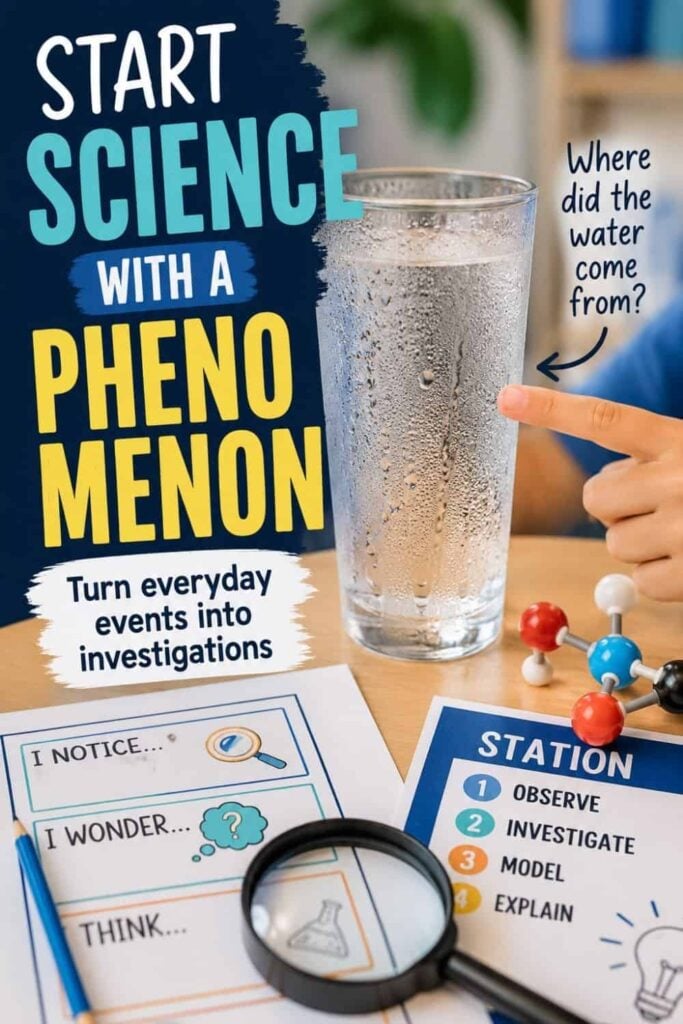
This post covers what a science phenomenon is, examples that work in elementary classrooms, and how to use science stations to teach phenomenon-based science without reinventing your whole curriculum.
What Is a Science Phenomenon?
A science phenomenon is simply an observable event that sparks questions. In a phenomenon-based classroom, a lesson or unit opens with an anchor phenomenon, something students can see happening, and their job is to figure out how and why it works. Instead of starting with a vocabulary list, students start with curiosity.
This is the heart of the Next Generation Science Standards and their three-dimensional approach, where students use science practices, crosscutting concepts, and core ideas together to make sense of the world. And phenomena don’t have to be spectacular. A rusting nail or an ice cube melting is plenty to get elementary students asking good questions. You can browse curated examples at the NGSS phenomena resource page.
Phenomena vs. Phenomenon
A quick grammar note, since it trips everyone up: phenomenon is singular (one event), and phenomena is plural (more than one). So you anchor a lesson with one phenomenon, and over the course of a unit, students explore several phenomena.
Why Use Science Stations to Teach Phenomena
Science stations and phenomenon-based learning fit together naturally. A phenomenon raises questions that take more than one activity to answer, and stations give students several angles on the same event: reading about it, investigating it hands-on, modeling it, and sorting examples. A few reasons stations work so well here:
- Students actively explore a phenomenon rather than being told the answer.
- Rotating through stations gives every student multiple ways to make sense of the same event.
- Stations are naturally differentiated, so a range of readers and writers can all engage.
- Small-group work gives you time to listen in and catch misconceptions.
If you’re new to running rotations, my tips for successful elementary science stations will help you set them up smoothly.

Learn how to set up science stations so your students can successfully learn about scientific phenomena.
How to Run Science Phenomena Stations
The routine is straightforward once you’ve picked a phenomenon:
- Introduce the anchor phenomenon. Show the event or a photo or video of it, and let students wonder and ask questions.
- Investigate across stations. Students rotate through activities that each reveal part of the answer, gathering observations and evidence as they go.
- Make and revise models. Students draw or build a model to explain the phenomenon, updating it as they learn more.
- Explain with evidence. Students write a claim about how the phenomenon works, backed by the evidence they collected. This pairs well with a claim, evidence, reasoning response.
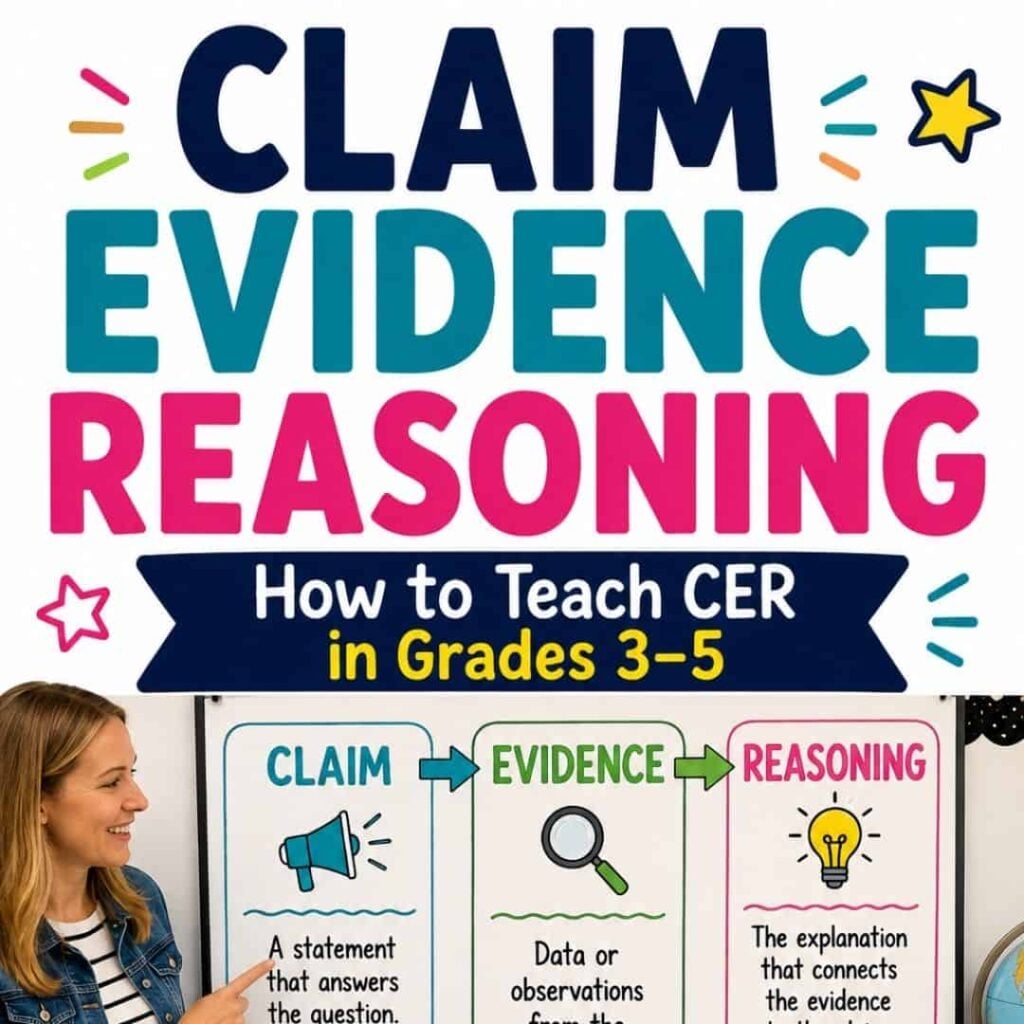
Learn what CER is, why it belongs in your science block, and exactly how to teach it in grades 3 through 5.
How Science Phenomena Stations Fit the 5E Model
If you teach with the 5E instructional model, phenomena and stations already have a home in it. The phenomenon is what launches the lesson, and the stations are how students dig in:
- Engage: The anchor phenomenon hooks students and surfaces their questions. That’s the heart of the 5E Engage phase.
- Explore: Students investigate the phenomenon hands-on at stations, gathering observations and evidence. This is the 5E Explore phase in action, and where science stations do their best work.
- Explain: Students use their evidence to explain how the phenomenon works, often in a claim, evidence, reasoning response.
- Elaborate: Students apply the idea to a new example or a related phenomenon.
- Evaluate: You check understanding through their models, explanations, and station recording sheets.
My 5E science unit plans build a whole unit around a single phenomenon, with stations dropping right into the Explore phase, so the phenomenon you introduce on day one carries all the way through to how students are assessed.
Examples of Science Phenomena for Elementary (Mapped to Stations)
The best phenomena are ones your students have seen. Here are relatable examples by science domain, each paired with a station set that helps students investigate it.
- Matter: Water “sweats” on a cold glass, or sugar disappears in tea. Investigate with properties of matter stations or atoms and molecules stations.
- Chemical change: A nail rusts, or a cake rises in the oven. Investigate with chemical reactions stations and a reversible and irreversible changes sort.
- Earth science: Day turns to night, or a mountain range forms over time. Investigate with Earth’s spheres stations and plate tectonics stations.
- Life science: A caterpillar becomes a butterfly, or a pond food web changes when one animal disappears. Investigate with life cycle stations, ecosystems stations, and food web stations.
- Physical science: A magnet moves a paperclip without touching it, or you feel a speaker’s sound. Investigate with magnetism stations and sound and waves stations.
Frequently Asked Questions
Bringing It All Together
You don’t need a whole new curriculum to teach with phenomena. Start a unit with an event your students have seen, give them stations that let them investigate it from a few angles, and have them explain what they figured out. That’s phenomenon-based science, and it’s exactly what well-built science stations are made to do.
Want ready-to-use science phenomena stations? Flagship sets like my Chemical Reactions, Earth’s Spheres, and Atoms and Molecules stations each anchor a phenomenon with hands-on investigation, and my grade-level science station bundles pull a full year together, all aligned to NGSS.
Recommended products
-
4th Grade NGSS Science Station Yearlong BUNDLE
Original price was: $287.57.$159.00Current price is: $159.00. -
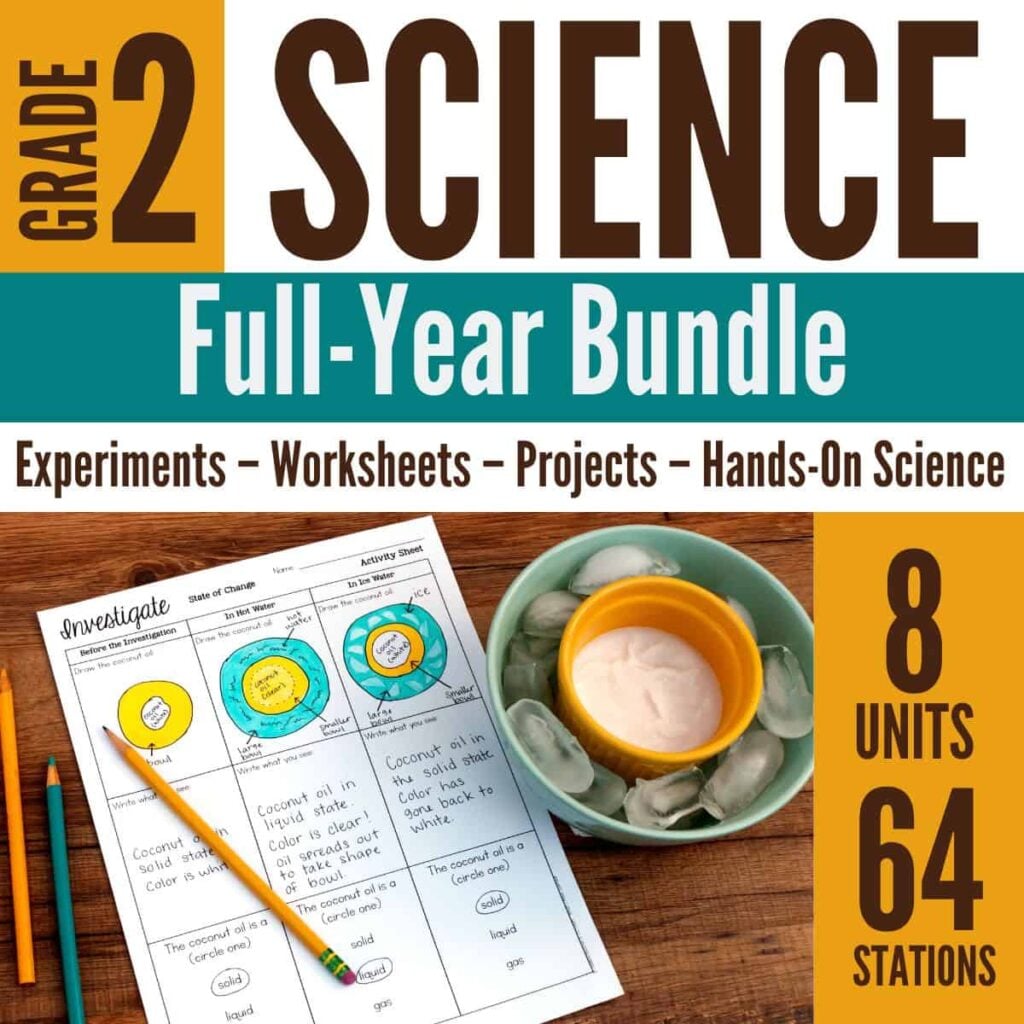
Second Grade Science Stations BUNDLE – ALL Next Generation Science Stations
Original price was: $173.43.$109.44Current price is: $109.44. -
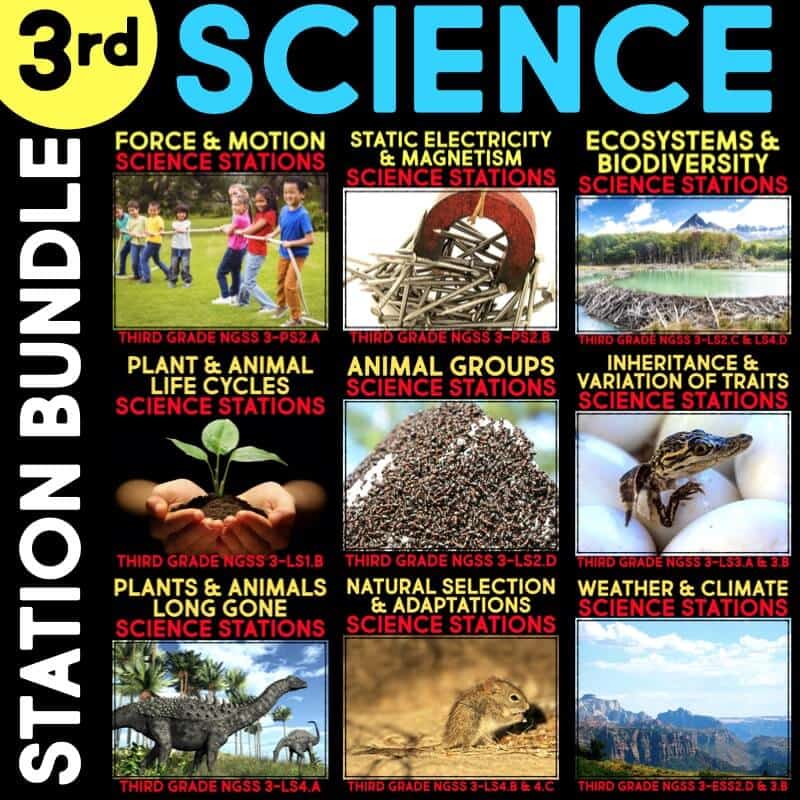
Third Grade Science Stations BUNDLE
Original price was: $222.12.$111.84Current price is: $111.84. -
5th Grade NGSS Science Station Yearlong BUNDLE
Original price was: $316.00.$177.87Current price is: $177.87.


Jessica BOschen
Jessica is a teacher, homeschool parent, and entrepreneur. She shares her passion for teaching and education on What I Have Learned. Jessica has 16 years of experience teaching elementary school and currently homeschools her two middle and high school boys. She enjoys scaffolding learning for students, focusing on helping our most challenging learners achieve success in all academic areas.