
Second Grade Science Stations: NGSS Units for All Topics
Second graders cover three main science domains under the NGSS: physical science (matter and its changes), life science (plant growth and habitats), and earth science (landforms, erosion, maps, and water). These second grade science stations are built around all eight NGSS standards for second grade — one unit per standard, with eight stations in each unit covering hands-on activities, reading passages, diagrams, sorts, and more.

Each unit includes digital versions for Google Classroom, differentiated reading passages with audio support, and vocabulary cards. Below are links to all eight units with details about what each one covers.
If you want all eight units at once, the Second Grade Science Stations Yearlong Bundle includes everything.
Common Questions About These Second Grade Science Stations
Before I link up to all of our 2nd grade NGSS science units, let me answer a few quick questions that you might have about them. If you have a question that I haven’t answered below, let me know in the comment section at the end of the page.
What are the Next Generation Science Standards?
The Next Generation Science Standards (NGSS) are multi-dimensional. Each standard weaves together three components: Disciplinary Core Ideas (the science content), Science and Engineering Practices (what scientists and engineers actually do), and Cross-Cutting Concepts (ideas that apply across all science disciplines).
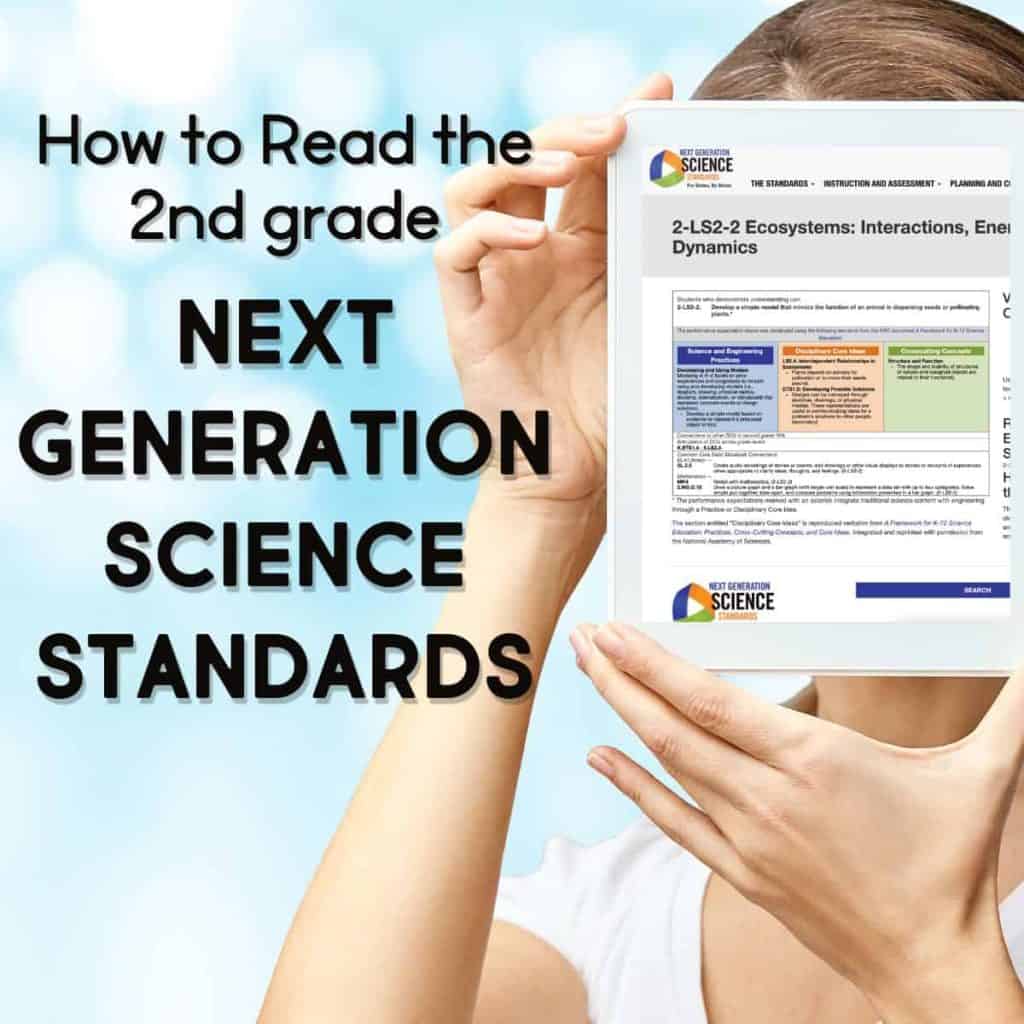
Find out more about how to read the NGSS and which parts of each standard were used to design these science stations.
Do These Science Stations Align with the Texas TEKS?
Yes. There is full alignment between the NGSS and TEKS, showing which standards in each framework match. All of the science station units are linked in the alignment so you can find the right stations for your TEKS standards quickly.

Take a look at how the standards are aligned.
Can I Buy Individual Stations, or Do I Have to Buy the Whole Bundle?
You can buy either. The original design had 8 science station units — one per NGSS standard — with 8 stations in each unit. Because many teachers were only using part of each unit, the stations were also made available individually. Individual stations are sold only on TPT. The full units and the yearlong bundle are available both on TPT and here on the website. Buying a unit bundle or the yearlong bundle saves money compared to purchasing stations individually.
Here is how they are broken out:
- INDIVIDUAL Science Station
- UNIT Bundle by NGSS Standard (8 Stations in each UNIT)
- DOMAIN Bundle (Physical Science, Life Science, Earth Science)
- YEARLONG Bundle
While you can purchase each science station individually, you save more money by purchasing the science UNITS or a larger BUNDLE.
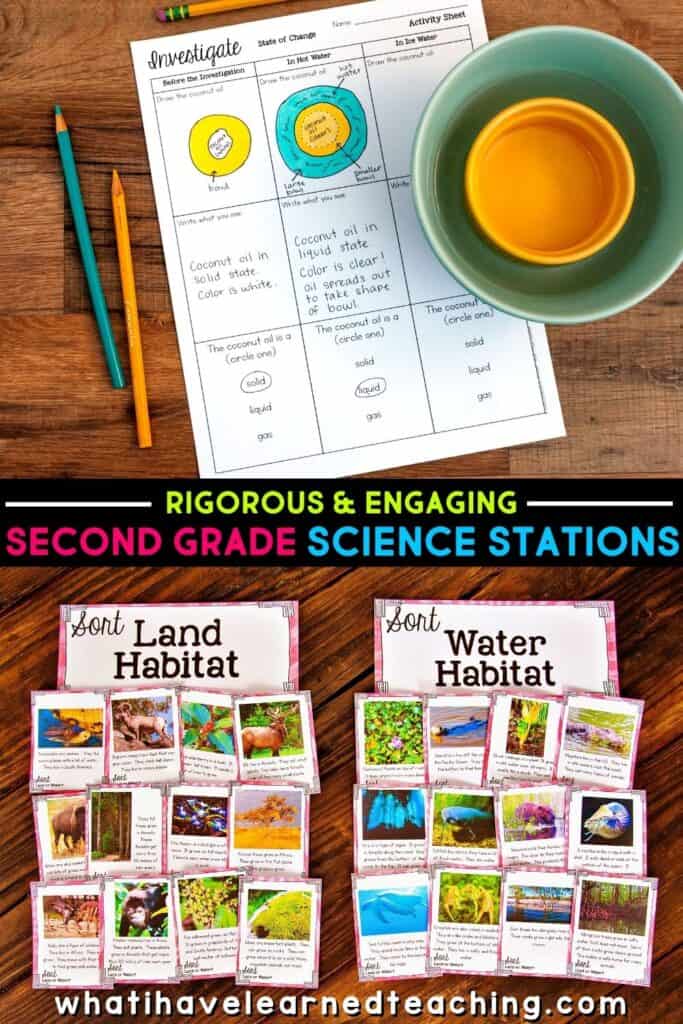
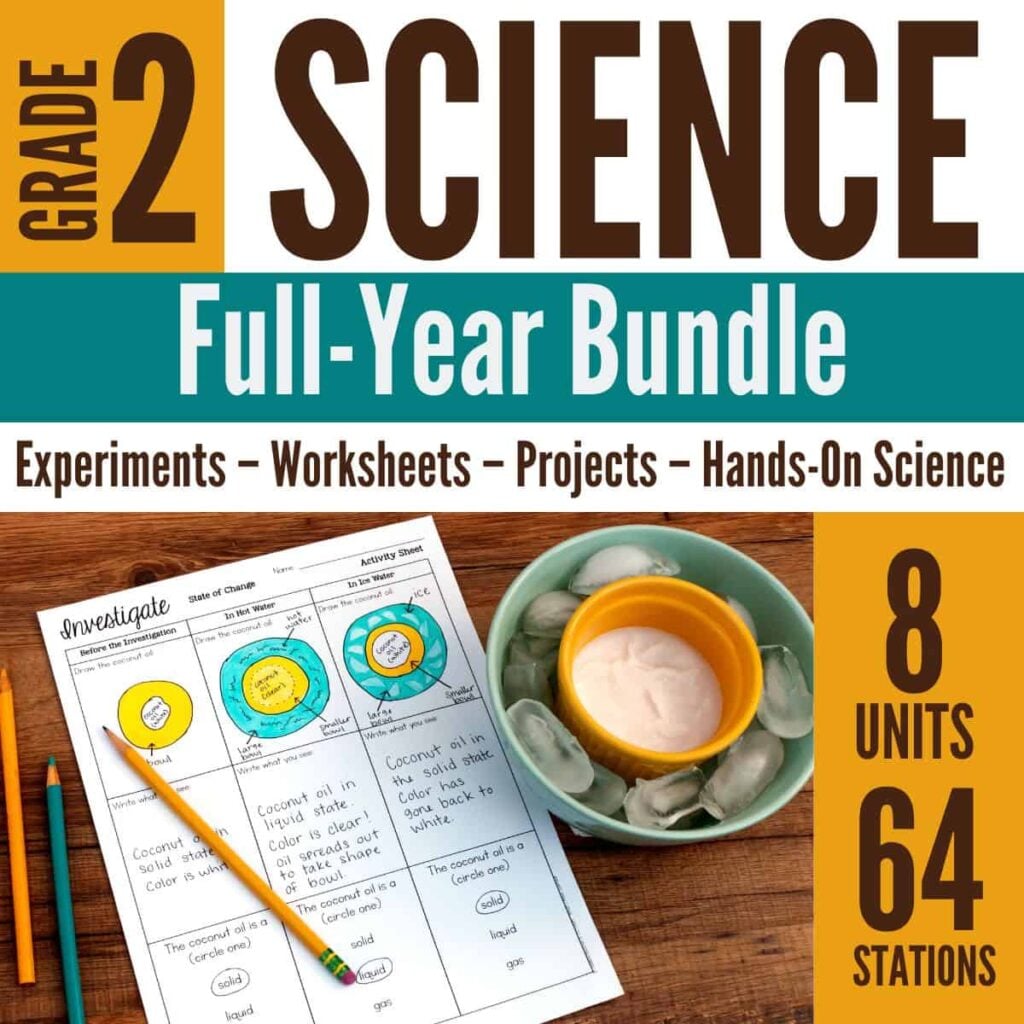
Second Grade Science Stations BUNDLE – ALL Next Generation Science Stations
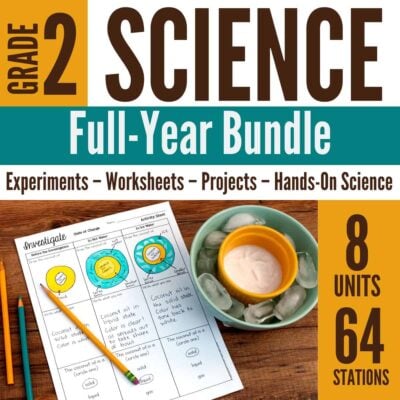
A BUNDLE of 64 Second Grade Science Stations that cover ALL Next Generation Science Standards for second grade. Engage your students with hands-on science activities that meet the standards.
What are the Eight Different Science Stations?
Each unit has the same 8 station types:
- Watch — Students watch one of two videos and answer comprehension questions.
- Play — Students play a video game or complete a board game, word search, or crossword about the topic.
- Investigate — Hands-on activity with a reading passage and differentiated questions.
- Diagram — Students label or complete a diagram, with a reading passage and differentiated questions.
- Read — Reading passage with differentiated questions.
- Model — Students build or create a model, with a reading passage and differentiated questions.
- Explore — Hands-on exploration activity with a reading passage and differentiated questions.
- Sort — Students sort cards or pieces to demonstrate understanding, with a reading passage and differentiated questions.
Every unit also includes vocabulary cards, checklists, and audio versions of all reading passages for students who need listening support.

How do I use the Science Stations in my Classroom?
There is no single right way. Most teachers use them as science centers where small groups rotate through stations over the course of a week or two. Some teachers use one station at a time in a whole-group format — working through each station together as a class lesson rather than as independent centers. The stations also work well in a distance learning setup through Google Classroom.

Teaching with science stations? Here are some ways to set them up for student success!
Are there Digital Science Stations?
Yes. Every station comes with a digital version for Google Classroom.
- Google Forms — Reading passages, differentiated questions, and video links available for all stations.
- Google Slides — Activity directions and recording worksheets available for the Investigate, Diagram, Model, Explore, and Sort stations.
Note: many of the core activities are hands-on and require physical materials. The digital versions are a complement, not a replacement, for the hands-on work.
Second Grade Science Station UNIT BUNDLES
There are 8 Second Grade Science Station UNIT BUNDLES. Directly below are links to purchase each unit. Keep scrolling to find more links and in-depth details and photographs about each UNIT BUNDLE.
-

-
-
-
-
-
-
-
Product on saleSecond Grade Science Stations BUNDLE – ALL Next Generation Science StationsOriginal price was: $173.43.$109.44Current price is: $109.44.
-
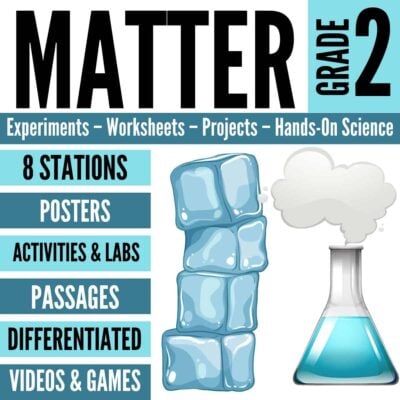

What Science Topics are Taught in Second Grade?
Below are the Second Grade Science Stations UNITS or TOPICS that are aligned with the Next Generation Science Standards. They are organized by UNIT BUNDLE and include links to more photographs and in-depth descriptions of some station.
Physical Science Stations for Second Grade
The physical science resources for second grade focus on states of matter and reversible and irreversible changes.
Structure and Properties of Matter – NGSS 2-PS1.A
In the Structure and Properties of Matter Science Station Unit students play games, watch videos and explore the properties of matter. Students explore how matter changes states by heating and cooling. They diagram hardness and used a hardness chart. Students model how small pieces can be put together differently to make different things and explore the properties of air.

Here are details about the Structure and Properties of Matter SORT for second grade.

Reversible & Irreversible Changes – NGSS 2-PS1.B
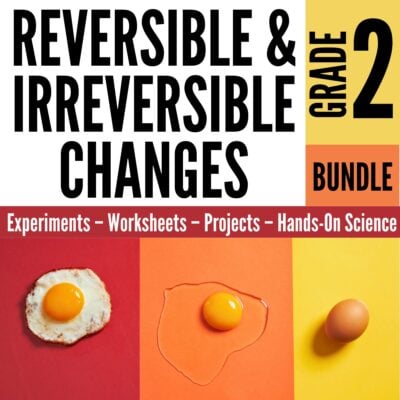
In the Reversible and Irreversible Changes Science Station Unit students play games, watch videos and explore the how matter changes states and whether it can change back. Students read about reversible and irreversible changes and experiment with food to show whether or not it can change back. Included are four hands-on yummy activities, and four other stations that do not include food.
Life Science Stations for Second Grade
The life science resources for second grade focus on the growth of plants and habitats.
Green and Growing – NGSS 2-LS2.A
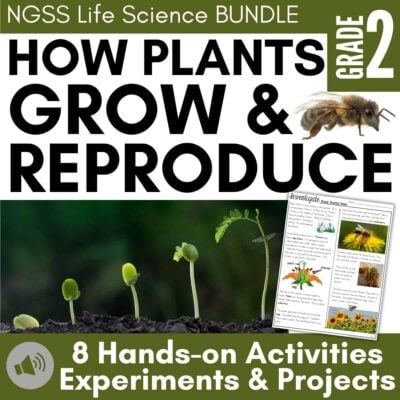
This How Plants Grow Science Station Unit is about the biology and ecology of plants. Students learn about what plants need to grow, how they reproduce, and the role of pollinators in their life cycle. It includes 8 different science stations where students deepen their understanding of plant growth and reproduction.
Here are details about the Green and Growing SORT for second grade.

Biodiversity & Humans – Habitats – NGSS 2-LS4.D
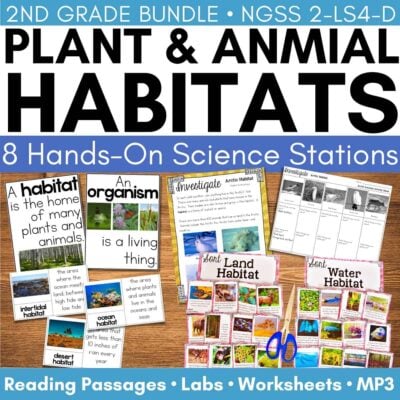
In this Habitats Unit, students learn about the biology, ecology, and climate zones of Earth’s habitats. They learn how structures of different species suit them for their environment. Students learn about the following habitats: arctic, temperate forest, intertidal, pond, desert, and land and water habitats.
Earth Science Stations for Second Grade
The earth science resources for second grade focus on plate tectonics, weathering, erosion, maps, and surface water.
History of the Planet Earth- The Changing Earth – NGSS 2-ESS1.C
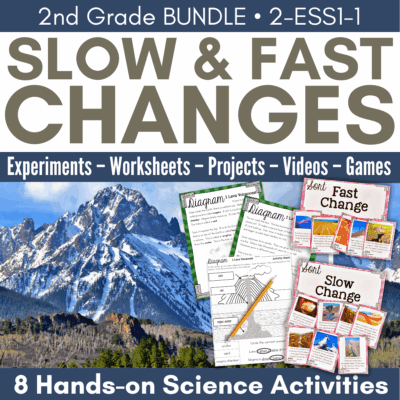
In this Changing Earth Unit students learn how plate tectonics, earthquakes, volcanoes, weathering, and erosion have shaped our planet Earth. Students learn how some events cause changes quickly and some events cause change slowly.
Here are details about the Slow and Fast Landform Changes SORT for second grade.

Earth Materials and Systems – Wind and Water Erosion and Weathering – NGSS 2-ESS2.A
This Wind and Water Changes Unit is about how wind and water change the shape on land. It focuses on weathering and erosion caused by wind and water.
Here are details about the Wind and Water Changes SORT for second grade.
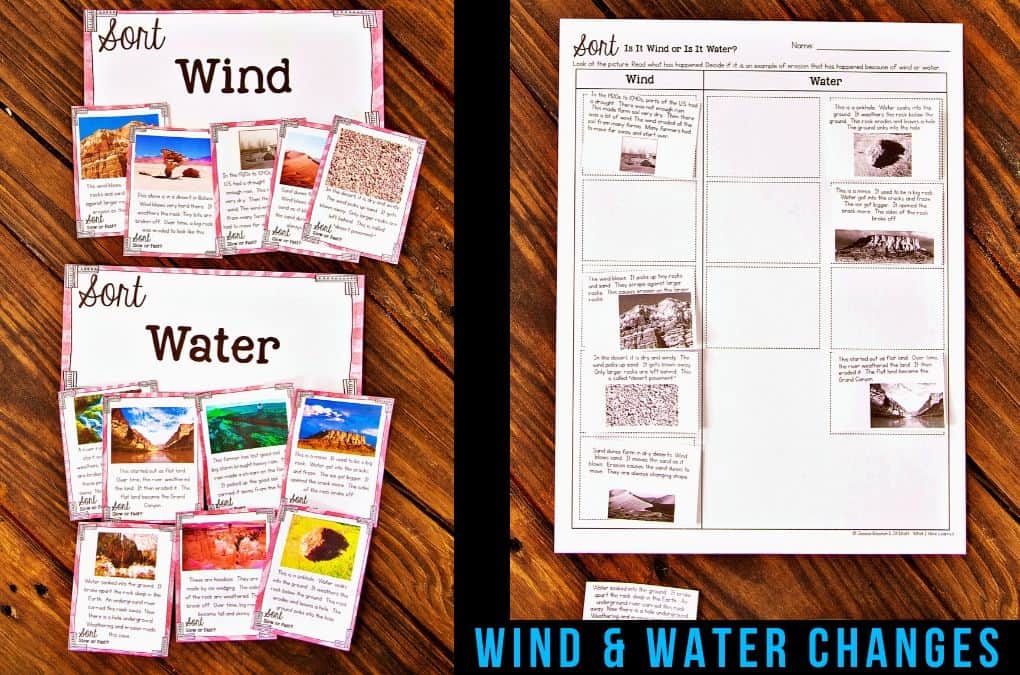
Plate Tectonics and Large-Scale System Interactions – Maps – NGSS 2-ESS2.B
This Shape of Our World Unit students learn about how maps show where things are located. Students will learn about how different maps show different types of land and water features. Students deepen their understanding of maps, the globe, reading maps, plates, bodies of water, and landforms.
The Role of Water in Earth’s Surface Processes – NGSS 2-ESS2.C
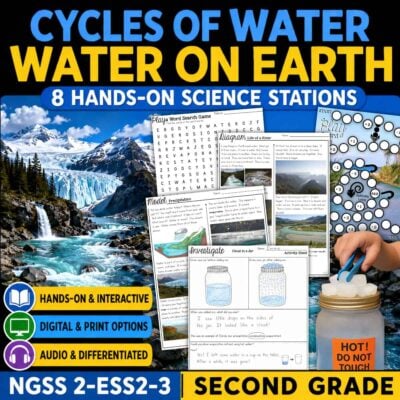
This Water on Earth Unit is about the different places water is found on Earth, including oceans, rivers, lakes, and ponds, as well as the forms of water. Students will learn about the role of the water cycle on Earth and the state of water in different locations on Earth.
Here are details about the Types of Water on Earth SORT for second grade.

Where can I get the Second Grade Science Stations?
You can purchase the NGSS Second Grade Science Stations on my website or on Teachers Pay Teachers.
Check out the 3rd grade NGSS Science Stations or the 4th grade set of science stations!
-
-
-
-
-
-
-
-
Product on saleSecond Grade Science Stations BUNDLE – ALL Next Generation Science StationsOriginal price was: $173.43.$109.44Current price is: $109.44.
-
Jessica BOschen
Jessica is a teacher, homeschool parent, and entrepreneur. She shares her passion for teaching and education on What I Have Learned. Jessica has 16 years of experience teaching elementary school and currently homeschools her two middle and high school boys. She enjoys scaffolding learning for students, focusing on helping our most challenging learners achieve success in all academic areas.