


Structure and Properties of Matter Science Stations for Second Grade NGSS
$14.35
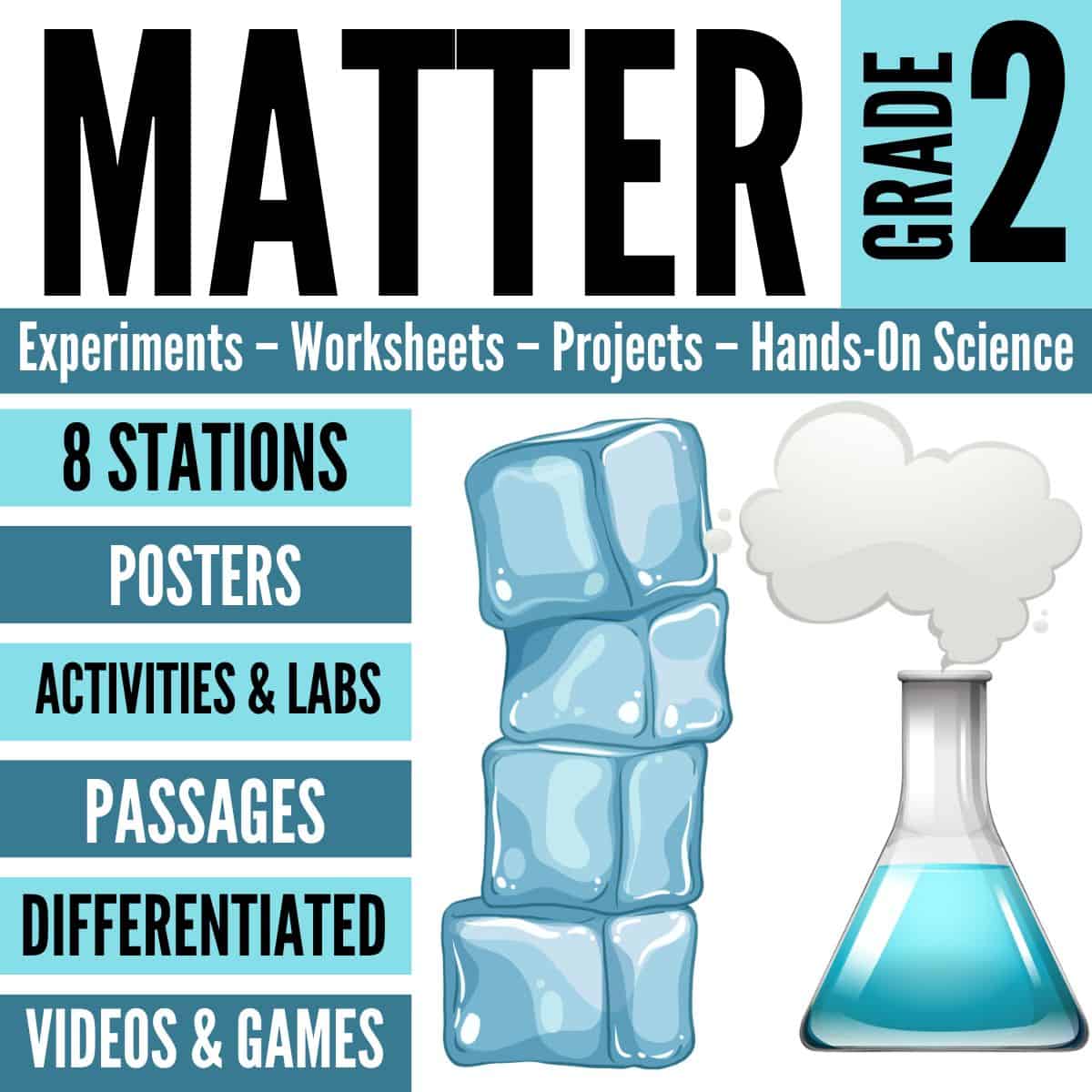
Teach second grade students about the structure and properties of matter with 8 engaging NGSS-aligned science stations. Students explore solids, liquids, gases, observable properties, changes in states of matter, classifying materials, modeling with small pieces, and choosing materials for a purpose.
Help students deepen their understanding of matter with these Structure and Properties of Matter Science Stations for Second Grade. This station set includes 8 interactive science stations that guide students through key concepts related to the properties and states of matter, how matter can be changed, and how objects can be classified by their observable properties.
Each station gives students a different way to interact with the content through videos, games, reading passages, investigations, diagrams, models, exploration, sorting, and written responses. These stations are designed to meet DCI 2-PS1.A and support second grade NGSS standards for matter and materials.
What’s Included
This Structure and Properties of Matter resource includes:
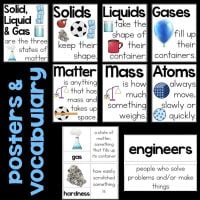
- Big Idea Posters that explain the core ideas
- Vocabulary cards in two formats
- Vocabulary cards with pictures
- Vocabulary cards without pictures
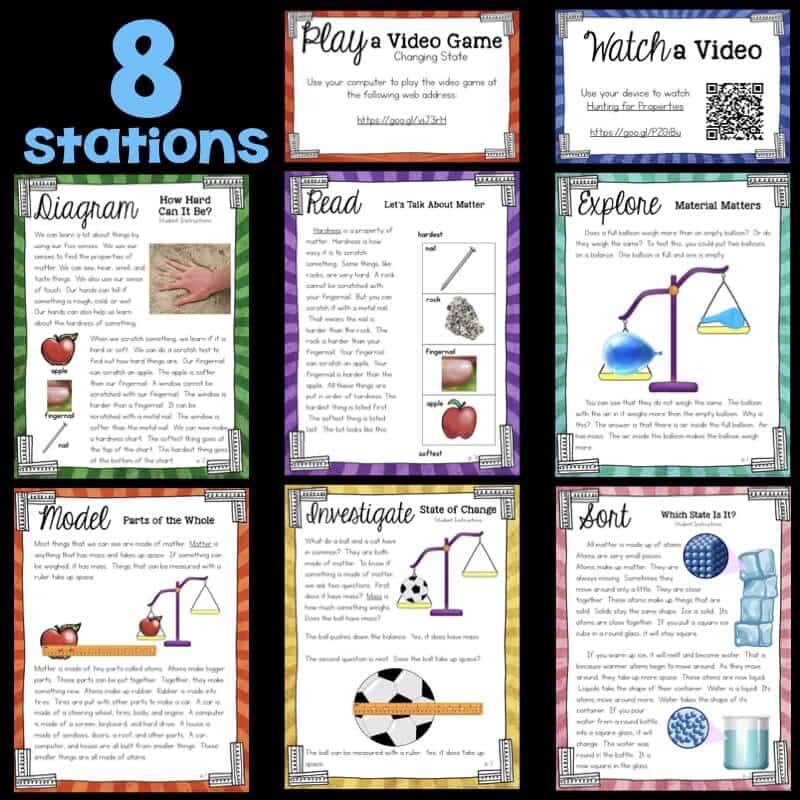
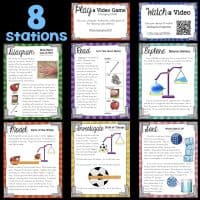
- 8 science stations
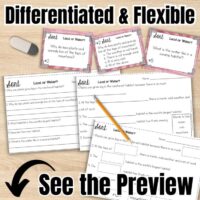
- Differentiated response options for each station
- Worksheets and science journal response options
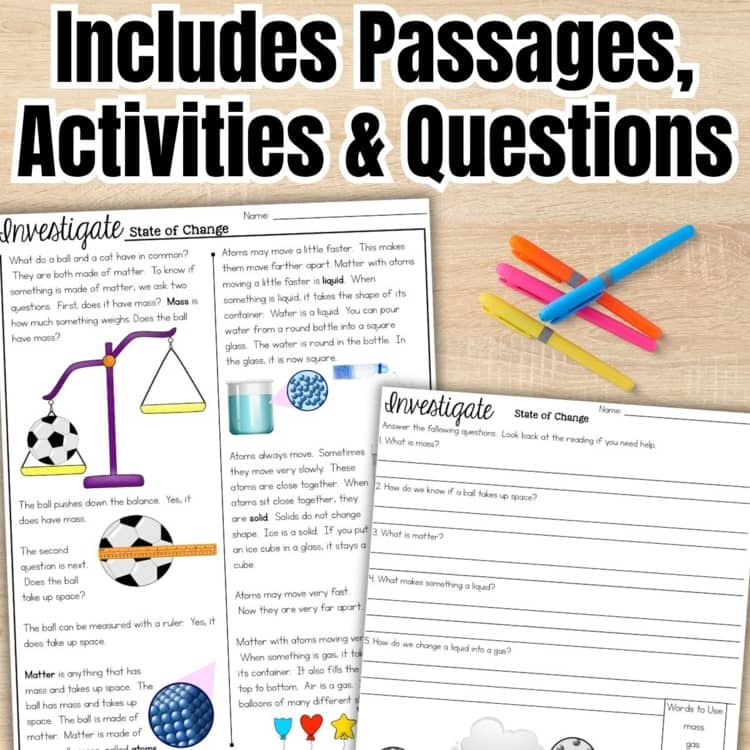
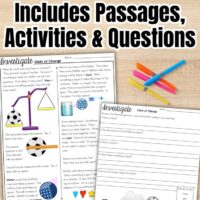
- Reading passages
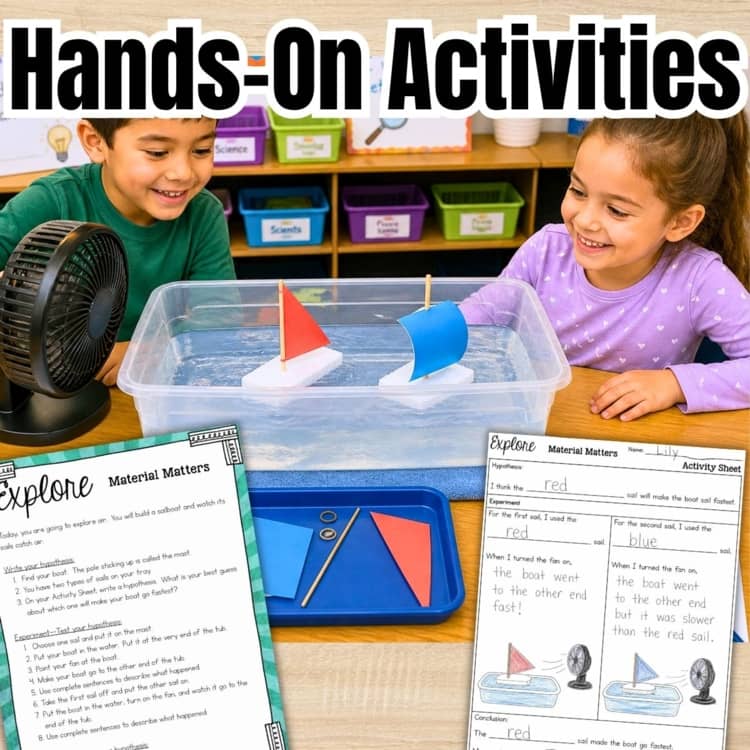
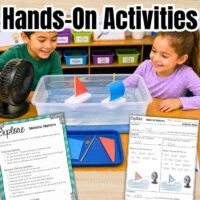
- Hands-on investigations
- Diagrams, models, sorting activities, videos, and games
Science Stations Included
Watch
Students watch one of two videos about matter and the properties of matter, then answer questions to reinforce what they learned.
Play
Students play an interactive game to learn about volcanoes or what happens when matter changes state. Students then answer questions to review the concepts.
Investigate
Students read about states of matter and changes in states of matter. Then they change the state of coconut oil or butter to observe how matter can change. Students answer questions based on their investigation.
Diagram
Students read about properties of matter and hardness. Then they create a diagram in the form of a hardness chart and answer questions to show what they learned.
Read a Passage
Students read about properties and states of matter, then answer questions to reinforce their understanding.
Model
Students read about how small pieces can be rearranged to make different things. Then they build a model by rearranging paper shapes into a new figure and answer questions about the activity.
Explore
Students read about mass and matter, then explore matter by observing the properties of air. Students answer questions to connect their observations to the science concept.
Sort
Students read about the states of matter, sort pictures into categories, and answer follow-up questions about solids, liquids, and gases.
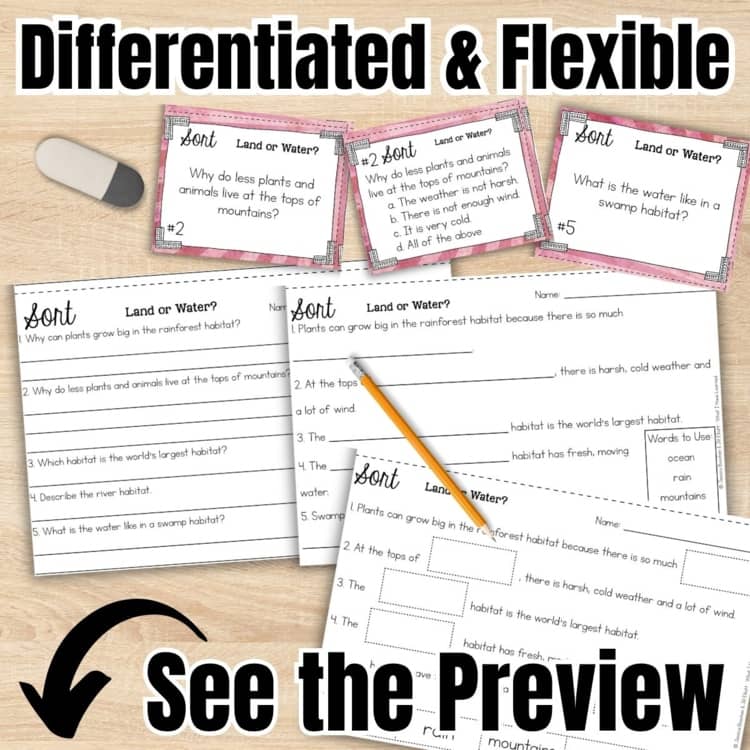
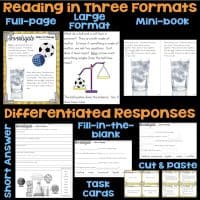
Differentiated Response Options
Each station includes four different response formats:
- Short answer questions
- Fill-in-the-blank questions
- Task cards with short answers
- Task cards with multiple choice
The response options are similar in content, so you can choose the format that best fits your students. Students may respond in science journals, or you can use the included worksheets.
Skills Covered
Students practice and build understanding of:
- Properties of matter
- States of matter
- Solids, liquids, and gases
- Observable properties
- Classifying materials
- Changing states of matter
- Temperature and matter
- Hardness as a property
- Mass and matter
- Properties of air
- Choosing materials for a purpose
- Rearranging small pieces to make new objects
- Making observations
- Using models
- Sorting and categorizing
- Reading science texts
- Communicating scientific understanding
Ways to Use This Resource
These matter science stations are flexible and easy to fit into your science block. Use them for:
- Second grade NGSS science lessons
- Science station rotations
- Small group activities
- Whole-class rotations
- Hands-on science investigations
- Science centers
- Science journal work
- Matter unit review
- Independent or partner work
- Early finisher activities
Each station is designed to last about 15–20 minutes. Students can complete one station per day for 8 days, two stations per day for 4 days, or another rotation schedule that works for your classroom.
NGSS Standards Connection
This station set supports second grade NGSS standards, including:
- 2-PS1-1: Plan and conduct an investigation to describe and classify different kinds of materials by their observable properties.
- 2-PS1-2: Analyze data from testing materials to determine which materials have the properties best suited for an intended purpose.
- 2-PS1-3: Make observations to explain how an object made of small pieces can be taken apart and made into a new object.
These standards connect to DCI 2-PS1.A, which focuses on different kinds of matter, solids and liquids, observable properties, materials suited for different purposes, and building objects from a small set of pieces.
Science and Engineering Connections
The Investigate, Diagram, and Explore stations connect to engineering design concepts by encouraging students to ask questions, make observations, gather information, and think about how materials and properties relate to problems and solutions.
This resource also supports crosscutting concepts such as:
- Patterns
- Cause and effect
- Energy and matter
- Connections between science, engineering, technology, and the designed world
Integration with Other Science Stations
This station set connects well with 2-PS1.B: It’s a Matter of Change. This resource focuses on changes in states of matter as a physical property, while 2-PS1.B explores changes in matter in the context of chemical reactions.
Why Teachers Love It
Teachers love this resource because it gives students multiple ways to learn about matter. Students do not just read about the structure and properties of matter—they watch, play, investigate, diagram, model, explore, sort, and explain their thinking.
The differentiated response options make it easier to meet student needs, while the station format keeps students engaged and actively involved in science learning.
These Structure and Properties of Matter Science Stations for Second Grade are a hands-on NGSS-aligned resource for teaching properties of matter, states of matter, solids, liquids, gases, observable properties, classifying materials, changing states, and building objects from small pieces. With 8 science stations, Big Idea Posters, vocabulary cards, differentiated responses, reading passages, models, sorting activities, and hands-on investigations, this resource is perfect for 2-PS1.A matter lessons, second grade science centers, station rotations, and NGSS review.
Gabriela V. –
Kids loved the visual and enjoyed the handouts. It was user friendly.
Mindy Jones-Jamison –
This was a wonderful resource to use when I was having to write lesson plans for school. This worked wonders
Melissa W. –
This was truly an amazing way to help set up this lesson.
Sarah R. –
I use this resource with mostly my 3rd graders as we do lots of study of matter and how matter changes in 3rd grade in North Carolina. My students enjoy the passages and I like having a resource to go to since my county doesn't provide anything.
Chelsea H. –
Great resource to use with my second graders. Especially my ELLs!!!!!