
Informational Writing Week 4: Using Checklists to Revise Writing
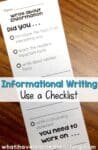
As students begin writing more independently, they need clear guidance on what to improve and how to improve it. During Week 4 of our informational writing unit, the instructional focus shifts to helping students use a checklist to review and revise their writing.

This is part of a series on informational writing. The overall structure of the unit is outlined in the overview post. Here, I’m sharing how we introduced checklists during Week 4 and how they supported students as they revised their informational paragraphs.
The Focus of Week 4
By Week 4, students are familiar with the routine for gathering information, organizing facts, and drafting informational paragraphs. This allows instruction to focus on revision rather than the writing process itself.
The goal for this week was to help students:
- understand what a strong informational paragraph includes
- use a checklist to self-check their work
- begin revising with more independence
Choosing a Topic for Practice
This week, students wrote about ladybugs. As in previous weeks, the animal itself was not the focus. Ladybugs provided familiar, manageable content so students could concentrate on learning how to revise their writing using a checklist.
Day 1 & 2: Gathering and Organizing Information
At the beginning of the week, students gathered information about ladybugs through brainstorming, reading, and watching short videos. We recorded facts together using a circle map.

We also experimented with organizing information using webs. This provided useful insight into how students handle moving information between formats.


For this group of learners, creating webs added an extra layer of difficulty that distracted from the writing goal. This reinforced why fact sorts are often a better option for reducing the physical demands of writing and keeping the focus on organization and ideas.
Day 3: Introducing the Checklist
Midweek, we paused our content work to focus on how to use a writing checklist. This was not a new concept for students, as we had used a similar format during opinion writing earlier in the year.

Using student-written paragraphs from the previous week, I modeled how to read a paragraph alongside a checklist and determine whether the required elements were present. We discussed each checklist item and identified evidence in the text. Using real student writing helped make the checklist feel relevant and purposeful rather than abstract.

Day 4: Revisiting Introductions
Before writing, students worked with introductory sentences again. They sorted sample introductions by type, such as questions, facts, or descriptions, and then by topic focus. This reinforced earlier work on introductions while helping students think about how openings connect to the rest of the paragraph.

Day 5: Writing with the Checklist
On Friday, students wrote their informational paragraphs about ladybugs. Students chose whether to write about appearance or life cycle and selected an introductory sentence that matched their topic.
As students wrote, the checklist served as a reference point. Instead of asking, “Is this good?” students were able to check whether their paragraph included the required elements and revise accordingly.


Student writing from this week shows growth in structure and clarity. While there is still work to do, students are beginning to apply the checklist independently, which is the long-term goal.
Why This Work Matters
Learning to revise with a checklist helps students take ownership of their writing. Rather than relying on teacher feedback alone, students begin to understand what quality writing looks like and how to improve their work step by step. These skills continue to develop in later weeks as students apply checklists with increasing independence.
Looking Ahead
In Week 5, the focus shifts to organizing facts within a paragraph so students can strengthen the structure and flow of their informational writing.
Informational Writing Resources
This post is part of a series about Informational Writing. Throughout the series, I show you how I teach informational Writing in the classroom by scaffolding instruction for my students. Here is a list of all the posts in the series:
- Informational Writing Overview – Unit structure and instructional routine
- Week 1: Building the Informational Writing Routine (Sea Turtles)
- Week 2: Introducing the Topic (Spade-Foot Toad)
- Week 3: Finding and Ordering Related Facts (Wolves)
- Week 4: Using a Checklist to Revise Writing (Ladybugs)
- Week 5: Organizing Facts Around a Concept (Bird Migration)
- Week 6: Applying the Full Informational Writing Process (Lionfish)
- Other tools: Genius Paragraph and Bats
The lessons shown in this series are organized in my Informational Writing Tools resource. It includes fact sorts, graphic organizers, checklists, and outlines that support each week of instruction. In this resource, I provide the fact sorts, circle maps, links, and an outline of how I taught these six weeks of informational writing lessons. Also included are checklists and a rubric to use with your students.

Informational Writing Tools for Elementary Animal Reports and Paragraph Writing
Support your elementary informational writing unit with ready-to-use informational writing tools, sentence sorts, graphic organizers, anchor charts, checklists, publishing pages, and report templates designed to help students plan, organize, and write informational paragraphs and animal reports.
Free Informational Writing Resource
If you’d like to try this approach in your classroom, you can start with a free informational article about frogs. It includes a two-page article with photographs, a text-only version, QR codes, and a fact sort.

Do you need engaging informational texts that your elementary students will actually want to read?
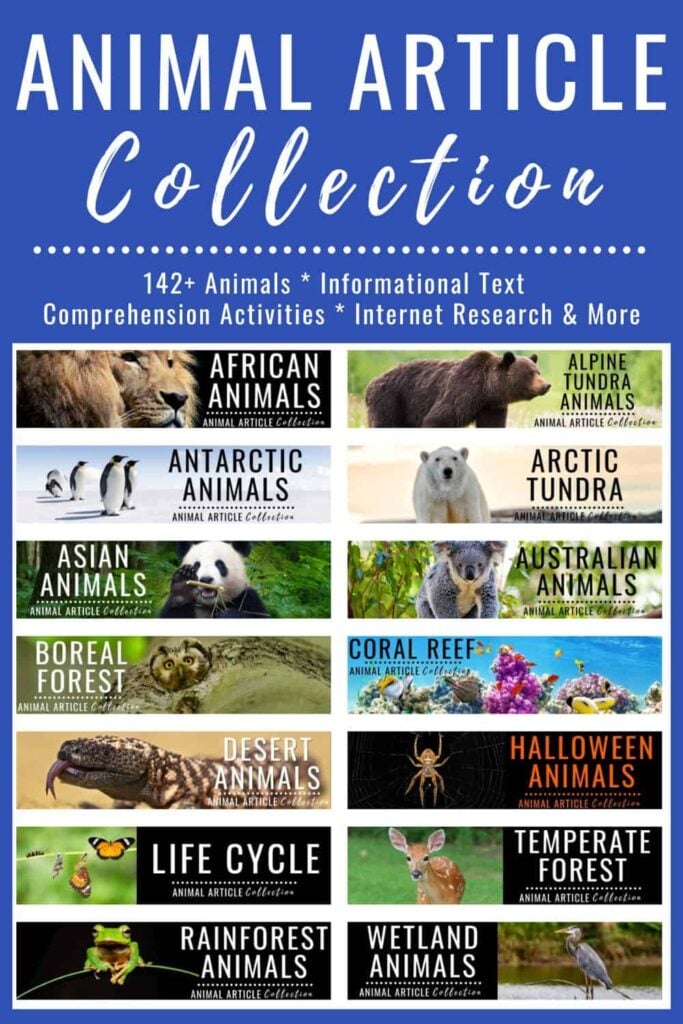
The Animal Article Collection includes 142+ animal articles spanning 14 ecosystems, complete with reading comprehension and structured writing activities. Students can choose their animal while building skills in informational text, research, and report writing.
Jessica BOschen
Jessica is a teacher, homeschool parent, and entrepreneur. She shares her passion for teaching and education on What I Have Learned. Jessica has 16 years of experience teaching elementary school and currently homeschools her two middle and high school boys. She enjoys scaffolding learning for students, focusing on helping our most challenging learners achieve success in all academic areas.