
Informational Writing Week 5: Organizing Facts Around a Concept
As students prepare for more independent informational writing, they need opportunities to organize facts around a clear idea rather than just a specific animal. During Week 5 of our informational writing unit, the focus shifts to organizing information around a concept so students can see how facts work together to support a topic.

This post is part of a larger series on informational writing. The overall structure of the unit is outlined in the overview post. Here, I’m sharing how we focused on organizing facts during Week 5.
The Focus of Week 5
By this point in the unit, students are familiar with gathering information, sorting facts, and writing informational paragraphs. Week 5 builds on that foundation by asking students to organize facts around a broader concept rather than a single animal.
Because our upcoming writing assessment includes migration, I wanted students to understand the concept before asking them to apply it to butterflies. Instead of introducing migration and a new animal at the same time, we focused solely on bird migration.
Choosing a Topic for Practice
Bird migration provided a familiar and accessible context for studying migration. Students regularly see birds flying overhead, which makes it easier to discuss where birds go, when they migrate, and how migration works.
The goal was not mastery of bird facts, but practice organizing information around a shared idea.
Day 1: Gathering Facts About Migration
We began by creating a circle map to record what students learned about bird migration. As a class, we read the book How Do Birds Fly and watched short videos, adding facts to the map as we went.
I intentionally wrote facts with enough spacing so they could be easily cut apart the following day. This allowed us to move directly from note-taking to hands-on organization without rewriting information.

Day 2: Sorting and Organizing Facts
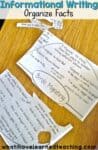
On Day 2, students worked in pairs to cut apart the facts from the circle map and sort them into categories. For this sort, we used the headings Where, When, and How to organize information about migration.
Because the headings were question words, some students initially needed clarification. Modeling examples and revisiting directions helped students understand that the categories described types of information, not questions they needed to answer.
Once students understood the structure, they were able to group facts logically. Most facts fit clearly into one category, with some overlapping ideas, which led to useful discussions about how information connects.


Day 3: Writing Introductory Sentences
On this shorter instructional day, we focused on writing introductory sentences. Using sentence stems, students practiced writing both questions and statements to introduce the topic of migration.
- Have you ever seen _________?
- Did you know that _________?
- Do you ever wonder why ______?
- It’s fascinating that _________.
- Let’s explore how ___________.
Students organized their introductions using a simple T-chart, separating questions from statements. This helped them think intentionally about how to open their informational paragraphs.
Days 4 & 5: Writing Informational Paragraphs
For their final paragraphs, students selected one introductory sentence and used their sorted facts to write an informational paragraph about bird migration. Most students completed their drafts on Day 4 and used additional time to revise and improve clarity.
Writing about migration was more challenging than writing about a single animal, but this challenge was intentional. Organizing information around a concept required students to think carefully about sentence structure, subjects, and how ideas connect.
This week also allowed for a gradual release of responsibility. Instead of working from typed sentence strips, students wrote more of their own sentences, preparing them for the upcoming assessment.
Why This Work Matters
Organizing facts around a concept helps students move beyond listing information. This work supports stronger paragraph structure and prepares students to write about more complex topics. By focusing on organization before assessment writing, students gain confidence and flexibility in how they approach informational tasks.
Looking Ahead
In Week 6, students apply everything they have learned as they write informational paragraphs with greater independence and attention to structure.
Informational Writing Resources
This post is part of a series about Informational Writing. Throughout the informational Writing series, I show you how I teach informational Writing in the classroom by scaffolding instruction for my students. Here is a list of all the posts in the series:
- Informational Writing Overview – Unit structure and instructional routine
- Week 1: Building the Informational Writing Routine (Sea Turtles)
- Week 2: Introducing the Topic (Spade-Foot Toad)
- Week 3: Finding and Ordering Related Facts (Wolves)
- Week 4: Using a Checklist to Revise Writing (Ladybugs)
- Week 5: Organizing Facts Around a Concept (Bird Migration)
- Week 6: Applying the Full Informational Writing Process (Lionfish)
- Other tools: Genius Paragraph and Bats
The lessons shown in this series are organized in my Informational Writing Tools resource. It includes fact sorts, graphic organizers, checklists, and outlines that support each week of instruction.
In this resource, I provide the fact sorts, circle maps, links, and outline of how I taught these six weeks of informational writing lessons. Also included are checklists and a rubric to use with your students.

Informational Writing Tools for Elementary Animal Reports and Paragraph Writing
Support your elementary informational writing unit with ready-to-use informational writing tools, sentence sorts, graphic organizers, anchor charts, checklists, publishing pages, and report templates designed to help students plan, organize, and write informational paragraphs and animal reports.
Free Informational Writing Resource
If you’d like to try this approach in your classroom, you can start with a free informational article about frogs. It includes a two-page article with photographs, a text-only version, QR codes, and a fact sort.

Do you need engaging informational texts that your elementary students will actually want to read?
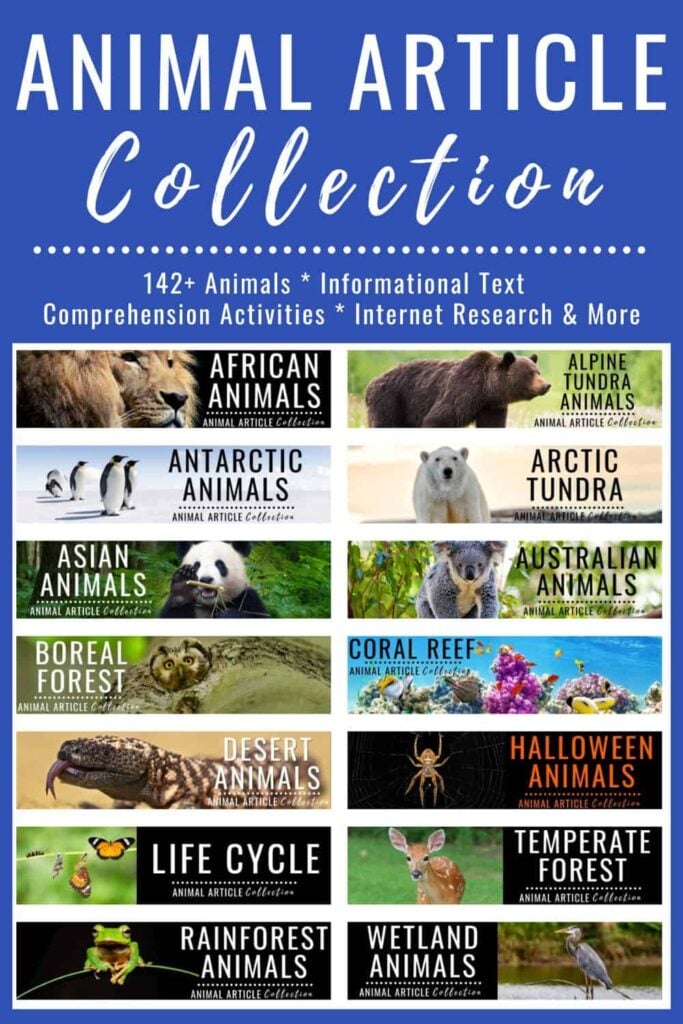
The Animal Article Collection includes 142+ animal articles spanning 14 ecosystems, complete with reading comprehension and structured writing activities. Students can choose their animal while building skills in informational text, research, and report writing.

Great lesson! Thanks for sharing!
Im trying to get my son to write a story about that he read about. I know he have short time remembering things can you please help me out
This blog was so very helpful!! I love how you taught the mini lessons based on the students’ needs. It all fit together and makes sense. I can’t wait to try this with my 3rd graders.