
How I Teach Informational Writing in Second Grade (Step-by-Step Process)
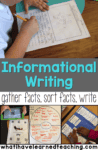
How do you teach expository writing in your classroom? I wish I could do it throughout the year thematically as we approach different content.
We can do that occasionally, but in reality, our district gives a writing assessment on a certain date, and I need to prepare students for that writing assessment. So we do a whole unit on Expository & Informational Writing.

This post shares the overall structure I use to teach informational writing in second grade, including the step-by-step process we follow each week, with links to more detailed examples and lesson-specific posts.
Why I Use Familiar Content to Teach Informational Writing
In second grade, we focus on writing about animals during our expository writing unit. Animals are familiar, concrete, and easy for students to visualize. They have clear attributes, behaviors, and life processes, which make them an accessible topic for young writers.
When students are learning a new writing structure, I want the content itself to feel manageable. If the topic is too complex, students spend their energy decoding vocabulary and facts instead of forming strong sentences and using academic language. I think of this balance as a see-saw: when the content becomes too heavy, writing skills suffer.
Using animals keeps the focus on writing. Students may learn new facts, but the topic itself is familiar enough that it doesn’t interfere with learning how to organize ideas and write clear informational paragraphs. This choice also aligns with our district writing assessment, which is based on informational writing about an animal.
Each informational paragraph typically takes about a week to complete, with fewer days needed as students become more comfortable with the routine. The same structure repeats each week, so students can focus on improving their writing rather than learning a new process. Links to specific weekly examples are included later in this post.
The Weekly Structure of Our Informational Writing Unit
Day 1: Gather Information
Day one focuses on gathering information about the animal. I elicit input from students and guide them through a short research routine.
Find out what students know
We begin with a whole-class brainstorm using a circle map to record what students already know about the animal.

Research the Topic
Next, students build background knowledge by reading an informational article and watching one or two short videos about the animal.
Take notes as we go
As we read and watch, we record notes on the circle map together.
I facilitate this note-taking to lower the cognitive load for students. My goal is not for students to collect large amounts of information or worry about spelling and mechanics. Instead, I want them to focus on learning how to write clear, organized expository paragraphs using academic language.
Detailed examples of how this looks in the classroom are shared in the weekly lesson posts linked below.
Day 2: Work with the Information
On Day 2, students work with the information they gathered by sorting facts into related categories. We often group facts by attributes, actions, or environment, adjusting categories when needed based on the focus of the text.

This step helps students organize related facts before writing. I continue to support students closely so they can focus on academic language and paragraph structure.
This organizational step supports clearer topic sentences and smoother sentence flow in informational writing.
Day 3, 4, 5: Draft, Revise, Publish
During the remaining days of the week, students draft, revise, and publish their informational paragraphs. At the start of this phase, I highlight one specific writing focus for the week, such as writing a clear topic sentence, using transition words, or expanding ideas with details.
Students apply that focus as they draft their paragraphs, using the organized facts from Day 2. Drafting typically happens on Day 3.
Next, I review student drafts and provide feedback. Students use that feedback to revise and write a final version on publishing paper. Illustrations are added once the writing is complete, often on Day 4 or 5. As students become familiar with the routine, they move through this process more efficiently and with greater independence.
This repeated drafting and revision process helps students internalize expectations for informational writing.
How This Structure Prepares Students for Writing Assessments
This structure closely mirrors the format students encounter on our informational writing assessments. Students practice gathering information from both print and video sources. By regularly working with articles and short videos, my students learn how to extract key facts from different types of media without feeling overwhelmed.
My second-grade students also practice writing one focused informational paragraph at a time. Instead of trying to manage multiple paragraphs or extended reports, they concentrate on writing a clear introduction, developing ideas with related facts, and bringing their writing to a close. This helps them understand what a strong informational paragraph looks like and sounds like before they are asked to do it independently.
Repeating the same routine each week builds confidence and independence. Students know what to expect at each stage of the process, which frees up their attention for the writing itself. By the time assessment day arrives, the structure feels familiar, and students can focus on communicating their ideas clearly rather than figuring out what to do next.
Weekly Lesson Examples
During our Informational Writing Unit, we write about one animal a week, generally, over a seven or eight-week period.
Each of the posts below shows how one specific writing skill fits into the overall informational writing process. These posts are classroom examples, not step-by-step lesson plans.
- Informational Writing Overview – Unit structure and instructional routine
- Week 1: Building the Informational Writing Routine (Sea Turtles)
- Week 2: Introducing the Topic (Spade-Foot Toad)
- Week 3: Finding and Ordering Related Facts (Wolves)
- Week 4: Using a Checklist to Revise Writing (Ladybugs)
- Week 5: Organizing Facts Around a Concept (Bird Migration)
- Week 6: Applying the Full Informational Writing Process (Lionfish)
- Other tools: Genius Paragraph and Bats
Seasonal Informational Writing Examples
- Reindeer
- Genius Paragraphs: Polar Bears
- Bats: Nonfiction Writing
Informational Writing Resources I Use
These resources support the same gather–organize–write routine described above.
Informational Writing Tools
The Informational Writing Tools {All About Animals} includes all of the sorts that you have seen in the above blog posts as well as a publishing page, graphic organizers, checklists, and weekly lessons. It’s basically all of the information from the blog posts above in one succinct product.
In the product, I go in-depth on some of the Day 3 lessons I do with students to help them create topic sentences or organize their paragraphs. This product does not include any informational articles, but it does include links to articles and videos where applicable.

Informational Writing Tools for Elementary Animal Reports and Paragraph Writing
Support your elementary informational writing unit with ready-to-use informational writing tools, sentence sorts, graphic organizers, anchor charts, checklists, publishing pages, and report templates designed to help students plan, organize, and write informational paragraphs and animal reports.
Also available is a BUNDLED Elementary Writing Tools product that has the Informational Writing Tools, Narrative Writing Tools, and Opinion Unit.
Animal Articles
Animal Articles are the articles that we use to gather information about each of the animals. I have packets for African Animals, Rainforest Animals, and Life Cycles. Coming soon are Coral Reef and Antarctic Animals.
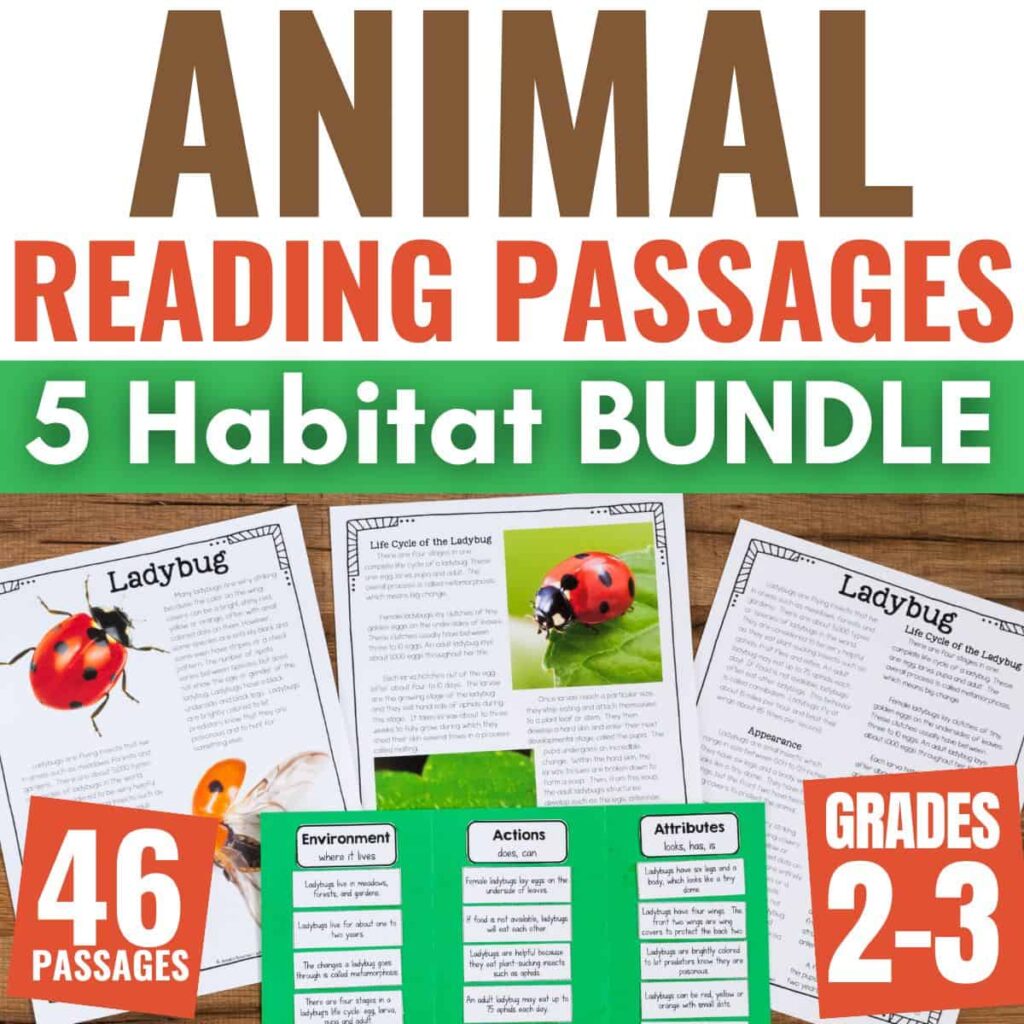
Animal Articles BUNDLE – Most Popular Sets
Animal Articles: Informational Article, QR Code Research Page & Fact Sort is a set of animal nonfiction informational articles all about wild animals. These animal articles are full of interesting facts and details that students can use during reading and writing activities in the classroom.
Do you need engaging informational texts that your elementary students will actually want to read?
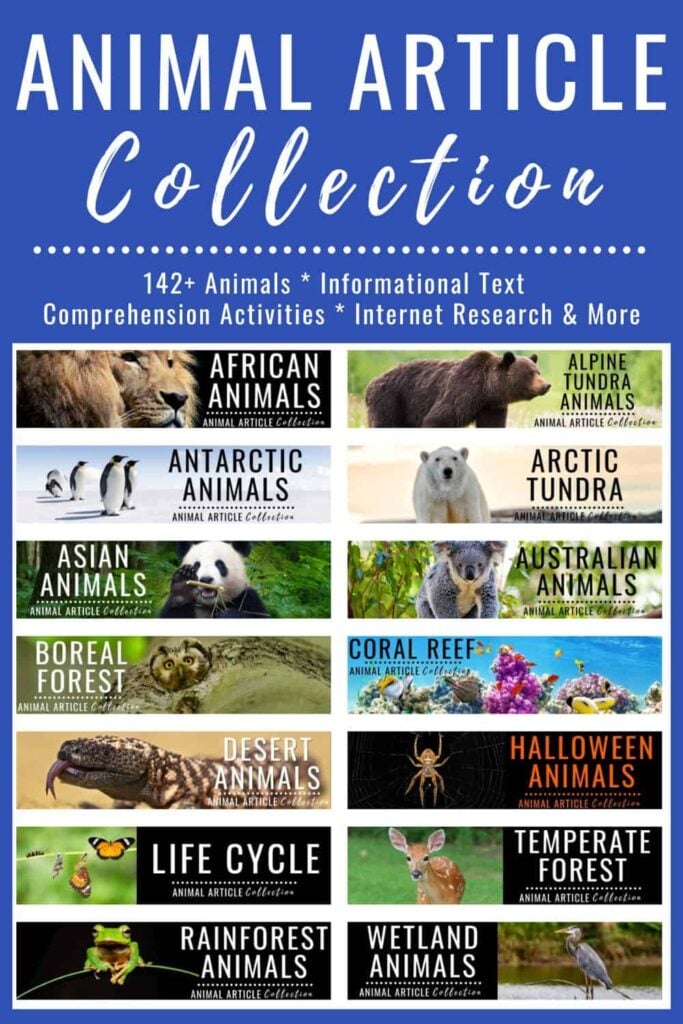
The Animal Article Collection includes 142+ animal articles spanning 14 ecosystems, complete with reading comprehension and structured writing activities. Students can choose their animal while building skills in informational text, research, and report writing.
FREE Frog Informational Article
Are you interested in a FREE resource for your Informational Writing Unit? This Animal Article includes a two-page article with color photos, a one-page article with only text, QR codes, and a fact sort.

Is this all the expository writing we do all year? No. I like to do bits of expository writing as we respond to reading or around different seasons and holidays. This is how we approach our main informational writing unit each year.

Hi there! I love your writing blogs and informational writing tips! I do have a question…when the children write, what do they have in front of them? I find that if I let them have the informational piece, they tend to copy. Please advise.
My students use the sort activity when writing their paragraphs. The sentences are pretty simple sentences at about their writing level. I do have some students copy the sentences more than others. We do lessons on how to combine simple sentences and vary sentence length. However, my lowest students need more support and some do copy sentences more than others. Since the sentences are so simple it’s hard to create original writing from them.
Hi Jessica! I love this post. I am just wondering if you take the posts down eventually or if I will have access to this for a while (I am planning on having my 1,2,3s do animal research projects closer to the end of the year. Thank you!
No, I generally don’t take posts down. It will be here for you to reference.
I love this organizer! I want to try it with my class. Do you have a sample of a final paragraph? I would love to see one.
If you click through to the posts in the series, you will see many sample final paragraphs, as well as see how they progress throughout the weeks we focused on informational writing.
Here are the links:
Thank you so much!
Thanks for sharing all this great information! My second graders are researching bats this week and are following your format. Do you have rubric that you use for your summative assessments? We’re not quite there yet, but looking ahead to the end of our trimester.
I don’t have a rubric for a summative assessment, but I have a rubric and checklist that I use for our expository writing. You can find out more info here: https://whatihavelearnedteaching.com/teach-students-to-use-a-checklist/
Thank you for this information!! This is awesome for a new teacher like me to dive into! I was wondering about how much time do you spend per day on this paragraph writing? Does this take up your whole reading block or do you have a designated writing block time? I find time management for writing is difficult as I want to give my students time to complete their writing.
It did not take up our reading block, but it did take up our writing time. We spent about 40-45 minutes on it a day, plus or minus. Finding time for writing is hard! We didn’t get to it all the time, but when I was teaching a specific genre, I did focus on it intensely for a period of time.
This was super helpful. Thank you so much.