
Helping Students Expand Informational Writing One Sentence at a Time
Many students can identify strong facts during informational writing, yet still struggle to turn those facts into clear, meaningful sentences. They know what they want to say, but not how to say it in writing.

Sentence expansion routines give students a structured way to work with language before they’re expected to write full informational paragraphs. In my classroom, I use Genius Paragraphs and Stretch a Sentence to help students practice building stronger sentences using content they already understand.
This post shares how I use these routines to support informational writing without overwhelming students.
Where This Fits in the Informational Writing Unit
Before using sentence expansion routines, students need a foundation:
- background knowledge about a topic
- a shared set of facts
- experience sorting and organizing information
I’ve shared that full process in my Informational Writing Unit series, where students practice gathering, organizing, and writing about informational topics. Once students reach that point, sentence work becomes far more productive because they are no longer inventing ideas — they are refining how those ideas are written.
Using Genius Paragraphs to Build Sentence Awareness
To help students work with sentence structure, I use the Genius Paragraph routine adapted for elementary writers.
We start with a simple sentence and gradually add layers:
- adjectives
- prepositional or adverbial phrases
- reasons or explanations
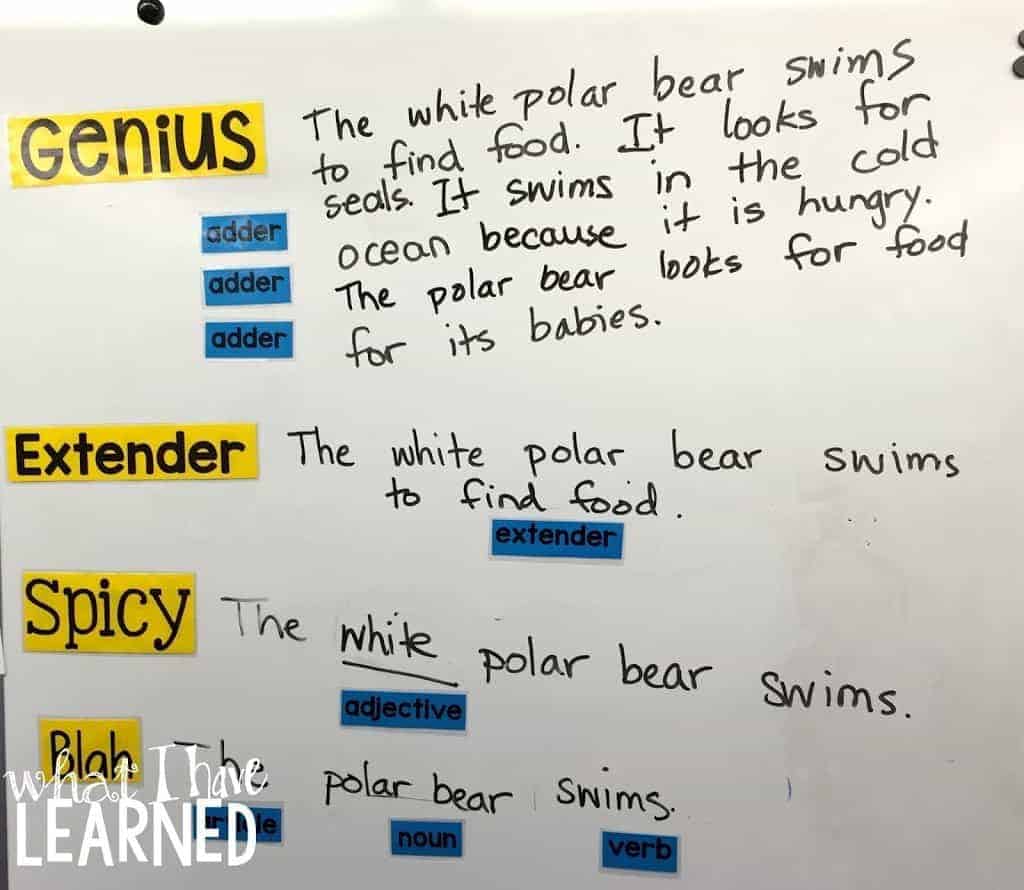
For example, during our work on polar bears:
- Simple: The polar bear swims.
- Expanded: The white polar bear swims to find food.
- Developed: The white polar bear swims in the cold ocean because it is hungry.
Working through these steps as a class allows students to hear, see, and manipulate language without the pressure of writing everything independently.
Step 1: Gathering Facts
The first step is to gather facts about the topic. In this case, we were writing about polar bears. You can read more about how we gather facts in the writing process post, in the finding-related facts post, and in the organizing facts post. For now, we just listed the facts that students knew and discovered in their research.

Step 2: Expanding Sentences
To help students be more successful with writing complex sentences, I started using the Genius Paragraph routine from Whole Brain Teaching. This routine makes sentence structure visible and gives students a clear way to add meaning without guessing.
Here is our Genius Paragraph that we completed as a whole class:
Step 3: Practicing Sentence Expansion
The next day, we practiced the same routine using slides from the WBT website. We worked through a Genius Paragraph together, trading out words and phrases to build sentences. Students got a little silly—but that engagement made the language work stick.
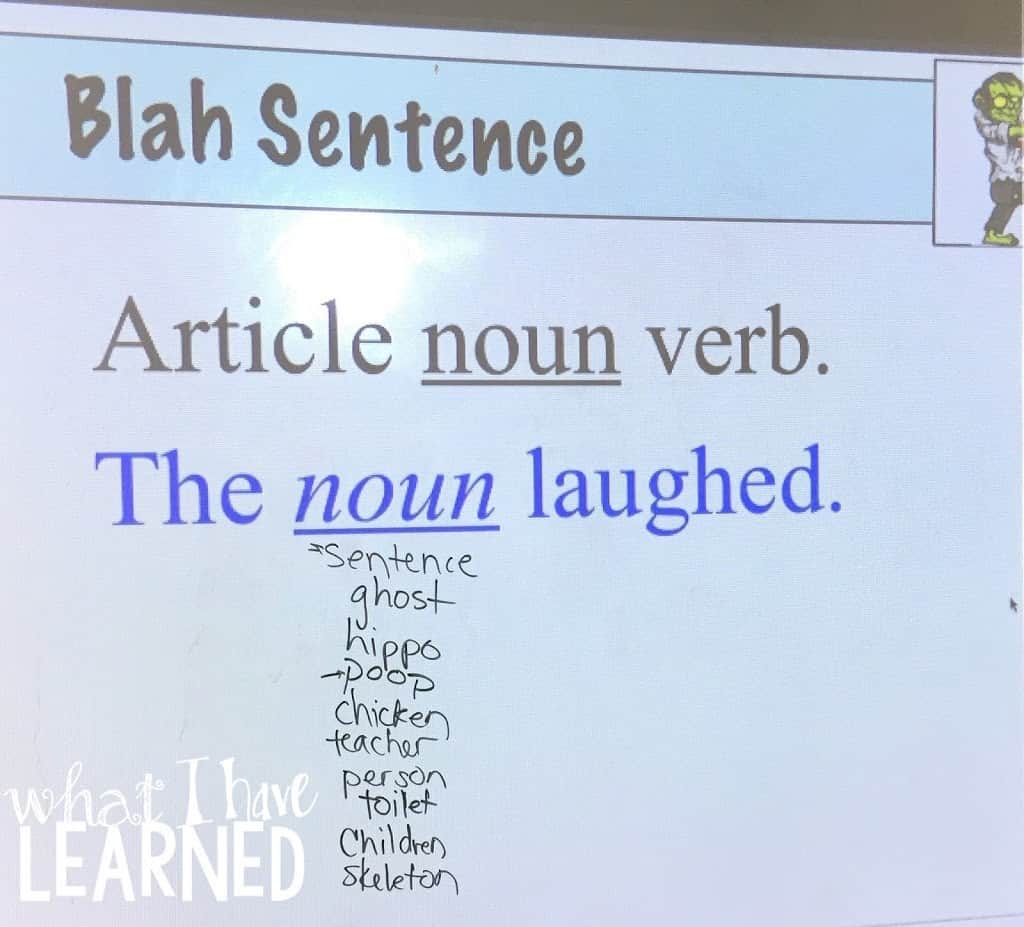
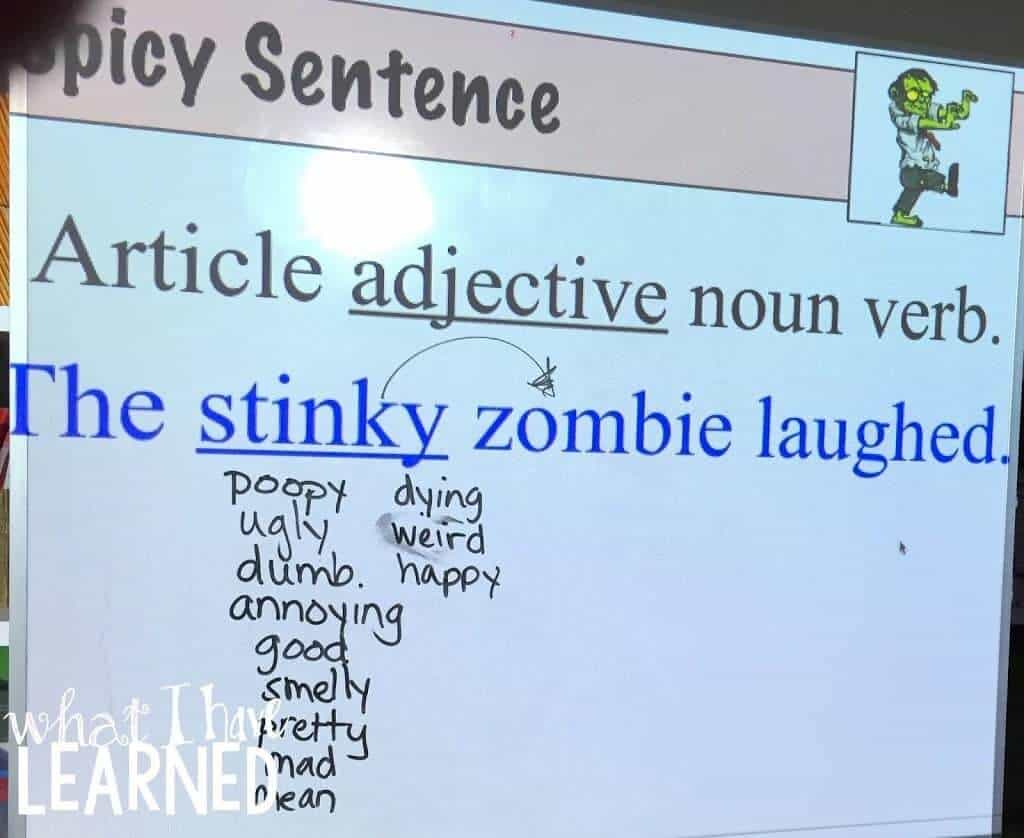
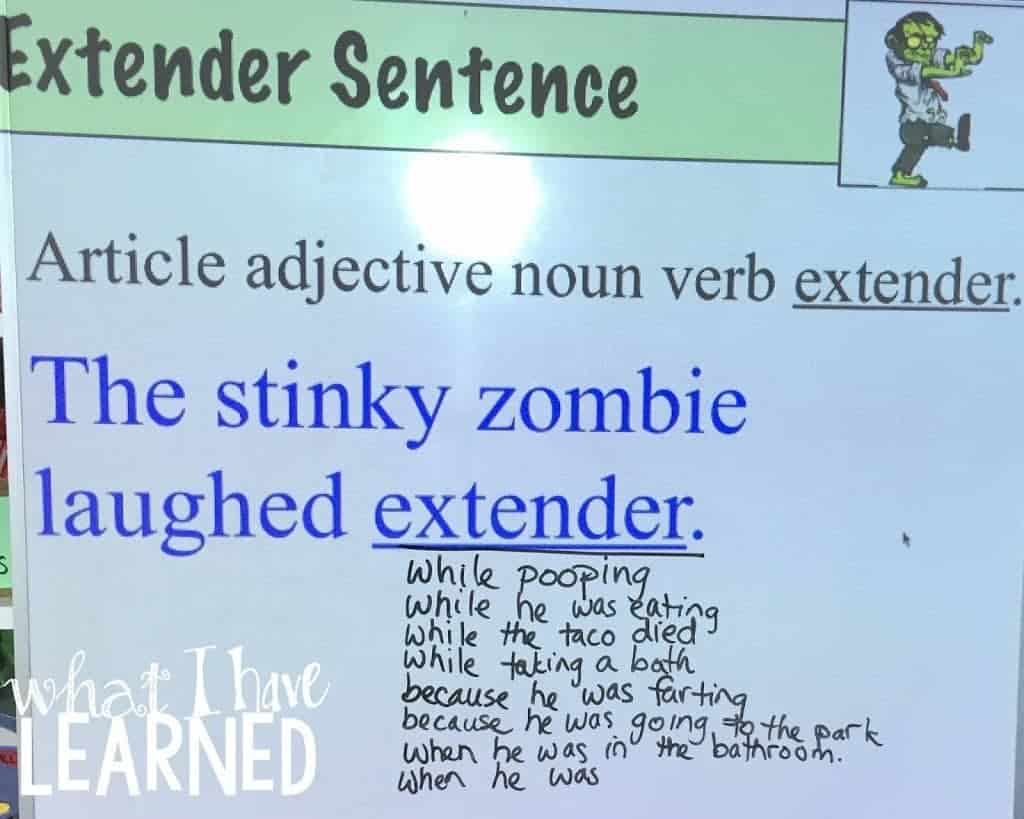
I used the given sentence in the slide as a type of sentence construction chart, where we just traded out the word or phrase.
Why Sentence Expansion Helps Informational Writing
Most of my students are English learners, and extending sentences does not come naturally. Asking them to “add more detail” is often too vague.
Sentence expansion routines:
- reduce language guesswork
- keep the focus on meaning
- connect directly to informational content
Because students already understand the facts, they can focus on how sentences work, not on generating new ideas.
Applying Sentence Work to New Topics
Once students understand the routine, we apply it to different informational topics.
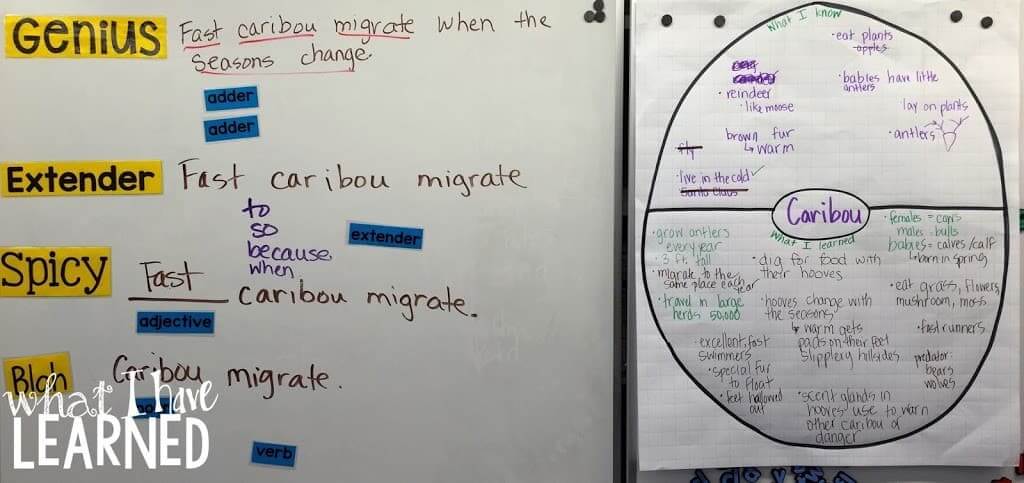
When we studied caribou, students worked with the same sentence structure but new content:
- Base: Caribou migrate.
- Expanded: Fast caribou migrate when the seasons change.
I gradually removed scaffolds, leaving only partial sentence starters so students had more flexibility. This step was challenging, but it revealed exactly where students still needed support — especially with extenders and academic language.
Moving from Sentence Work to Paragraph Writing
After each Genius Paragraph activity, students wrote a short informational paragraph.
Early on, I allowed students to copy the shared paragraph. Later, I required them to write their own supporting sentences that matched the topic sentence.
This step made it clear that:
- sentence quality directly affects paragraph clarity
- facts must stay connected to the topic sentence
- cohesion takes repeated practice
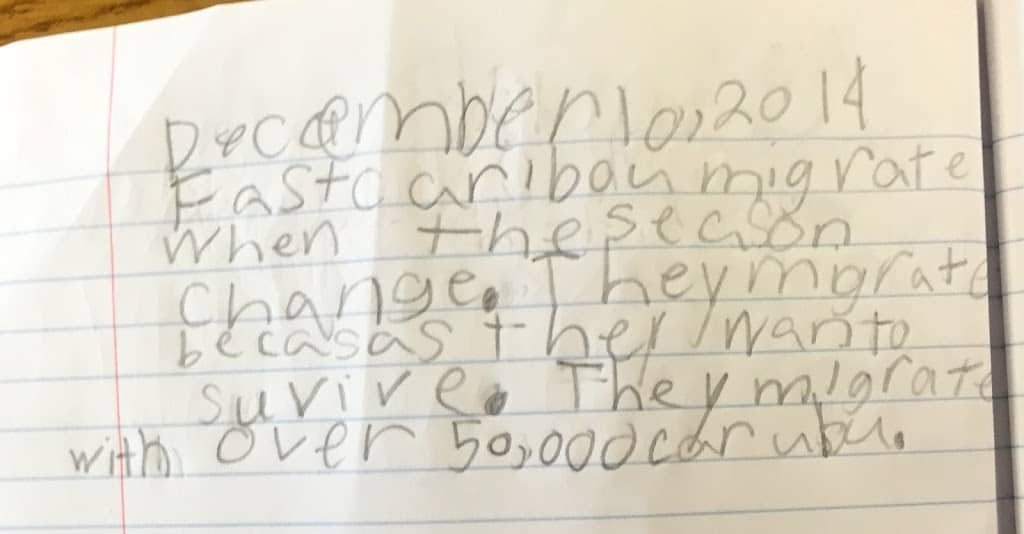
Students were not perfect — and that was expected. The goal was growth, not polish.
How Stretch a Sentence Supports This Same Skill
While Genius Paragraphs work well for whole-group instruction, Stretch a Sentence gives students structured, independent practice with the same sentence skills.
Stretch a Sentence:
- breaks sentence expansion into manageable steps
- supports students who need more structure
- reinforces the same sentence skills used in informational writing
Together, these routines help students turn strong facts into clear, connected sentences — a critical step in informational writing.

Stretch a Sentence Yearlong Bundle
Support students in writing stronger, more descriptive sentences with this Daily Sentence Stretching Bundle! With monthly themes and easy-to-use prompts, each worksheet guides students to expand a simple sentence using who, what, when, where, why, and how.
Related Resources
If you’re building an informational writing unit, these resources support the same routine:
- Informational Writing Tools – fact sorts, organizers, checklists, and lesson support
- Stretch a Sentence – structured sentence expansion practice
- Genius Paragraph Labels – visual sentence-building support for whole-group instruction
Free Informational Writing Resource
If you’d like to try this approach with your students, you can start with a free informational article about frogs. It includes:
- a fact sort
- a photo article
- a text-only version
- QR codes


I love this. I am also implementing WBT and started at the end of last year. The genius ladder has improved my students writing.
Jessica, This is SO cool! I love your set up,organization and ideas on how to use it! I teach 3rd and am having a lot of trouble getting my students to even WANT to do decent expository writing. This looks fun, and like a BIG help! Just getting into WBT myself! Hope I can try this in the next week or so. Thank you for sharing your ideas, resources and labels!
Love this! I’m so excited to start using this with my first graders when we get back to work next week!
Hello,
First let me say thank you for all your ideas and resources they have been amazing ! Our philosophy and teaching styles seem very similar. I have purchased your animal research packets, including the QR Code activities, informational articles and fact sort for many different animals and the Informational Writing tools packet and started using them last year this year I am doing more writing with them and I am wondering if you have rubrics you could share for the Expository writing activities, such as the Genius Paragraph writing or really any non-fiction research writing. Thanks for your help!
Lisa
Thank you so much! I’m glad you like the units and articles. I love helping students learn to learn and work with the content. This has become one of my favorite units to teach.
I have some blog posts on how I’ve taught genius paragraphs with a couple different topics. The routine is generally the same.
As for a rubric, there is a rubric in the Informational Writing Tools on page 4. It is a kid-friendly rubric that follows the CCCSS and the included checklists.