
How to Teach Stretch a Sentence in Elementary School (Grades 1–5)
When students are told to “write more,” most of them stare at the page. They don’t know what to add or where to start. That’s what stretch a sentence solves.
It’s a structured writing strategy where students start with a short, bare sentence and grow it step by step by answering simple questions: Who? What? When? Where? Why? How? Instead of guessing, students have a clear process — and that process works from first grade all the way through fifth.

In this guide, you’ll find everything you need to teach stretch a sentence in grades 1–5: a step-by-step teaching routine, how to create an anchor chart your students will actually use, grade-level expectations, tips for differentiation, and a daily practice structure that fits into any writing block.
What Is Stretch a Sentence?
Stretch a sentence is a writing strategy where students start with a basic sentence and gradually add details to make it more clear and interesting.
Students expand their sentences by answering key questions:
- Who is it about?
- What are they doing?
- When did it happen?
- Where did it happen?
- Why did it happen?
- How did it happen?
This structure gives students a clear path for adding details instead of guessing what to write next.
How to Stretch a Sentence
Students learn how to stretch a sentence by adding details one step at a time.
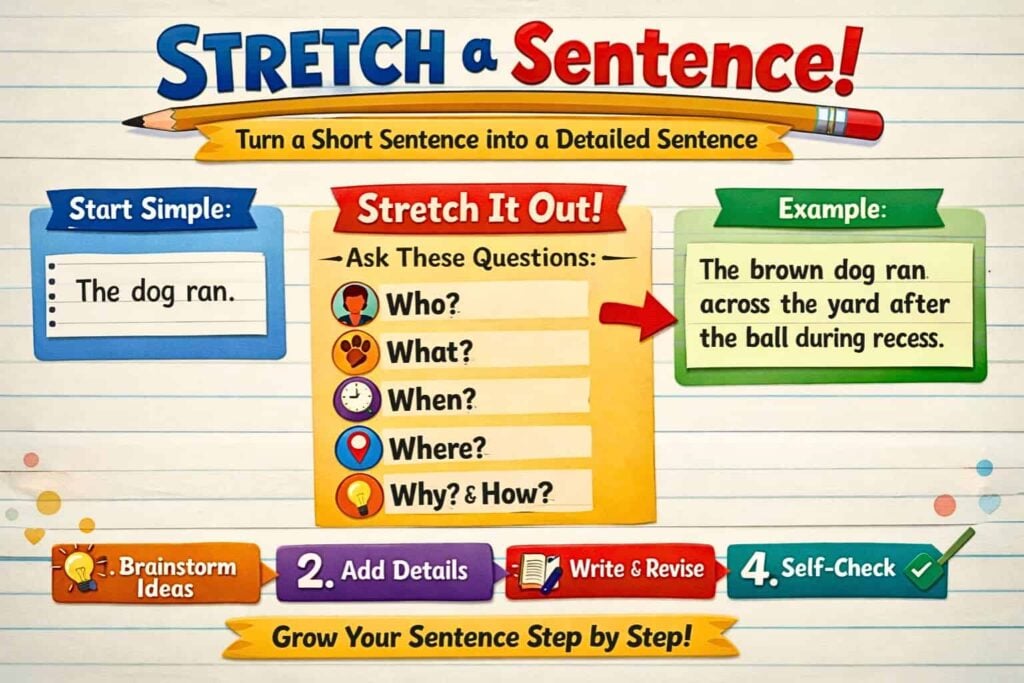
Start with a simple sentence:
The dog ran.
Then guide students to expand it:
- The dog ran.
- The brown dog ran.
- The brown dog ran across the yard.
- The brown dog ran across the yard after the ball.
- The brown dog ran across the yard after the ball during recess.
Each step adds one new detail. This helps students focus on clarity instead of trying to write everything at once.
How to Stretch a Sentence in the Classroom
In a typical lesson, stretch a sentence starts with a short, simple sentence and grows through guided discussion.
Teachers model how to stretch a sentence by adding details step by step, often using questions or an anchor chart. Students then practice stretching sentences together before trying it independently.
For example:
Original: The girl laughed.
Stretched: The little girl with curly hair laughed loudly as she played tag at recess.

If you want more examples for students, you can see additional stretch a sentence examples here.
Why Sentence Stretching Works Well in Elementary Classrooms
By second grade, students are learning how to organize their thoughts into paragraphs and communicate ideas clearly.
This approach helps students:
- Improve sentence fluency
- Build descriptive vocabulary
- Learn to revise and expand their writing
- Engage their audience with better detail
Stretching a sentence also supports reading comprehension. When students are better at expressing details in their writing, they become more adept at recognizing those same elements when reading.
How to Teach Stretch a Sentence (Step-by-Step)
Step 1: Start With a Simple Sentence
Begin with a short sentence that includes a subject and verb. Read it aloud together.
Examples:
- The kids played.
- The bird flew.
- The teacher explained.
Step 2: Ask Guided Questions
Have students brainstorm answers to questions such as:
- Who or what?
- Did what?
- When?
- Where?
- Why?
- How?
Students can jot ideas or discuss them orally before writing.
Step 3: Add a Grammar Focus
Choose one grammar skill to practice, such as:
- Adding an adjective
- Using a conjunction
- Checking subject-verb agreement
- Writing in past tense
This keeps grammar connected to real writing.
Step 4: Write the Stretched Sentence
Students use their brainstormed ideas to rewrite the sentence with added details. Emphasize clarity over length.
Step 5: Self-Check and Share
Students review their sentence for capitals, spacing, punctuation, and details. Sharing with a partner builds oral language and revision awareness.
In addition to this routine, many teachers use anchor charts, mentor texts, and whole-class activities to reinforce sentence stretching. This post shares practical ideas for teaching sentence stretching in elementary classrooms through modeling and discussion.
Stretch a Sentence by Grade Level (Grades 1–5)
The core strategy stays the same at every grade level — start simple, add details one at a time. What changes is how much you expect students to add, how independently they work, and what grammar skills you connect to the stretching.
1st Grade
Focus on adding one detail at a time. Work whole-group or in pairs. Goal: expand “The cat ran.” into “The big cat ran outside.” Oral stretching before written stretching — have students say the expanded sentence aloud before writing it down.
2nd Grade
Students begin adding 2–3 details independently. Introduce the anchor chart and the six question prompts. Connect to adjectives and prepositional phrases. Goal: “The dog barked.” → “The small brown dog barked loudly in the backyard.”
3rd Grade
Focus on selecting the most meaningful details rather than adding everything at once. Introduce subordinating conjunctions (because, when, after) to stretch sentences in a new way. Students revise existing sentences from their own writing.
4th Grade
Stretch sentences become a revision tool, not just a warm-up. Students identify bare sentences in their own drafts and expand them. Focus on varying sentence structure — not every stretched sentence needs to follow the same pattern.
5th Grade
Students evaluate which sentences in a paragraph need stretching and which are already strong. Introduce the idea that a sentence can be stretched too far — more detail isn’t always better. Focus on precision and word choice in addition to length.
A useful rule of thumb: in grades 1–2, you’re building the habit. In grades 3–5, you’re sharpening the tool. Both phases use the same prompts, but the expectations and independence level shift significantly.
How to Make a Stretch a Sentence Anchor Chart
Your stretch a sentence anchor chart is the reference students will turn to every time they sit down to write. Keep it simple and visible — a chart that requires reading doesn’t get used.
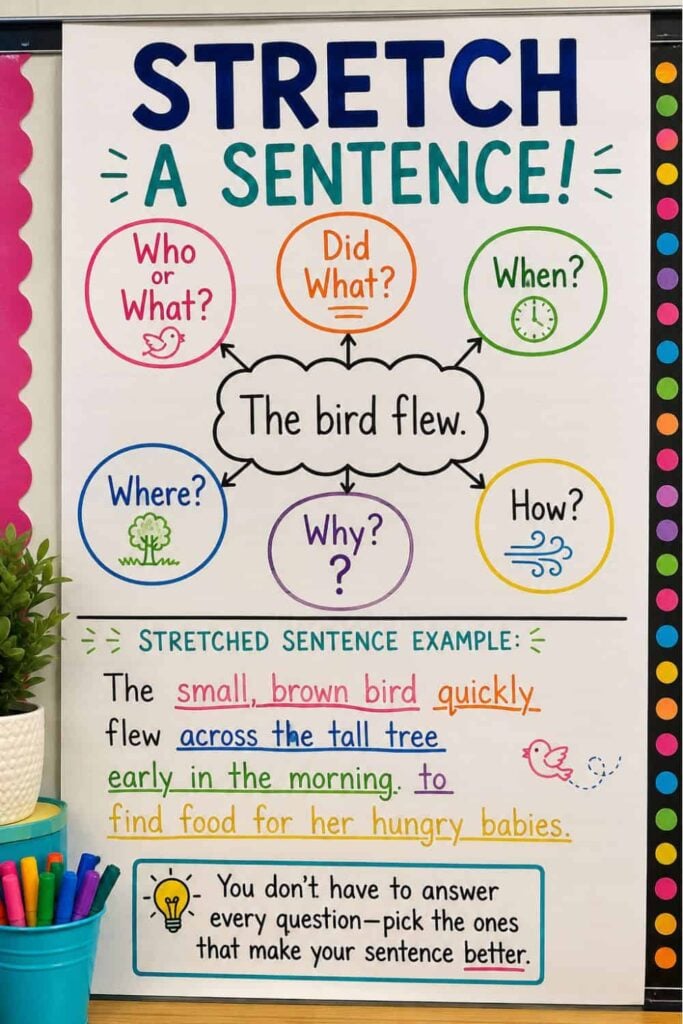
Here’s what an effective stretch a sentence anchor chart includes:
- A short starter sentence in the center — something like “The bird flew.” written large enough to see from every seat.
- Six question bubbles around the sentence: Who or What? Did What? When? Where? Why? How? Color-code each bubble so students learn which question they’re answering at a glance.
- One stretched example at the bottom showing how the starter sentence grows when you answer all six questions. This is the model students will imitate.
- A simple reminder: “You don’t have to answer every question — pick the ones that make your sentence better.”
A few practical tips:
- Laminate the chart so students can write on it with dry-erase markers during whole-group practice, then wipe and reuse.
- Make a smaller version (half-sheet) students can keep in their writing folders as a personal reference.
- Update the starter sentence every few weeks to match your current content area — “The plant grew.” during a science unit, “The explorer traveled.” during social studies.
The anchor chart works best when you introduce it actively — don’t just hang it on the wall. Walk through it with the class, stretch a sentence together using it, and then refer back to it explicitly during the first few days of practice. After a week, students will start using it on their own.
Differentiating Stretch a Sentence for All Learners
One reason stretch a sentence works across grades 1–5 is that the same structure can be adjusted up or down without changing the routine. Students don’t feel like they’re doing something different — they’re all stretching the same sentence, just to different levels of depth.
For students who struggle with writing or sentence construction: Start with oral practice only. Have students say the expanded sentence aloud before writing a single word. Provide a sentence frame: “The [adjective] [noun] [verb] [where] because [why].” Let them fill in the blanks before attempting a freeform stretch. Using a printed template with a box for each question reduces the cognitive load enough that students can focus on the language itself.
For English language learners: Pair stretch a sentence with picture support. Show a simple image and have students describe what they see before building a sentence about it. The question prompts (Who? When? Where?) act like sentence frames — they give ELL students the structure they need to compose without having to generate the organizational framework on their own. Allow oral sharing before written production.
For students who are ready for more: Challenge them to stretch a sentence without using the anchor chart prompts. Ask them to vary the sentence structure — can they put the “when” at the beginning instead of the end? Can they write two different stretched versions of the same starter and compare which one is stronger? Introduce subordinating conjunctions as a new way to add detail: “because,” “when,” “after,” “although.”
The key is that all three groups use the same starter sentence and the same daily routine. Differentiation happens in the level of support — not in a separate activity.
Tips for Teaching Stretch a Sentence Successfully
Once students understand the idea, consistency is what makes the strategy stick. These routines help make stretch a sentence part of your daily instruction.
Here are a few strategies to try in your classroom:
1. Use a Stretch-a-Sentence Anchor Chart
Create an anchor chart that lists guiding questions:
- Who is the sentence about?
- What did they do?
- When did it happen?
- Where did it happen?
- Why did they do it?
- How did they do it?
Model how to use the chart with a simple sentence and think aloud as you stretch it.
2. Turn It Into a Whole-Class Game
Start with a basic sentence on the board. Go around the room, asking students to add one word or phrase at a time. Challenge them to use adjectives, prepositional phrases, or strong verbs.
Example progression:
- The cat slept.
- The fluffy cat slept.
- The fluffy cat slept on the windowsill.
- The fluffy cat slept on the sunny windowsill all afternoon.
I explain this routine when creating genius sentences. We began with silly examples, then practiced the routine using academic sentences that students could incorporate into their informational texts.
You can use this as a quick sentence writing warm-up at the beginning of your literacy block.
3. Use Sentence Stretching Templates
Provide writing templates that include blanks for the different sentence parts. These scaffold the process and give students a framework to follow.
Template example:
The (adjective) (noun) (verb) (where) (when) because (why).
These templates are especially helpful for students who need extra support or struggle with sentence writing.
Free Sentence Stretching Practice Sheets
Would you like a free sample of my daily sentence-stretching practice sheets? Sign up below and have them sent to your inbox today!

4. Highlight Stretchy Sentences in Mentor Texts
Read a picture book aloud and point out well-stretched sentences. Discuss what details the author included and how they help the reader visualize the scene.
📚 Mentor Texts That Support Sentence Stretching
Mentor texts help students see how authors naturally add details, making sentence stretching feel purposeful rather than mechanical.
1. Owl Moon by Jane Yolen
Sentence: “It was late one winter night, long past my bedtime, when Pa and I went owling.”
Why It’s Great: Yolen stretches the sentence with when, who, and what details—setting the scene with mood and timing.
2. The Snowy Day by Ezra Jack Keats
Sentence: “He walked with his toes pointing out, like this.”
Why It’s Great: A short action is extended with how it was done—this is a great example of adding how details in a child-friendly context.
3. Come On, Rain! by Karen Hesse
Sentence: “Mama lifts a cotton sheet, and the corners snap, crisp as crackers.”
Why It’s Great: Rich similes and adjectives show how to add sensory detail (what it looks/sounds like).
4. A Bad Case of Stripes by David Shannon
Sentence: “Camilla Cream loved lima beans, but she never ate them.”
Why It’s Great: This sentence uses contrast to add interest—students can learn that even small additions like “but” can stretch ideas.
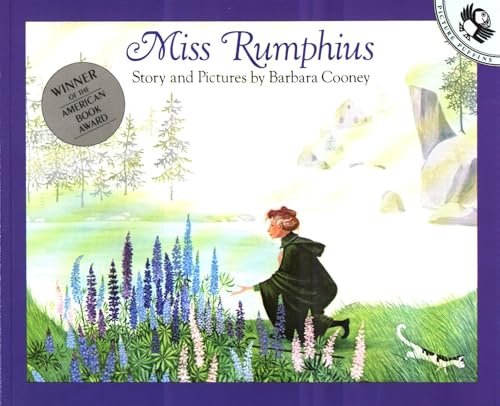
5. Miss Rumphius by Barbara Cooney
Sentence: “When she grew up, she wanted to travel to faraway places and live by the sea.”
Why It’s Great: Shows when and adds two detailed what goals—ideal for teaching sentence expansion in narrative writing.
6. Alexander and the Terrible, Horrible, No Good, Very Bad Day by Judith Viorst
Sentence: “I went to sleep with gum in my mouth and now there’s gum in my hair.”
Why It’s Great: A simple action (“I slept with gum”) is expanded into a cause-and-effect sentence with detail.
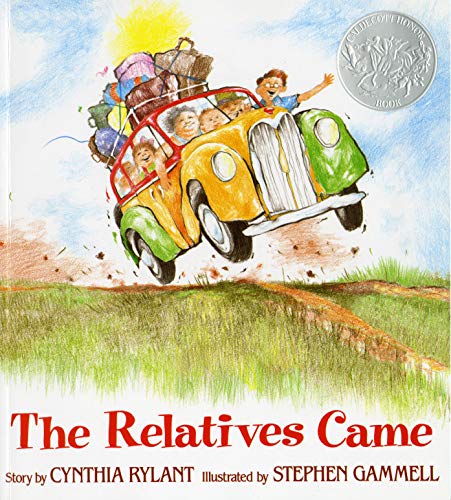
7. The Relatives Came by Cynthia Rylant
Sentence: “It was in the summer of the year when the relatives came.”
Why It’s Great: This opening gives when and sets up who and what, modeling how to stretch an introductory sentence.



🪄 How to Use These Mentor Sentences in Your Classroom
- Display the sentence on chart paper and underline the parts that answer who, what, when, where, why, how.
- Rebuild the sentence from a basic version and “stretch” it together as a class.
- Have students mimic the structure with their own topics (e.g., “It was in the summer when we went to the beach.”)
- Create a “Stretch Like an Author” anchor chart with examples from books they know
5. Encourage Drawing First
Let students draw a picture before writing. Then prompt them to describe every part of their picture using complete sentences. Drawing helps generate ideas and gives a visual base for details.
Quick Tips for Classroom Success
- Practice daily with morning message sentences or during writing warm-ups.
- Display examples of stretched sentences on a bulletin board.
- Pair students to stretch each other’s sentences during peer editing.
- Celebrate student writing by sharing before-and-after sentence examples.
Daily Routine to Teach Stretch a Sentence
One of the easiest ways to see growth is by making stretch a sentence part of your daily routine.
A simple structure could look like this:
- Day 1: Model stretching a sentence
- Day 2: Stretch a sentence together as a class
- Day 3: Students stretch sentences with a partner
- Day 4: Independent practice
- Day 5: Revise and improve a sentence
This type of routine builds confidence and helps students apply the strategy automatically in their writing.
Frequently Asked Questions About Stretch a Sentence
Stretch a Sentence Builds Strong Writers
When students learn how to stretch a sentence, they begin to move beyond basic writing and add meaningful detail to their ideas.
With regular practice, stretch a sentence becomes a natural part of how students write, revise, and communicate clearly.
If you want a simple way to implement this daily, my yearlong Sentence Stretching Prompts provide consistent practice with built-in scaffolds and seasonal themes—making it easy to support students all year long.
👉 Click below to grab the Yearlong Sentence Stretching Bundle.
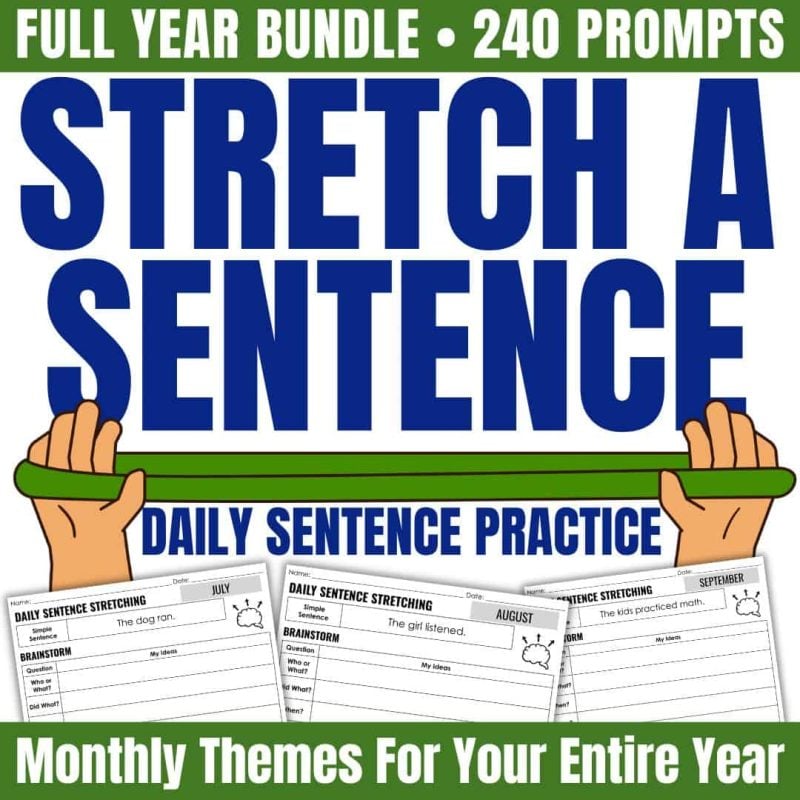
Stretch a Sentence Yearlong Bundle
Support students in writing stronger, more descriptive sentences with this Daily Sentence Stretching Bundle! With monthly themes and easy-to-use prompts, each worksheet guides students to expand a simple sentence using who, what, when, where, why, and how.
Jessica BOschen
Jessica is a teacher, homeschool parent, and entrepreneur. She shares her passion for teaching and education on What I Have Learned. Jessica has 16 years of experience teaching elementary school and currently homeschools her two middle and high school boys. She enjoys scaffolding learning for students, focusing on helping our most challenging learners achieve success in all academic areas.