
Writing Activities for Reluctant Writers: 10 Ideas for 2nd Grade
Getting second graders to write can feel like pulling teeth, especially when you’re working with students who avoid writing at all costs. Whether it’s due to lack of confidence, fear of spelling mistakes, fine motor difficulties, or simply not knowing where to start, reluctant writers need a different kind of support to get their ideas on paper.
The good news? With the right writing activities for reluctant writers, even your most hesitant students can begin to see writing as something they can do. These ideas are all about lowering the barrier to entry, building confidence, and making writing feel meaningful.
1. Start with Oral Storytelling
Before students ever put pencil to paper, let them say their ideas aloud. Pair students up and let them talk through their stories with a classmate, or have them share their thoughts with you one-on-one. You can record their voices with a classroom tablet or use speech-to-text tools like Google Docs voice typing to capture their words.
Oral storytelling helps students process and organize their ideas without worrying about handwriting, punctuation, or spelling. It’s especially useful for English learners or students who have lots to say but freeze up when asked to write.
2. Use Drawing as a Bridge to Writing
Give students time to draw their ideas before asking them to write. Ask open-ended questions about their pictures to guide the transition to writing:
- “What’s happening here?”
- “Who is this?”
- “What happened first?”
For some students, especially those with strong visual thinking skills, drawing provides a safe entry point to organize thoughts and develop story elements. You can follow up with sentence stems like “This is a picture of…” or “In my picture, you can see…” to build momentum.
3. Offer Sentence Scrambles and Word Banks
Give students structured writing support with sentence starters, pre-written phrases, or word banks related to the topic. You might use cut-apart sentence strips for students to rearrange into complete thoughts, or anchor charts with themed vocabulary.
For example, during a unit on animals, create a word bank that includes action verbs, descriptive words, and habitat terms. This allows students to focus on assembling ideas rather than searching for how to spell “slither” or “burrow.”
4. Add Playful Choice with Roll-a-Story or Story Dice
Gamify story generation with tools like story dice, spinners, or “Roll-a-Story” mats that give students a random character, setting, and plot. This not only adds novelty but helps students who struggle with open-ended prompts.
When students roll a pirate, a beach, and a lost treasure, the story practically writes itself! These creative constraints also help reluctant writers by narrowing down the possibilities and sparking their imagination.
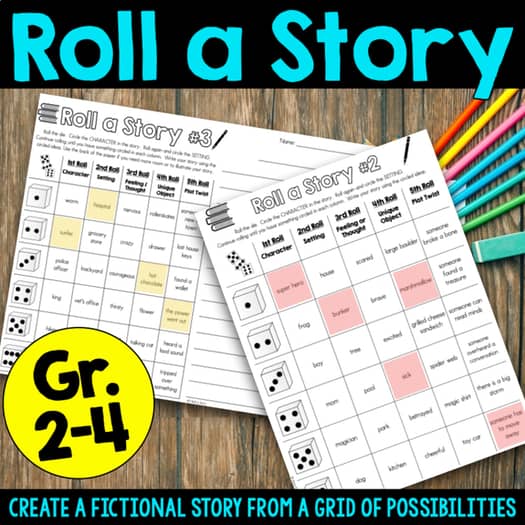
Students can create a fictional story from a grid of possibilities!
I also have seasonal roll-a-stories for each month of the school year!
5. Use Graphic Organizers to Break Writing Into Chunks
Provide graphic organizers that support basic story structure, like:
- Beginning / Middle / End charts
- Story maps with boxes for character, setting, problem, and solution
- Sequence charts for nonfiction writing or how-tos
These organizers serve as a visual guide, helping students see writing as a series of manageable steps. For some, writing an entire story from start to finish feels overwhelming—but writing just the beginning? That’s doable.
Chunk Your Writing Unit
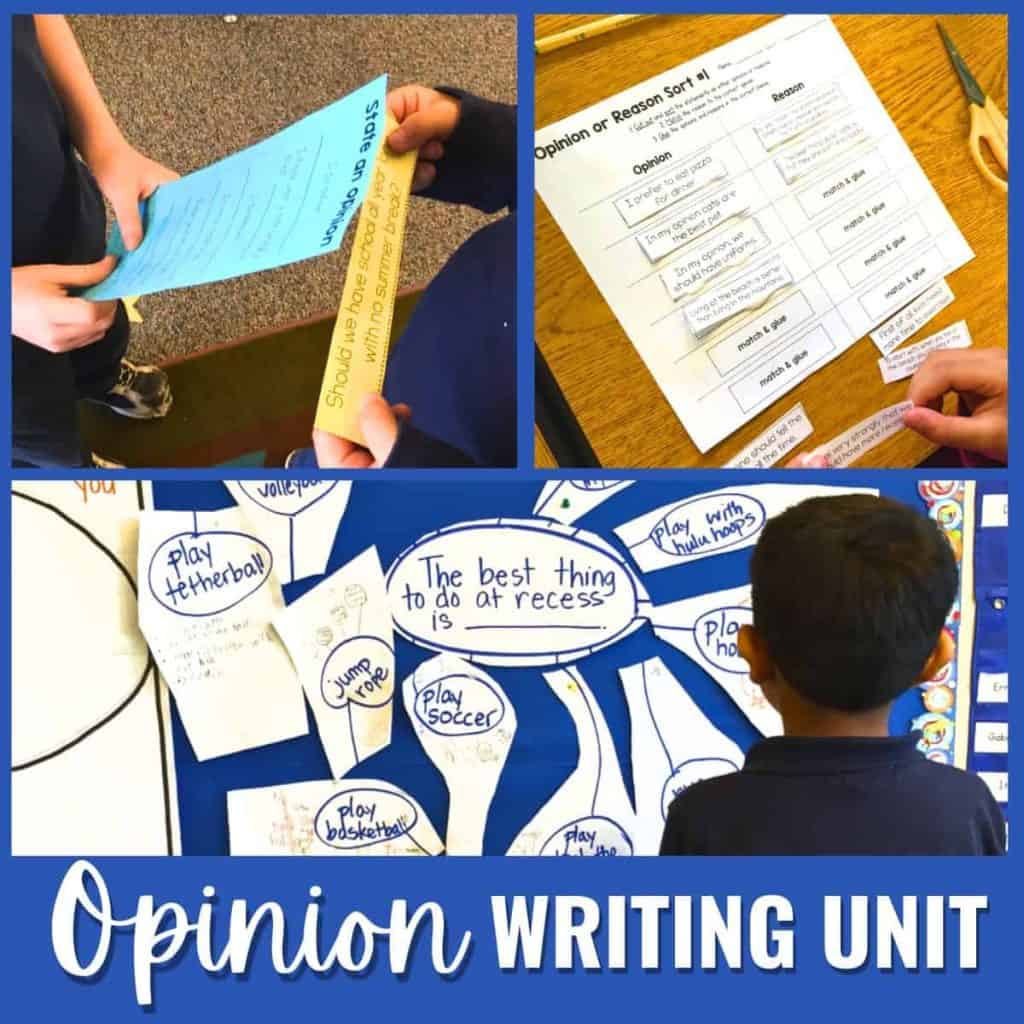
My Opinion Writing Unit is built around this same structure. I teach students to write each part of an opinion paragraph in chunks, starting with stating an opinion and then supporting it with reasons.
6. Keep the Writing Short and Purposeful
Not every writing task needs to be a full paragraph. Give students low-pressure writing opportunities that are quick and meaningful:
- Write a silly message to the class mascot
- Leave a sticky note thank-you to a classmate
- Fill in a sentence like “If I were invisible, I would…”
This builds fluency and confidence without the stress of extended writing assignments. You can gradually increase expectations once students feel more comfortable putting their thoughts on paper.
7. Connect Writing to Favorite Books
Use read-alouds and familiar stories as a springboard for writing. Ask students to:
- Write a letter to a character
- Create an alternate ending
- Make a comic strip retelling the story
When students already know the characters and plot, they don’t have to invent everything from scratch. This gives reluctant writers a head start and helps them focus on expressing ideas rather than creating new ones.
8. Give Students a Real Audience
Students are more motivated to write when their work is seen and valued. Display stories on a bulletin board, send writing home to parents, or “mail” short notes to other classrooms. You can even host an author share day where students read their work aloud.
Having a real audience turns writing from a classroom chore into something purposeful. Even the shyest students often take more pride in their work when they know it’s being shared beyond your desk.
9. Model Writing: Mistakes and All
Show students how real writing works by modeling your thinking and writing process out loud. Let them see you make mistakes, get stuck, erase, and revise. Talk through your choices:
- “Hmm… I don’t like how this sentence sounds. Let me try another way.”
- “I’m not sure how to spell this word. What sound does it start with?”
This helps students understand that writing isn’t perfect the first time, and that’s okay. It also makes writing feel more human and less intimidating.
10. Build a Routine with Daily, Low-Stakes Writing
Incorporate quick writing tasks into your daily routine:
- Morning journals
- Exit tickets
- Would-you-rather prompts
- “Finish this sentence” slips
The more often students write, the less scary it becomes. These quick, consistent opportunities help develop fluency and reduce anxiety around writing time.

Do you need some writing prompts?
Check out these would you rather prompts. Students can use them for oral practice or written practice.
Reluctant writers aren’t trying to be difficult. They need more support, more structure, and more low-stakes practice before writing starts to feel manageable. Start with one or two of these activities and build from there. Over time, small wins add up.
Jessica BOschen
Jessica is a teacher, homeschool parent, and entrepreneur. She shares her passion for teaching and education on What I Have Learned. Jessica has 16 years of experience teaching elementary school and currently homeschools her two middle and high school boys. She enjoys scaffolding learning for students, focusing on helping our most challenging learners achieve success in all academic areas.