
Informational Writing Week 1: Setting the Routine in Second Grade
At the start of our informational writing unit, I focus on helping students understand the routine we will use throughout the unit. This first week is less about writing independently and more about learning the process for gathering information, organizing facts, and turning those ideas into an informational paragraph.

This post is part of a larger series on informational writing. The overall structure of the unit is outlined in the overview post. This routine also aligns with the format students will encounter on informational writing assessments later in the year.
Here, I’m sharing what Week 1 looks like in the classroom and how I introduce the expectations that support students in later weeks.
The Focus of Week 1
Week 1 is all about learning the process. Students are not expected to write strong paragraphs yet. Instead, they practice gathering information, working with facts, and understanding how those facts eventually turn into an informational paragraph.
To keep the focus on the routine, I provide a high level of support during this first week.
Choosing a Familiar Topic
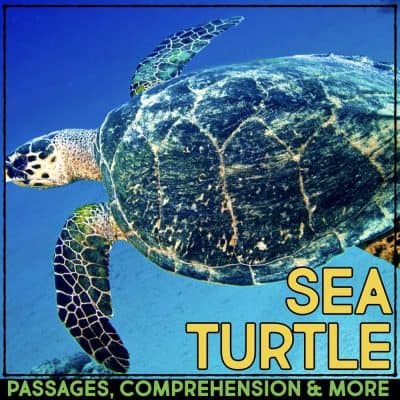
For Week 1, students wrote about sea turtles. I chose this topic simply because I had access to a clear, student-friendly text. The goal was not deep content knowledge, but giving students something concrete and interesting to work with while learning a new writing routine.
Students used an informational article and a short video to gather facts about sea turtles. This mirrors the format of our writing assessment, where students are asked to read, watch, and then write.
Day 1: Gathering Facts Together
We began with a whole-class brainstorm using a circle map. Students shared what they already knew about sea turtles, and all ideas were recorded. At this stage, accuracy mattered less than participation. We revisited and corrected ideas as we read and watched.

After viewing the video and reading the article, we returned to the map to verify facts, cross out incorrect information, and add new learning. Recording information together helped students focus on understanding the content without the added pressure of writing everything on their own.
Ways we read the article & share facts
To support students while gathering facts, we read the informational text in short sections and pause frequently to record what we learned. I vary how the text is read — sometimes reading aloud, sometimes using partner reading — so all students can access the information. Stopping often helps students retain details and keeps everyone engaged in the discussion.
Day 2: Sorting Facts Before Writing
Before writing, students worked with the facts we gathered by sorting them into categories. Each fact was written in a consistent sentence format to make the task accessible for all learners.
Sea turtles _______.
I wanted to make this as easy as possible for my lower readers with a standard sentence structure. Later on in study, I do a few mini-lessons on combining sentences and making complex sentences. However, all my sorts have simple sentences to accommodate all learners.

Fact sorting helps students see how information naturally groups together. It also prepares them for writing by showing that informational paragraphs are built from related ideas, not random facts.
Students noticed that we didn’t write many facts about the sea turtle’s environment, but students remembered facts and wrote a few down. I love fact sorts because they’re tactile and allow students to play with the facts, comparing and contrasting which ones go together.

Day 3 through 5: Write our paragraphs
Since this was the first week of the unit, I provided students with the introductory and concluding sentences. My goal was for students to experience the full writing process without being overwhelmed by every part at once.
Students selected a small number of facts from their sort and used them to write the body of their paragraph. Looking back, I realized that choosing facts from different categories made some paragraphs feel choppy. This became a teaching point that informed how I structured writing in later weeks.

Why Week 1 Matters
By the end of Week 1, students understood:
- How we gather information
- How we organize facts
- How facts turn into sentences and paragraphs
Most importantly, they knew what to expect. This familiarity makes it easier to release responsibility in later weeks, when students begin writing more independently and focus on specific writing skills.
Looking Ahead
What’s my plan moving forward?
Each week of the unit follows the same structure, with one new writing focus added at a time. In Week 2, students write about the spade-foot toad, and the mini-lessons shift toward developing strong introductions. Later weeks focus on conclusions, organizing related facts, sentence combining, and transitions.
Informational Writing Resources
The lessons shown in this series are organized in my Informational Writing Tools resource. It includes fact sorts, graphic organizers, checklists, and outlines that support the same routine used throughout this unit.
- Informational Writing Overview – Unit structure and instructional routine
- Week 1: Building the Informational Writing Routine (Sea Turtles)
- Week 2: Introducing the Topic (Spade-Foot Toad)
- Week 3: Finding and Ordering Related Facts (Wolves)
- Week 4: Using a Checklist to Revise Writing (Ladybugs)
- Week 5: Organizing Facts Around a Concept (Bird Migration)
- Week 6: Applying the Full Informational Writing Process (Lionfish)
- Other tools: Genius Paragraph and Bats
If you’re looking for student-friendly informational text, I also use Animal Articles during this unit. These articles include photographs, text-only versions, QR codes, and fact sorts.

Free Informational Writing Resource
If you’d like to try this approach in your classroom, you can start with a free informational article about frogs. It includes multiple text formats, QR codes, and a fact sort that works well for introducing informational writing routines.

Do you need engaging informational texts that your elementary students will actually want to read?
The Animal Article Collection includes 142+ animal articles spanning 14 ecosystems, complete with reading comprehension and structured writing activities. Students can choose their animal while building skills in informational text, research, and report writing.

I use this RESEARCH FOLDER SYSTEM with 4th graders, but you could adapt for 2nd grade. It is similar to your tri-fold with the facts. I love it when students can see the sub-topics in a clear, visual way! Thanks for the post.
Caitlin
TheRoomMom
We do something similar to your brainstorming process called “Word Splash.” If everyone was writing about their own topic, you would have them write down everything they can think about their topic in a set amount of time (3 minutes?). Then everyone in the class would walk around the room for another set amount of time (2 minutes) and add ideas to other student’s splashes. I like the structure you used here, especially typing up the facts and having the kids sort them. I have some 4th graders who could definitely use that visual/hands-on support.
Jennifer
Mrs. Laffin’s Laughings
Do you have a template you would consider putting in your store for the fact sort? I’m trying to do this with my class but it’s taking me forever to put the facts in a format like yours that are ready to cut.
Sorry, I do not have a template for the fact sort. It is a table with dotted lines, if that helps.
Enough input is very important in the pre-writing process. In my writing class, I usually give my students enough input, but there are always some reluctant learners. I tried many ways; however, they are not so effective. I think your tips will be great help for these students. Next time, I will try. Thank you so much.
I cannot find the resource packet for Spade foot toad, when I click on that link it takes me to Sea Turtles…help please
Sorry about that! Here is the link to the blog post about Spade Foot Toads: https://whatihavelearnedteaching.com/introduce-the-topic/