
20 Sea Turtle Fun Facts for Kids (and Teachers!)
If you’re looking for sea turtle fun facts to use in your classroom, you’re in the right place. Sea turtles are one of those animals that instantly hook students. They’re huge. They migrate thousands of miles. Their babies race to the ocean. What’s not to love?
Whether you’re building a life cycle unit, planning an informational writing project, or just need engaging, fun facts about sea turtles for a morning meeting, this list will give you plenty of student-friendly information. I’ve included facts that work beautifully for 2nd–4th grade readers and connect naturally to vocabulary like reptile, carapace, migrate, and predator.
Let’s jump in.
20 Sea Turtle Fun Facts
1. Sea turtles are reptiles.
Sea turtles are cold-blooded reptiles with dry, scaly skin. Like other reptiles, they breathe air with lungs and must come to the surface for oxygen. Even though they spend nearly their entire lives in the ocean, they are not fish.
2. There are seven species of sea turtles.
Scientists recognize seven species of sea turtles around the world:
- Green sea turtle
- Leatherback sea turtle
- Loggerhead sea turtle
- Hawksbill sea turtle
- Kemp’s ridley sea turtle
- Olive ridley sea turtle
- Flatback sea turtle
Each species has unique features, habitats, and diets. For example, leatherbacks are the largest, and Kemp’s ridleys are the smallest.
3. The leatherback is the largest sea turtle.
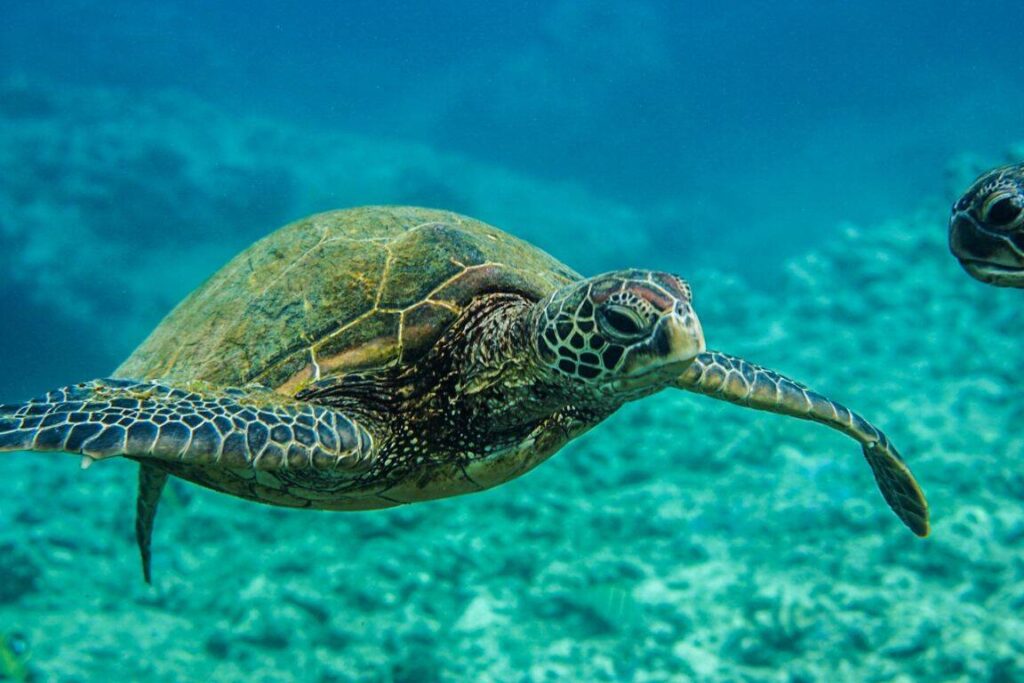
Leatherbacks can grow up to nine feet long and weigh as much as 1,500 pounds. Their large size helps them travel long distances and survive in cooler waters than other sea turtles.
4. Not all sea turtles have hard shells.
Most sea turtles have a hard shell called a carapace. The leatherback turtle is different. Instead of a hard outer shell, it has a flexible, leathery covering with bony plates underneath.
5. Sea turtles can’t tuck into their shells.
Unlike box turtles or other land turtles, sea turtles cannot pull their heads and flippers into their shells. Their bodies are designed for swimming, not hiding.
6. Sea turtles have powerful flippers.
Their front flippers are long and strong, helping them glide through the water almost like underwater wings. Their back flippers help them steer.
7. Some sea turtles are herbivores.
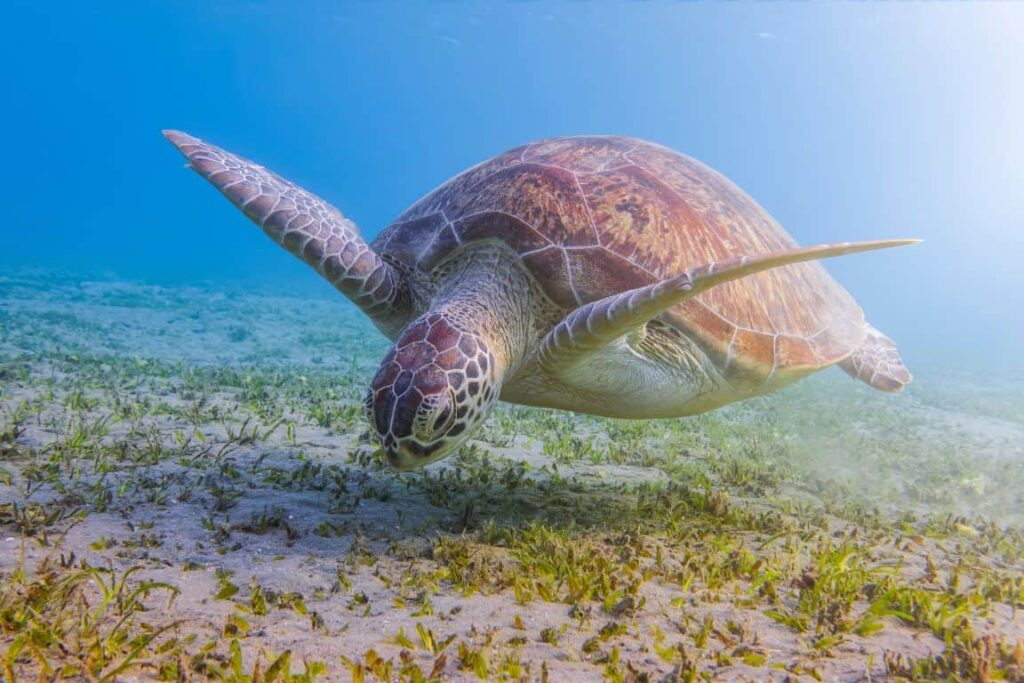
Green sea turtles eat mostly seagrass and algae. As they graze, they help keep seagrass beds healthy, which supports other ocean life.
8. Some are carnivores.
Leatherbacks mainly eat jellyfish. This helps control jellyfish populations in the ocean.
9. Others are omnivores.
Loggerheads and other species may eat crabs, shrimp, fish, and plant matter. Their strong jaws help them crush hard-shelled prey.
10. Sea turtles can hold their breath for hours.
When resting or sleeping, sea turtles can stay underwater for up to seven hours. When they are swimming or feeding, they usually come up more often.
11. They migrate long distances.
Sea turtles migrate between feeding and nesting areas. Some travel up to 3,700 miles across the ocean. Many females return to the very same beach where they hatched.
12. Female sea turtles return to land to lay eggs.
Even though they live in the ocean, females crawl onto sandy beaches at night to lay eggs. They use their back flippers to dig a deep hole in the sand.
13. One nest can hold hundreds of eggs.
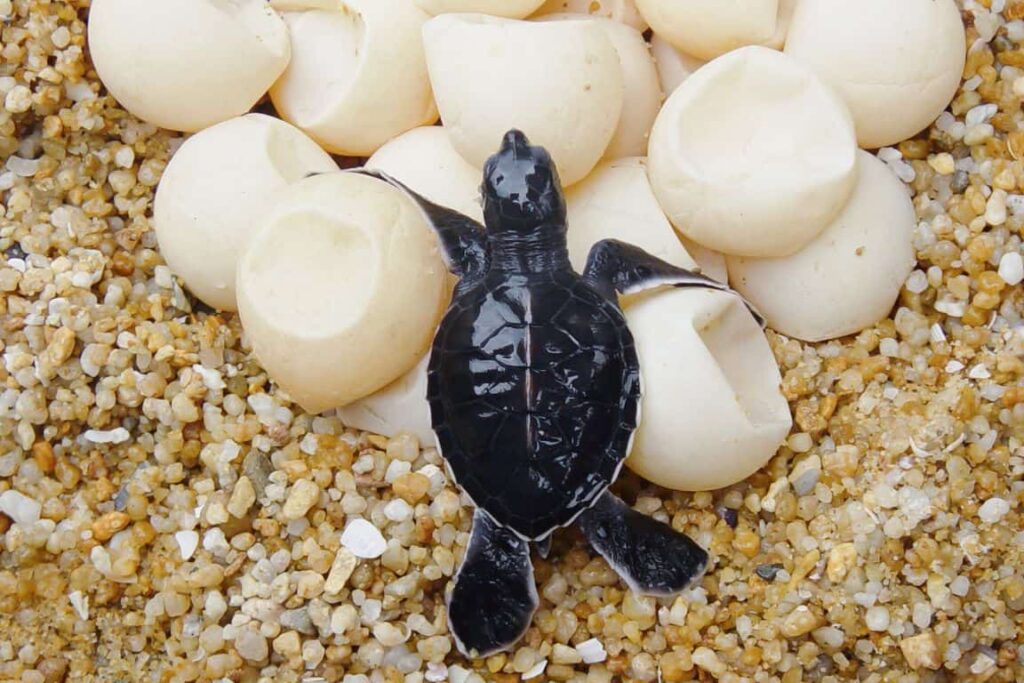
A female may lay between 50 and 350 eggs in a single nest. She carefully covers the eggs with sand before returning to the ocean.
14. All the eggs hatch at the same time.
After about 50–60 days, the eggs hatch together. The baby turtles dig upward through the sand as a group, which helps them reach the surface more quickly.
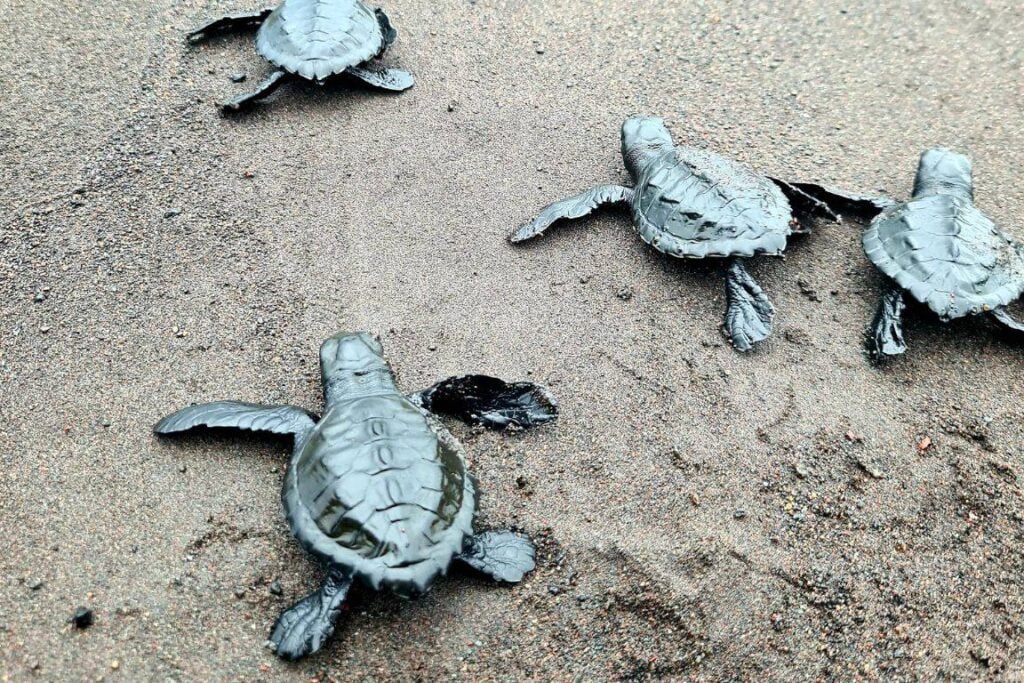
15. Baby sea turtles race to the ocean.
Once they reach the surface, hatchlings crawl toward the water. They must avoid predators such as birds and crabs. Bright lights near beaches can sometimes confuse them.
16. Very few babies survive.
Only about 1 in 1,000 hatchlings survives to adulthood. This is because baby sea turtles face many dangers from the moment they hatch. Birds and crabs hunt them on the beach. Fish and larger ocean animals eat them in the water. Some are confused by bright lights near beaches and crawl away from the ocean instead of toward it. Pollution, plastic, and fishing nets add even more risks as they grow. With so many challenges, only a small number make it to adulthood.
17. Most species are endangered.
Six of the seven species are considered endangered or threatened. Conservation efforts are helping protect nesting beaches and reduce accidental capture in fishing gear.
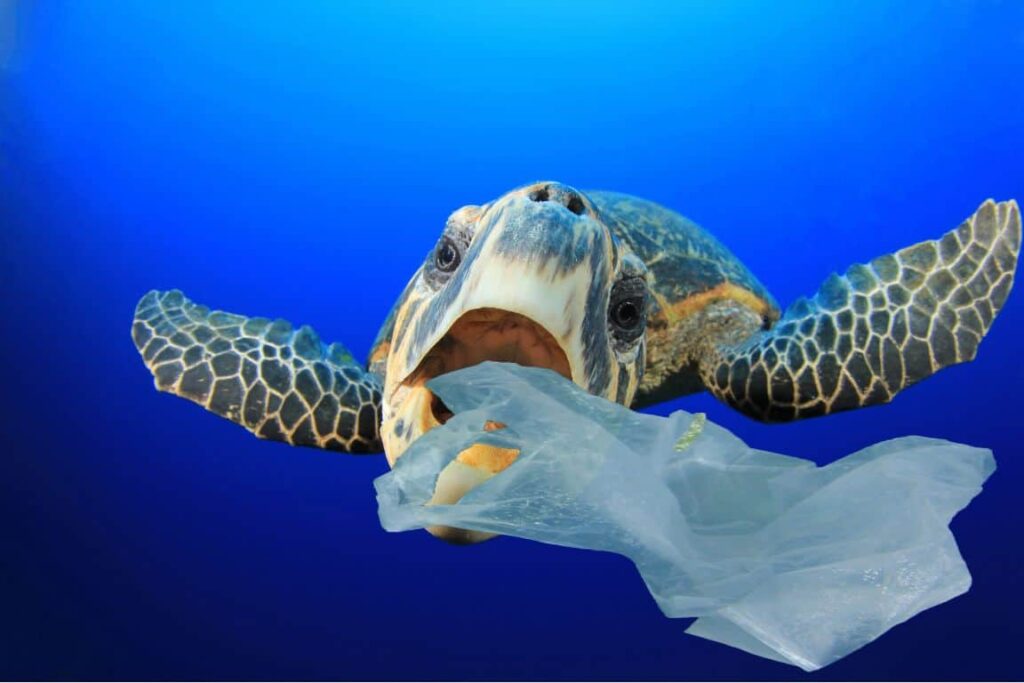
18. Pollution is a major threat.
Plastic bags floating in the water can look like jellyfish to sea turtles. When turtles eat plastic, it can block their digestive systems.
19. Warmer sand changes hatchling gender.
The temperature of the sand determines whether hatchlings are male or female. Warmer sand produces more females. Rising global temperatures are affecting this balance.
20. Sea turtles use Earth’s magnetic field to navigate.
Sea turtles have an amazing built-in GPS system. Scientists believe they can sense Earth’s magnetic field to help them navigate across thousands of miles of open ocean. This ability helps females return to the same beaches where they were born to lay their eggs. Imagine traveling across the ocean with no map — and still finding your way home!
How to Use These Sea Turtle Fun Facts in the Classroom
These fun facts about sea turtles aren’t just interesting—they’re instructional gold.
You can use them for:
- Informational writing prompts
- Text feature scavenger hunts
- Vocabulary lessons (reptile, predator, migrate, carapace, pollution)
- Fact vs. opinion sorting
- Close reading practice
- Life cycle sequencing
If you’re working on NGSS life science standards, sea turtles are perfect for discussions about survival, adaptation, life cycles, and environmental impact.
Pair These Fun Facts with a Student-Friendly Reading Passage
If you want students to go deeper than just a fact list, I created a Sea Turtle Animal Research Article & Activities resource that expands on these topics with:
- Two formats of the article (full page and two-page layout)
- Controlled reading level for 2nd–3rd grade
- Vocabulary cards (reptile, carapace, predator, migrate, omnivore, herbivore, carnivore, pollution)
- Cloze reading passage
- Fact sorts
- Note-taking sheets
- Writing pages
- Answer key
It’s structured exactly the way many of you already use my animal articles—appearance, habitat, diet, offspring, threats—so it fits seamlessly into informational writing units.

Sea Turtle Informational Article and Comprehension Activities
A Sea Turtle Informational Article and Comprehension Activities includes an article about sea turtles, website resources for online articles and videos, a fact sort sheet, a variety of note-taking sheets, comprehension activities, and mini-report pages.
Why Students Love Sea Turtle Fun Facts
There’s something powerful about teaching an animal that:
- Migrates thousands of miles
- Has babies that dig out of sand
- It can weigh over a thousand pounds
- Faces real environmental challenges
Sea turtles spark curiosity and empathy at the same time. They’re perfect for connecting science content with conservation conversations in age-appropriate ways.
And if your students suddenly start asking whether jellyfish are really food and how turtles can swim that far… congratulations. You’ve got engaged learners.
Do you need engaging informational texts that your elementary students will actually want to read?
The Animal Article Collection includes 142+ animal articles spanning 14 ecosystems, complete with reading comprehension and structured writing activities. Students can choose their animal while building skills in informational text, research, and report writing.
Jessica BOschen
Jessica is a teacher, homeschool parent, and entrepreneur. She shares her passion for teaching and education on What I Have Learned. Jessica has 16 years of experience teaching elementary school and currently homeschools her two middle and high school boys. She enjoys scaffolding learning for students, focusing on helping our most challenging learners achieve success in all academic areas.