
How to Teach Animal Reports in Elementary School
Animal reports are one of my favorite ways to teach research, note-taking, organization, and structured writing all at once. Students love choosing their own animal, and teachers appreciate how naturally animal research fits into informational writing standards.
In an animal research report project, students read informational texts, gather facts about animals, organize their research, and turn their notes into a structured piece of writing.
And yes — I have a FREE Animal Report Template you can use with your students.

If you’re planning a full research unit, this guide to animal research projects for elementary students explains how students choose animals, research information, and present their findings.
In this post, I’ll walk you through exactly how I teach animal reports step-by-step, from brainstorming to the final report.
Step 1: Introduce the Animal Report Project
Before students start researching, I explain what an animal report actually is.
An animal report is a structured piece of informational writing where students:
- Research one animal
- Gather facts about habitat, diet, behavior, and physical traits
- Organize their notes
- Write a clear, organized report
I explain that this project isn’t just about animals. It’s about learning how to research, organize information, and turn facts into strong paragraphs.
Once students understand the purpose, they take ownership of the project.
Step 2: Brainstorm and Choose an Animal
Start with brainstorming.
You can:
- Let students freely list animals
- Or categorize by mammals, birds, reptiles, amphibians, fish, insects, etc.
If students need help choosing, this list of animals to research for school projects gives them many possible topics.
After brainstorming, I have students:
- Choose four animals they’re interested in
- Circle the one they most want to research
Having backup choices makes it easier to assign unique animals across the class.
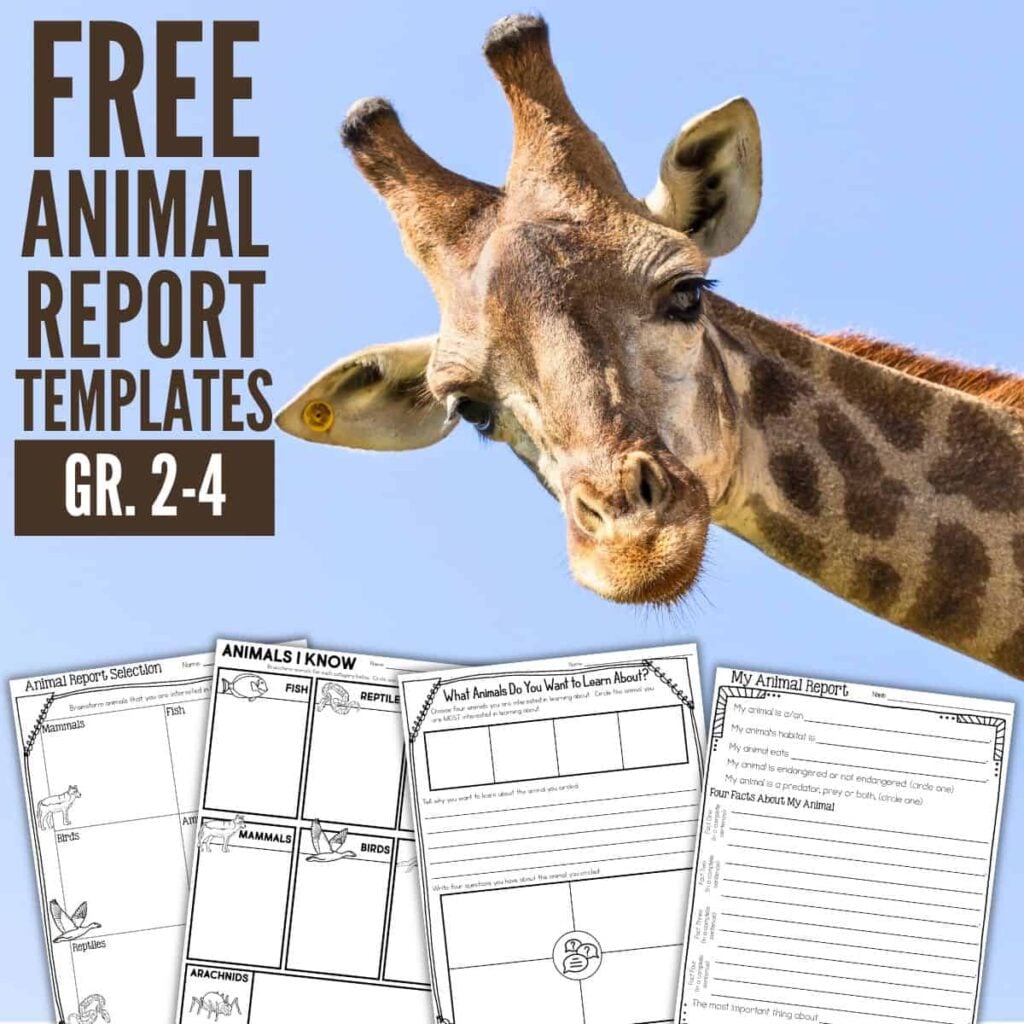
The FREE Animal Report Template includes structured brainstorming pages to make this step simple and organized.
Step 3: Explain the Research Process (Without Overwhelming Students)
Animal research can feel overwhelming if students see the entire project at once.
Here is the full process I follow:
- Choose an animal
- Read about the animal and watch short videos
- Take notes
- Organize facts into categories
- Use a template or graphic organizer
- Write a rough draft
- Write a final draft
- Assemble the finished report
Instead of presenting all of this at once, I simplify the process into three phases:
Research → Organize → Write
Breaking the project into these three steps helps students stay focused.
Step 4: Research and Collect Facts
Once students choose an animal, they begin gathering information.
Students research topics such as:
- physical appearance
- habitat
- diet
- behavior
- interesting facts
At this stage, I encourage students to write down as many facts as they can without worrying about organization.
Students might use:
- a brainstorm list
- a circle map
- a simple note-taking organizer
Later, we group the facts into categories so they are easier to turn into paragraphs.
Students can also use animal research websites for kids to find safe, student-friendly information.
Step 5: Provide Strong Research Materials
One challenge with animal research is finding informational texts written at the right reading level.
Students can research animals using:
- library books
- informational articles
- kid-friendly websites
- short educational videos
High-Interest Animal Articles for Elementary Students
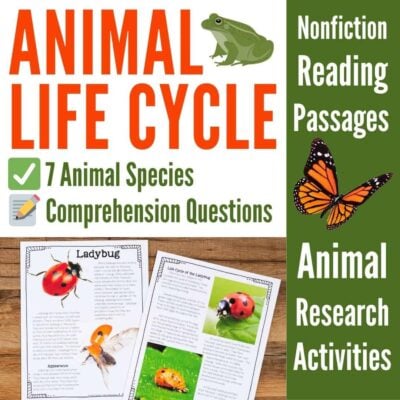
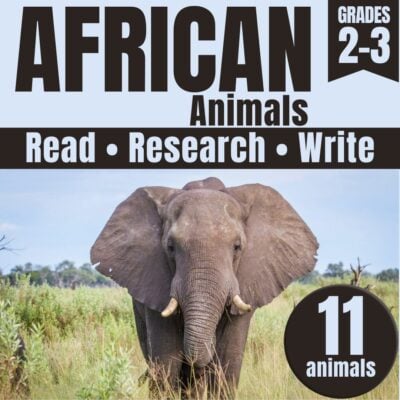
To support student research, I created animal informational articles written specifically for elementary students.
These articles include:
- high-interest informational text
- scaffolded reading comprehension activities
- fact sorting activities
- mini report writing options
Many of the articles also include QR codes that link to additional research websites and videos, giving students even more ways to explore their topic.
-
 Product on saleLife Cycle Informational Articles and Comprehension Activities – BUNDLEOriginal price was: $21.00.$14.70Current price is: $14.70.
 -
-
Product on saleAfrican Animals BUNDLEOriginal price was: $33.00.$16.51Current price is: $16.51.

Do you need engaging informational texts that your elementary students will actually want to read?
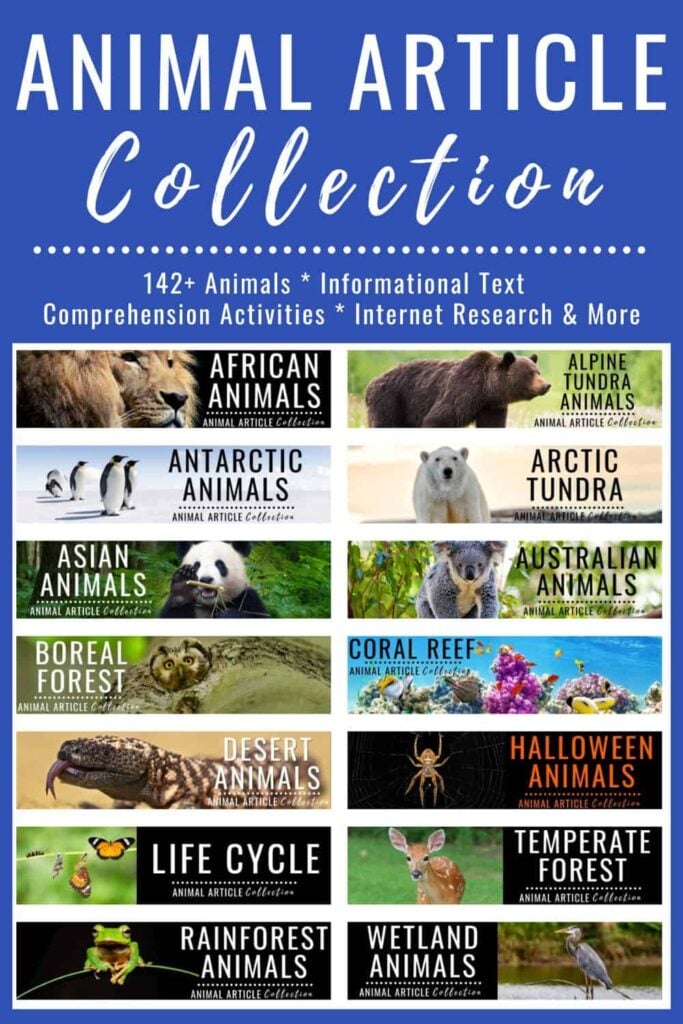
The Animal Article Collection includes 142+ animal articles spanning 14 ecosystems, complete with reading comprehension and structured writing activities. Students can choose their animal while building skills in informational text, research, and report writing.
Step 6: Teach Students to Organize Facts
Before writing full reports, I model how to:
- Extract key information
- Break facts into usable pieces
- Group related ideas
- Turn grouped facts into a paragraph
We practice together before students write independently.

If you want a deeper look at how I introduce informational writing during the first week of this unit, I share those details in another blog post here.
Step 7: Use a Clear Animal Report Template
Once students have organized their notes, they are ready to write their animal research report.
Using a structured animal report template gives students a clear framework for their writing.
Most animal reports include sections such as:
- introduction
- habitat
- diet
- behavior or characteristics
- interesting facts
- conclusion
Providing structure reduces frustration and helps students produce stronger writing.

My Animal Report for Any Animal resource includes:
- differentiated graphic organizers
- multiple report formats
- structured writing pages
- flexible layouts for different grade levels
This makes it easy to run a full animal research unit.
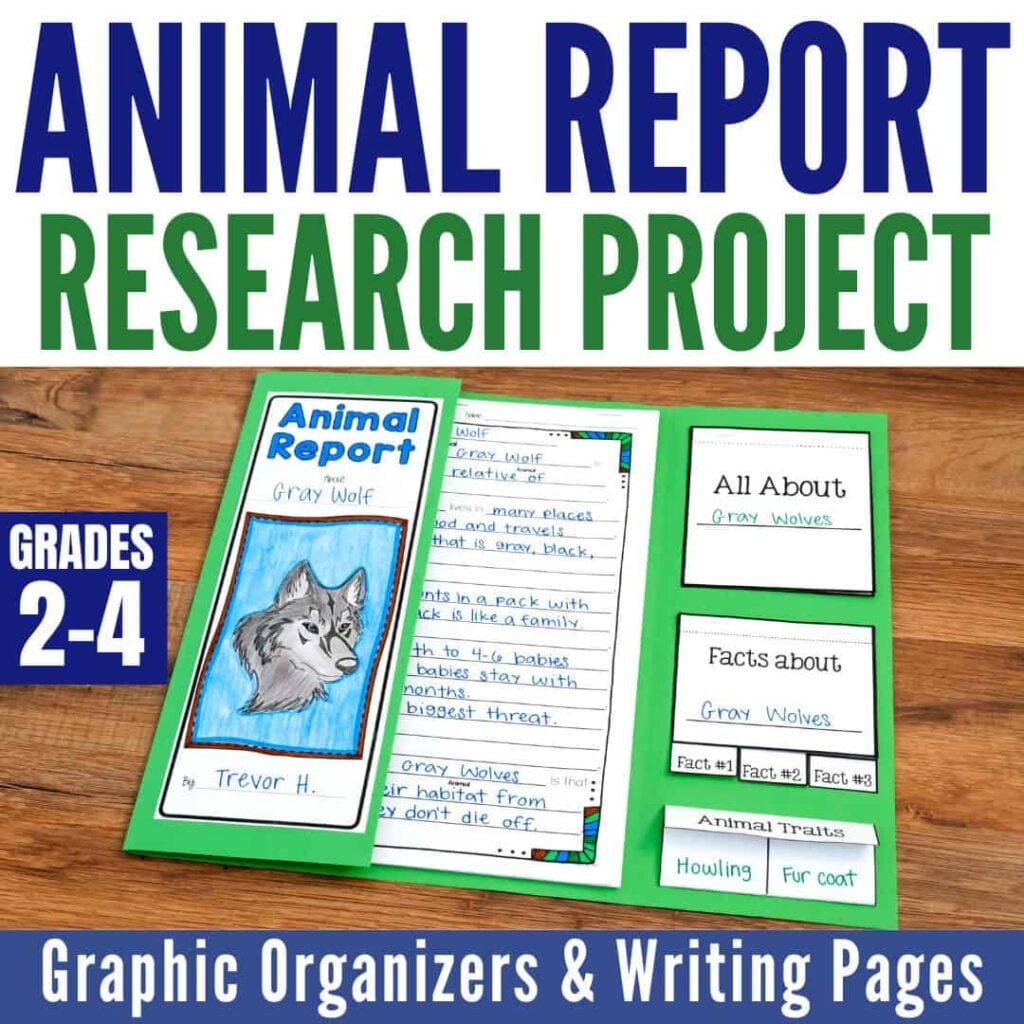
Animal Report Templates, Graphic Organizers, Rubric, Lapbook, Trifold
This animal report project helps students research and write about any animal. The resource includes graphic organizers, research pages, report templates, and project options such as booklets, trifolds, lap books, and interactive notebooks.
Teach Students to Use Facts and Evidence
One of the most valuable lessons in an animal report project is learning to support writing with evidence.
We discuss how to:
- write complete sentences
- avoid random lists of facts
- explain why information matters
- include details from research
This builds strong informational writing habits that students will use in future research projects.
FREE Animal Report Template
If you’re looking for a simple way to get started, I created a free animal report template you can use in your classroom.
This template includes:
- brainstorming pages
- animal selection tools
- guided research questions
- structured writing support
- a complete report page
The pages walk students through the entire research and writing process step-by-step, making it much easier for students to complete their first animal report.
You can download the FREE Animal Report Template here.
Final Thoughts on Teaching Animal Reports
Animal reports are more than a fun science activity.
They help students develop important academic skills, including:
- research skills
- note-taking
- organization
- informational writing
- evidence-based explanations
With clear steps and the right tools, students can confidently research animals and turn their discoveries into strong written reports.
Start with the free template, then build the project from there. Students will be proud of the animal reports they create.

I would love the free animal report template.
There are a couple places above to enter your email to download the template.