
Compare and Contrast Topics for Elementary Students
Students naturally notice similarities and differences in the world around them. They compare which snack is better, which game is more fun, and which animal is faster. Using engaging compare and contrast topics helps teachers turn that natural curiosity into a meaningful reading and writing skill. Compare and contrast lessons tap into students’ everyday thinking and guide them to analyze similarities and differences in a clear, structured way.
Teaching students to compare and contrast helps them think more deeply about what they read and observe. Instead of simply recalling facts, students analyze ideas, identify patterns, and explain relationships between two topics.
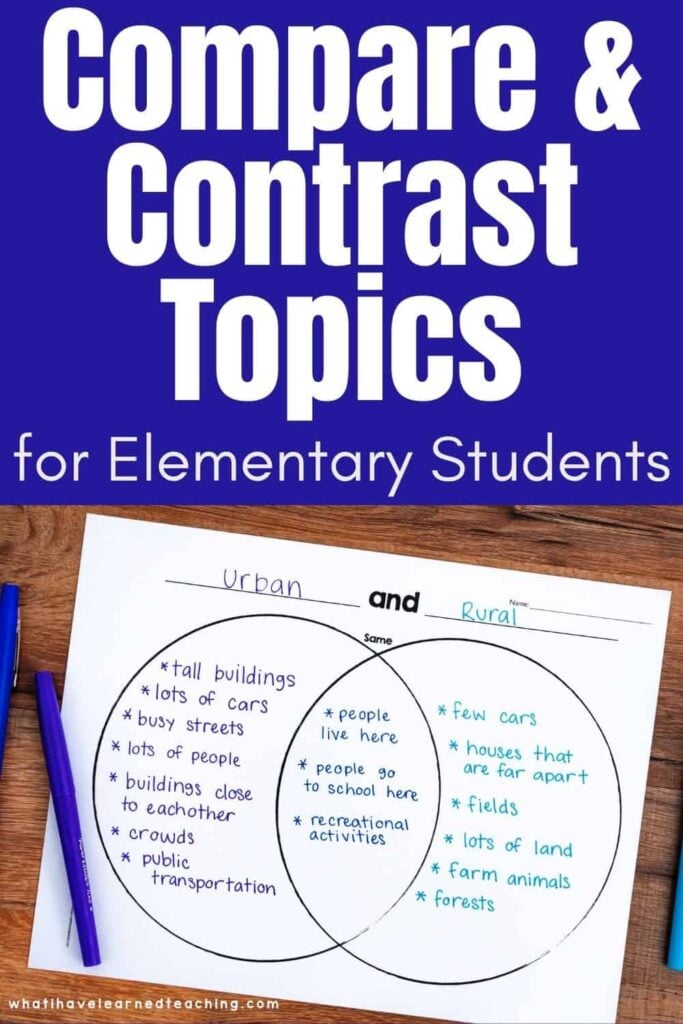
In elementary classrooms, compare and contrast activities work well across subjects. Teachers can use them during reading lessons, writing workshop, social studies units, and science investigations. With the right topics, students quickly move beyond basic answers and begin explaining their thinking in more detail.
What It Means to Compare and Contrast
When students compare, they identify how two things are similar.
When students contrast, they identify how two things are different.
This skill supports many literacy standards since it encourages students to analyze information rather than just recall it.
Students might compare:
- Characters in a story
- Two animals
- Two settings
- Two historical events
- Two ecosystems
- Two ways to solve a math problem
A structured approach makes this skill easier for elementary learners. Graphic organizers, sentence frames, and guided discussions help students organize their ideas before writing.

For a full breakdown of teaching this skill step-by-step, see this guide on how to teach compare and contrast.
Compare and Contrast Topics for Elementary Students
Strong topics make compare and contrast lessons much more engaging. Students tend to do better when the topics feel familiar or interesting.
Animals
Animal comparisons work well in both reading and science lessons.
Examples:
- Frogs vs. toads
- Sharks vs. dolphins
- Owls vs. hawks
- Lions vs. tigers
- Desert animals vs. rainforest animals
Students can compare habitat, diet, body structure, and behavior. I have sets of compare and contrast animal articles available on TPT.
Characters in Stories
Literature provides many opportunities for comparing characters.
Students might analyze:
- Two characters in the same book
- The main character vs. the antagonist
- Characters from two different stories
- How a character changes from the beginning of a story to the end of the story
Questions might include:
- How are the characters similar?
- What motivates each character?
- How do they solve problems differently?
A strong read-aloud can easily lead to these discussions.
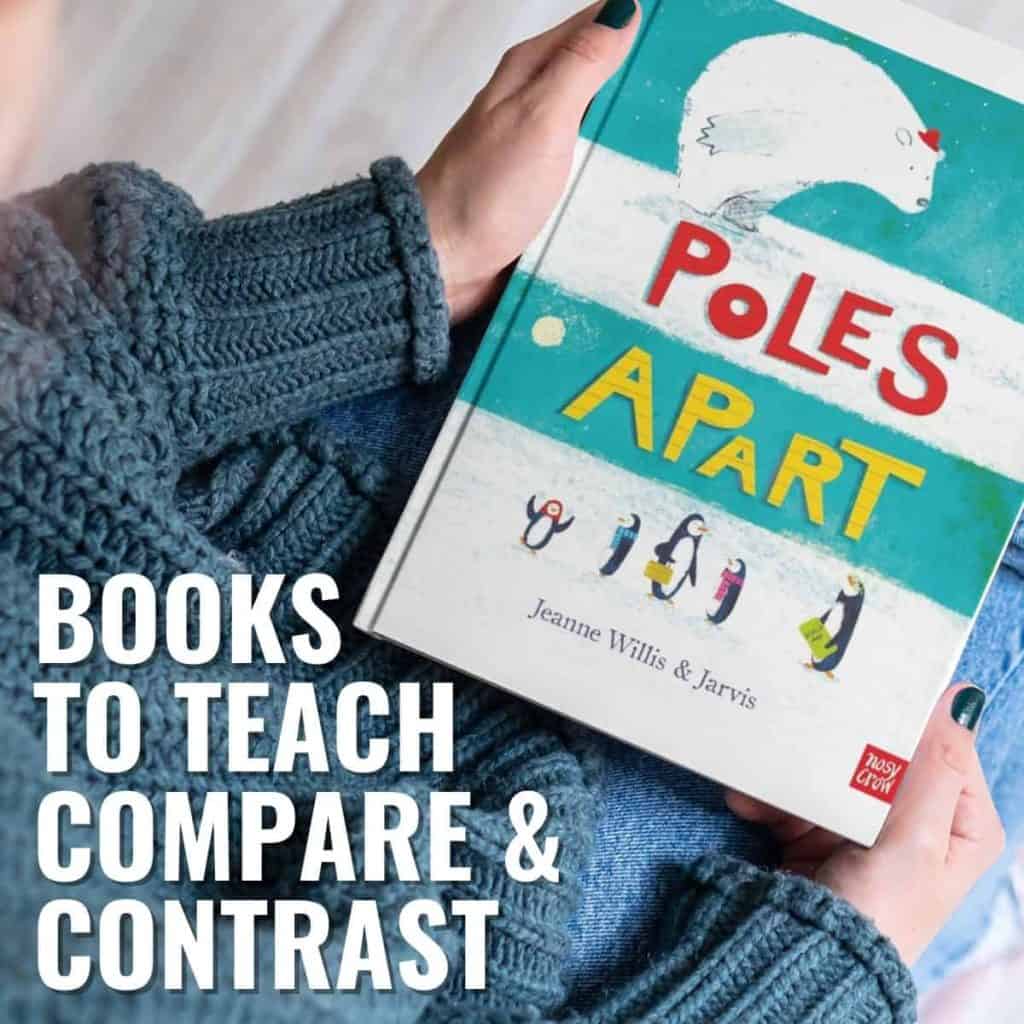
This list of books to teach compare and contrast includes stories that naturally highlight similarities and differences.
Settings
Students can compare settings within the same story or across different texts.
Examples include:
- City vs. countryside
- School vs. home
- Beach vs. mountains
- Winter vs. summer settings
These topics help students practice identifying descriptive details in text.
Science Topics
Science lessons are full of natural comparisons.
Examples:
- Living vs. nonliving things
- Mammals vs. reptiles
- Herbivores vs. carnivores
- Weather vs. climate
- Solids vs. liquids
Students can organize their thinking using charts, diagrams, or writing frames.
Everyday Objects
Simple classroom items work well for younger students.
Examples:
- Pencils vs. pens
- Apples vs. oranges
- Bikes vs. scooters
- Dogs vs. cats
These topics are easy for early writers and help introduce the concept before moving to more complex comparisons.
Urban and Rural Communities
One example that works particularly well in social studies is comparing urban and rural communities.
Students often enjoy discussing how life might feel different in each environment.
Urban areas may include:
- Tall buildings
- Public transportation
- Many businesses close together
- Larger populations
Rural areas may include:
- Farms and open land
- Smaller towns
- Fewer people
- Longer distances between locations
This topic encourages students to think about geography, lifestyles, and community structures.
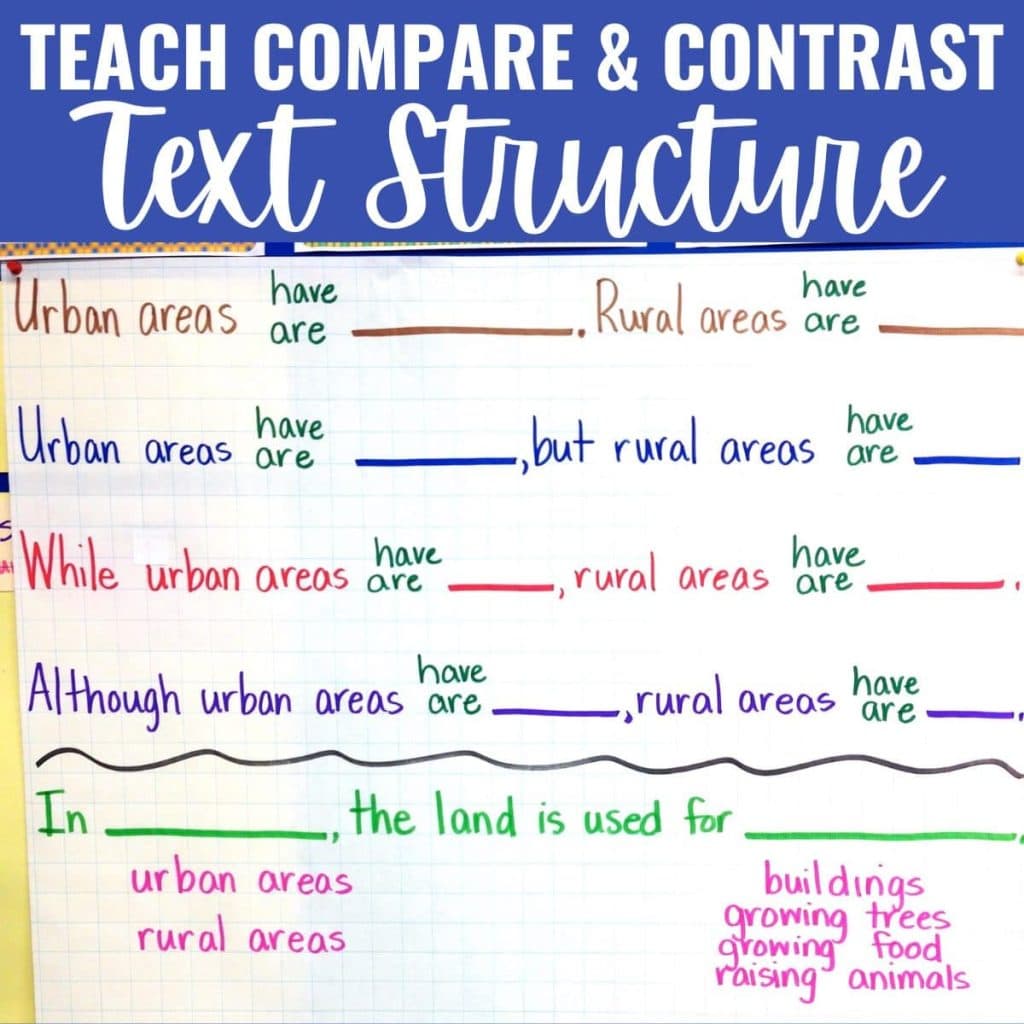
A deeper example of this comparison can be found in this urban and rural lesson.
Activities for Teaching Compare and Contrast
Students understand the skill more easily when they practice it in different ways.
Venn Diagrams
Venn diagrams provide a visual structure for organizing ideas.
Students write similarities in the overlapping section and differences in the outer circles.

T-Charts
A simple T-chart works well when students focus mainly on differences.
Example:
| Cats | Dogs |
|---|---|
| Climb trees | Fetch objects |
| Usually quieter | Often bark |
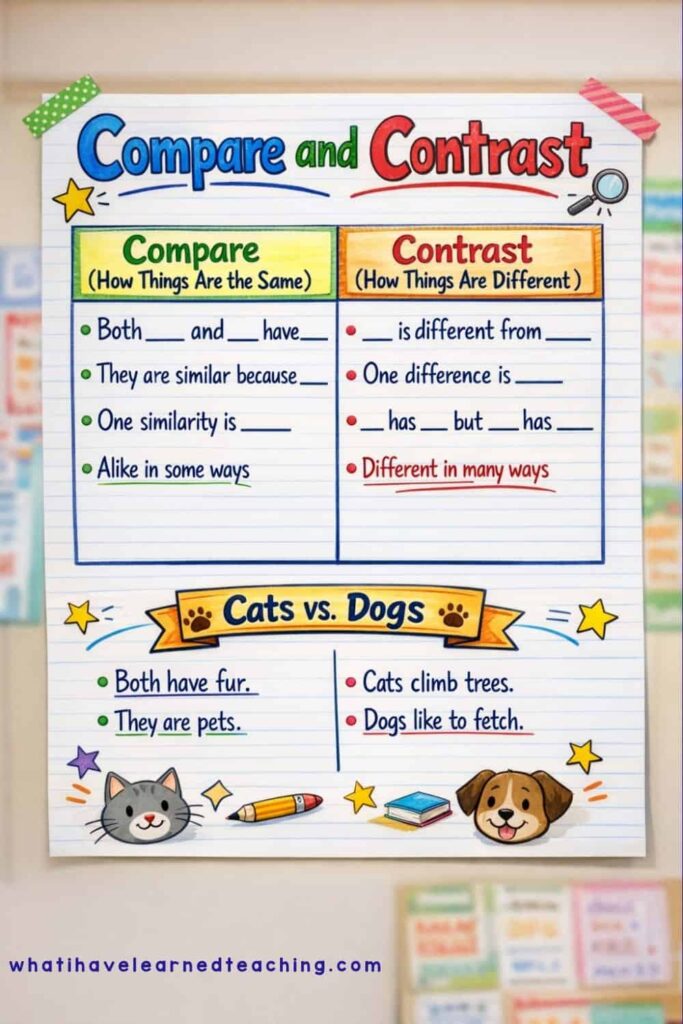
Sentence Frames
Sentence frames help students explain their thinking in complete sentences.
Examples:
- Both ___ and ___ are similar because ___.
- ___ and ___ are different because ___.
- One similarity between ___ and ___ is ___.
- One difference is ___.
Compare and Contrast Writing
Once students gather ideas, they can turn those notes into paragraphs.
Students might write:
- A paragraph about similarities
- A paragraph about differences
- A short essay explaining both
Structured resources can make this process easier for teachers. This compare and contrast unit includes reading passages, organizers, and writing practice that guide students through the process step by step.
Compare and Contrast Unit for Elementary Students
If you’re looking for a structured way to teach this skill, this Compare and Contrast Unit provides step-by-step lessons that help students learn how to identify similarities and differences in informational texts.
The unit includes reading passages, graphic organizers, and writing activities that guide students through the process of analyzing two topics. Students practice organizing their ideas using tools like Venn diagrams and then explain their thinking in complete sentences and short paragraphs.
These activities work well during reading comprehension lessons. They give students repeated practice comparing topics, organizing details, and clearly explaining similarities and differences.

Compare and Contrast Paragraphs & Reading Passages, Comprehension Activities for Academic Language
Help students master the academic language of comparing and contrasting with this unit that enhances reading comprehension by comparing and contrasting topics through differentiated texts and sentence frames.
Why Compare and Contrast Matters
Compare and contrast is more than just a reading strategy. It strengthens many academic skills.
Students learn to:
- Analyze information
- Organize ideas logically
- Support statements with evidence
- Write clear explanations
- Engage in deeper discussions
These skills support reading comprehension, writing development, and critical thinking across subjects.
Compare and contrast lessons help students move past surface-level thinking. When students analyze similarities and differences, they begin making stronger connections between ideas.
With engaging topics, graphic organizers, and structured writing practice, this skill becomes much easier for elementary students to understand. Whether students compare animals, characters, communities, or scientific concepts, the process builds stronger readers, writers, and thinkers.
Jessica BOschen
Jessica is a teacher, homeschool parent, and entrepreneur. She shares her passion for teaching and education on What I Have Learned. Jessica has 16 years of experience teaching elementary school and currently homeschools her two middle and high school boys. She enjoys scaffolding learning for students, focusing on helping our most challenging learners achieve success in all academic areas.