
100 Progress Report Comments for Elementary Students (Mid-Year + Quarterly Examples)
Progress report comments help families understand how a student is doing right now, not just the outcome at the end of the term. Writing them can feel tricky when you want to be specific, supportive, and clear without sounding repetitive from student to student.
Unlike end-of-year report card comments, progress report comments are about ongoing growth. They highlight what’s improving, what still needs support, and what the next steps are in academics, behavior, and work habits.
This list of 100 progress report comments for elementary students is organized by academic progress, behavior, organization, and parent-focused notes so you can quickly choose a comment, personalize it, and move on with your life.
Progress reports vs. report cards: Progress report comments focus on what students are working on right now and the next steps to keep growth going. If you’re writing end-of-term report card comments, use my full list of report card comments for elementary teachers here. (link to pillar)
Progress Report Comments by Category (Academic, Behavior, Work Habits)
This list of 100 progress report comments is categorized to help you address students’ academic achievements, classroom behavior, organizational skills, and other areas crucial to their overall development. With these comments, you can craft personalized feedback that supports students and keeps parents informed about their child’s ongoing progress.
Progress Report Comment Sentence Frames
Use these sentence frames to make comments specific without writing from scratch:
- ___ has shown progress in ___, especially when ___.
- ___ is improving in ___ and is working on ___ next.
- ___ is beginning to ___ more consistently and will continue to grow by ___.
- ___ demonstrates strength in ___; a helpful next step is ___.
- ___ benefits from ___, and we will continue practicing ___ in class.
Academic Progress Report Comments by Subject
Progress in core academic subjects provides a strong foundation for a student’s overall growth. Comments in this section should address specific achievements in math, reading, writing, science, and social studies, acknowledging students’ strengths and identifying areas for improvement.
These subject-based insights can give parents a clear view of how their child is performing academically. They work best when you add one next step you want the student to practice during the next grading period. Here are a few examples you can adapt to your own classroom:
Math
- Demonstrates a solid understanding of basic math concepts and can apply them independently.
- Needs consistent practice with multiplication tables for greater fluency.
- Shows improvement in problem-solving skills but could benefit from more practice with multi-step problems.
- Often requires assistance in understanding new concepts but is making steady progress.
- Is quick to grasp new math concepts and applies them accurately in assignments.
Reading
- Shows a great interest in reading and consistently meets reading goals.
- Needs encouragement to choose more challenging texts to improve reading comprehension.
- Has shown significant progress in reading fluency and expression.
- Requires help with identifying main ideas and supporting details.
- Demonstrates strong understanding of grade-level texts but could improve in inferential comprehension.
Writing
- Shows a good grasp of grammar and sentence structure in written work.
- Needs to work on organizing ideas more clearly in writing.
- Writes with creativity but requires guidance in using appropriate vocabulary.
- Has shown improvement in writing neatness and legibility.
- Needs encouragement to add more detail and expand ideas in written responses.
Science
- Demonstrates curiosity about scientific concepts and participates actively.
- Has a good understanding of the scientific method but needs more practice with lab activities.
- Shows improvement in understanding complex scientific terms and ideas.
- Could benefit from reviewing the concepts covered to strengthen retention.
- Works well on projects but struggles with understanding scientific explanations.
Social Studies
- Shows a keen interest in history and participates in discussions actively.
- Demonstrates a strong understanding of key historical events studied this term.
- Needs to improve recall of important facts and details for tests.
- Shows improvement in map-reading and geographical skills.
- Could use more practice analyzing primary sources and forming opinions.
Behavioral Development Comments
Behavioral skills are key to students’ success in and out of the classroom. This category covers how students interact with peers, respect classroom rules, and manage responsibilities.
By noting areas such as social skills, classroom behavior, and motivation, teachers can provide feedback that supports a student’s personal and social growth alongside academic progress.
Classroom Behavior
- Consistently follows classroom rules and sets a positive example for peers.
- Needs frequent reminders to stay on task and avoid distractions.
- Shows respect for classmates and works well in groups.
- Occasionally interrupts others and could work on listening more attentively.
- Takes responsibility for actions and is improving in conflict resolution.
Effort and Motivation
- Consistently puts forth best effort in all tasks and assignments.
- Shows improvement in work ethic but needs encouragement to try challenging tasks.
- Demonstrates enthusiasm but occasionally rushes through assignments.
- Requires reminders to stay motivated and finish assignments on time.
- Is working on developing persistence when faced with difficult tasks.
Social Skills
- Is considerate and supportive when interacting with peers.
- Needs to work on sharing ideas more confidently during discussions.
- Shows improvement in building positive relationships with classmates.
- Occasionally struggles with taking turns during group activities.
- Is very inclusive and helps create a positive classroom environment.
Organizational Skills Comments for Progress Reports
Good organizational skills help students effectively manage their time and responsibilities, building a foundation for academic and personal success. Comments in this section focus on students’ ability to stay organized, manage assignments, and complete tasks efficiently. Positive feedback in these areas can encourage students to continue improving their organizational habits.
Time Management
- Manages time effectively and rarely needs reminders to stay on task.
- Needs to improve consistency in completing assignments on time.
- Has shown improvement in managing class time wisely.
- Frequently needs reminders to start tasks promptly and stay focused.
- Completes work efficiently and often finishes early.
Assignment Completion
- Consistently completes all assignments and homework with effort and attention.
- Shows improvement in meeting deadlines but occasionally needs reminders.
- Requires assistance to manage workload and prioritize assignments.
- Has made strides in turning in assignments more consistently.
- Frequently submits high-quality work but could improve in meeting deadlines.
Organizational Skills
- Keeps desk and materials organized, making it easier to find supplies.
- Needs frequent reminders to organize desk and belongings.
- Shows improvement in organizing materials and keeping track of assignments.
- Has difficulty keeping track of materials and could use more support.
- Demonstrates responsibility in caring for personal and classroom supplies.
Areas for Continued Growth
Identifying areas for continued growth allows students to improve specific skills and develop positive habits. This section can include feedback on developing independence, boosting self-confidence, or enhancing focus. These comments offer targeted goals that students can work toward with support from teachers and parents.
Independence
- Demonstrates increasing independence in completing assignments.
- Needs encouragement to work without seeking frequent teacher assistance.
- Often requires reminders to work independently and trust their abilities.
- Shows improvement in tackling tasks independently but needs further practice.
- Is developing independence in personal responsibilities and schoolwork.
Self-Confidence
- Displays confidence in abilities and participates actively in class.
- Needs gentle encouragement to believe in their skills and answer questions.
- Shows progress in self-confidence, especially in group settings.
- Often hesitant to speak up and could benefit from confidence-building activities.
- Has shown improvement in expressing ideas and taking risks.
Following Directions
- Listens to and follows directions carefully and accurately.
- Needs reminders to listen to all instructions before starting work.
- Shows improvement in following directions independently.
- Occasionally rushes through instructions, resulting in errors.
- Takes initiative to clarify instructions when needed.
Overall Progress Report Comments
Summarizing a student’s overall progress helps create a balanced picture of their development throughout the term. This section recognizes individual strengths, improvements, and areas for further support. Use these comments to celebrate a student’s successes while encouraging ongoing growth.
Strengths
- Demonstrates a positive attitude toward learning and improvement.
- Has a strong work ethic and consistently strives to do their best.
- Is a thoughtful and respectful member of the classroom community.
- Participates enthusiastically in all classroom activities and discussions.
- Shows creativity and originality in completing assignments.
Areas to Improve
- Needs to develop patience with challenging tasks to avoid frustration.
- Could benefit from setting specific goals to stay focused on improvement.
- Occasionally needs reminders to stay on topic during assignments.
- Requires encouragement to participate more actively in group work.
- Could improve by taking more time to check work before submitting.
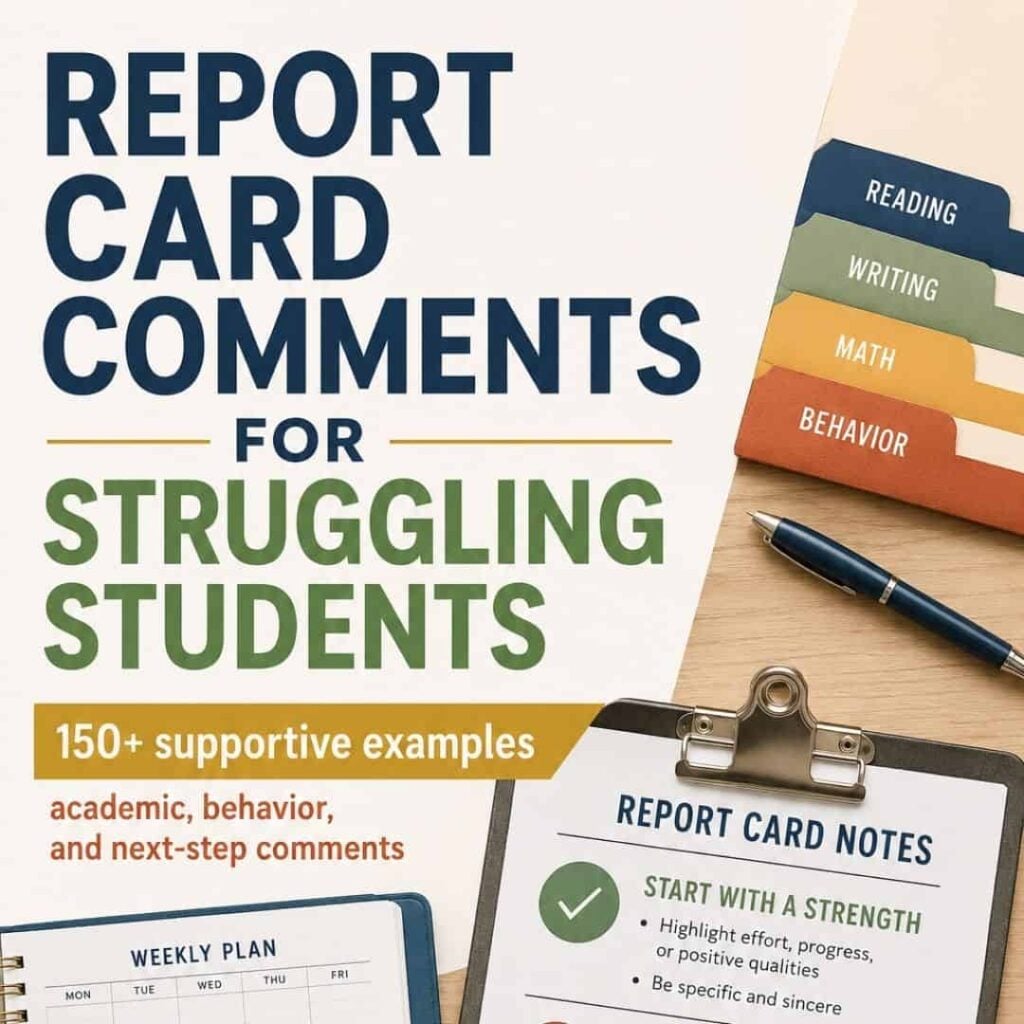
Need wording for students who are behind? See these report card remarks for struggling students.
Customized Comments for Progress Reports
Sometimes, a student’s journey requires more personalized feedback to capture their unique contributions and areas for improvement.
These tailored comments can cover a wide range of achievements, from handling social situations to demonstrating perseverance. Personal touches in this section make feedback more meaningful and motivate students to keep making strides.
Individual Growth
- Has made noticeable progress in managing emotions in social settings.
- Shows pride in completed work and is learning to appreciate quality over speed.
- Requires additional support with adapting to new classroom routines.
- Frequently volunteers to help classmates, demonstrating leadership skills.
- Enjoys hands-on learning experiences and benefits from them.
Attitude and Perseverance
- Maintains a positive attitude even when faced with difficult work.
- Needs encouragement to embrace challenges as opportunities for growth.
- Is learning to handle mistakes as part of the learning process.
- Shows resilience and a positive outlook when facing academic challenges.
- Needs to be reminded that success comes with consistent effort.
Parent-Focused Comments about Progress
Providing specific feedback and suggestions for parents fosters a partnership between home and school. This section offers actionable advice for parents to support their child’s learning at home. Positive parent-teacher collaboration is essential for helping students make steady progress, both academically and behaviorally.
Home Support Suggestions
- Would benefit from reading together at home to enhance comprehension skills.
- Could use additional support at home to reinforce math facts.
- Please encourage daily review of classroom material to reinforce learning.
- Practicing organization skills at home would benefit classroom routines.
- Setting a consistent homework routine may help with time management.
Encouraging Development
- Thank you for your support in reinforcing positive behaviors at home.
- With continued support at home, I’m confident we’ll see further improvement.
- It’s a pleasure to see such strong support for [Student’s Name]’s progress.
- Consistent practice at home on [specific subject] would strengthen skills.
- We appreciate your partnership in helping [Student’s Name] succeed in school.
Make Progress Reports More Meaningful with Student Reflection
Progress report comments are most effective when students understand their own growth.
Before sending home mid-year or quarterly progress reports, consider having students complete a self-reflection activity. When students evaluate their behavior, effort, and academic habits, they become active participants in their growth.
My Behavior & Academic Self-Reflection Sheets guide 3rd–5th graders through:
- Behavior reflection rubrics
- Academic self-assessment (including reading and math)
- Short-answer goal setting
- Conference-ready discussion points
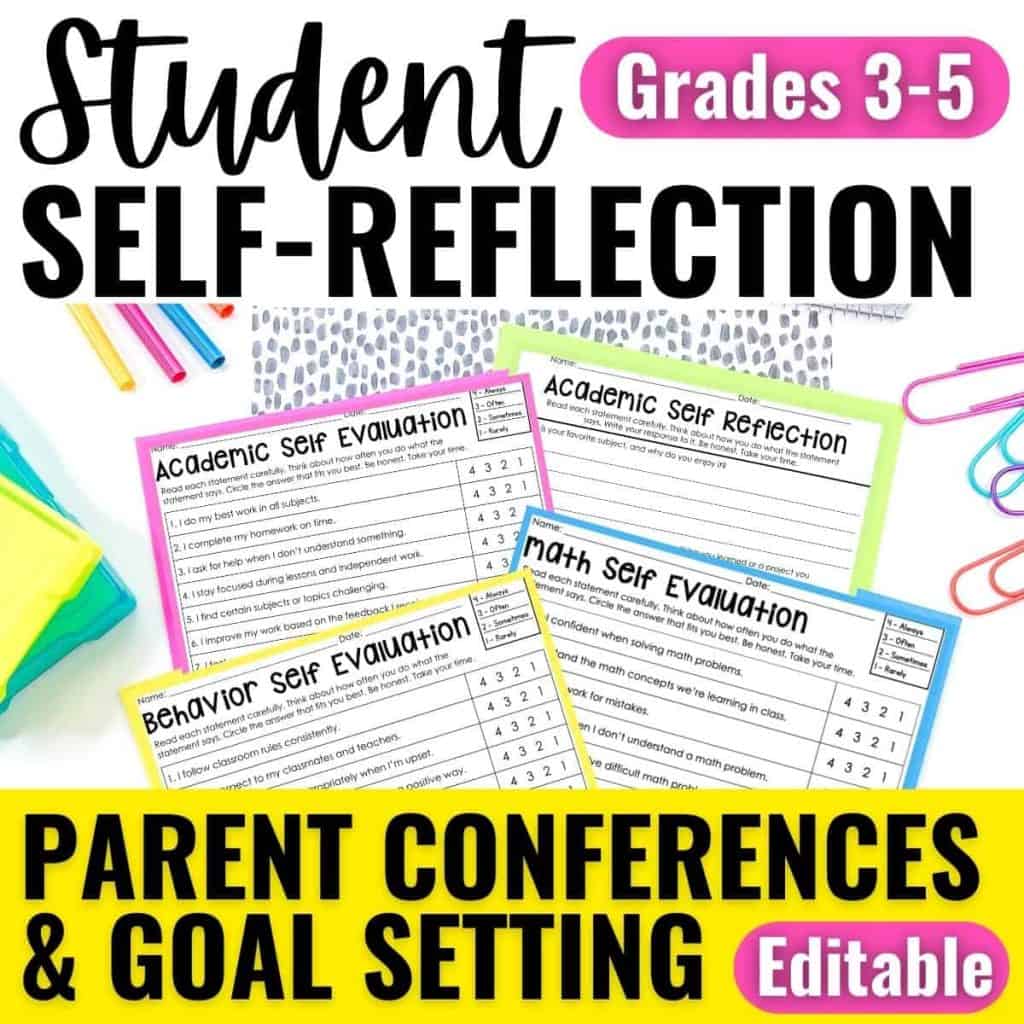
These reflection sheets work especially well before parent-teacher conferences. Students can share their own goals alongside your progress report comments, creating a more productive and student-centered conversation.
Crafting progress report comments doesn’t have to be a time-consuming task. By focusing on specific achievements and areas for growth, you create feedback that is both actionable and supportive.
Remember that progress reports are an opportunity to celebrate each student’s journey while also guiding the path forward. Whether you’re recognizing their achievements in math, encouraging better time management, or highlighting their improvement in social skills, these comments will help you communicate clearly with parents and contribute positively to each student’s learning experience.
For end-of-year wording, see my report card comments list.
Jessica BOschen
Jessica is a teacher, homeschool parent, and entrepreneur. She shares her passion for teaching and education on What I Have Learned. Jessica has 16 years of experience teaching elementary school and currently homeschools her two middle and high school boys. She enjoys scaffolding learning for students, focusing on helping our most challenging learners achieve success in all academic areas.