
Student Self-Reflection Sheets for Parent-Teacher Conferences
A few days before parent-teacher conferences, I send home a student self-reflection sheet with each student. By the time families sit down with me, their child has already thought through their own behavior and academic habits — and that changes the conversation completely. Instead of the teacher delivering a report while the student sits quietly, students come in ready to talk about where they are and where they want to go.
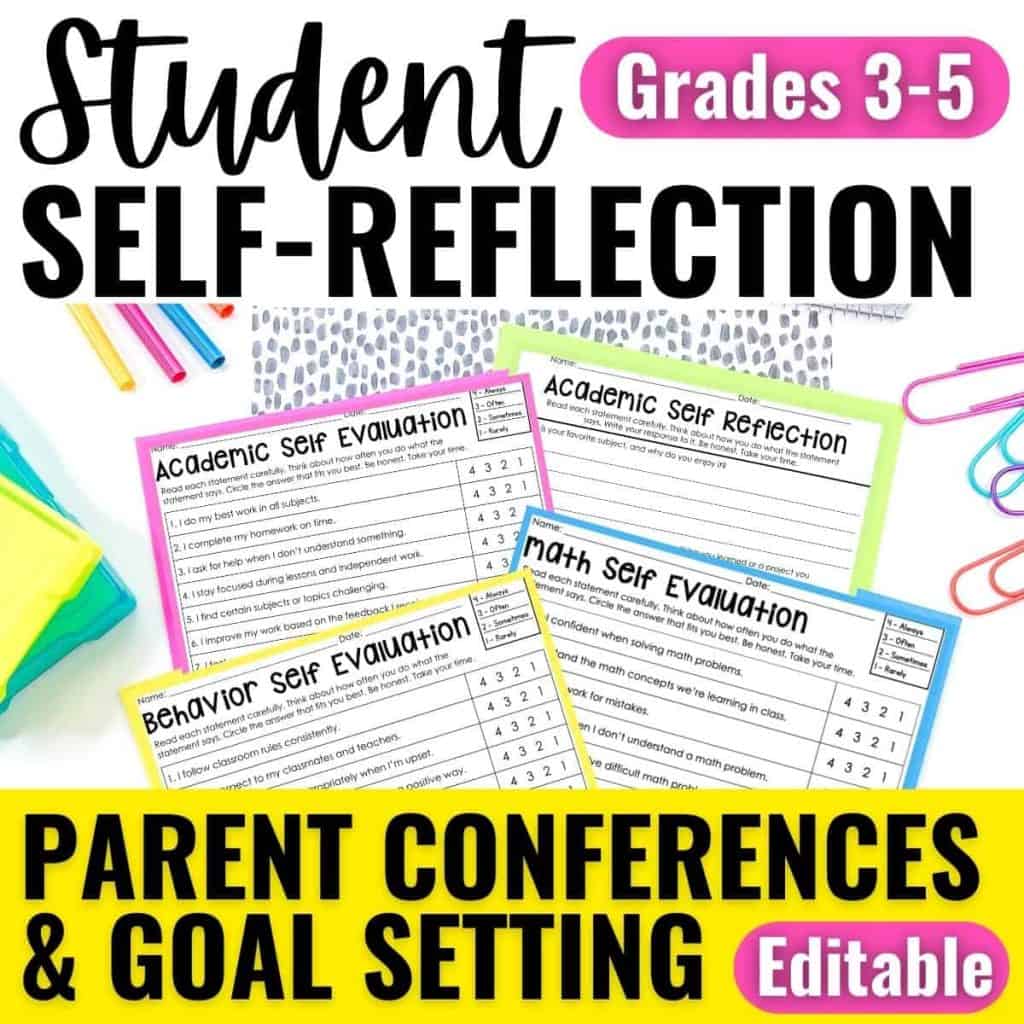
These Behavior and Academic Self-Reflection Sheets are designed for 3rd, 4th, and 5th graders. Students work through rubrics and short-answer questions that cover both their behavior and their academic habits in reading, math, and overall. Here is what is included.

Why Encourage Student Reflection?
By encouraging students to look inward and assess their actions and learning habits, teachers provide them with a tool to understand their own behavior, academic strengths, and areas needing improvement. Self-reflection enhances their educational experience by promoting growth in ways that simple feedback cannot.
Here are some key benefits of fostering student reflection in your classroom.
- Builds Accountability
Reflection is a foundation for accountability. When students assess their behavior and academic habits, they’re prompted to recognize patterns and take responsibility for their actions. This self-awareness translates into improved behavior and more focused learning, as students begin to understand their role in their success. - Supports Goal-Setting Skills
Goal-setting becomes more effective when students reflect on their strengths and areas for growth. The Self-Reflection Sheets encourage them to think critically about both behavior and academics, setting the stage for realistic, achievable goals. This early practice of setting and working toward goals lays a foundation for lifelong success. - Promotes Emotional Intelligence
Through self-reflection, students learn to identify and manage their emotions. Questions related to handling conflicts, respecting classmates, and managing frustration provide them with tools to navigate social interactions. This is crucial in developing emotional intelligence, which impacts every area of life, from the classroom to personal relationships. - Boosts Academic Ownership
When students reflect on their academic performance, they become more engaged and motivated. Self-assessment questions like “What is one academic goal you have for the rest of the year?” help students recognize their growth areas and encourage them to seek help when needed. This proactive approach enhances their learning and builds confidence.
What’s Inside the Self-Reflection Resource?
These Behavior & Academic Self-Reflection Sheets are thoughtfully crafted to guide students through a holistic self-assessment. Here’s what’s included:
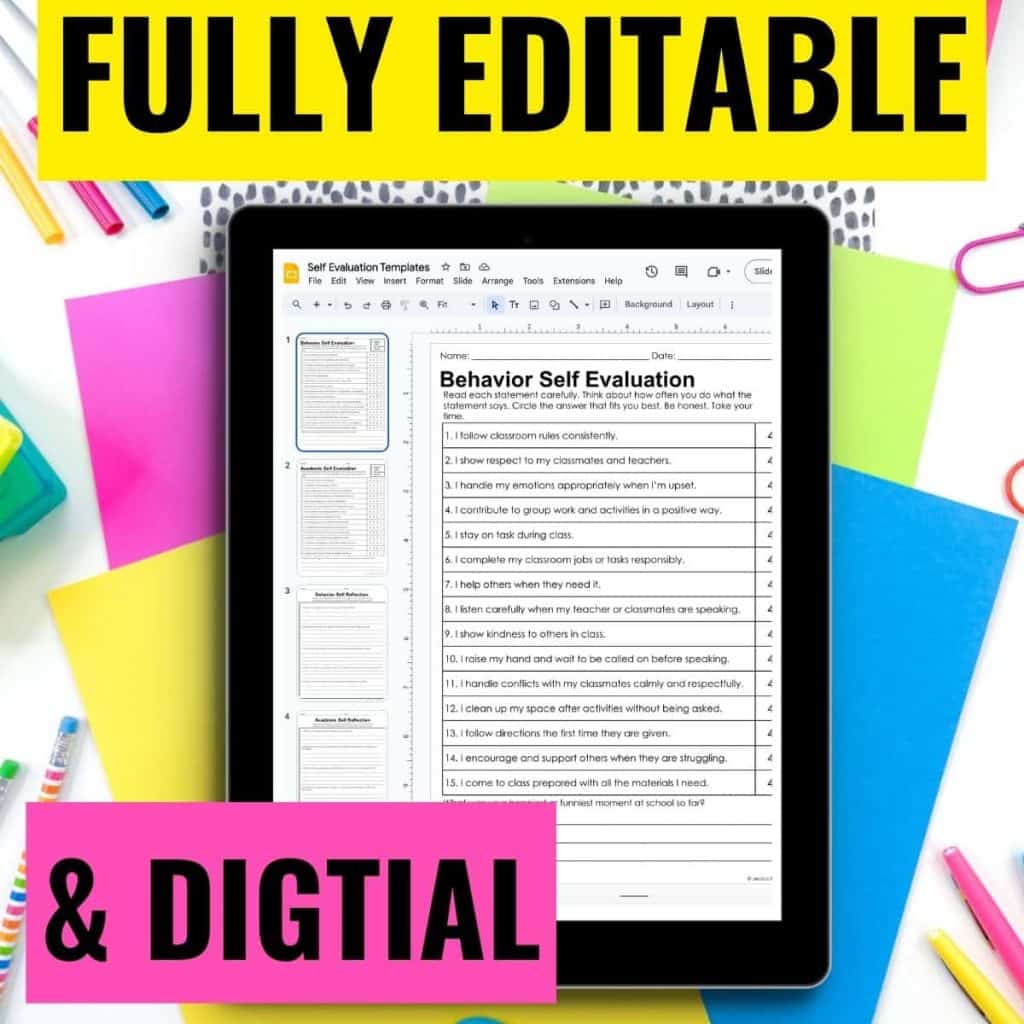
- Editable Google Slides: Easily adapt the content to meet your classroom’s unique needs.
- Behavior Self-Reflection Rubric: 15 targeted questions to help students evaluate their classroom behavior and interpersonal interactions.
- Academic Self-Reflection Rubric: 15 questions that guide students to reflect on their academic habits and progress. Also includes separate sheets for reading and math.
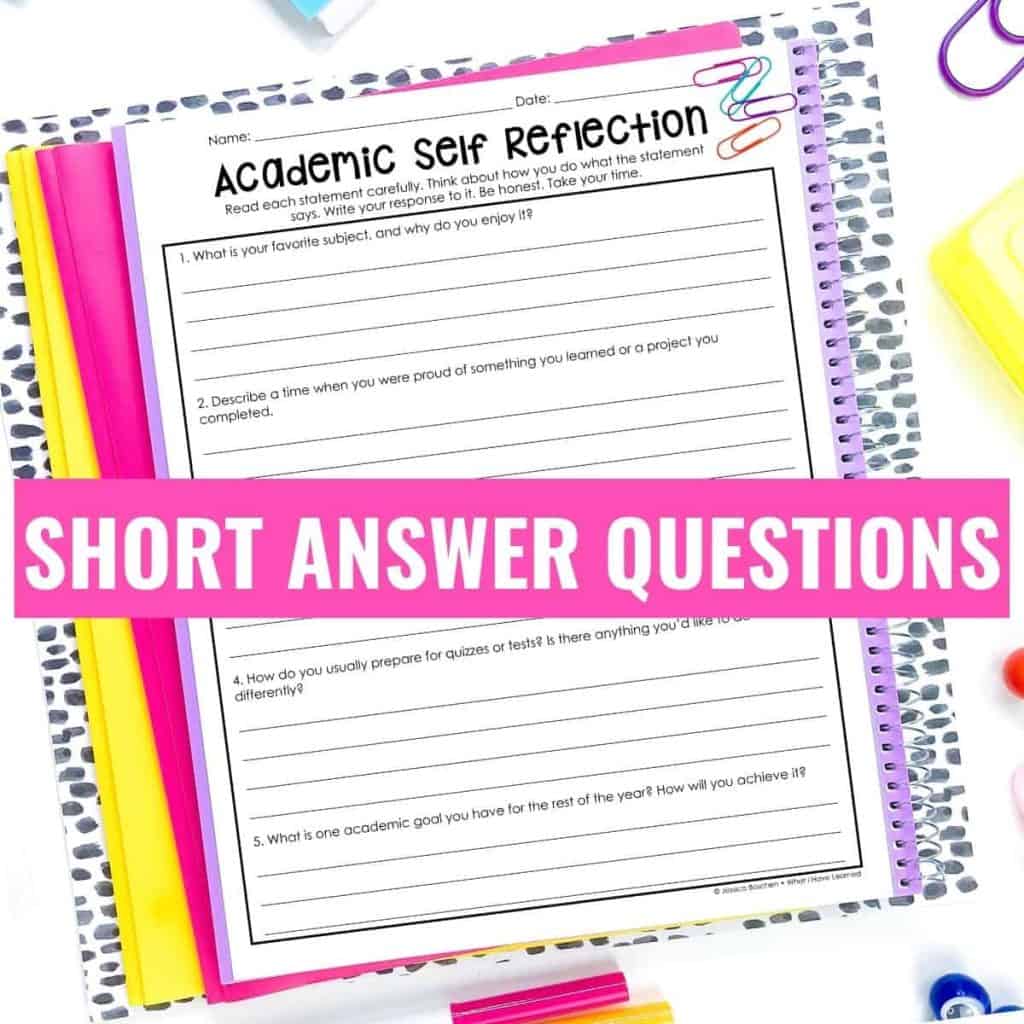
- Short Answer Questions: For more in-depth self-assessment, allowing students to articulate their thoughts on behavior and academics.
- Clear, student-friendly layout designed for grades 3-5: Designed to make self-reflection an enjoyable and meaningful process.
This resource works well for encouraging responsibility and helping students prepare for parent-teacher conferences or year-end reflections.

Help your students reflect on their behavior and academic performance with these Behavior & Academic Self-Reflection Sheets! Perfect for 3rd-5th graders, these easy-to-use rubrics and short answer questions guide students through a thoughtful self-assessment process before parent conferences or end-of-year reflections.
Using These Sheets Before Conferences
The most impactful time to use these sheets is the week before conferences. I send the reflection sheet home two to three days before each family’s scheduled time. Students complete both the behavior and academic rubrics, then bring the completed sheets to the conference.
What this does for the conference dynamic is significant. Parents have already seen their child’s self-assessment before the meeting starts, providing everyone with a common reference point. Students arrive having thought about their own growth areas, making them more likely to engage in the conversation rather than disengage while the adults talk.
After the conference, I keep the completed sheets in each student’s data portfolio so we can revisit them at the next conference. Comparing a student’s fall and spring self-assessments is a concrete way to show growth over time.
How to Use This Resource in the Classroom
Here are a few tips to get the most out of this resource:
- Weekly or Monthly Reflection: Use the sheets regularly to help students track their progress. Consistent reflection allows them to see their growth and work on areas that need improvement.
- Goal-Setting Workshops: Dedicate class time to goal-setting, where students can use their reflections to identify personal goals and create a plan for achievement.
- Parent-Teacher Conferences: These sheets provide a solid foundation for students to discuss their progress and areas for growth with teachers and parents, making conferences more productive.
Ready to Get Started?
These Behavior & Academic Self-Reflection Sheets can be a transformative addition to your teaching toolkit. By encouraging students to reflect on their learning and behavior, you’re helping them develop essential skills that will benefit them beyond the classroom.
You can purchase the Student Reflection Sheets on Teachers Pay Teachers.
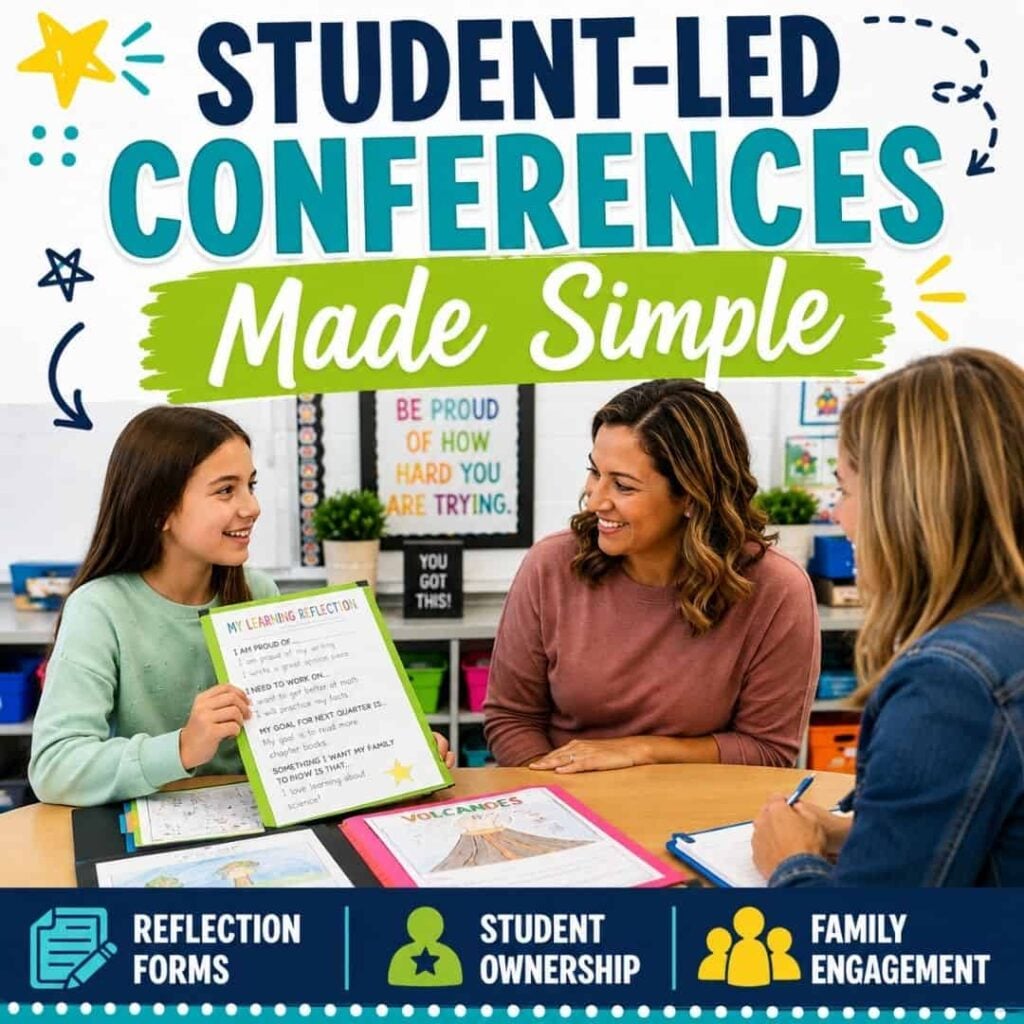
Interested in moving toward student-led conferences? This post will give you ideas on how to do it.
Jessica BOschen
Jessica is a teacher, homeschool parent, and entrepreneur. She shares her passion for teaching and education on What I Have Learned. Jessica has 16 years of experience teaching elementary school and currently homeschools her two middle and high school boys. She enjoys scaffolding learning for students, focusing on helping our most challenging learners achieve success in all academic areas.