
Student-Led Parent Teacher Conferences: A Complete Guide
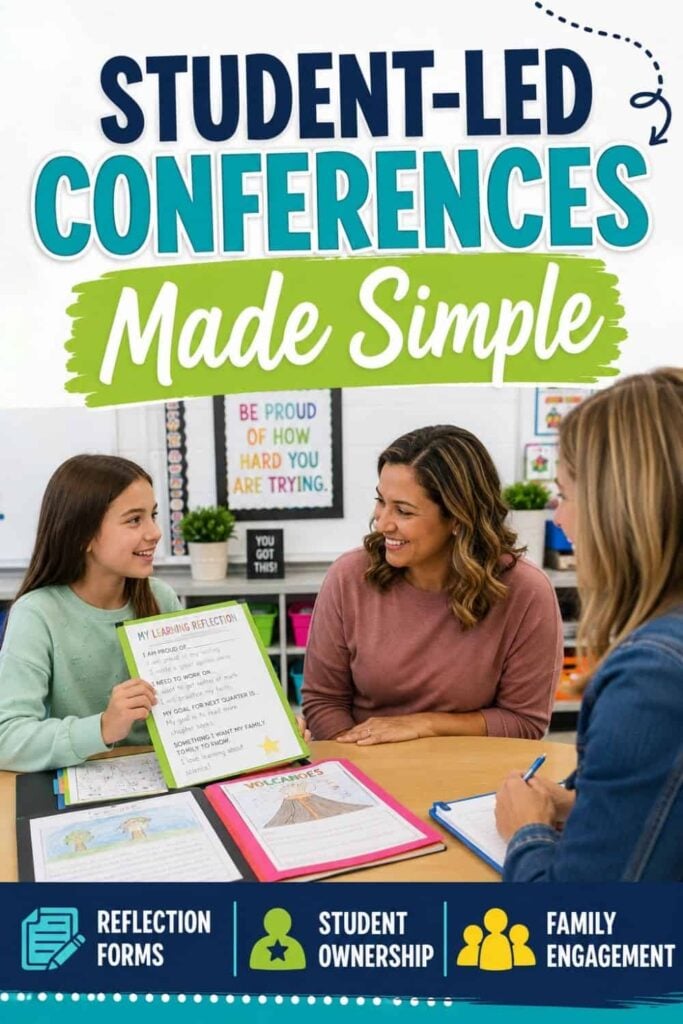
Student-led parent teacher conferences completely change the dynamic of conference week — and once you’ve run them, it’s hard to go back. Instead of spending twenty minutes narrating a student’s progress to their parents, you spend twenty minutes listening as the student explains their own growth, struggles, and goals. The conversations are more honest, more memorable, and more useful for everyone in the room.
What Are Student-Led Parent Teacher Conferences?
In a student-led conference, the student takes an active role in sharing their learning with their family — rather than sitting quietly while the teacher talks. Depending on the grade level and your comfort with the format, this can range from a student presenting a portfolio of their work to a student leading most of the conversation while the teacher observes and adds context.
The key ingredient in every version of this format is preparation. Students need structured time before the conference to reflect on their learning, gather evidence, and practice what they’ll say. When that groundwork is in place, the conference itself runs remarkably smoothly — even with younger students.
Why Student-Led Conferences Work
The research on family-school partnerships consistently shows that students benefit when families are actively engaged in their education — not just informed about it. Studies from the Harvard Family Research Project link family engagement to higher achievement, better attendance, and stronger student motivation. Student-led conferences are one of the most direct ways to build that engagement, because families aren’t just hearing about school — they’re hearing about it from their own child.
From a classroom management standpoint, this format also builds something harder to measure: student ownership. When students know they’ll be explaining their progress to their family, they pay closer attention to it throughout the quarter. The conference becomes an authentic audience for the reflection work you’ve already been doing.
How to Prepare Students for Student-Led Parent Teacher Conferences
Preparation is where this format lives or dies. Students who walk into a conference with a reflection form, a few work samples, and a sense of what they want to say are confident. Students who show up cold will shrug and stare at the table.
Step 1: Complete a Student Self-Reflection Form
A structured self-reflection form provides students with a scaffold for thinking about their progress before they have to talk about it aloud. The best forms move through several dimensions — academic subjects, effort, behavior, and goals — so students arrive with something substantive to share in each area.
Good reflection prompts include:
- What subject am I most proud of this quarter, and why?
- Where do I need to work harder?
- What is one goal I want to set for next quarter?
- What do I want my family to know about my learning?
When students write this out in advance, they arrive at the conference with something concrete to say — and something to show their parents. The Student Self-Reflection Sheets include grade-differentiated forms designed specifically for this purpose, with prompts suitable for students in 2nd through 5th grade.
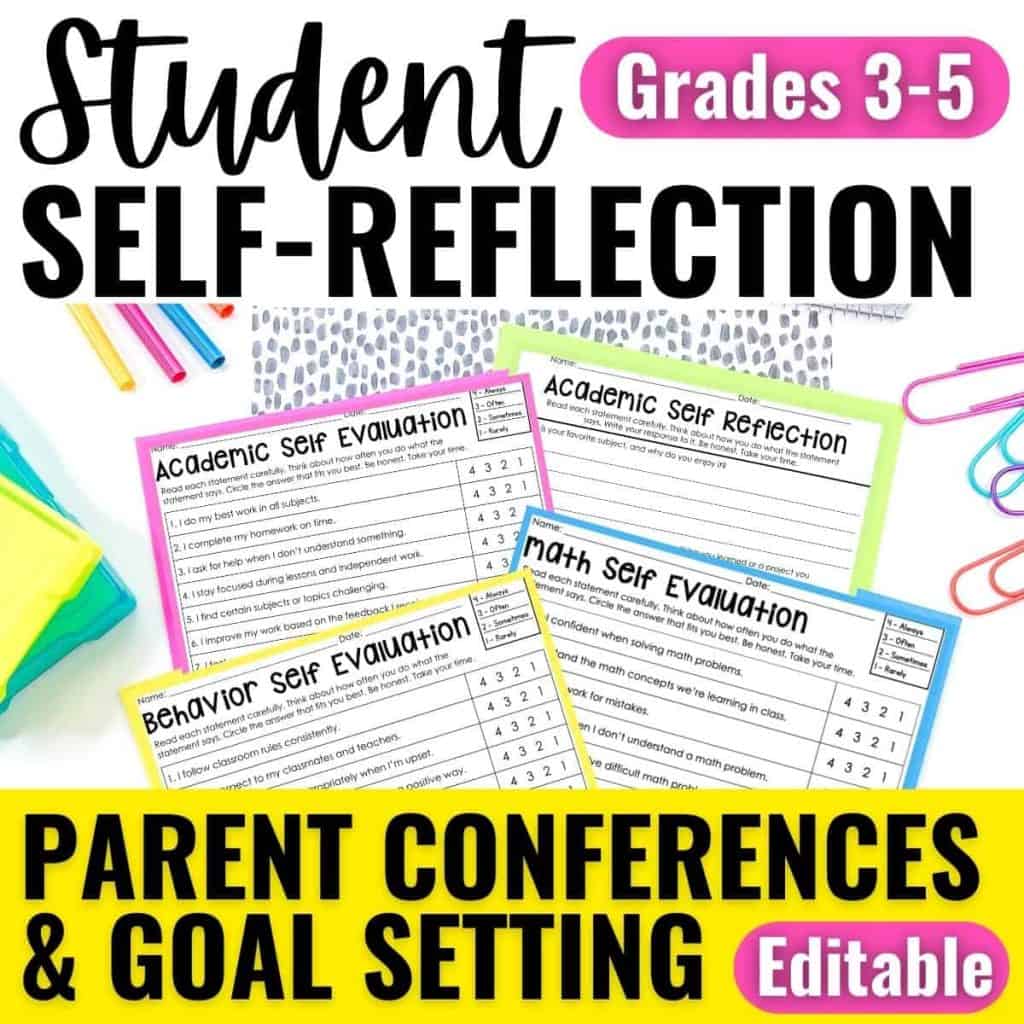
Help your students reflect on their behavior and academic performance with these Behavior & Academic Self-Reflection Sheets! Perfect for 3rd-5th graders, these easy-to-use rubrics and short answer questions guide students through a thoughtful self-assessment process before parent conferences or end-of-year reflections.
Step 2: Select Work Samples
Ask students to choose 2–3 pieces of work that tell a story about their learning this quarter. One piece they’re proud of, one that was challenging, and one that shows growth are a useful combination. When the reflection form is attached to actual student work, families get a complete picture — not just a summary.
For students who struggle to identify meaningful pieces, a simple prompt helps: “Which piece of work surprised you most this quarter?” That question opens up more honest reflection than “what’s your best work?”
Step 3: Practice Out Loud
For many elementary students, the idea of talking to their parents about school while a teacher is sitting there is intimidating. Take 10–15 minutes to practice with partners. One student reads their reflection while a partner plays the role of a family member and asks a follow-up question or two.
This rehearsal matters more than it might seem. Students find their words, realize what they actually want to say, and arrive at the real conference with a little more confidence. Even a single practice round makes a visible difference.
A Student-Led Conference Format That Works
Here’s a simple 20-minute structure you can use or adapt:
- Minutes 1–2: Teacher welcomes the family and explains the format briefly
- Minutes 3–10: Student shares their reflection form and walks through their work samples
- Minutes 11–14: Teacher adds context — academic data, observations, anything the student didn’t cover
- Minutes 15–17: Family asks questions or shares what they’re seeing at home
- Minutes 18–20: Student states one goal out loud; everyone agrees on next steps
That final step — the student naming a goal in front of their family — is often the most powerful moment in the conference. It creates a shared commitment rather than a one-sided report, and it gives families something specific to follow up on at home.
Adapting Student-Led Conferences by Grade Level
This format works across elementary grades, but the scaffolding varies by your students’ ages.
2nd and 3rd Grade
Younger students need more structured support. Use a reflection form with sentence frames rather than open-ended prompts — “I am proud of ___ because ___” is much more accessible than “What are you proud of this quarter?” Plan for the teacher to play a more active role during the conference itself, stepping in to add context and keep the student on track. Focus on 1–2 work samples rather than a full portfolio.
4th and 5th Grade
Upper elementary students can handle more open-ended reflection and take a more genuine leadership role in the conversation. They’re also better able to discuss specific academic skills — what they understand about fractions, how their writing has changed — rather than just showing finished work. By 5th grade, many students can lead nearly the entire conference with minimal teacher interjection.
How to Introduce This Format to Families
Some parents will be surprised — in a good way — when their child starts talking. Others may be confused about why the teacher isn’t doing more of the talking. A brief note home before conferences helps set expectations.
Something like this works well:
This year, your child will be taking an active role in our conference. They’ve spent time reflecting on their learning and selecting work to share with you. Your job is to listen, ask questions, and celebrate their growth. I’ll be there to add context and make sure we cover everything that matters. I think you’ll love hearing directly from your child about their school year.
That framing — “your job is to listen and celebrate” — gives parents a role they feel good about and sets the student up for success.
What to Do When a Student Shuts Down
Even with great preparation, some students freeze when their family is in the room. A few moves that help:
- Give them an out. “That’s okay — can I share what I wrote about you, and you can tell me if I got it right?” This keeps them involved without putting them on the spot.
- Use their work samples as a prop. “Can you show your mom this piece? Just show her — you don’t have to say anything yet.” Physical objects give nervous students something to do with their hands and ease them into talking.
- Ask a low-stakes question first. “What’s been your favorite part of school this quarter?” is easier than “Tell us about your growth in math.” Start simple and let the conversation build.
For more strategies on running conferences with families, including agenda formats and tips for difficult conversations, see these parent-teacher conference tips.
Final Thoughts on Student-Led Parent-Teacher Conferences
The first time you run student-led conferences, it will feel a little uncertain. By the second time, you won’t want to go back. When students walk out of a conference having just explained their own growth to their family — and named a goal they’re going to work toward — something real has happened. That’s worth the preparation it takes to get there.
The Student Self-Reflection Sheets include everything students need to prepare: grade-differentiated forms that walk them through reflecting on academic progress, effort, and goals, plus a format that holds up in front of an audience.
Help your students reflect on their behavior and academic performance with these Behavior & Academic Self-Reflection Sheets! Perfect for 3rd-5th graders, these easy-to-use rubrics and short answer questions guide students through a thoughtful self-assessment process before parent conferences or end-of-year reflections.
Free Parent Questionnaire
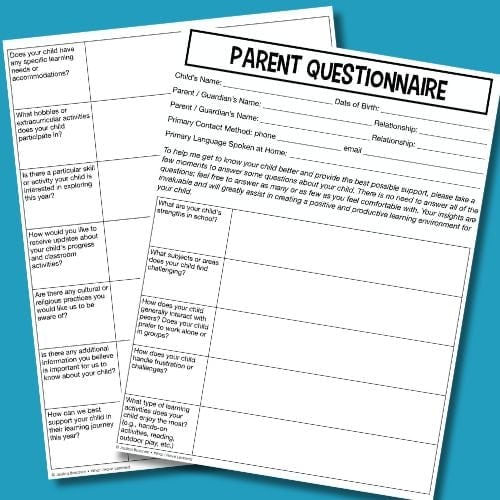
To learn more about your students before parent conferences, consider sending a parent questionnaire home at the beginning of the school year. Sign up below to receive one to your inbox.
Jessica BOschen
Jessica is a teacher, homeschool parent, and entrepreneur. She shares her passion for teaching and education on What I Have Learned. Jessica has 16 years of experience teaching elementary school and currently homeschools her two middle and high school boys. She enjoys scaffolding learning for students, focusing on helping our most challenging learners achieve success in all academic areas.