
Questions to Ask Parents at Parent-Teacher Conferences: A Teacher’s Guide
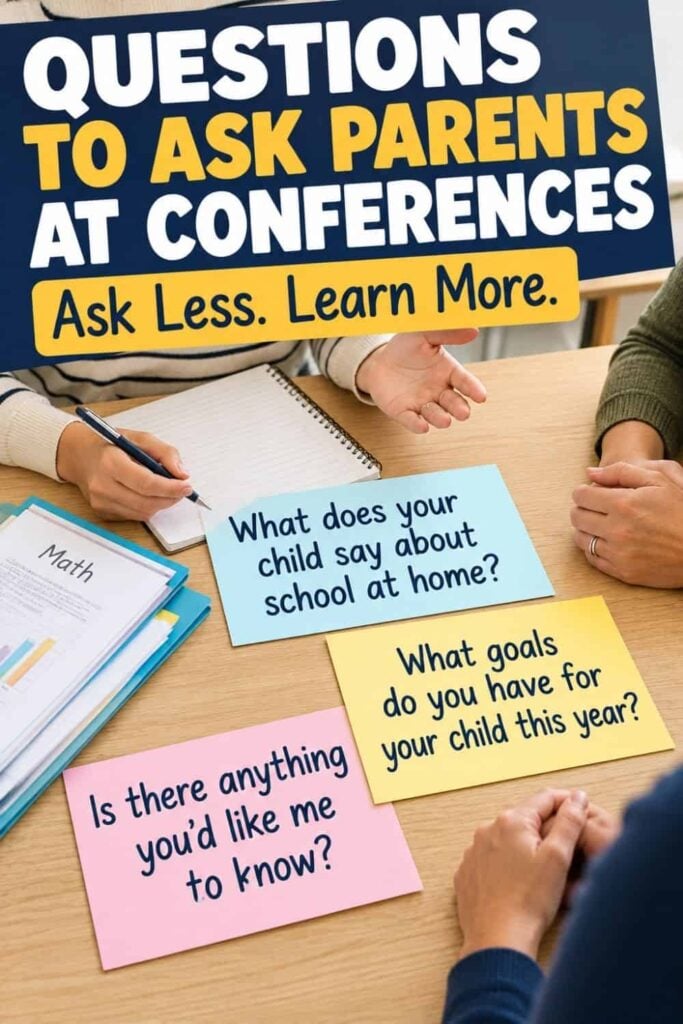
Twenty minutes with a family go fast. If you spend most of it talking, you leave the conference knowing exactly what you walked in knowing, which isn’t much. The best questions to ask parents at conferences are open-ended and invite real answers, not yes-or-no ones. Here are the ones worth asking, grouped by what you’re trying to understand.
Why the Questions You Ask Parents Matter
Parents know things about your students that you will never observe in a classroom. They know how their child talks about school at the dinner table, how they handle frustration at home, whether they’ve mentioned a conflict with a friend, or whether something significant has happened recently that might explain a shift in behavior or focus. The only way to get that information is to ask, and to ask in a way that makes parents feel like their perspective is actually welcome.
Open-ended questions do that. Closed questions (“Is homework getting done?”) give you a yes-or-no answer. Open questions (“How does your child typically handle homework time?”) give you context, patterns, and sometimes the key to understanding something that’s been puzzling you for weeks.
Questions to Ask Parents at Conferences About Academic Progress
These questions help you understand how students experience learning outside of school, such as what they’re drawn to, what they avoid, and whether what you’re seeing in the classroom matches what parents see at home.
- What subjects does your child seem most interested in right now?
- Are there any subjects they find frustrating or tend to avoid?
- How does homework time typically go at your house?
- Does your child talk about what they’re learning at school?
- Is your child reading outside of school, for fun, not just for assignments?
That last question is one of the most telling. A student who reads independently at home and a student who never picks up a book voluntarily can look similar on a reading assessment, but they’re in very different places in terms of building reading stamina and motivation.
Questions About How Students Experience School
How a student describes their school day when they’re at home differs from what you observe in the classroom, and sometimes the gap is significant. These questions give you a window into that.
- What does your child say about their day when they get home?
- Does your child seem excited to come to school, or is there resistance in the mornings?
- Has your child mentioned anything about friendships or social dynamics?
- Have they shared any concerns about routines, activities, or anything in the classroom?
A student who dreads mornings but seems engaged in your classroom might be dealing with something on the bus or at arrival. A student who seems disengaged at school but is apparently enthusiastic about it at home might just need a different kind of challenge. Either way, you want to know.
Questions to Ask Parents About Social and Emotional Development
These are often the most important questions in the conference, and the ones teachers skip when time gets short. Don’t skip them.
- How does your child typically handle frustration or disappointment?
- Have you noticed any changes in their mood or behavior recently?
- Does your child talk about friendships, who they like spending time with, any conflicts?
- Is there anything going on at home or in your child’s life that might be affecting them at school?
That last question takes courage to ask and more courage to answer honestly. Frame it gently and give parents time to respond. What they share, a family change, a health issue, a loss, can reframe everything you’ve been observing in the classroom.
Questions About Behavior and How Students Engage
Understanding how a student behaves in other structured settings, sports, religious programs, and family gatherings can tell you a lot about whether what you’re seeing at school is situational or more consistent.
- How does your child do in group settings or structured activities outside of school?
- Would you describe your child as more introverted or extroverted?
- Does your child talk about participating in class, asking questions, and sharing ideas?
- Is there a particular type of activity where your child really comes alive?
Questions to Ask Parents About Supporting Learning at Home
These questions show families that their role matters, and they often surface strategies or constraints you wouldn’t otherwise know about. A parent who tells you their child does best with a snack and 20 minutes of downtime before homework, or that the family doesn’t have reliable internet access in the evenings, is giving you genuinely useful information.
- What strategies do you use at home to support your child’s learning?
- Is there anything I could do differently to better support your child?
- What goals do you have for your child this year?
- Is there anything you’d like me to know that would help me support your child better?
“Is there anything you’d like me to do differently?” is one of the most disarming questions you can ask a parent. It communicates that you’re open to feedback, which tends to make the rest of the conversation more honest.
Closing Questions That Keep the Partnership Going
How you end the conference shapes how families feel about the next interaction. These questions wrap things up with a forward-looking, collaborative tone rather than a “we’ll see how it goes” shrug.
- What’s the best way to reach you if something comes up?
- Are there any concerns you’d like us to revisit later in the year?
- How can we work together if challenges come up between now and the next conference?
These aren’t just pleasantries. A parent who leaves knowing exactly how to reach you and who feels you actually want to hear from them is far more likely to contact you early when something goes wrong, rather than letting it build.
How to Work These Questions Into a Real Conference
You won’t ask all of these in a single 20-minute conference, and you shouldn’t try. Pick 3–5 questions that feel most relevant for a specific family and student, and let the conversation guide you from there. The goal isn’t to work through a checklist; it’s to leave the conference knowing something you didn’t know when you walked in.
If you’re looking for a structure to organize the rest of the conference around these questions, the parent-teacher conference tips post has an agenda format and guidance for navigating difficult conversations. And if you’re thinking about involving students in the conference itself, student-led conferences are worth exploring. When students come prepared with their own reflections, the questions parents and teachers ask each other get even better.
Final Thoughts on Questions to Ask Parents at Conferences
The families who leave conferences feeling like genuine partners in their child’s education are almost always the ones who got to talk as much as they listened. A few well-chosen questions make that possible, and they often surface the information that changes how you teach a specific student for the rest of the year.
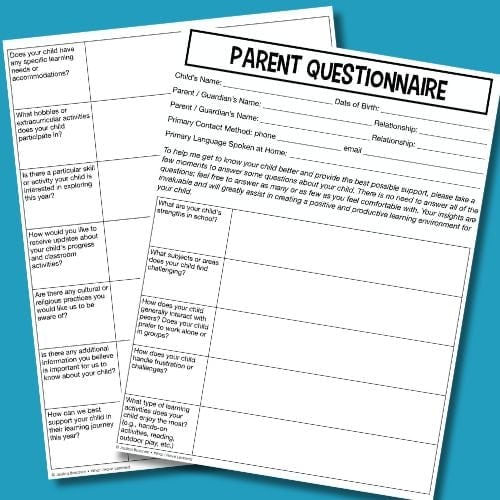
Free Parent Questionnaire
To learn more about your students before parent conferences, consider sending a parent questionnaire home at the beginning of the school year. Sign up below to receive one to your inbox.
Jessica BOschen
Jessica is a teacher, homeschool parent, and entrepreneur. She shares her passion for teaching and education on What I Have Learned. Jessica has 16 years of experience teaching elementary school and currently homeschools her two middle and high school boys. She enjoys scaffolding learning for students, focusing on helping our most challenging learners achieve success in all academic areas.