
Stretch a Sentence Worksheets: Which One Is Right for You
If you landed on my store and found several different stretch-a-sentence worksheets, you are not the only one who’s asked which is which. I get this question a lot: what is the difference between them, which one fits my grade, and can I buy just one set instead of a bundle?
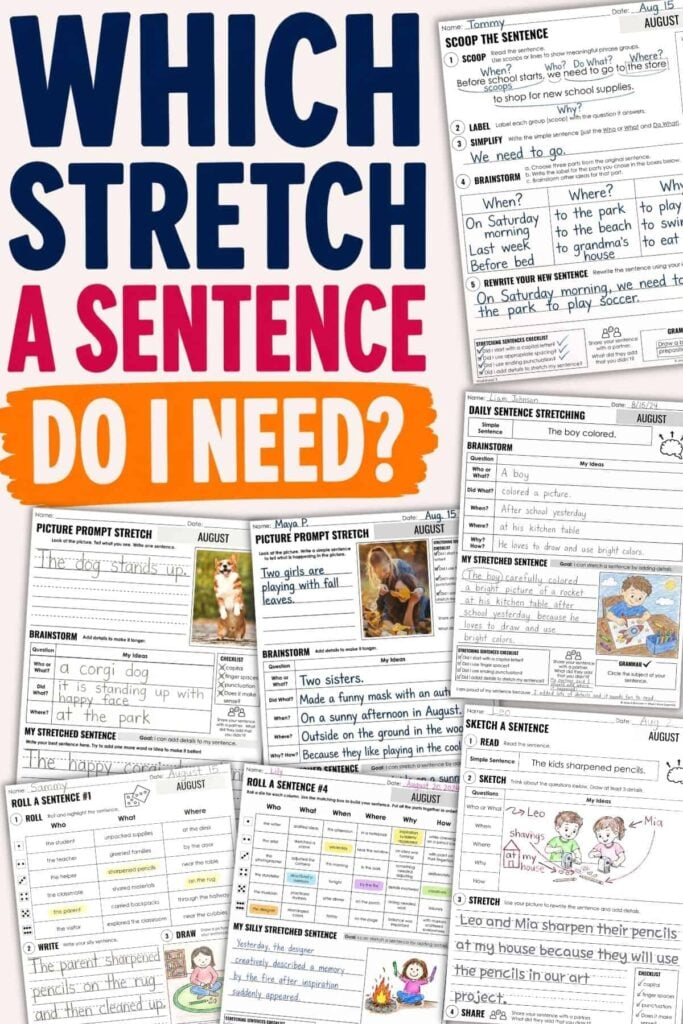
This guide lays out every sentence-building resource I make, what students actually do in each, which grade it fits, and how to buy exactly the piece you want. By the end, you will know precisely which one to click.
If you are brand new to the routine itself, start with my how to teach stretch a sentence post and the free worksheet in it. This page is about choosing among the resources once you know you want them.
The Stretch a Sentence Worksheets at a Glance
Each one teaches the same core skill: taking a short sentence and growing it with detail. They differ in what gets students started (a photo, their own drawing, a dice roll, a text sentence) and in how much they cover. Here is the quick comparison:
| Resource | Grade | What students do | Best for |
|---|---|---|---|
| Sketch a Sentence | K-2 | Draw a quick picture, write a sentence, then grow it with who, what, and where | Early writers who need to make the idea before they write it |
| Picture Stretch a Sentence | K-5 | Look at a real photo, write a simple sentence, then stretch it with details from the image | Reluctant writers and visual support; the “photo ones” |
| Roll a Sentence | K-5 | Roll dice or draw prompts to decide what details to add, then build a sentence | A playful, game-style change of pace |
| Scoop a Sentence | 3-5 | Read a longer sentence in meaningful chunks, or scoops, to build fluency | Reading fluency and seeing how an expanded sentence fits together |
| Stretch a Sentence (Original) | 2-5 | Stretch a text sentence by answering who, what, when, where, why, one detail a day | A no-picture daily routine for independent practice |
| Sentence Strands | 2-5 | A full year of combining, stretching, and fixing run-ons around fiction or nonfiction themes | Teachers who want one comprehensive yearlong program |
The resources labeled K-2 have a K-2 version and a 2-5 version. Second grade can go either way, and it depends on your students’ writing abilities.
The Picture Stretch a Sentence Worksheets (the “Photo Ones”)
If you love the versions with photos and want those specifically, the resource you are looking for is Picture Stretch a Sentence: Write About It. Students look at a real, engaging image, write one simple sentence, brainstorm details with question words, and stretch that sentence into a detailed one.
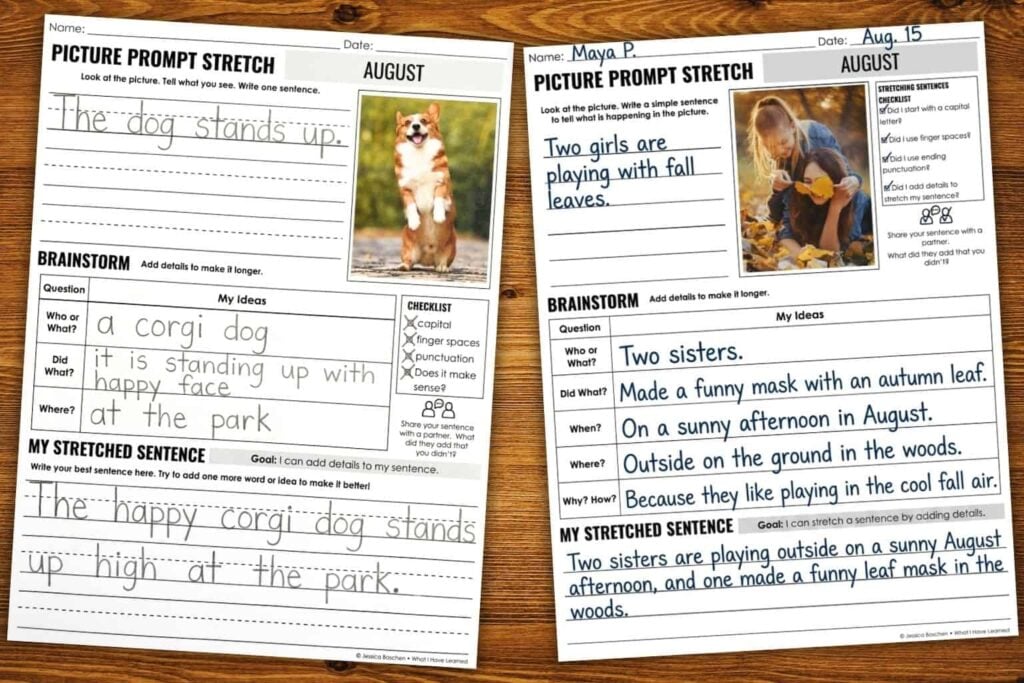
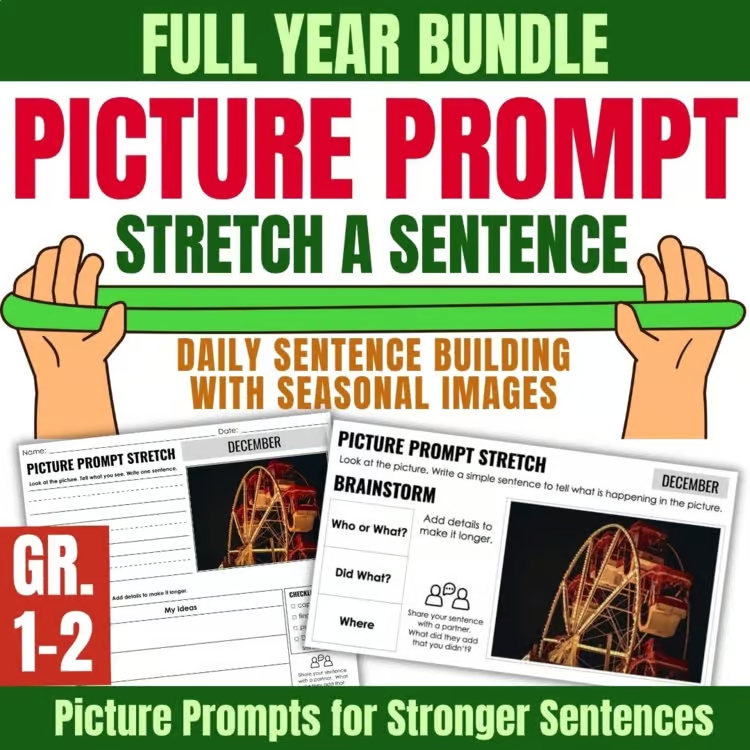
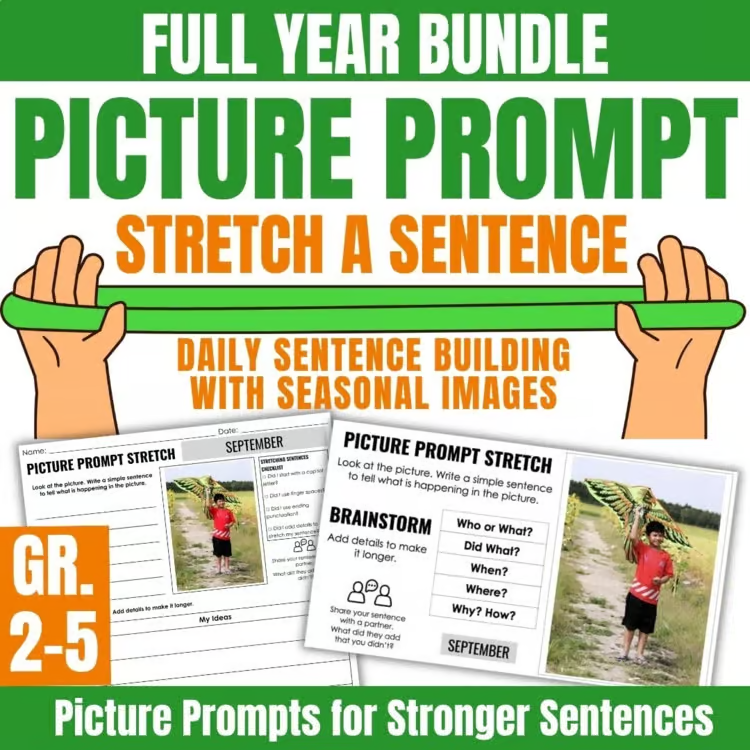
Here’s what matters if you don’t want a bundle: this is a growing set sold monthly, so you can buy a single monthly set on its own. You do not have to buy the whole bundle to get started. The picture prompt bundle is for teachers who want the full year at a discount, but a single set lets you try the photo version without committing to the whole bundle. My picture writing prompts post walks through exactly how these work in the classroom.
One note: if the original text-only version did not land with your students, the photo sets are a different experience. The image gives students something concrete to describe, which is often the missing piece when a blank stretch-a-sentence line feels too abstract.
Sketch a Sentence vs Picture Stretch a Sentence
Both use pictures, so they are easy to mix up. The difference is who makes the picture.
- Sketch a Sentence has students draw a quick sketch first, then write and expand a sentence about it using who, what, and where. It is best for K-2, where drawing to plan comes naturally.
- Picture Stretch a Sentence gives students a ready-made photo to write about. No drawing step, so it works up through the older grades and moves faster.
If your students love to draw and need to picture the idea before writing, choose Sketch. If you want the picture provided and a quicker routine, choose Picture Stretch.

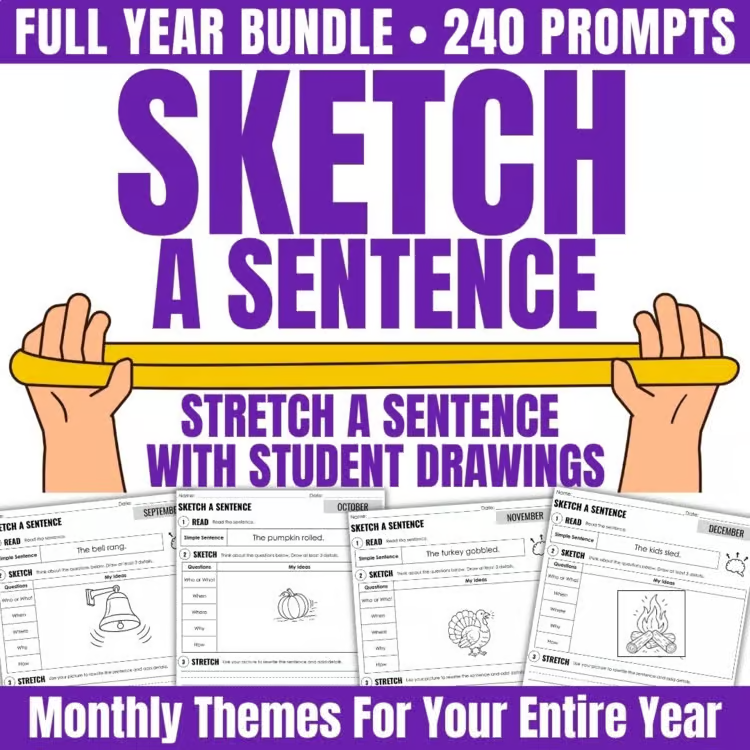
Designed for young learners, this comprehensive resource helps students expand sentences, develop writing conventions, and visualize their ideas through a consistent and creative routine.
What Is the Difference Between Sentence Strands and Stretch a Sentence?
This is the other question I hear most, so it deserves its own section. The short answer: Stretch a Sentence teaches one skill, and Sentence Strands is a full program that includes that skill plus more.
Stretch a Sentence is focused. Students take a short sentence and expand it with detail. That is the whole routine, and it is a great daily warm-up.
Sentence Strands is a yearlong program built around themed passages. Across the year, students combine sentences, stretch them, and fix run-ons, so stretching is one strand of several. It comes in a fiction version and a nonfiction version, so you can match it to what your class is reading.
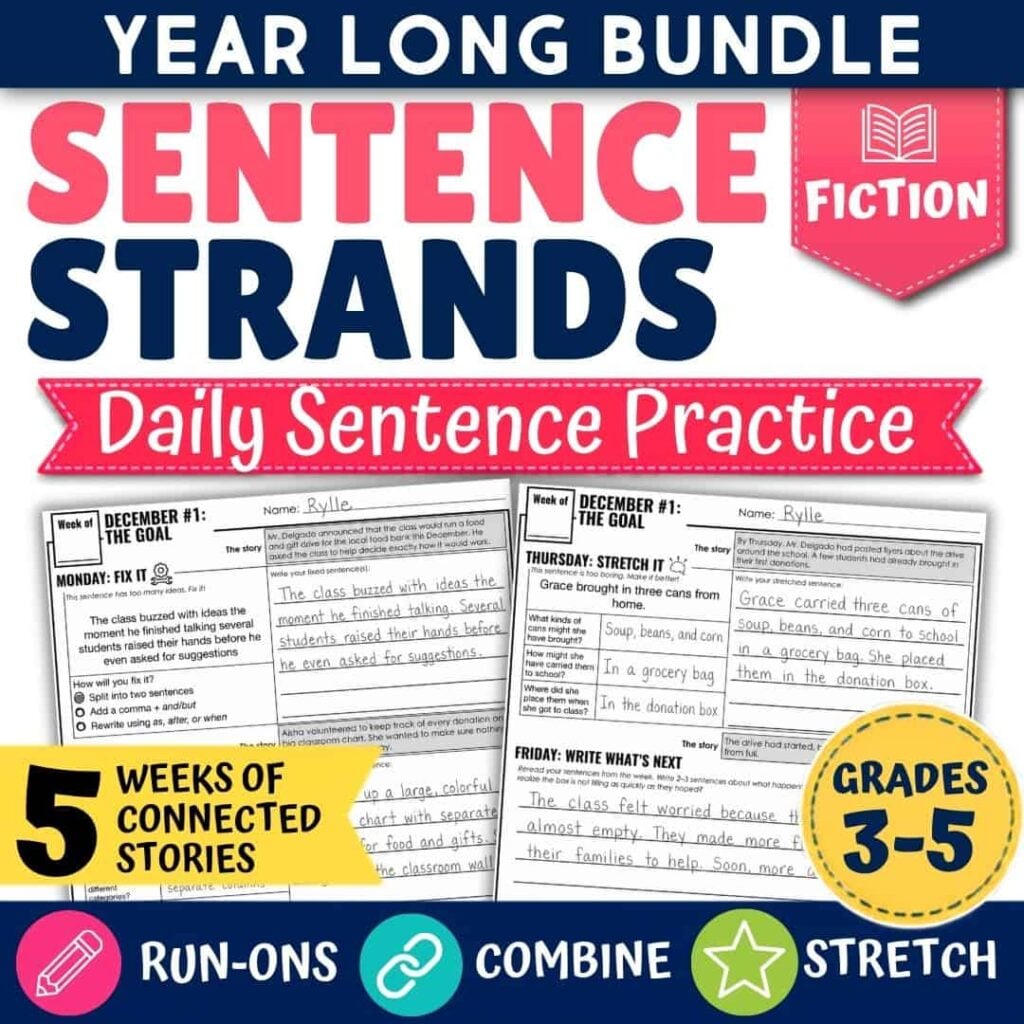
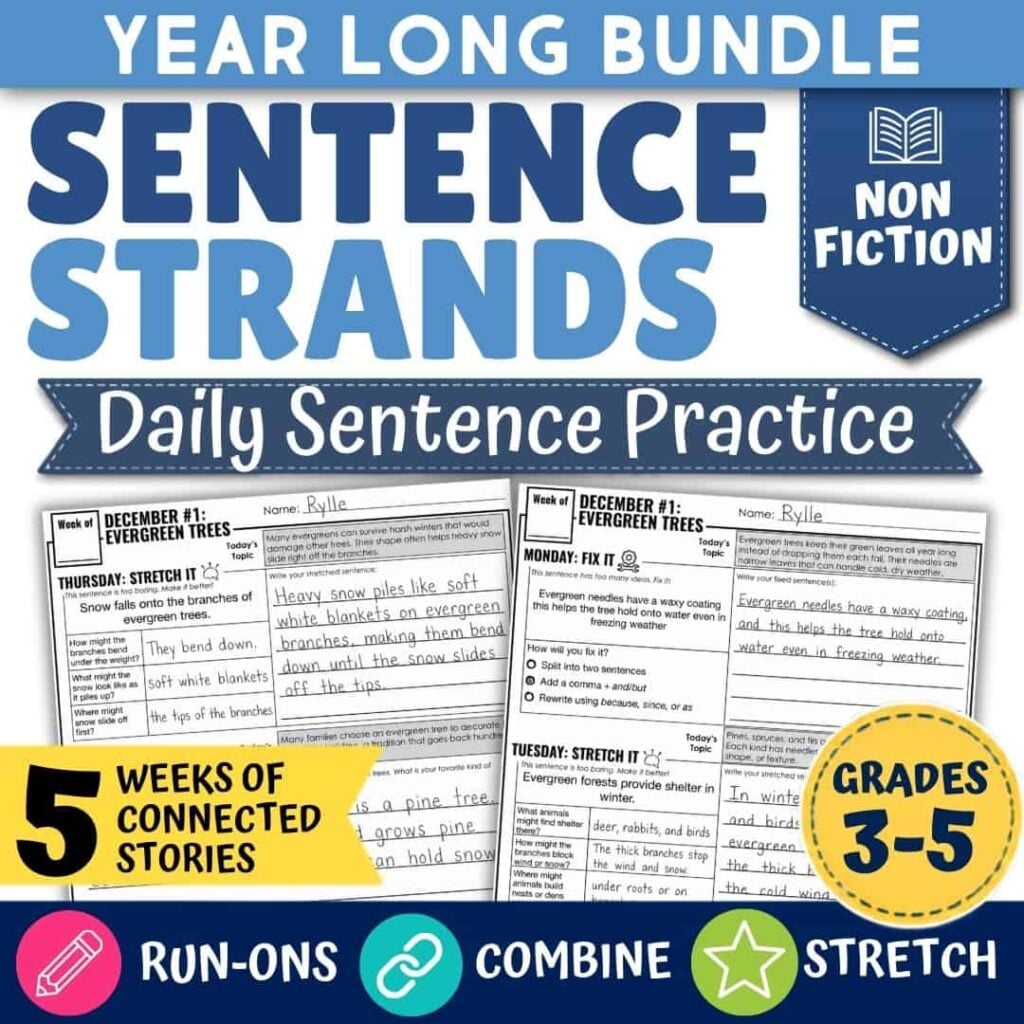
Choose Stretch a Sentence if you want a single, focused routine. Choose Sentence Strands if you want one resource that carries sentence work across the whole year and covers combining and run-ons too. If you’re after sentence combining, my sentence combining post explains that skill in depth.
Which Stretch a Sentence Worksheets Fit My Grade?
If you would rather choose by grade than by routine, here is the simple version.
Kindergarten through 2nd Grade
Early writers do best with picture support and a drawing step. Reach for Sketch a Sentence, Picture Stretch a Sentence, or Roll a Sentence for a playful option.
2nd through 5th Grade
Older students are ready for more independence and fluency. Picture Stretch a Sentence, Roll a Sentence, Scoop a Sentence, and Stretch a Sentence (Original, no pictures) all fit here, and Sentence Strands is the pick if you want one comprehensive yearlong program.
For the full teaching background on all of these routines and how they connect, my expanding sentences pillar is the place to go, and my sentence writing warm-ups post shows how to make sentence practice a daily habit.
Frequently Asked Questions
Still Not Sure? Start Here
If you want one clear starting point: try a single Picture Stretch a Sentence monthly set. It is the most flexible across grades, the picture support works for almost every writer, and buying one month lets you see how your students respond before you commit to more. From there, add Scoop a Sentence for fluency, Roll a Sentence for a game-day change of pace, or step up to Sentence Strands when you want a full year of sentence work in one place.
If you want a free way to try it, grab my free stretch a sentence worksheet and run it as your first lesson.

Jessica BOschen
Jessica is a teacher, homeschool parent, and entrepreneur. She shares her passion for teaching and education on What I Have Learned. Jessica has 16 years of experience teaching elementary school and currently homeschools her two middle and high school boys. She enjoys scaffolding learning for students, focusing on helping our most challenging learners achieve success in all academic areas.