
Expanding Sentences: Activities and Routines (Grades 1-5)
Ask a young writer to describe their weekend, and you’ll often get “It was fun.” Teaching expanding sentences is how you help students turn those bare-bones sentences into detailed, interesting writing. Expanding a sentence means adding information- the who, what, when, where, why, and how- so a simple idea grows into a complete picture.
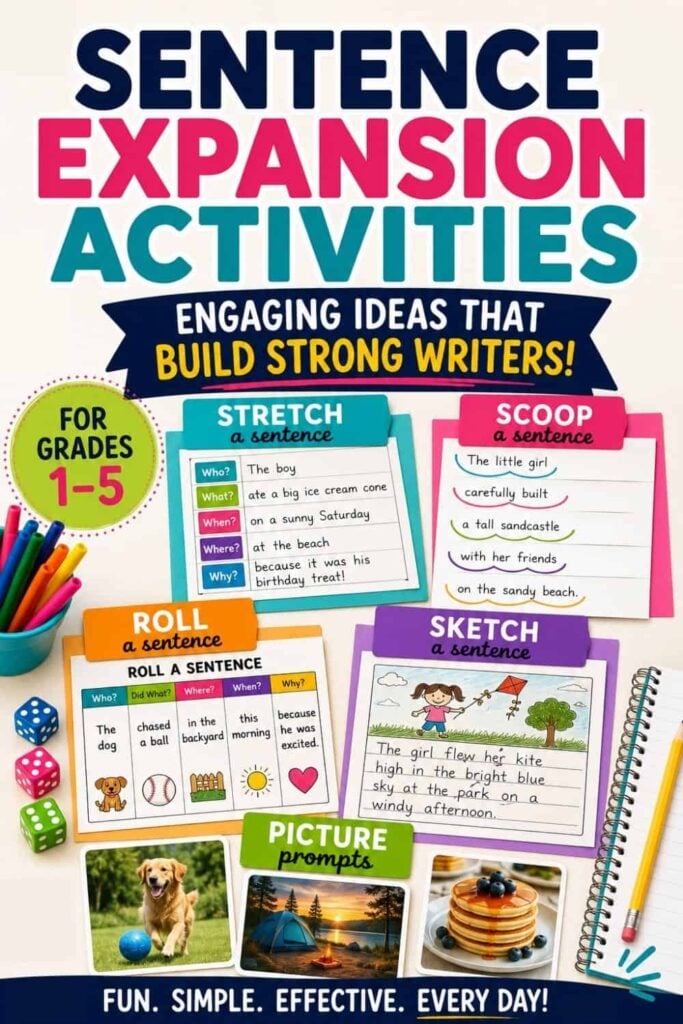
This post explains what expanding sentences means, why it matters, and the classroom routines that teach it, from stretching and scooping to rolling and sketching, with resources for grades 1 through 5.
What Does It Mean to Expand a Sentence?
Expanding a sentence means starting with a basic idea and adding details to make it clearer and more interesting. A student might begin with “The dog ran.” By answering a few questions, they can expand it into “The muddy brown dog ran across the yard this morning to chase a squirrel.”
The questions that drive expansion are the ones students already know:
- Who or what? Add or describe the subject.
- When? Add a time.
- Where? Add a place.
- Why or how? Add a reason or a way it happened.
This is the same skill behind the popular stretch a sentence routine, where students literally stretch a short sentence longer by answering those questions one at a time.
Why Teach Expanding Sentences?
Sentence-level work is some of the highest-value writing instruction you can do, especially in the elementary grades. When students can expand a sentence with control, their paragraphs and stories improve almost automatically. A few reasons it earns daily practice:
- It builds detail. Students learn to move past “It was fun” and show what actually happened.
- It strengthens grammar and syntax. Adding phrases and clauses teaches how sentences are put together, not just what a noun or verb is.
- It builds fluency. Regular sentence practice makes writing feel less overwhelming, because students are working one manageable sentence at a time.
- It supports every genre. Whether students are writing a narrative, an opinion, or an informational piece, expanded sentences make the writing stronger.
The literacy nonprofit Reading Rockets has helpful background on why sentence-level instruction supports young writers.
Sentence Expanding Routines and Activities
There’s no single right way to teach this. The routines below all build the same skill, and using a few of them keeps practice fresh across the year.
Stretch a Sentence
Students take a short sentence and stretch it longer by answering who, what, when, where, and why, one detail at a time. It’s the most direct way to teach expansion, and it works from first grade up. My full guide on how to teach stretch a sentence walks through the routine and the modeling step by step. This activity is geared toward grades 2-5.

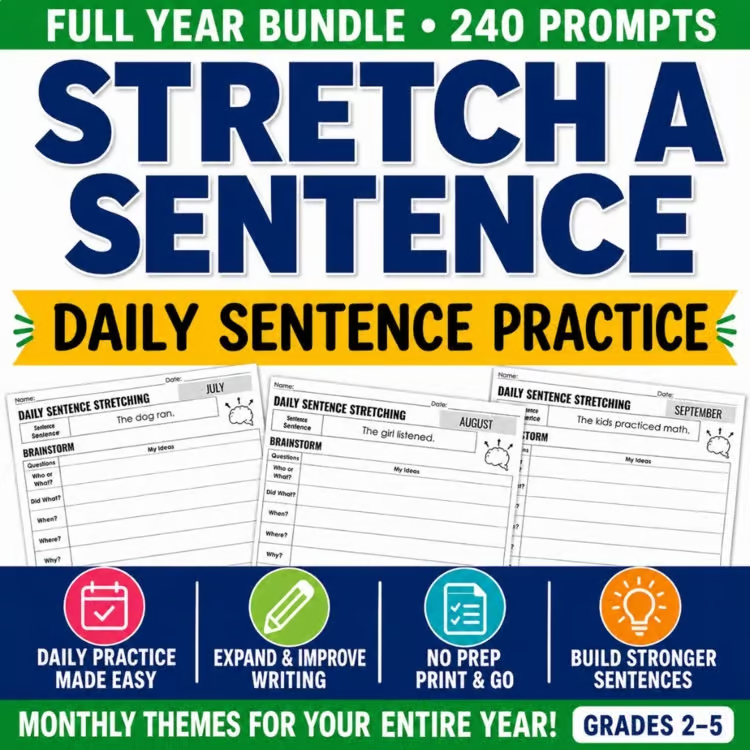
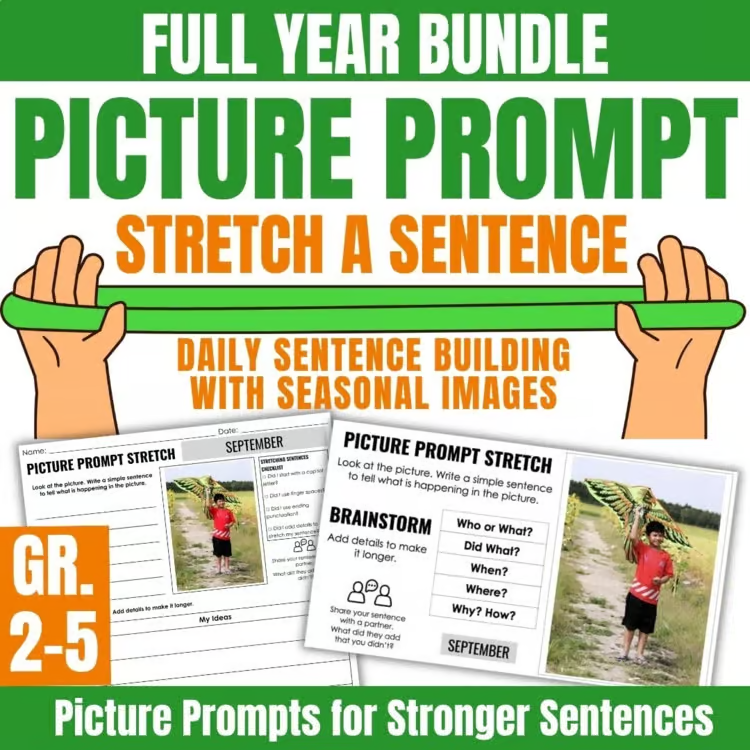
Support your students in expanding and writing stronger, more detailed and descriptive sentences all year long with this Bundle of Daily Sentence Stretching Prompt Worksheets!
Scoop a Sentence
Scooping is reverse stretching. Students read a longer sentence in meaningful chunks, or “scoops,” which builds reading fluency and shows them how the parts of an expanded sentence fit together. It pairs well with stretching. My scoop a sentence post explains how to run it. This activity is for grades 3-5
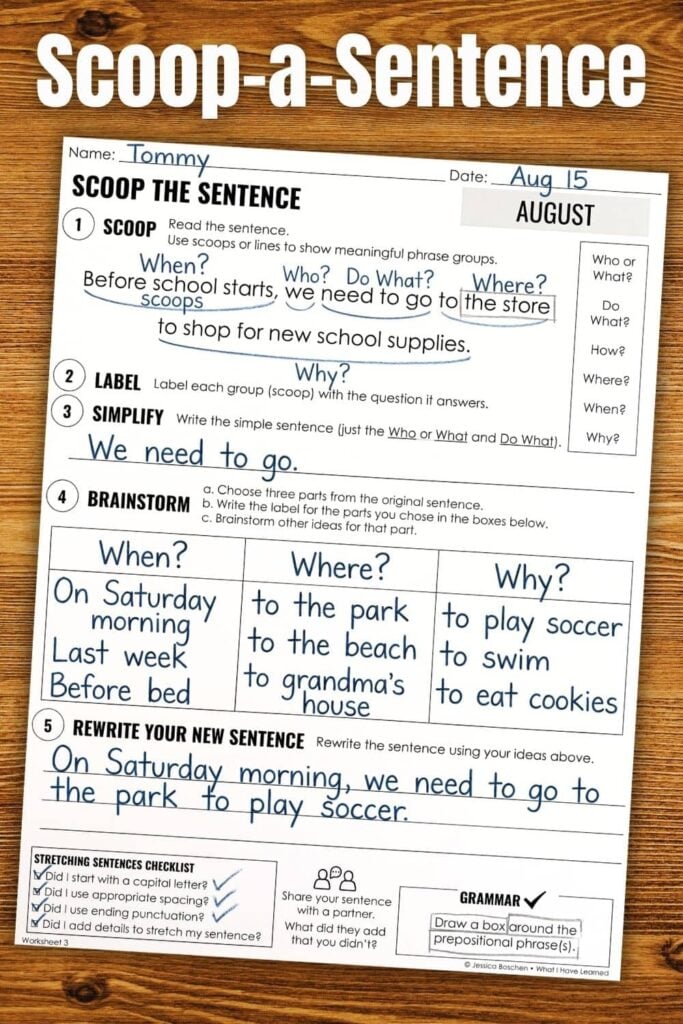
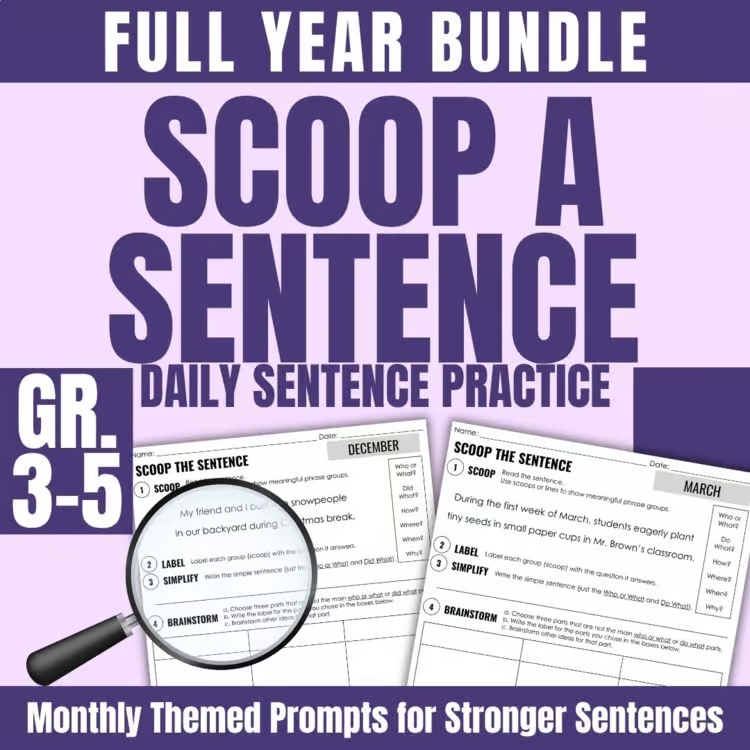
This yearlong Scoop a Sentence bundle provides engaging, seasonal activities that guide students step-by-step as they break down and rebuild sentences.
Roll a Sentence
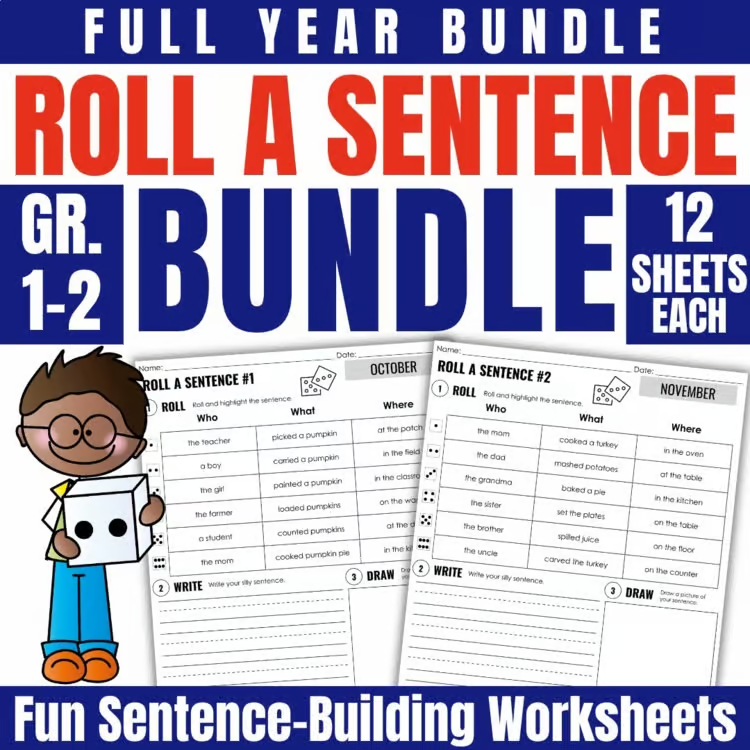
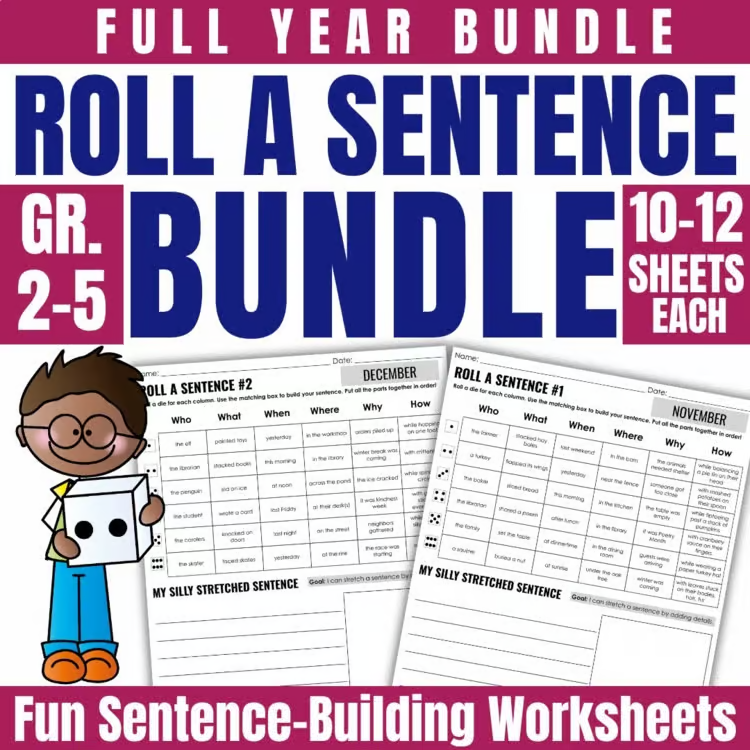
Students roll dice or draw prompts to decide what details to add, then build and write a sentence. The element of chance makes it playful, and the silly results keep engagement high while students still practice real sentence structure. This activity is for grades 1-5.

Sketch a Sentence and Picture Prompts
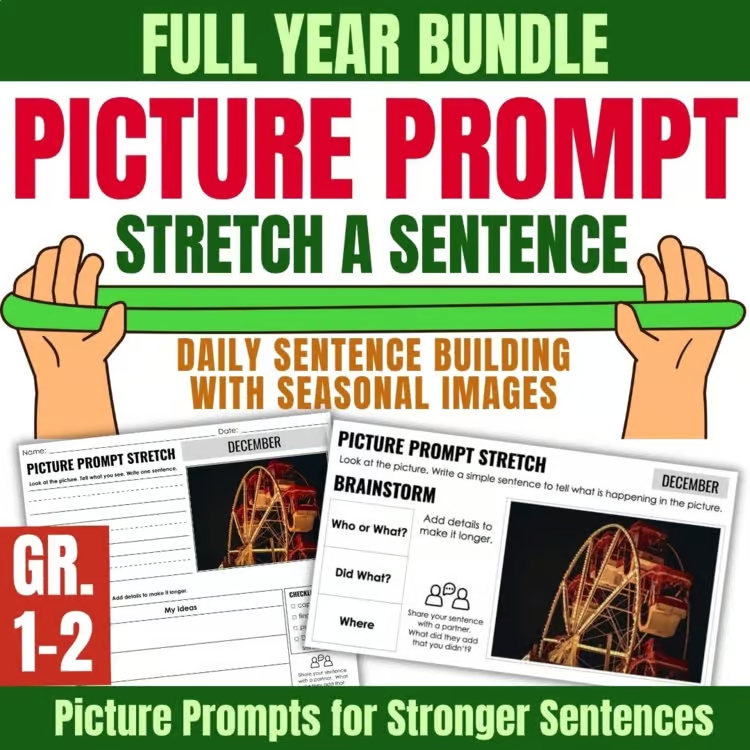
Give students an image and have them write and expand a sentence about it. A picture gives every student something concrete to describe, which lowers the barrier for reluctant writers and naturally invites detail. This activity is for grades 1-2.

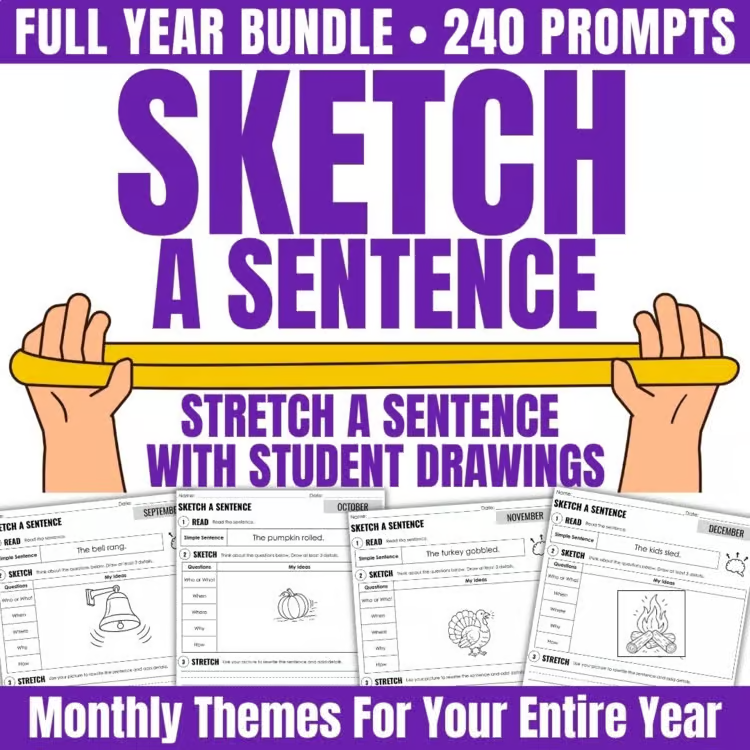
Designed for young learners, this comprehensive resource helps students expand sentences, develop writing conventions, and visualize their ideas through a consistent and creative routine.
Picture Prompts
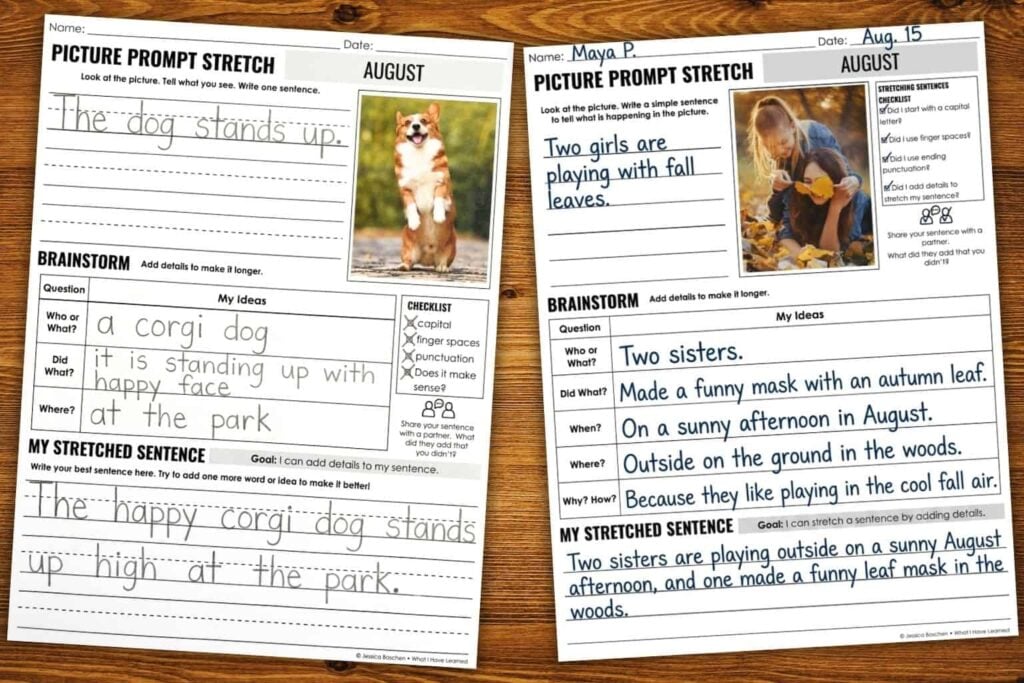
Give students an image and have them write and expand a sentence about what they see. A photo or illustration naturally invites detail, because students can describe who is in it, what is happening, and where. Picture prompts work well for students who freeze up at a blank page, since the picture hands them something to write about. This activity is for grades 1-5.
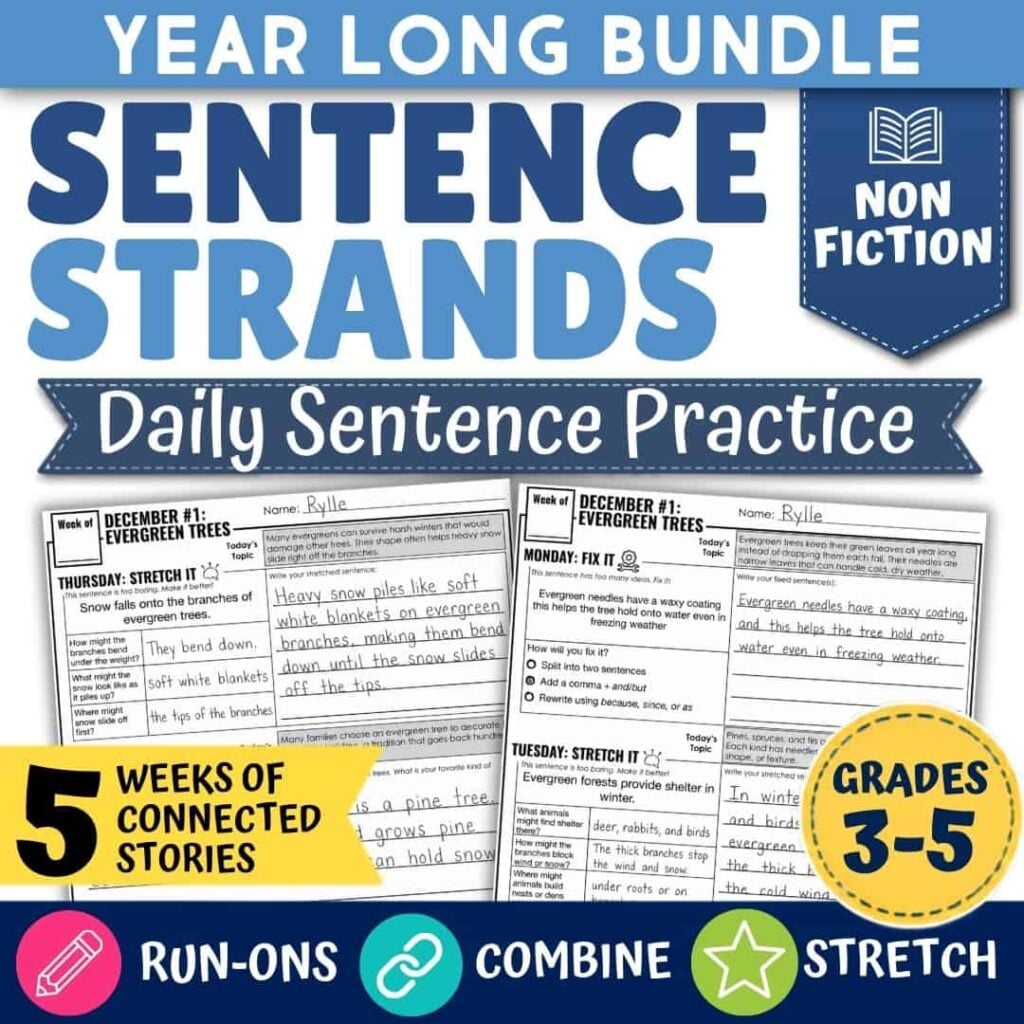
Sentence Strands
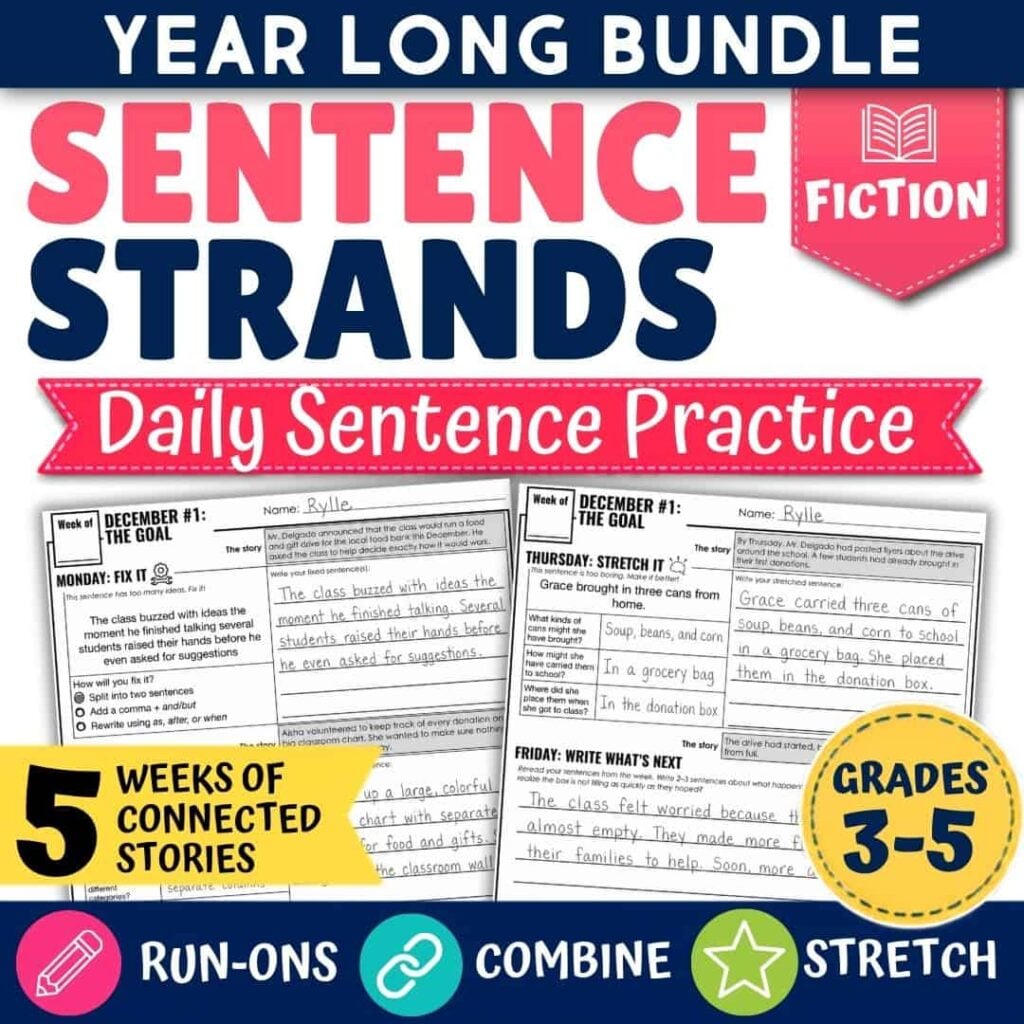
Sentence Strands takes sentence work across a full year. Instead of a single routine, students combine sentences, stretch them, and fix run-ons using themed passages, so the skills build together over time.
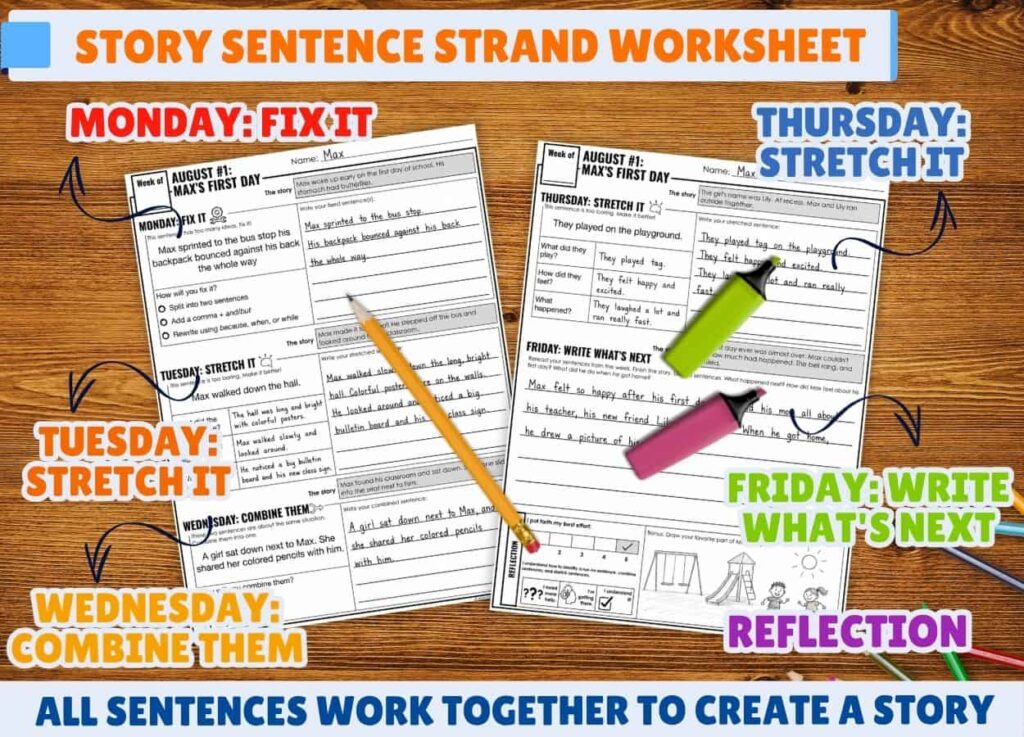
It comes in a fiction and a nonfiction version, which makes it a good fit when you want sentence practice tied to what your class is already reading.
Not Sure Which Resource to Choose?
If you have seen several of my sentence-building resources and cannot tell which is which, or you are wondering how Sentence Strands differs from Stretch a Sentence, I wrote a guide just for that. My stretch a sentence worksheets guide compares every version by grade and format, explains the difference between the picture and sketch versions, and shows how to buy a single set instead of a bundle.
How to Teach Expanding Sentences Step by Step
Whatever routine you choose, the teaching sequence is the same:
- Model it. Start with a short sentence and think aloud as you add one detail at a time, showing students the questions you ask yourself.
- Do it together. Expand a sentence as a class, taking suggestions and adding details on the board.
- Release to students. Let students expand sentences on their own or with a partner, using a recording sheet or warm-up.
- Keep it short and frequent. One expanded sentence a day beats a long lesson once a month. Short daily sentence writing warm-ups are an easy way to make it a habit.
If you want a free way to try it, grab my free stretch a sentence worksheet and run it as your first lesson.

Expanding Sentence Activities by Grade Level
The same skill looks a little different depending on the grade. Here are ready-to-use resources grouped by grade band.
Grades 1-2
Early writers do best with picture support and short daily practice:
- Sketch a Sentence, students draw their expanded sentences, then write them.
- Roll a Sentence Bundle, fun sentence-building worksheets with 3-4 options.
- Stretch a Sentence Picture Prompt Bundle, holiday and daily image prompts for easier sentences.
Grades 2-5
Older students are ready for fluency, syntax, and more independent building:
- Stretch a Sentence a Day, a daily routine for expanding, building, and grammar.
- Scoop a Sentence Yearlong Bundle, a full year of fluency, grammar, and syntax practice.
- Stretch a Sentence: Write About a Picture, picture-prompt stretching worksheets with 5 sentence parts.
- Roll and Write Sentences, a playful sentence-building activity for 2nd through 4th grade that has more sentence parts.
Frequently Asked Questions
Final Thoughts
Expanding sentences is small, daily work that pays off across every kind of writing your students do. Pick one routine to start, model it well, and make it a habit. Once students can grow a sentence on their own, stronger paragraphs and stories follow naturally.
Jessica BOschen
Jessica is a teacher, homeschool parent, and entrepreneur. She shares her passion for teaching and education on What I Have Learned. Jessica has 16 years of experience teaching elementary school and currently homeschools her two middle and high school boys. She enjoys scaffolding learning for students, focusing on helping our most challenging learners achieve success in all academic areas.