
Writing Sentence Starters for Elementary Students (Grades 3–5)
Teaching writing in upper elementary often comes down to one challenge: students know what they want to say, but they don’t know how to begin.
Writing sentence starters give students structured language support across all genres. Whether students are writing informational reports, opinion essays, personal narratives, or fictional stories, sentence starters help them organize ideas into clear, complete sentences.
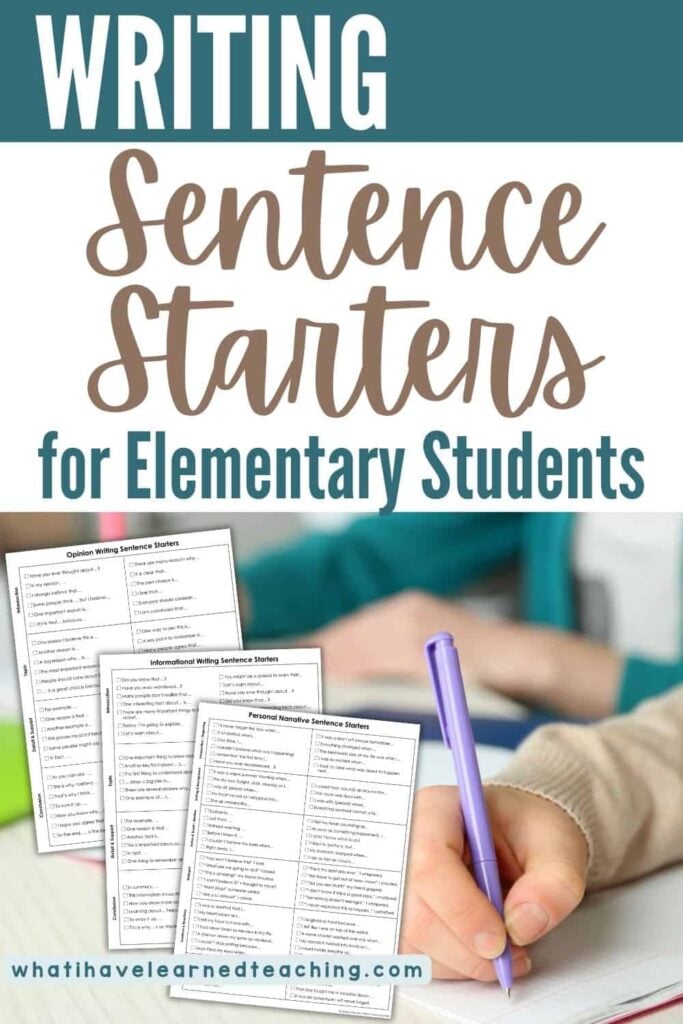
Instead of staring at a blank page, students have a starting point.
Below you’ll find sentence starters organized by writing genre, along with guidance on when and how to use each type.
What Are Writing Sentence Starters?
Writing sentence starters are short phrases that help students begin sentences in different types of writing.
They are especially helpful for:
- Students who struggle with writer’s block
- English learners
- Students developing academic vocabulary
- Writers who repeat the same sentence structure
Sentence starters provide structure, not scripts. Over time, students rely on them less and begin varying their language independently.
Sentence Starters by Writing Genre
Each genre requires different sentence structures. Using the right type of sentence starter helps students meet the expectations of that genre.
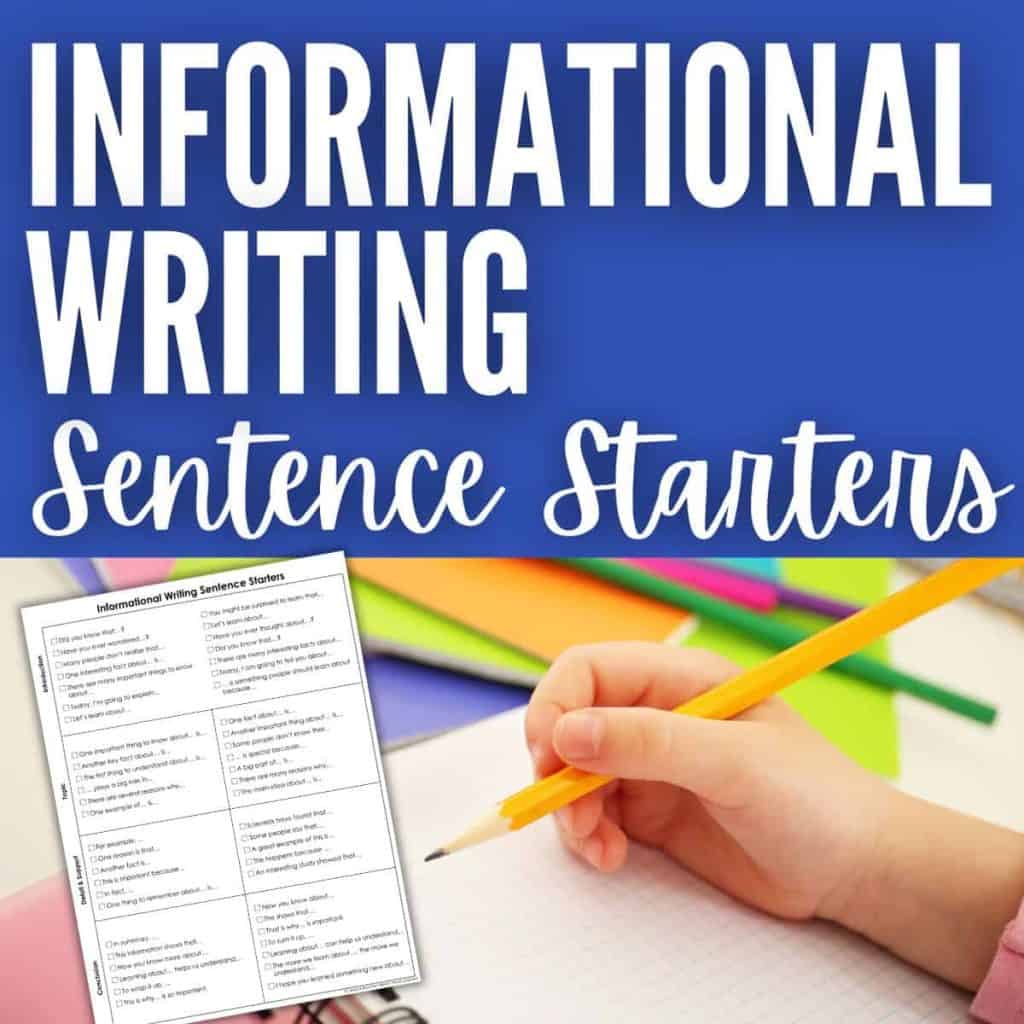
Informational Writing Sentence Starters
Informational writing focuses on presenting facts, explaining ideas, and organizing details clearly.
Students need sentence starters that help them:
- Introduce a topic
- State main ideas
- Add supporting details
- Show cause and effect
- Compare and contrast
- Write conclusions
If you’re teaching nonfiction writing, research reports, or science explanations, visit:
If you’re teaching nonfiction writing, research reports, or science explanations, visit:
Opinion Writing Sentence Starters
Opinion writing requires students to clearly state a claim and support it with reasons and evidence.
Students benefit from sentence starters that help them:
- Introduce their opinion
- State supporting reasons
- Add examples or evidence
- Address counterarguments
- Write persuasive conclusions

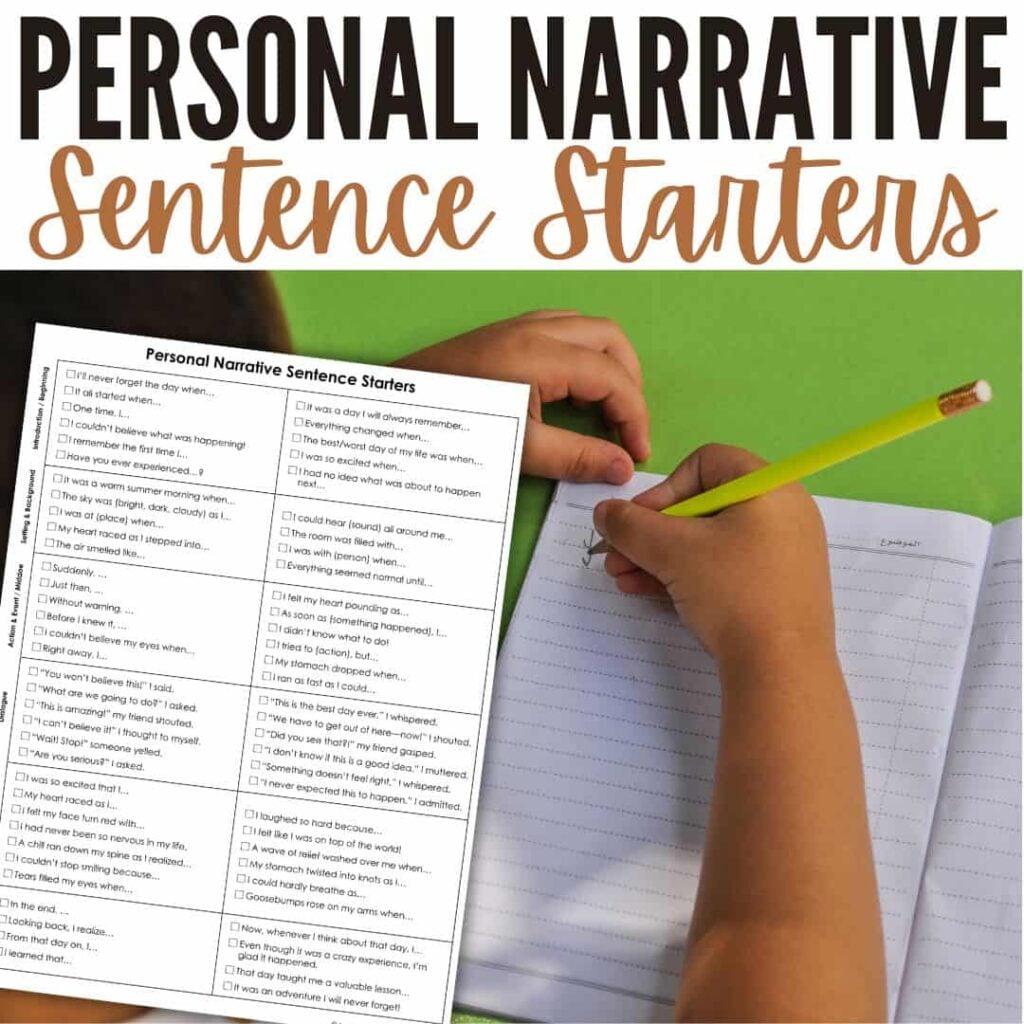
Personal Narrative Sentence Starters
Personal narratives focus on real-life experiences and reflection.
Students need sentence starters that help them:
- Introduce a real event
- Describe feelings
- Show the sequence of events
- Reflect on what they learned
Fictional Narrative Sentence Starters
Fictional narratives focus on storytelling — including characters, setting, conflict, and resolution.
Students need sentence starters that help them:
- Write strong story beginnings
- Develop setting
- Show action
- Add dialogue
- Introduce conflict
- Write satisfying endings

How to Use Sentence Starters in a Writing Unit
Sentence starters work best when paired with direct instruction.
Here’s how many teachers implement them:
- Introduce a specific writing skill (e.g., writing a strong introduction).
- Model using a sentence starter.
- Provide guided practice.
- Gradually remove supports as students gain confidence.
Sentence starters can be used as:
- Anchor charts
- Writing notebook references
- Small-group scaffolds
- Writing center tools
- Revision checklists
Over time, students internalize patterns and begin writing more independently.
When Should Students Stop Using Sentence Starters?
Sentence starters are scaffolds, not permanent supports.
As students become more confident writers, encourage them to:
- Vary sentence structure
- Combine sentences
- Develop their own phrasing
- Use starters as revision tools instead of drafting tools
The goal is independence. Sentence starters simply help students get there.
Writing Sentence Starters for Grades 3–5
In third grade, students often need strong support with structure and paragraph organization.
By fourth grade, students can use sentence starters to develop multi-paragraph writing.
By fifth grade, sentence starters can support advanced skills like counterarguments, evidence-based explanations, and complex story structure.
Having writing sentence starters available across genres makes it easier to differentiate instruction while maintaining consistency.
Classroom-Ready Writing Sentence Starters
If you prefer printable versions of sentence starters for each writing genre, you can find anchor charts, bookmarks, and hands-on activities in each genre-specific resource linked above.
Providing structured language support across informational, opinion, and narrative writing strengthens student confidence and clarity.

This Sentence Starters Bundle gives them the tools they need to structure their thoughts and build confidence across four major writing genres: Opinion, Informational, Personal Narrative, and Story Narrative.
Helping Students Become Stronger Writers
Writing improves when students understand structure.
Sentence starters help students see how writing is organized across genres, from persuasive essays to creative stories to research reports.
When students understand where sentences fit and why they matter, their writing becomes clearer, more purposeful, and more engaging.
Jessica BOschen
Jessica is a teacher, homeschool parent, and entrepreneur. She shares her passion for teaching and education on What I Have Learned. Jessica has 16 years of experience teaching elementary school and currently homeschools her two middle and high school boys. She enjoys scaffolding learning for students, focusing on helping our most challenging learners achieve success in all academic areas.