
Weather and Climate Science Activities for Upper Elementary
Teaching weather and climate can feel like juggling clouds, maps, and vocabulary cards all at once. Students mix up weather and climate, forget the water cycle details, and somehow every discussion circles back to snow days. These Weather and Climate Science Stations take all of that swirling content and organize it into meaningful, hands-on learning that actually sticks.
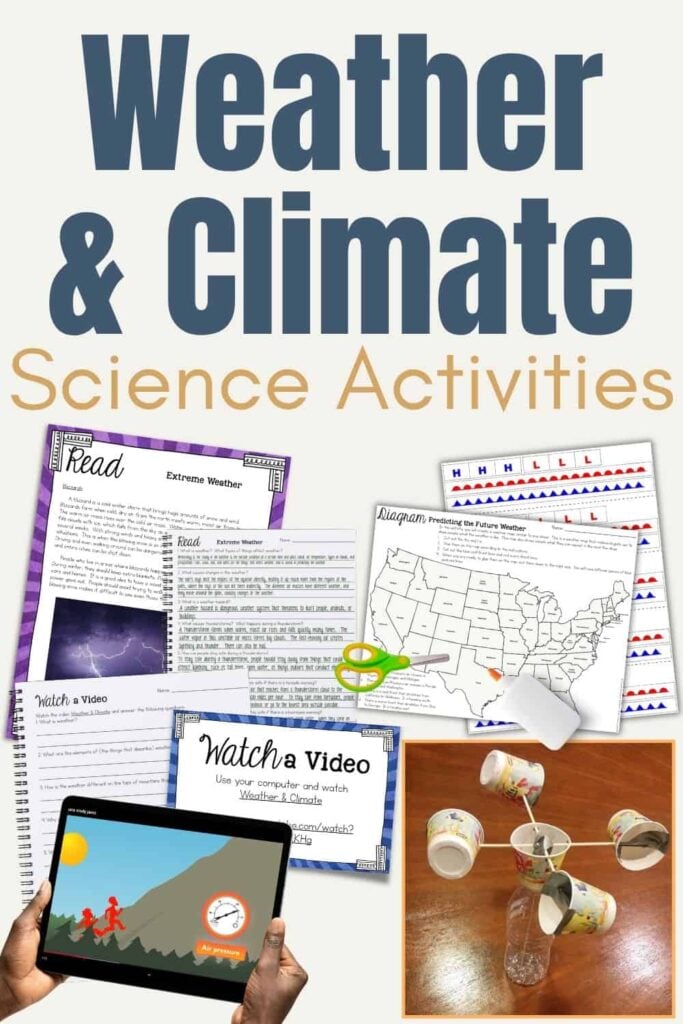
Designed for third grade and aligned with NGSS 3-ESS2.D and 3-ESS3.B, this set of eight science stations provides students with repeated exposure to weather patterns, climate, and weather hazards through reading, building, sorting, modeling, and observing. Each station targets a different learning style, keeps students actively engaged, and gives you solid evidence of understanding without reinventing your lesson plans.
Want to see how this fits into your full science year? The Earth Science for Elementary Students guide maps out every standard from 2nd through 5th grade, with activities and resources for each.
What’s Included in the Weather & Climate Science Stations
This resource includes eight distinct science stations that can be used over eight days or combined into a shorter rotation. Each station comes with clear direction cards, student recording pages, task card options, and answer keys. Digital options are included for Google Slides and Forms, making it flexible for print, digital, or blended classrooms.
Stations are designed to take about 20 minutes each and work well with science journals, small groups, or independent rotations.
Also included are big idea posters and weather vocabulary cards. These are not pictured here.
Here is information about each of the individual science stations:
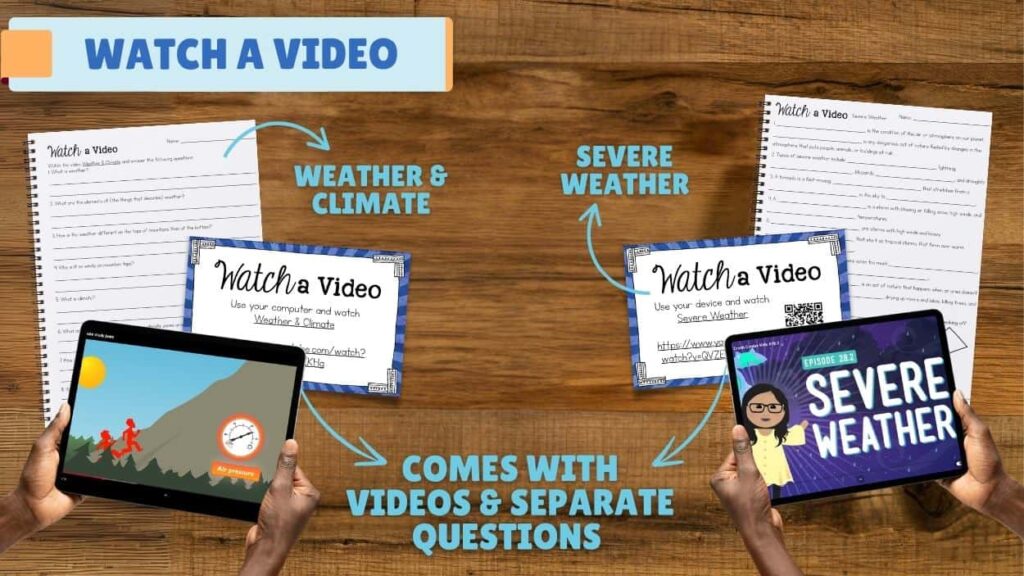
Watch a Video: Weather & Climate or Severe Weather
In this station, students watch a short video focused on weather, climate, or severe weather events. They answer comprehension questions that reinforce key ideas and vocabulary. This station works well as an introduction or review and helps visual learners connect concepts like weather patterns and hazards to real-world examples.
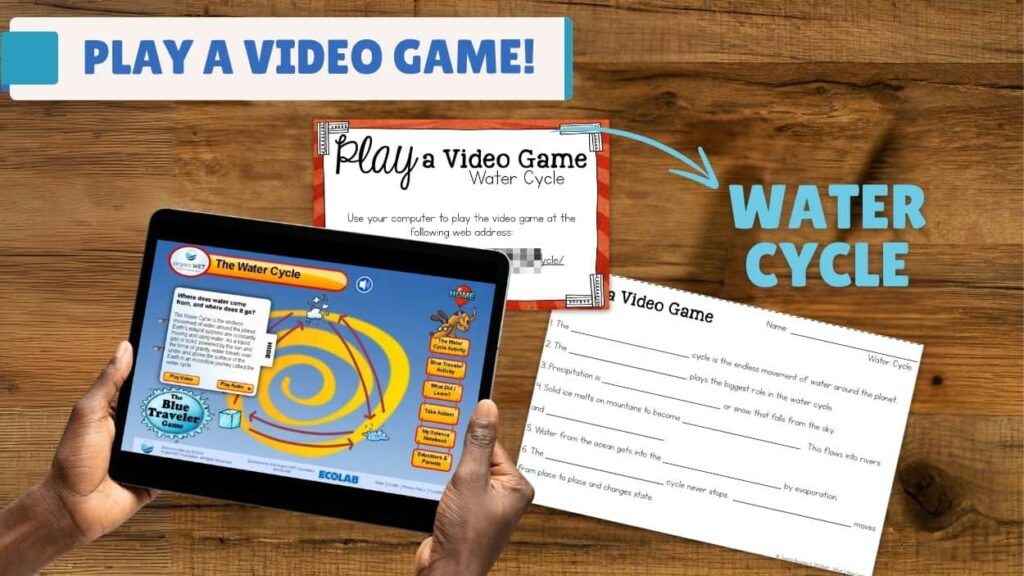
Play a Game: Weather, Seasons, and the Water Cycle
Students play an interactive game, board game, crossword, or word search focused on weather concepts. After playing, they answer questions about what they observed or learned. This station adds movement and motivation while reinforcing academic language tied to weather patterns and seasonal changes.
Investigate: The Making of a Cloud
This hands-on investigation lets students read about clouds and then create a cloud inside a jar. Using simple materials, students observe condensation and cloud formation in action. Follow-up questions guide them to connect what they saw to the water cycle and atmospheric conditions.
This station tends to be a favorite, mostly because science in a jar feels like magic.
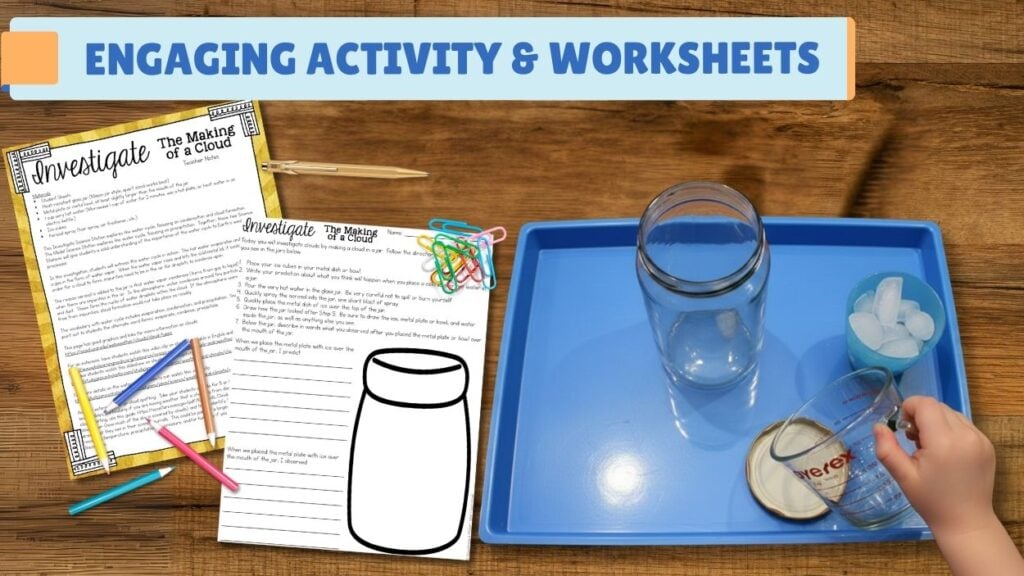
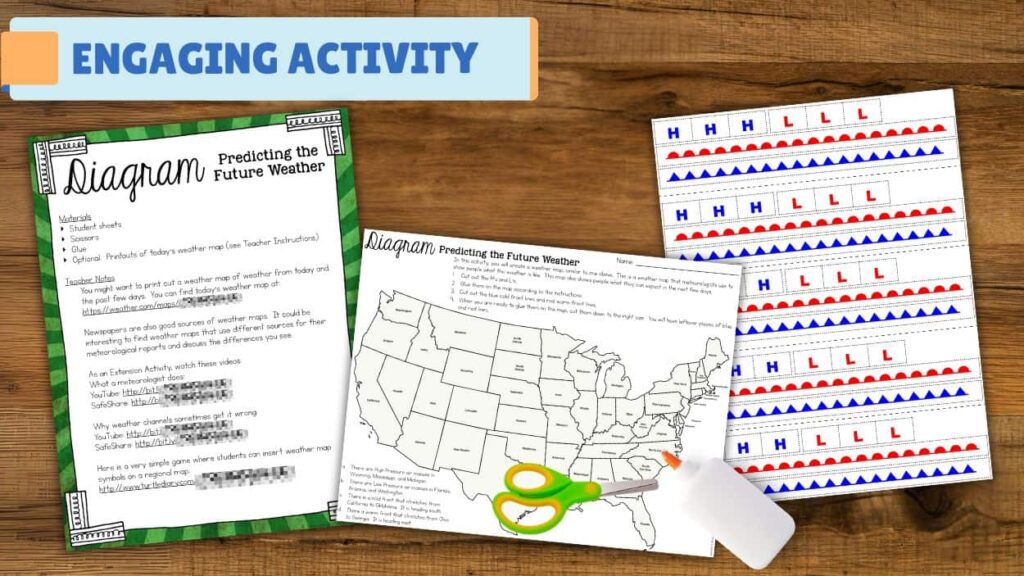
Diagram: Predicting the Future with Weather Maps
Students learn how meteorologists use weather maps and symbols to predict future conditions. They create and label their own weather map, then explain their thinking. This station strengthens diagramming skills, informational reading, and cause-and-effect reasoning.
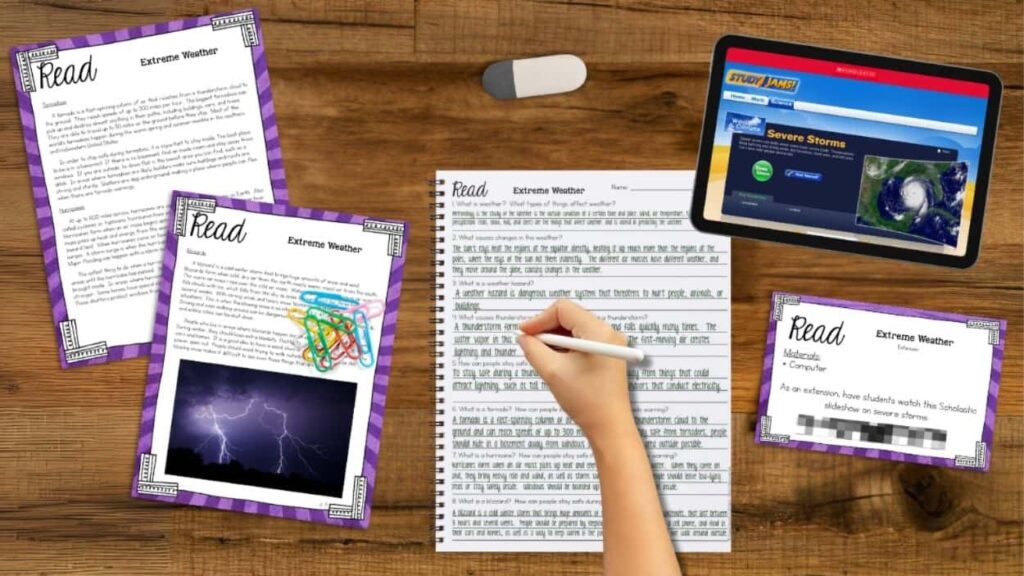
Read: Extreme Weather
Students read an informational passage about extreme weather events such as hurricanes, tornadoes, blizzards, and thunderstorms. Comprehension questions guide them to identify key details and understand how weather hazards impact people and environments.
This station pairs well with discussions about weather safety and preparedness.
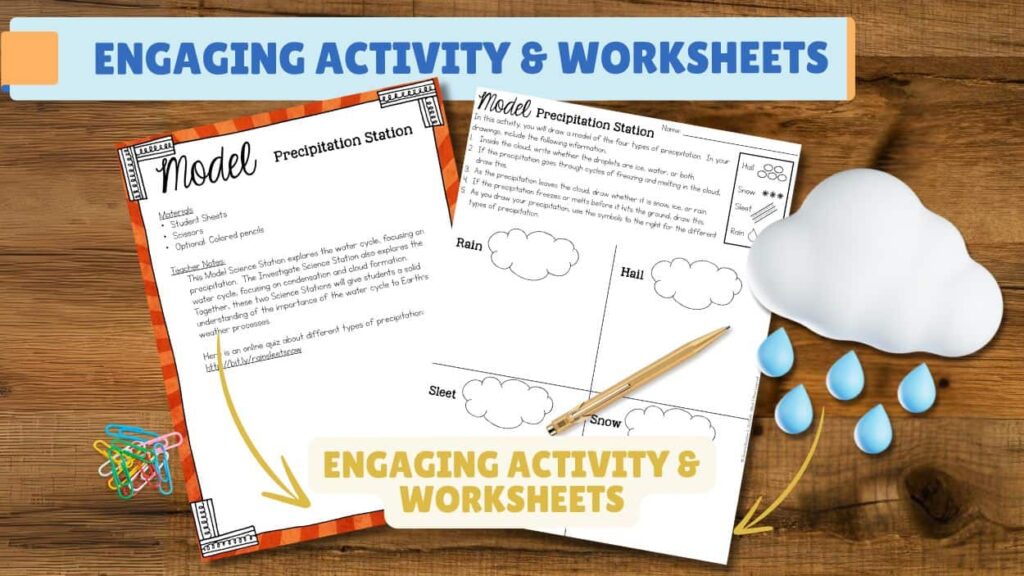
Model: Types of Precipitation
In this station, students build a model that shows different types of precipitation, including rain, snow, sleet, and hail. A reading passage explains how each type forms, and students create a visual model to represent their understanding. This station supports deeper thinking about the water cycle and atmospheric conditions.
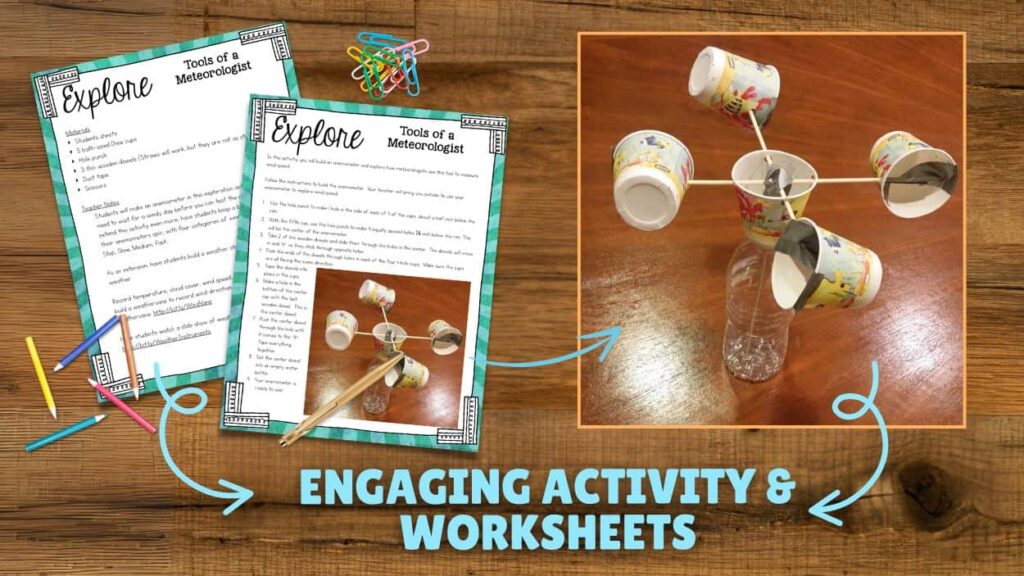
Explore: Tools of a Meteorologist
Students read about tools meteorologists use, then build a working anemometer to measure wind speed. The hands-on component makes abstract tools feel concrete and gives students a chance to test and observe real data. Extension ideas include tracking wind speed or building a simple weather station.
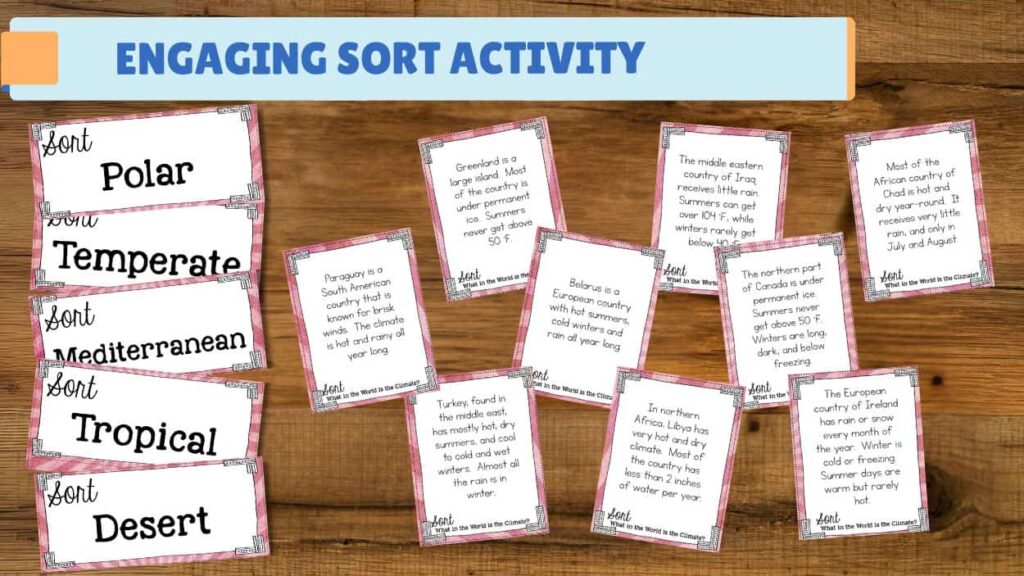
Sort: What in the World Is the Climate?
Students sort countries into climate zones based on descriptions of temperature and precipitation. Two versions are included: a traditional card sort and a map-based coloring sort. This station helps students clearly distinguish between weather and climate while strengthening geography skills.
Why Teachers Like These Stations
These Weather & Climate Science Stations save planning time, keep students engaged, and provide built-in differentiation. Students stay busy, learning feels purposeful, and the room stays productive. The variety of tasks keeps boredom away, even during longer science blocks.
Practical Ways to Teach with These Science Stations
These Weather & Climate Science Stations are flexible enough to fit a lot of classroom setups. You don’t need to run them the same way every time, and that’s part of what makes them useful.
These stations work beautifully after a short whole-group lesson or read-aloud to introduce the topic. Students rotate through the stations, building background knowledge, practicing vocabulary, and applying concepts in different formats. You can run one station per day, two per day, or set them up as true centers.
Each station offers multiple response formats, which makes differentiation easy. Students can respond with written answers, diagrams, models, or journal entries. A built-in checklist helps track progress and keep rotations moving without constant reminders.
Here are some ways to use them in your classroom:
Use Stations as a Structured Science Block
One simple option is to dedicate your entire science block to stations for a week. Introduce the topic with a short whole-group lesson or anchor chart, then let students rotate through one station per day. This approach works well when you want students to slow down and really process each concept without feeling rushed.
Students benefit from repeated routines, and by day two or three, they already know how stations run—no extra explaining needed.
Run Stations After Direct Instruction
Another approach is to teach weather and climate concepts through mini-lessons first, then use the stations as application and reinforcement. After covering topics like the water cycle, weather maps, or climate zones, stations give students a chance to practice and apply what they’ve learned in different formats.
This works especially well before assessments, since students revisit the same ideas through reading, modeling, sorting, and hands-on tasks.
Assign Stations Based on Student Needs
You don’t have to send every group to every station at the same time. Some teachers assign specific stations to specific groups based on readiness or learning style. For example, hands-on learners might start with the Investigate or Model stations, while strong readers begin with the Read or Diagram stations.
This keeps students productive without forcing everyone into the same entry point.
Use Science Journals for Accountability
Science journals pair perfectly with these stations. Instead of collecting eight separate papers, students can record responses, diagrams, and reflections in one place. Task cards make this especially easy, since students can respond directly in their journals.
Journals also make quick formative assessment easier. A quick flip through pages tells you who understands weather patterns and who still needs support.
Turn Stations into Assessment Evidence
Stations aren’t just practice—they double as assessment. The written responses, diagrams, models, and explanations give you concrete evidence of student understanding without a traditional test.
You can grade one or two stations more formally and use the rest as completion or participation grades. This keeps grading manageable while still collecting meaningful data.
Mix Digital and Print Options
These stations work well in classrooms with limited devices or 1:1 access. Some teachers run digital stations alongside hands-on ones, rotating groups between screens and tables. Others assign digital versions for early finishers or make-up work.
This flexibility helps when absences, schedule changes, or device availability throw plans off track.
Use Stations for Review or Reteaching
Stations aren’t just for first-time instruction. They work well as review before benchmarks or as reteaching tools for small groups. Pull a group to revisit the precipitation model or climate sort while others work independently.
Students often understand concepts better the second time around, especially when they interact with the content in a new way.
How to Purchase the Weather & Climate Science Stations
Ready to bring these science stations into your classroom? You can grab this resource in two easy ways, depending on how you prefer to shop.
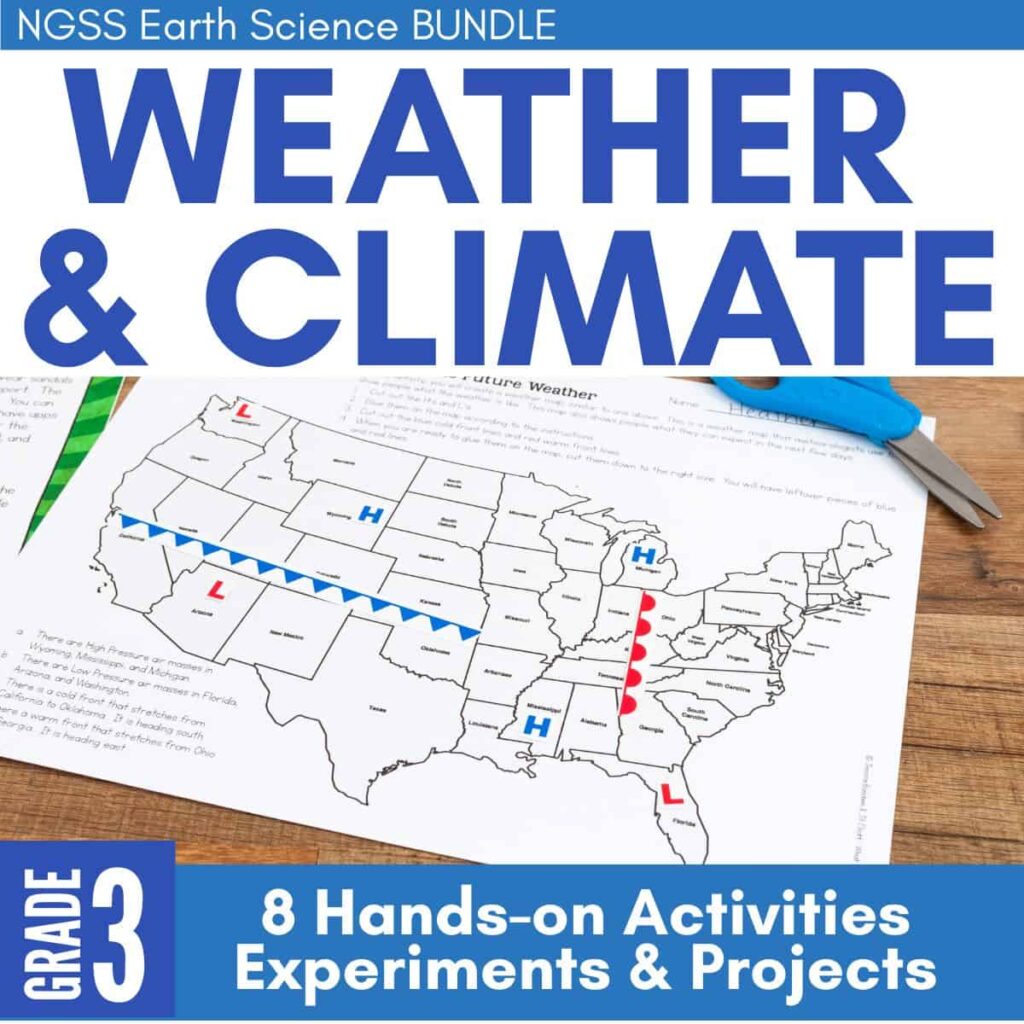
Weather and Climate Third Grade Science Stations
The focus is on NGSS 3-ESS2.D & 3-ESS3.B and includes concepts such weather, climate, severe weather, how clouds are formed, meteorology and weather maps, types of precipitation, meteorological tools, and climate zones.
Weather and climate concepts show up again and again in upper elementary science. Giving students multiple ways to interact with those ideas builds confidence and real understanding. These science stations offer structure without rigidity and engagement without chaos, which is a win for both teachers and students.
If you’re looking for a complete, ready-to-use way to teach weather and climate that goes beyond worksheets, these stations fit right into your classroom routine.
Grab a Free Science Station to Try First
Not quite ready to jump into the full set? I’ve got you covered.
You can try out a free science station to see how these activities work in your classroom before committing to the full bundle. It’s a simple way to introduce the station routine, test out student engagement, and see how the structure fits into your schedule.
This free sample includes:
- A ready-to-use science station activity
- Student passage & worksheet
- Easy-to-follow directions
- A quick way to gauge student understanding
It’s perfect for a low-prep science day or as a preview.
Grab the free science station here and see how it works with your students!

Jessica BOschen
Jessica is a teacher, homeschool parent, and entrepreneur. She shares her passion for teaching and education on What I Have Learned. Jessica has 16 years of experience teaching elementary school and currently homeschools her two middle and high school boys. She enjoys scaffolding learning for students, focusing on helping our most challenging learners achieve success in all academic areas.