
Teach Weather Maps in 3rd Grade: A Hands-On Meteorology Science Station
Weather maps are everywhere—on the news, weather apps, and websites—but for third graders, those symbols and lines can feel confusing without direct instruction. Teaching meteorology at this grade level works best when students interact with maps, symbols, and real-world examples instead of only reading about them.
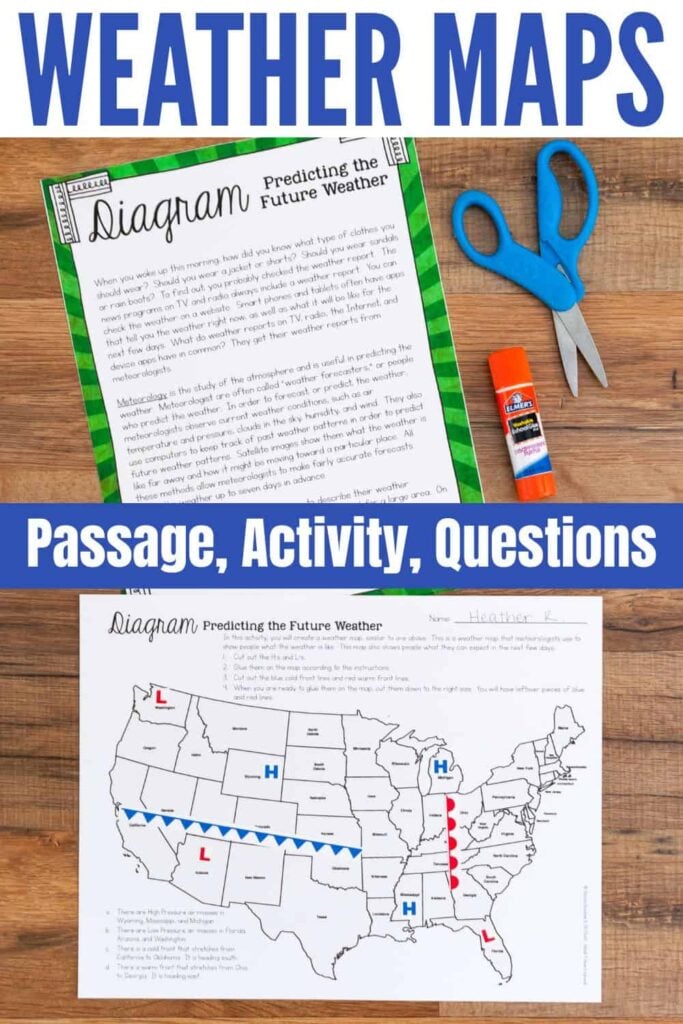
The Meteorology & Weather Maps Diagram Science Station gives students a clear, structured way to learn how meteorologists predict weather. Through reading, diagramming, and map-building, students learn how to interpret weather symbols and connect them to real weather patterns they experience every day.
Why Weather Maps Belong in a 3rd Grade Weather Unit
NGSS standard 3-ESS2.D expects students to understand weather patterns and how scientists use data to make predictions. Weather maps are a key part of that process.
When students learn to read weather maps, they:
- Understand how forecasts are created
- Connect symbols to real weather events
- Build background knowledge for future Earth science units
- Strengthen nonfiction reading and diagram interpretation skills
This station helps students move from “watching the weather” to understanding how forecasts work.
What’s Included in the Weather Maps & Meteorology PDF
This resource is one complete Diagram Science Station within a larger Weather & Climate unit. It is designed to work as an independent station or as part of a rotation.
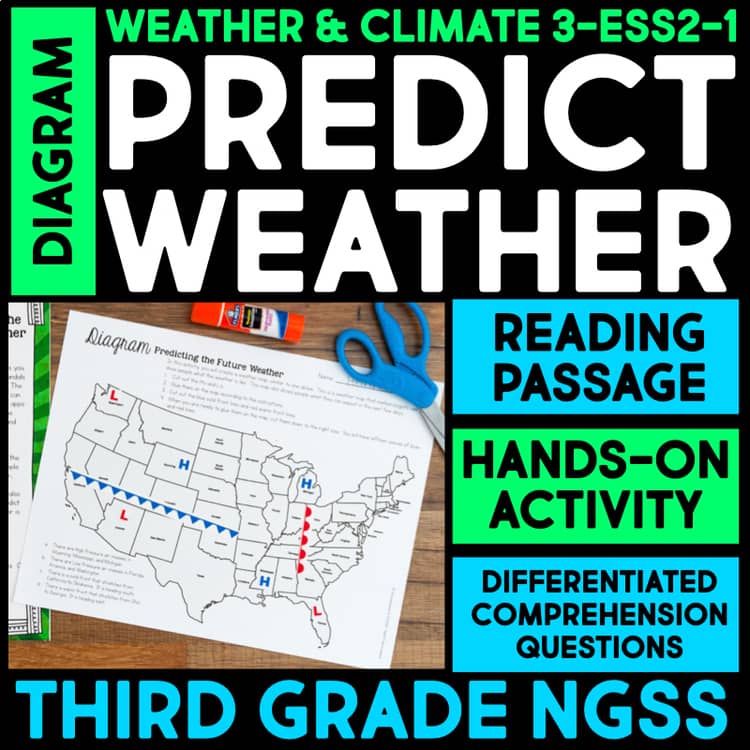
Designed to support NGSS 3-ESS2-2, this engaging resource introduces learners to weather symbols, high-pressure systems, low-pressure systems, weather fronts, and weather prediction
Informational Reading Passage
Students read about:
- What meteorology is
- What meteorologists do
- How weather forecasts are created
- Why weather maps are used
The reading introduces key weather vocabulary and builds science knowledge using student-friendly language.
Weather Map Symbols Instruction
Students learn the meaning of:
- High pressure (H) and low pressure (L) systems
- Cold fronts and warm fronts
- How symbols show air mass movement
- What different systems predict about weather
Visual examples help students understand how symbols relate to conditions such as storms, clouds, rain, and sunny skies.
Diagram & Map-Building Activity
Students create their own weather map by:
- Cutting and placing H and L symbols
- Adding cold and warm fronts
- Following map clues about air mass movement
This hands-on component helps abstract concepts make sense.
Student Response Pages
Multiple response options are included:
- Short-answer questions
- Fill-in-the-blank pages with word banks
- Diagram explanations
- Reflection questions
Teachers can choose formats that fit their classroom needs.
Task Cards and Science Journal Use
Task cards allow students to respond orally or in science notebooks. This setup works well for centers and small groups.
Digital Options and Answer Keys
Google Forms and Slides provide digital access for reading and questions. Answer keys support quick review and feedback.
Why Teachers Use This Weather Map Station
This resource works well in third grade classrooms because it:
- Makes weather maps student-friendly
- Builds real-world connections students recognize
- Combines reading, science, and diagram interpretation
- Supports independent learning during centers
- Fits into a 20-minute station block
Teachers often see stronger explanations when students later describe forecasts or track weather changes.
Tips for Teaching Weather Maps Successfully
Start With Familiar Experiences
Ask students how they know what to wear each morning. This question helps them connect forecasts to daily life.
Introduce Symbols One at a Time
Focus on high pressure, low pressure, and one type of front before adding everything together.
Use Real Weather Maps
Showing a current weather map before the activity helps students see how classroom learning connects to real forecasts.
Encourage Verbal Reasoning
Have students explain why a certain symbol predicts rain or sunshine before writing their answers.
Revisit Maps Over Several Days
Students can track how weather patterns change during the week and compare predictions to actual weather.
When to Use This Resource
This station works well:
- During a weather and climate unit
- As part of NGSS-aligned science centers
- For small-group instruction
- As a follow-up to cloud formation or precipitation lessons
It pairs naturally with other weather stations such as cloud investigations or precipitation modeling.
Designed to support NGSS 3-ESS2-2, this engaging resource introduces learners to weather symbols, high-pressure systems, low-pressure systems, weather fronts, and weather prediction
Helping Students Think Like Meteorologists
Weather maps give third graders a chance to think like scientists. Instead of memorizing terms, students analyze symbols, interpret patterns, and explain predictions using evidence.
The Meteorology & Weather Maps Diagram Science Station builds confidence with complex visuals and prepares students for deeper Earth science learning in later grades.
Jessica BOschen
Jessica is a teacher, homeschool parent, and entrepreneur. She shares her passion for teaching and education on What I Have Learned. Jessica has 16 years of experience teaching elementary school and currently homeschools her two middle and high school boys. She enjoys scaffolding learning for students, focusing on helping our most challenging learners achieve success in all academic areas.