
Teaching Growth Mindset: Mistakes as Learning Opportunities
Teaching growth mindset starts with one core idea: mistakes are part of learning. When students believe this, they begin to see challenges as opportunities to grow, take risks, and try new strategies. Routines, discussions, and writing activities can reinforce this message throughout the year and help build a classroom culture where mistakes are valued rather than avoided.

If you’re looking for a simple way to bring this into your classroom right away, this hands-on leaf craftivity gives students a meaningful way to reflect on mistakes and build resilience.
One of the best ways to teach a growth mindset in elementary is through engaging activities that combine social-emotional learning with seasonal themes. These activities build resilience and embrace learning challenges with confidence. It’s a simple way to bring growth mindset lessons into your fall classroom routines.
What Is a Growth Mindset? (Student-Friendly Explanation)
A growth mindset is the belief that our brains can grow and get stronger when we practice, try new strategies, and learn from mistakes. Instead of thinking, “I can’t do this,” students with a growth mindset learn to say, “I can’t do this yet.”
This idea helps students understand that learning doesn’t happen all at once. It takes time, effort, and sometimes a few mistakes along the way. When students see mistakes as part of learning, they are more willing to take risks, ask questions, and keep trying even when something feels difficult.
A simple way to explain this to students is:
- Your brain is like a muscle—it grows when you use it.
- Mistakes help your brain learn.
- Trying again is part of getting better.
Using clear, student-friendly language like this helps lay a foundation you can reinforce throughout the year through routines, discussions, and growth-mindset activities.
Why Teaching Growth Mindset Matters in Elementary Classrooms
Teaching growth mindset in elementary school helps shape how students view themselves as learners. At this age, students are forming beliefs about what they are capable of doing, and those beliefs can impact their confidence for years to come.
When students believe they are either “good” or “bad” at something, they may avoid challenges or give up quickly. Growth mindset shifts that thinking. Students begin to understand that effort, practice, and strategies play a big role in success.
In the classroom, this often leads to:
- Increased willingness to try challenging tasks
- More persistence when work gets difficult
- Improved problem-solving and flexibility
- Stronger confidence over time
It also supports social-emotional learning. Students learn how to handle frustration, learn from mistakes, and support their peers in positive ways. These are skills that go far beyond academics and help create a supportive classroom environment.
Simple Growth Mindset Activities for the Classroom
Looking for easy ways to bring a growth mindset into your classroom this season? These activities can be used at any time of year, especially when students are adjusting to new routines or facing challenges. These simple activities help students reflect, talk, and build confidence, all without much prep.
Quick Discussion Prompts
Use these during morning meeting, transitions, or whole-group discussions:
- What is a mistake you made this week? What did you learn from it?
- How do you feel when something is hard at first?
- What can you say to yourself when you want to give up?
- Why do you think mistakes help our brains grow?
These short conversations help normalize mistakes and give students language to talk about challenges.
Partner Talk Ideas
Give students a chance to process their thinking with a partner:
- Turn and talk: “One time I made a mistake and kept trying was…”
- Think-pair-share: “Something I’m still learning how to do is…”
- Partner reflection: “A classmate helped me when…”
You can also provide simple sentence stems:
- “I used to think ___, but now I think ___.”
- “A mistake helped me learn ___.”
- “Next time, I will try ___.”
Partner talk builds confidence and helps students hear how others handle challenges.
Simple Writing Prompts
Use these writing prompts for journals, quick writes, or writing centers:
- Write about a mistake you made and what you learned from it.
- Describe a time you didn’t give up. What helped you keep going?
- What would you tell a friend who is struggling with something new?
- Finish this sentence: “Mistakes help me because…”
These prompts connect SEL with writing practice and give students time to reflect more deeply.
A Hands-On Growth Mindset Activity Students Will Remember
If you want to take these ideas a step further, a hands-on activity can make the learning stick.
A hands-on activity like a leaf craftivity gives students a meaningful way to reflect on their mistakes and growth. In the fall, this can easily be turned into a seasonal bulletin board. Students write about a challenge, what they learned, and how they can encourage themselves moving forward. The visual element also turns their thinking into a classroom display that reinforces the message every day.
This type of activity works well after discussions or writing prompts and helps bring everything together in a way students remember.
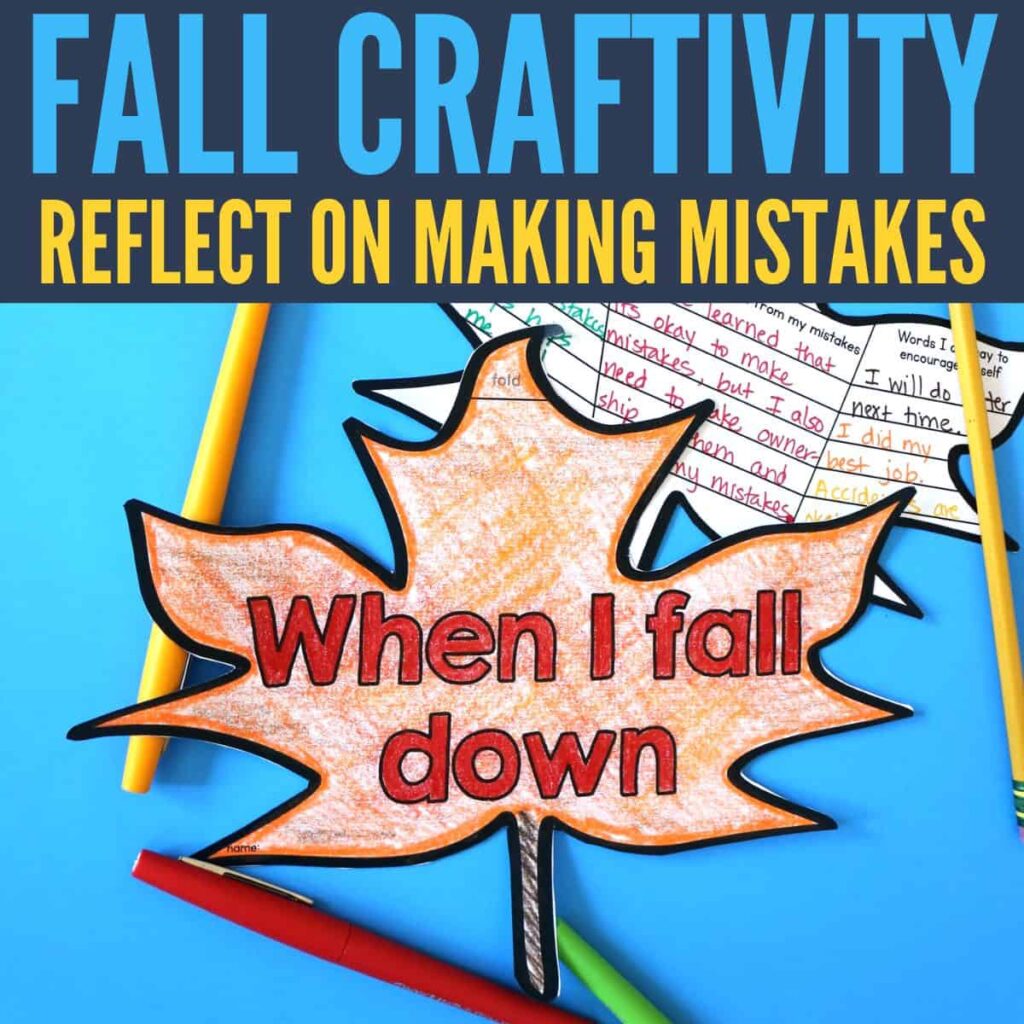
Fall Leaves Craftivity – Mistakes Are Opportunities to Learn
Encourage a growth mindset this fall with this meaningful “When I Fall Down” writing craftivity! Students reflect on mistakes, perseverance, and learning through a creative autumn leaf project—perfect for September and October bulletin boards.
Why Fall Is a Natural Time to Introduce Growth Mindset
September and October are key months for establishing classroom norms, expectations, and tone. Students are still forming beliefs about their abilities, and small wins or setbacks can have a significant impact. That’s why fall is an ideal time to introduce the concept of a growth mindset—the belief that intelligence and abilities can grow with effort, strategy, and help from others.
Mistakes are occurring more frequently this time of year, especially as students adjust to new routines, social dynamics, and academic expectations. Instead of shying away from those moments, you can teach students to embrace them as part of the learning process.
Autumn themes are naturally cozy and comforting, making September and October a fitting time to introduce reflective and emotionally rich activities. Incorporating leaves, fall colors, and seasonal quotes creates a warm and inviting context for lessons about growth and resilience.
Growth Mindset Read-Alouds for Teaching About Mistakes
Would you like to extend the lesson with read-alouds? Try:
- The Most Magnificent Thing by Ashley Spires
- Beautiful Oops! by Barney Saltzberg
- The Girl Who Never Made Mistakes by Mark Pett and Gary Rubinstein


Use these books as a springboard for discussion before or after completing the leaf craft. Ask questions like:
- What did the character learn from their mistake?
- How did they feel before and after?
- What would you have done in that situation?
Cross-Curricular Growth Mindset Activities
This activity also connects well with other content areas:
- Writing: Teach personal narrative writing by asking students to describe their mistakes and what they learned.
- Science: Talk about how scientists learn from failed experiments.
- Social Studies: Discuss historical figures who overcame early failures (e.g., Thomas Edison, Rosa Parks).
How to Build a Classroom Culture That Embraces Mistakes
Creating a classroom where mistakes are seen as part of learning doesn’t happen overnight. It’s built through consistent language, routines, and modeling.
Start by normalizing mistakes. Talk about them openly and treat them as learning opportunities instead of something to avoid. When a student makes an error, focus on what can be learned rather than what went wrong.
You can also model this yourself. Let students see you make a mistake and think through how to fix it. This shows them that mistakes are not something to hide—they are something to learn from.
Simple routines can make a big difference:
- Celebrate effort, not just correct answers
- Ask students, “What did you learn from that?”
- Use sentence stems like “I tried…” or “Next time I will…”
- Encourage students to help and support one another
Over time, these small shifts help students feel safe taking risks. They begin to understand that learning is a process and that mistakes are not the end. They are part of how we grow.
Helping students embrace mistakes as part of learning doesn’t need to be complicated. A simple fall-themed writing activity can open up real conversations and help students feel safe taking risks. Start with one or two ideas from this post, see what resonates with your class, and build from there.
Jessica BOschen
Jessica is a teacher, homeschool parent, and entrepreneur. She shares her passion for teaching and education on What I Have Learned. Jessica has 16 years of experience teaching elementary school and currently homeschools her two middle and high school boys. She enjoys scaffolding learning for students, focusing on helping our most challenging learners achieve success in all academic areas.