Skip to content
Free printables and teaching tips Get them here
What I Have Learned Logo
  • AboutExpand
    • Frequently Asked Questions
    • Contact
    • Legal Policies
    • How to Teach Word Problems
  • Teaching StrategiesExpand
    • Classroom Management
    • English Learners
    • Differentiation
    • Goal Setting
    • Explore by GradeExpand
      • Kindergarten
      • First Grade
      • Second Grade
      • Third Grade
      • Fourth Grade
      • Fifth Grade
  • Teaching IdeasExpand
    • Math
    • Reading
    • Writing
    • Science
    • Seasonal
Shop on TPT
What I Have Learned Logo
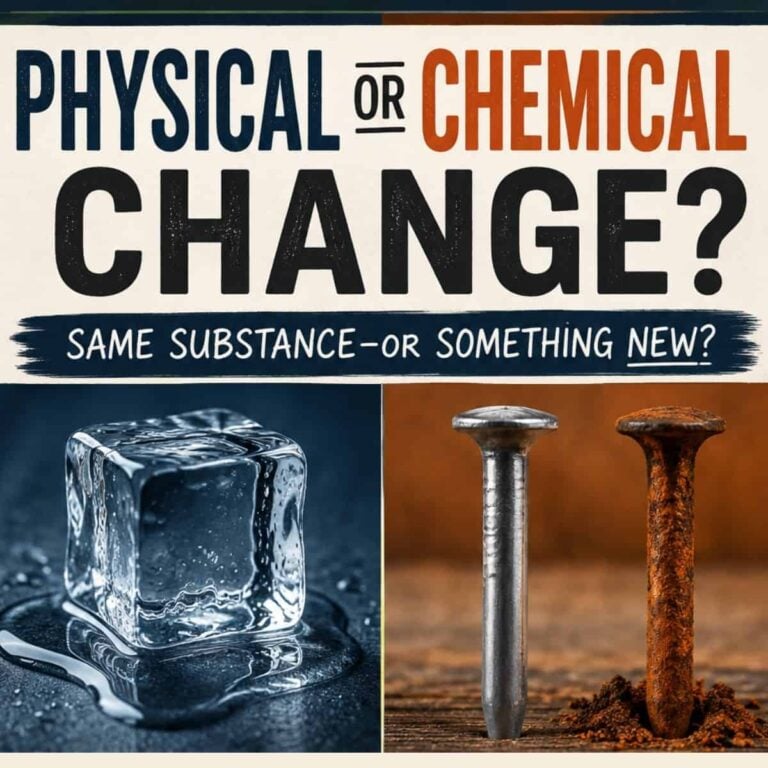
  • Top: Text Physical vs Chemical Changes—Is it the same substance or something new? Bottom: Melting ice cube; shiny nail next to a rusty nail.
    Physical Science

    Physical and Chemical Changes: Activities for Grades 3-5

    Teaching physical and chemical changes sounds simple until a student asks why dissolving sugar isn’t a chemical change but rusting a nail is. It’s one of those topics where students…

    Read More Physical and Chemical Changes: Activities for Grades 3-5Continue

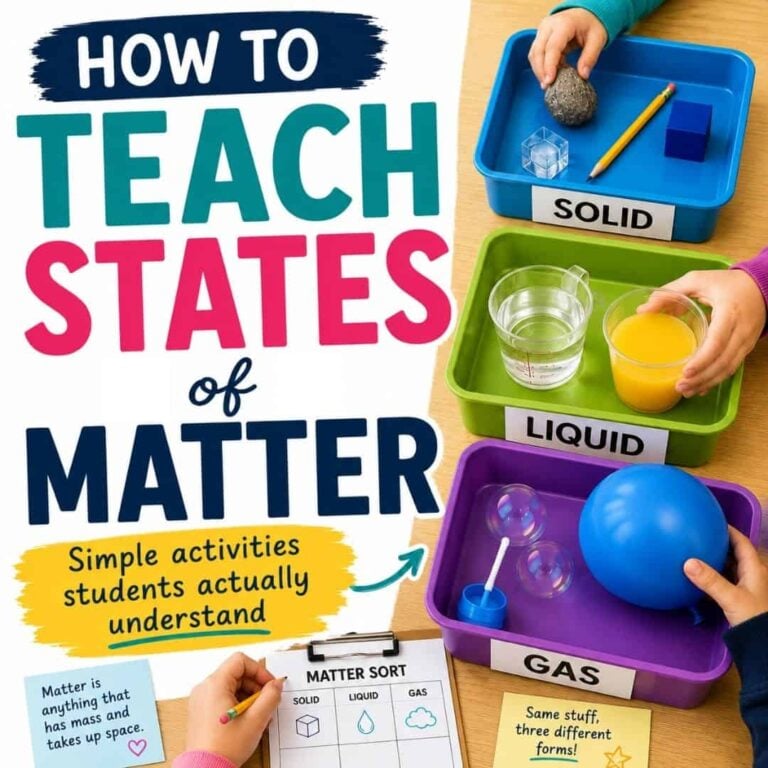
  • Three trays labeled solid, liquid, and gas from the States of Matter product display different objects: a rock for solid, cups of water and juice for liquid, and a balloon for gas. Children use their hands to engage with each item as they investigate the various states of matter. The image includes text reading How to Teach States of Matter along with related information.
    Physical Science

    States of Matter: Solids, Liquids, and Gases for Kids

    An ice cube, a glass of water, and the steam off a hot cup are all the same stuff in three different forms. That’s the whole idea behind the states…
    Read More States of Matter: Solids, Liquids, and Gases for KidsContinue

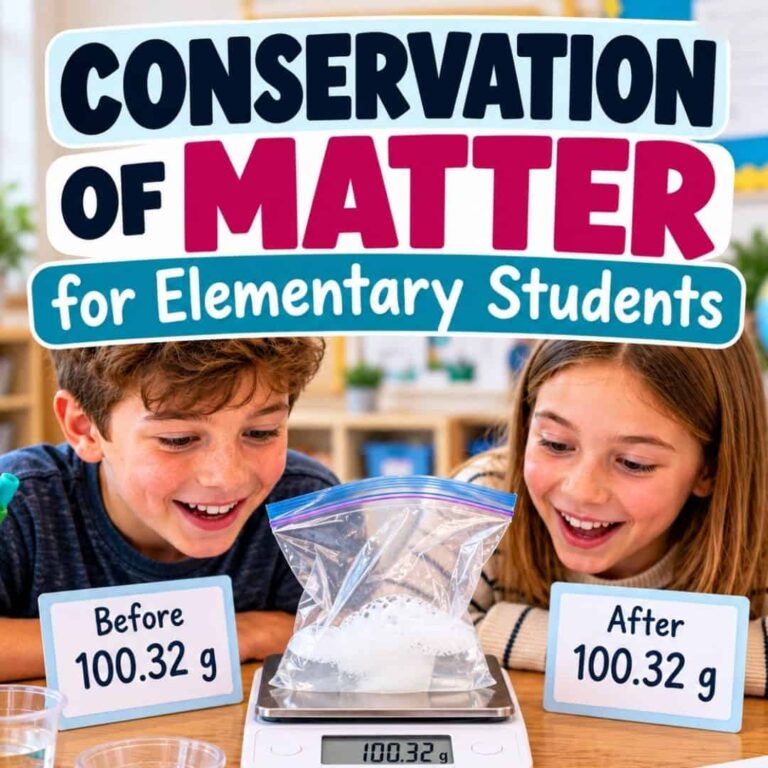
  • Two smiling children use conservation of matter experiments, observing a plastic bag of white substance on a scale. Signs show Before 100.32g and After 100.32g, demonstrating the law of conservation of mass.
    Physical Science

    Conservation of Matter: Experiments for 5th Grade

    When a candle burns down, or a tablet fizzes in water, students assume the matter has disappeared. Teaching the conservation of matter is how you replace that idea with the…
    Read More Conservation of Matter: Experiments for 5th GradeContinue

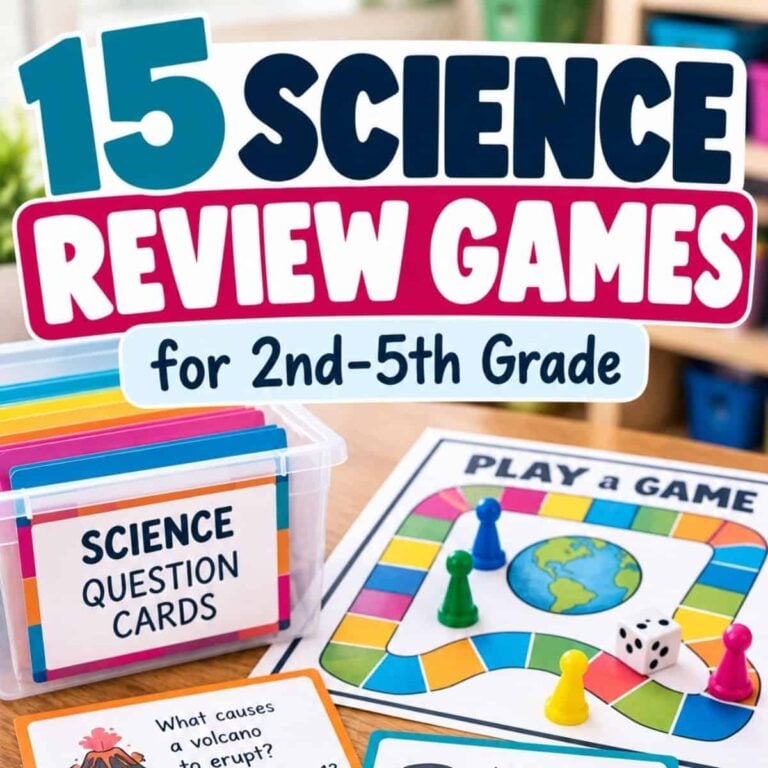
  • Colorful board game setup with science question cards, dice, and three game pieces—a fun way to use 15 Science Review Games (2) for elementary science review. Sign reads 15 Science Review Games for 2nd-5th Grade.
    Science

    15 Science Review Games That Are Easy to Run (No Prep Required When You Have the Right Cards)

    Science review games give elementary students a reason to actually think through what they’ve learned, and they work far better than another round of worksheets. Whether you’re wrapping up a…
    Read More 15 Science Review Games That Are Easy to Run (No Prep Required When You Have the Right Cards)Continue

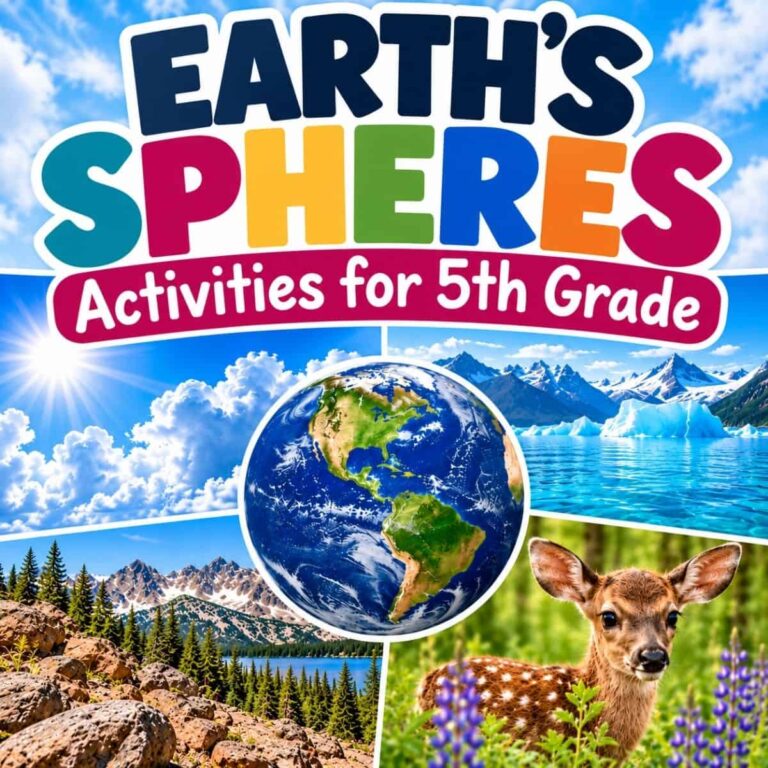
  • Earth’s Spheres Activities for 5th Grade (2) is a colorful poster showing Earth, mountains, lakes, pines, a fawn in purple flowers, and a blue sky with clouds.
    Earth Science

    Earth’s Spheres Activities for Elementary Students: A Complete Resource Guide

    When students learn about Earth’s spheres, they’re learning to see the planet as a system rather than a collection of separate facts. The atmosphere, hydrosphere, geosphere, and biosphere are constantly…
    Read More Earth’s Spheres Activities for Elementary Students: A Complete Resource GuideContinue

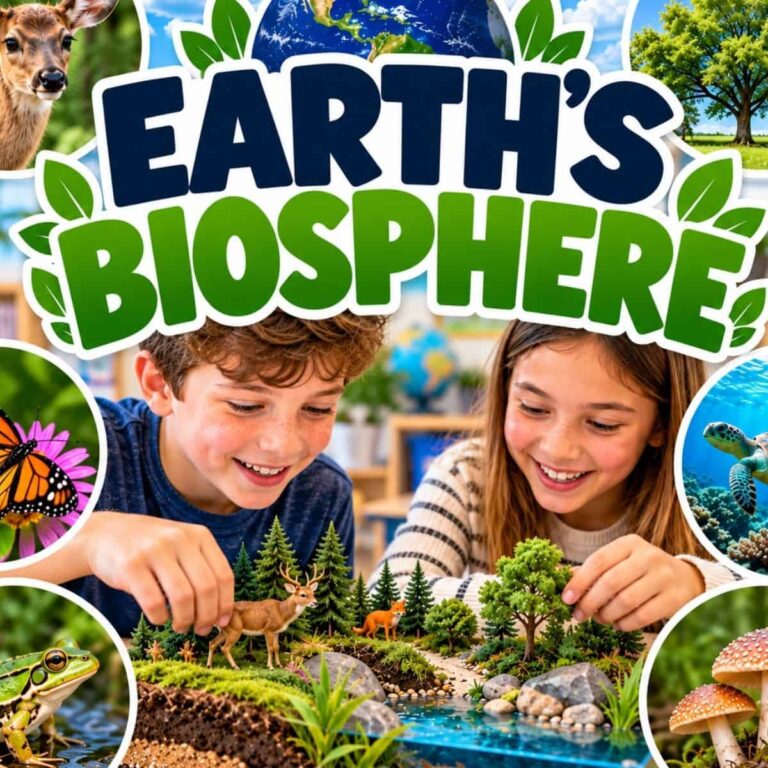
  • Two children use Earth’s Biosphere_ Hands-on Activities for Upper Elementary Students (2) (1) to explore a miniature landscape with animals and trees, surrounded by wildlife photos and the words Earth’s Biosphere above.
    Earth Science

    Earth’s Biosphere: Hands-on Activities for Upper Elementary Students

    The Earth’s biosphere is the sphere that students are already part of, making it a great anchor for teaching Earth’s systems. Every organism on the planet, from the bacteria in…
    Read More Earth’s Biosphere: Hands-on Activities for Upper Elementary StudentsContinue

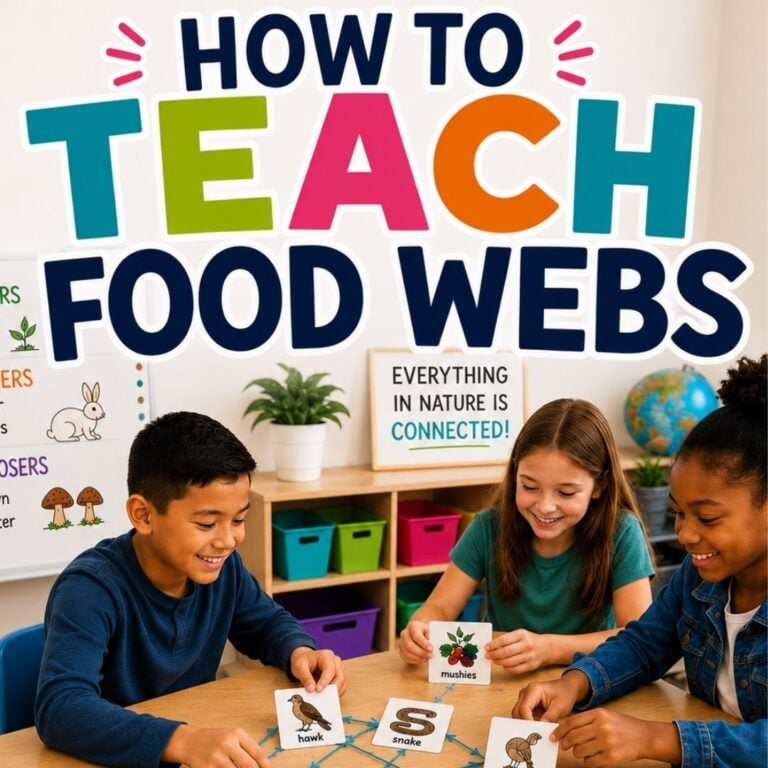
  • Three children smile as they connect animal and plant cards from Teach food webs, showing food chains and webs. A sign says, "Everything in nature is connected!"—making Teach food webs perfect for teaching elementary students.
    Life Science

    Food Chains and Food Webs: A Teacher’s Guide for Elementary Students

    Food chains and food webs are one of those topics that sound simple on the surface but become more complex as students move through the grade levels Students encounter the…
    Read More Food Chains and Food Webs: A Teacher’s Guide for Elementary StudentsContinue

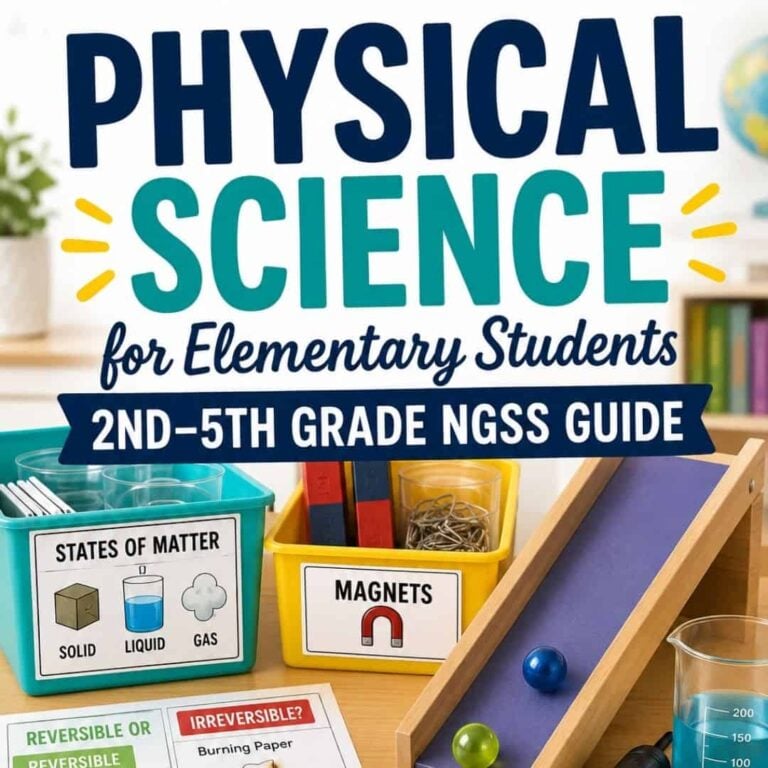
  • A classroom setup shows bins labeled States of Matter and Magnets, science cards, and a marble ramp. Text: physical science 2-5th grades—hands-on NGSS-aligned activities for elementary students.
    Physical Science

    Physical Science for Elementary Students: 2nd–5th Grade Guide

    Physical science is where students first realize that science isn’t just about living things. It’s also about the stuff that makes up everything around them and how that stuff moves,…
    Read More Physical Science for Elementary Students: 2nd–5th Grade GuideContinue

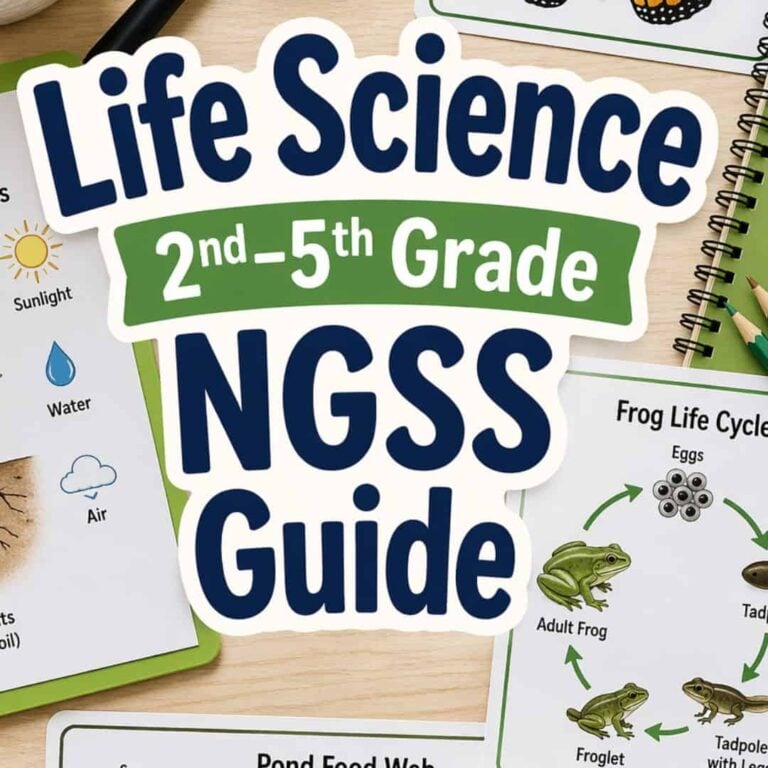
  • Text reads “Life Science NGSS Guide.” The background displays engaging life science diagrams, such as a frog life cycle, food web, and vibrant illustrations of sunlight, water, and air.
    Life Science

    Life Science for Elementary Students: 2nd–5th Grade Guide

    Life science is the content area where students realize that science isn’t just something that happens in a lab. It’s happening all around them, in every living thing they encounter….
    Read More Life Science for Elementary Students: 2nd–5th Grade GuideContinue

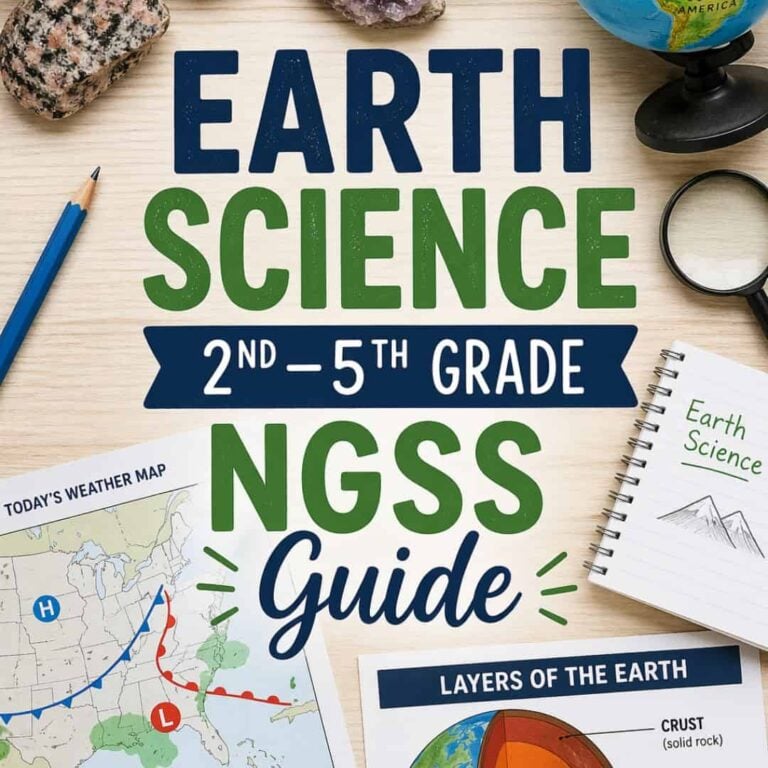
  • Top-down view of a desk featuring the SQUARE Earth Science Pillar Post surrounded by rocks, a globe, weather and earth layers charts, a pencil, and a notebook labeled Earth Science.
    Earth Science

    Earth Science for Elementary Students: 2nd–5th Grade Guide

    Earth science is one of those topics that feels enormous on paper but becomes immediately concrete the moment students pick up a rock, watch water carve a path through sand,…
    Read More Earth Science for Elementary Students: 2nd–5th Grade GuideContinue

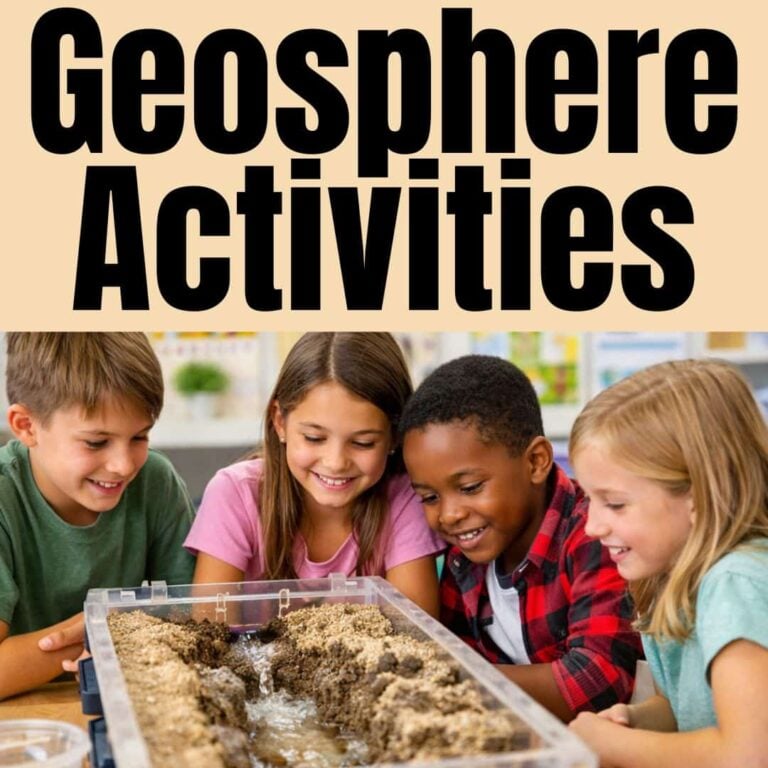
  • Four smiling children observe a model with sand, rocks, and water in class. Above them, bold text reads: Square Earth's Geosphere activities (1)—perfect for engaging geosphere activities 5th grade students will love.
    Earth Science

    Geosphere Activities: Hands-On Earth Science

    Teaching Earth’s spheres can feel abstract, especially when students are trying to picture how rocks form, how landscapes shift, and how living things interact with the ground beneath them. The…
    Read More Geosphere Activities: Hands-On Earth ScienceContinue

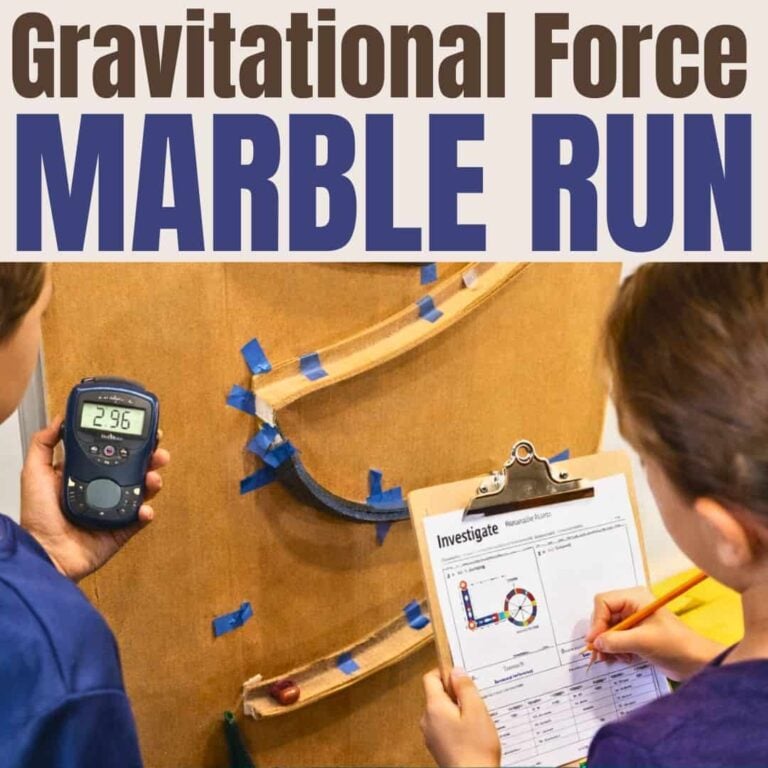
  • gravitational force marble run.
    Physical Science

    A Marble Run Lesson Plan That Teaches About Gravity in 5th Grade

    By fifth grade, students are ready to move beyond simple observations and start thinking like scientists and engineers. They want to test ideas, collect data, and explain what’s happening, not…

    Read More A Marble Run Lesson Plan That Teaches About Gravity in 5th GradeContinue

Page navigation

1 2 3 Next PageNext

Become a part of the Email Community!

Sign up to get a free resource of your choice!

Click to Get a Free Resource
WIHL Footer Logo homepage.
  • Facebook
  • Pinterest
  • Instagram
  • Amazon
  • YouTube

Information

  • About
  • FAQ
  • Shop
  • Contact

Topics

  • Math
  • Science
  • Reading
  • Writing

Teaching Ideas

  • Seasonal
  • Differentiation
  • Management
  • English Learners
  • Privacy Policy
  • Refund Policy

© 2026 What I Have Learned

  • What I Have Learned
  • Learn
    • Math
    • Reading
      • Early Reading
    • Writing
    • Science
    • Instructional Strategies
      • Seasonal
      • Classroom Management
      • Goal Setting
  • Shop
    • Bundles
    • Animal Articles
    • Goal Setting
    • Craftivities
    • Math
    • Phonics
    • Social Studies
    • Science
  • About
    • Courses & Collections
    • FAQ
Search