
Animal Life Cycle Video Games for Elementary Students
Teaching animal life cycles can be challenging, especially when students need to understand changes that happen over time. Using animal life cycle video games is an effective way to help students visualize each stage while staying engaged in the learning process.
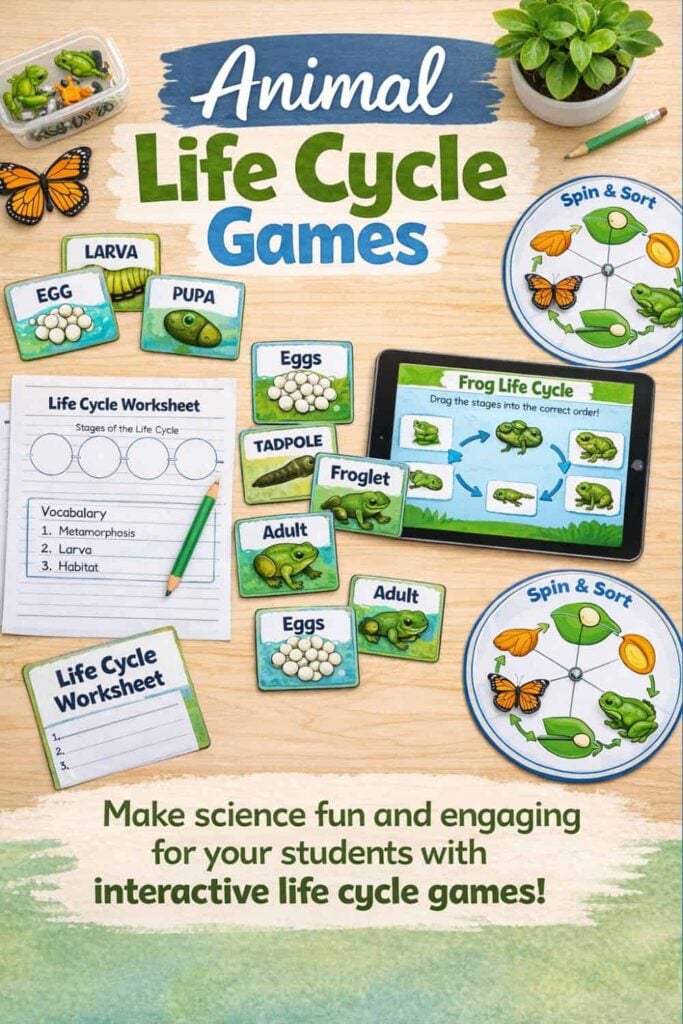
Instead of relying solely on diagrams or reading passages, these animal life cycle games give students a chance to interact with the content. When students see life cycles in action, they are more likely to understand sequencing, patterns, and vocabulary like egg, larva, pupa, and adult. These types of activities work well in science centers, small groups, or as part of a full life cycle unit.
Why Use Video Games for Life Cycles?
If you’re looking for a way to keep students engaged while reinforcing content, animal life cycle video games are a great addition to your science block. These activities give students the chance to apply what they’ve learned in an interactive format, which is especially helpful as they’re still developing a clear understanding of stages and sequences.
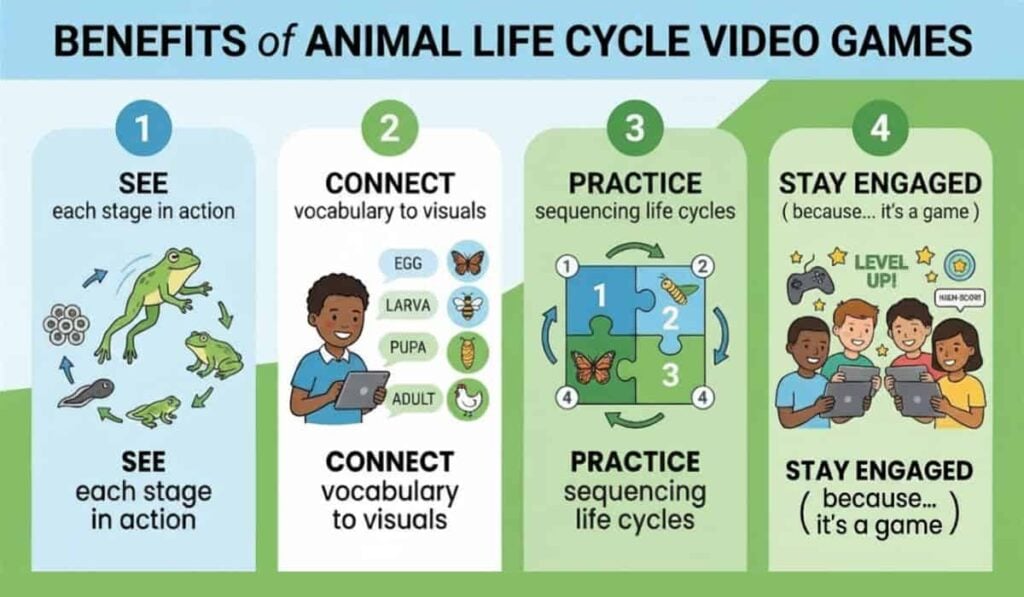
Interactive games help students:
- See each stage in action
- Connect vocabulary to visuals
- Practice sequencing life cycles
- Stay engaged (because… it’s a game)
When used with purpose, games can be a simple way to strengthen understanding without adding extra prep to your day.
And let’s be honest, if they think it’s a game, you’ve already won.
Animal Life Cycle Video Games to Use in Science Stations
Below is a list of animal life-cycle video games I found on various websites. Included are a few notes about each one.
1. Life Cycles with Lester (ABCmouse)
This interactive life cycles game introduces students to life cycles through guided exploration and simple animations.
What students can do:
- Follow four animal life cycles step-by-step. It starts with two animals that have a four-stage life cycle, then gives two animals with a three-stage life cycle.
- Interact with visuals showing each stage
- Build a foundational understanding of how animals grow and change
Best for:
- Early elementary students (2nd grade)
- Introducing life cycle vocabulary
2. TinyTap Life Cycle Game
This is a more interactive, student-paced activity where students actively respond as they learn. Students drag real pictures into boxes to order the life cycles. It gives immediate feedback and provides practice with a variety of animals.
What students can do:
- Tap, drag, and match life cycle stages
- Get immediate feedback
Best for:
- Reinforcing concepts after instruction
- Independent or partner work
3. Ecosystem for Kids: Life Cycle Diagrams
This site is less of a “game” and more of an interactive diagramming activity, but it works great in a game rotation. There are many animals and plants to choose from, including obscure ones such as a cockroach and a blowfly.
What students can do:
- View clear diagrams of different animal life cycles
- Compare multiple animals (frogs, butterflies, etc.)
- Use visuals to support understanding
Best for:
- Visual learners
- Students who need extra support
4. ESL Games Plus: Life Cycle Games
This site has a collection of simple review-style games that feel like quizzes, but way more fun.
What students can do:
- Answer life cycle questions in a game format
- Practice vocabulary and sequencing
- Review key concepts
Best for:
- Review days
- Quick practice stations
5. Legends of Learning: Animal Life Cycle Games
Legends of Learning offers interactive science games that align with standards and focus on key concepts like plant and animal life cycles. These games are a bit more structured than some others, making them a strong option when you want students to both play and demonstrate their understanding.
What students can do:
- Work through game-based scenarios that show stages of plant and animal life cycles
- Answer questions as they play to check for understanding
- Interact with models and simulations of how animals grow and change
What you’ll find in these games:
- Standards-aligned content focused on life cycles
- Built-in questions and feedback for students
- Engaging visuals that support understanding of sequences and changes over time
Best for:
- Reinforcing concepts after whole group instruction
- Small group or independent practice
- Students who need a more guided digital experience
These games work especially well when you want something more structured than a simple review game, but still engaging enough to keep students focused.
How to Use Animal Life Cycle Games in Your Classroom
Animal life cycle games fit naturally into your existing science routines and don’t require a complicated setup.
You can use them during:
- Science stations or rotations as an independent activity
- Small group instruction to reinforce concepts
- Early finisher work that still connects to your standards
- Review days before an assessment
To keep the activity focused, pair the game with a simple task. For example, students can:
- Sequence the stages they observed
- Write or draw each part of the life cycle
- Compare two different animals
- Use vocabulary in a sentence or a short explanation
This keeps the activity from becoming “just a game” and turns it into meaningful practice.
What Students Learn Through These Activities
These types of activities help students build a deeper understanding of life cycles by focusing on:
- The sequence of stages in an animal’s life
- Patterns across different species
- Key vocabulary related to growth and change
- Comparing complete and incomplete metamorphosis
Because students are actively interacting with the content, they are more likely to retain what they learn and apply it in other contexts.
Want to Go Beyond Video Games?
The full Play Game Life Cycle resource includes:
- Board games
- Word searches
- Crosswords
- Differentiated Questions
Mixing digital and non-digital options keeps students engaged and avoids tech burnout (for both you and them).
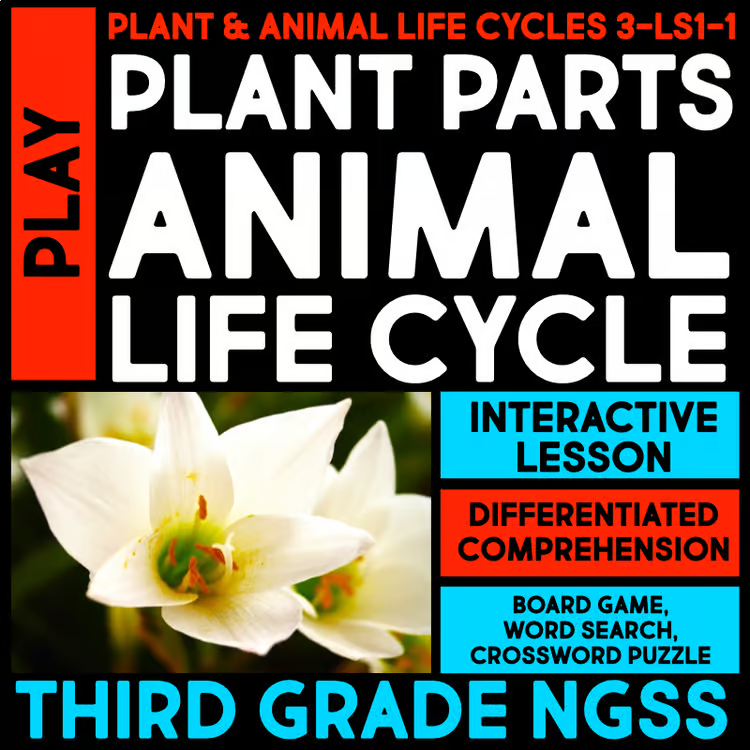
Students can play a video game, do a board game, or complete a word search or crossword puzzle – all centered around the life cycles.
Animal life cycle games are a practical way to support your science instruction while keeping students engaged. When paired with simple follow-up tasks, they help students move beyond memorizing stages and begin to understand how living things grow and change.
If you’re already teaching a life cycle unit, adding a game-based activity can give students another way to process the content and make those concepts stick.
Free Frog Life Cycle Informational Article
If your students need a stronger foundation before jumping into games, a short informational reading about frogs is a great place to start. Frogs are among the easiest animals for students to understand when learning about life cycles, making them perfect for introducing key concepts.
A free frog informational article can help students:
- Learn the stages of a frog’s life cycle (egg, tadpole, froglet, adult)
- Build background knowledge before playing games
- Practice reading informational text with science content
- Connect vocabulary to real-life examples

Teach Life Cycles with More Activities
Looking for more ways to teach animal life cycles beyond video games? Pairing interactive games with reading, hands-on activities, and science stations helps students build a deeper understanding of how living things grow and change.
Start by building background knowledge with a frog life cycle informational passage, where students learn about each stage before seeing it in action through games.
Then, extend learning with butterfly life cycle activities that give students hands-on practice comparing stages across different animals. If you want a complete, ready-to-use structure, these life cycle science stations combine reading, sorting, and interactive tasks to reinforce key concepts throughout your unit.
Using a mix of reading, games, and hands-on activities gives students multiple ways to process the same content—which leads to stronger understanding and better retention (and fewer “Wait… what comes after tadpole again?” moments).
Jessica BOschen
Jessica is a teacher, homeschool parent, and entrepreneur. She shares her passion for teaching and education on What I Have Learned. Jessica has 16 years of experience teaching elementary school and currently homeschools her two middle and high school boys. She enjoys scaffolding learning for students, focusing on helping our most challenging learners achieve success in all academic areas.