
Life Cycle of a Frog + Free Printable Passage
If you’re teaching the life cycle of a frog, you know it’s one of the most engaging science topics in elementary classrooms. Students are fascinated by how a tiny egg turns into a swimming tadpole and eventually becomes a hopping frog. If you’re searching for a clear explanation of the life cycle of a frog for kids, plus a ready-to-use life cycle of a frog worksheet and printable, you’re in the right place.
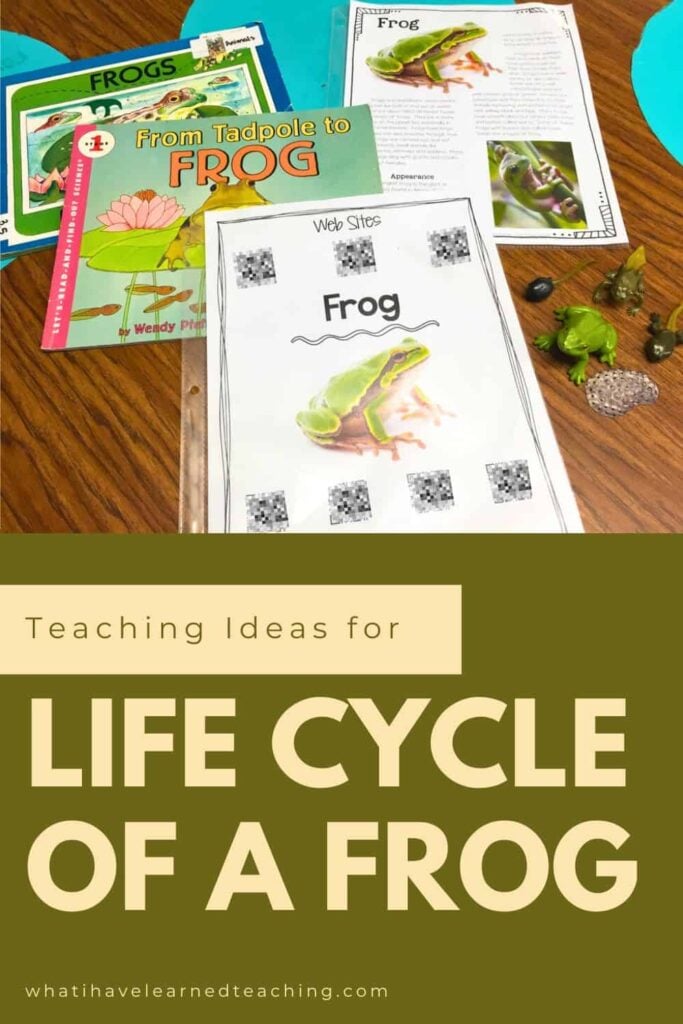
In this post, you’ll find a kid-friendly breakdown of the life cycle of a frog, classroom teaching ideas, vocabulary support, and a free life cycle of a frog reading passage.
Whether you teach 2nd or 3rd grade, these resources will help you create a standards-aligned science lesson that integrates reading, writing, and hands-on sequencing activities — all in one simple plan.
What Is the Life Cycle of a Frog?
The life cycle of a frog is the series of stages a frog goes through as it grows from an egg into an adult. This process is called metamorphosis, which means a big change.
There are four main stages in the life cycle of a frog:
- Egg
- Tadpole
- Froglet (tadpole with legs)
- Adult Frog
Each stage looks completely different from the last, which makes this life cycle especially engaging for kids.
Life Cycle of a Frog Worksheet
One of the most effective ways to teach the life cycle of a frog is through drawing and writing. When students illustrate each stage, they slow down and process what is happening.
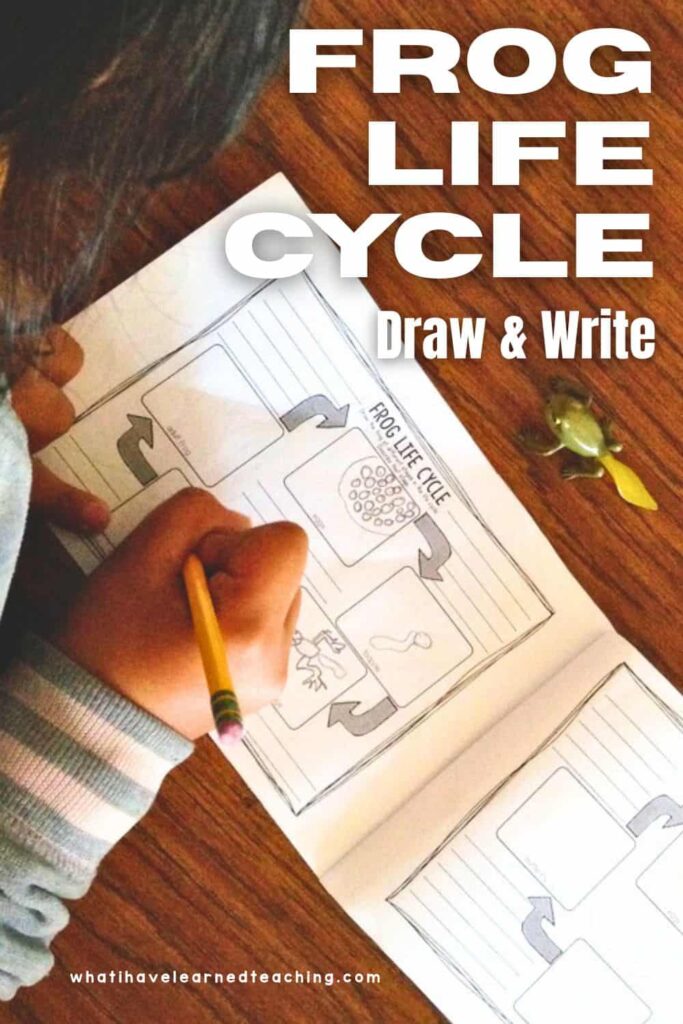
A Frog Life Cycle Graphic Organizer worksheet allows students to draw each stage, label it, write a short description, and sequence the life cycle order.
This format reinforces science vocabulary and integrates writing standards at the same time.
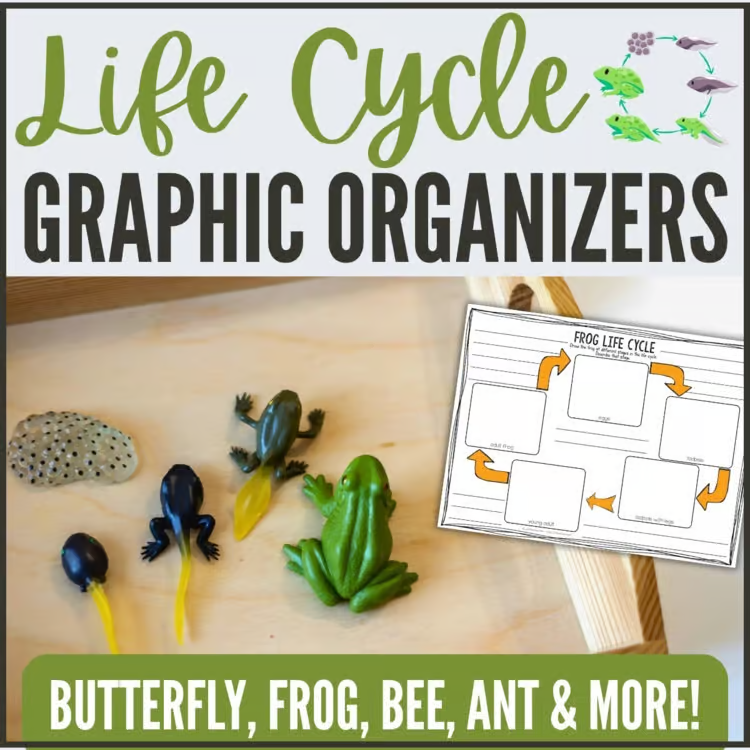
These graphic organizers help students visualize and describe the life cycles of eight different animals and insects through simple, hands-on drawing and writing activities.
Stage 1: Frog Eggs
Because frogs are amphibians, females lay their eggs in water, like a pond. The eggs are surrounded by a jelly-like substance or coating that protects them and gives them nutrients until they are ready to hatch.
Inside each egg, a tiny tadpole begins forming. These egg clusters are sometimes called frogspawn.
Have students describe:
- Where eggs are laid
- Why water is important
- What protects the egg
This is a great opportunity to introduce the term amphibian.
Stage 2: Tadpole
When the eggs hatch, tadpoles emerge. These water-bound tadpoles:
- Live fully in water
- Breathe with gills
- Have long tails
- Swim like fish
Students love comparing tadpoles to fish and discussing how they are different.
Stage 3: Tadpole With Legs (Froglet)
Next, the hind legs begin to grow. Then the front legs appear. The tail slowly shrinks as the back legs continue to grow.
This stage is often called a froglet. It is no longer fully fish-like, but it’s not yet an adult frog.
This transitional stage helps students understand gradual change. It’s an astonishing transformation!
Stage 4: Adult Frog
Eventually, the tail disappears. The young frog turns into an adult frog that:
- Breathes with lungs
- Lives mostly on land
- Returns to water to lay its own eggs
And the life cycle repeats.
Life Cycle of a Frog Printable Reading Passage
To build background knowledge, pair your worksheet with an informational article all about frogs.
The frog reading passage includes:
- Frog characteristics
- Habitat information
- Clear explanation of the life cycle of a frog
- Vocabulary such as metamorphosis, amphibian, and carnivorous
You can use this printable for:
- Close reading
- Highlighting key details
- Text-dependent questions
- Science notebook entries
This makes the lesson more than just labeling a diagram. Students are reading, writing, and applying science content together.

Teaching Ideas for the Life Cycle of a Frog
If you want to extend the lesson, try:
1. Compare Animal Life Cycles
Compare frogs to:
- Butterflies
- Sea turtles
- Chickens
Students notice that not all animals go through metamorphosis and that they have different life cycles.
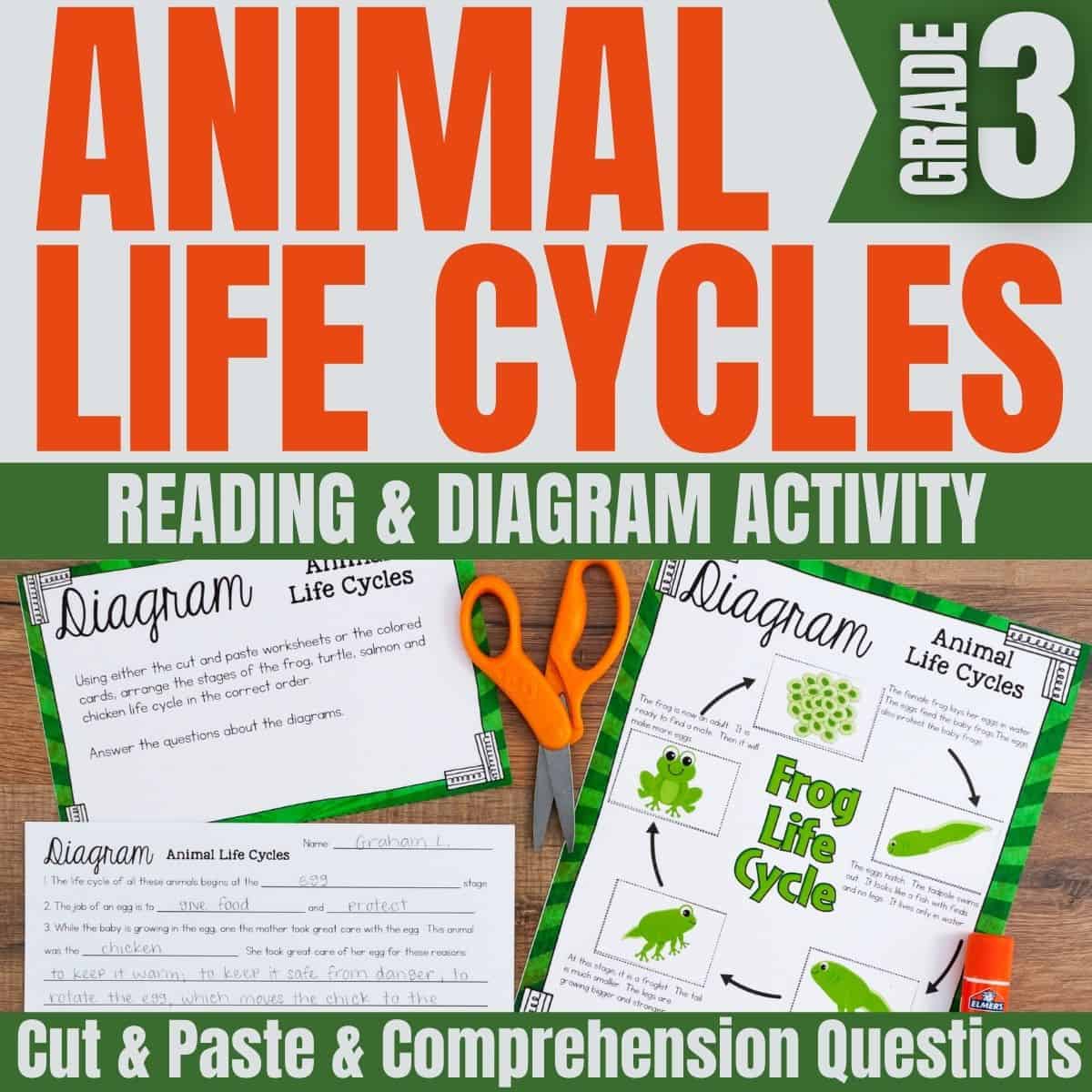
This Animal Life Cycles Diagram Station helps students in 3rd grade explore the growth and development of frogs, sea turtles, chickens, and salmon.
2. Sequence Cards
Have students cut and paste the stages in order. The sequence cards in the above resource make a great science station. In addition to the cut and paste sheets are comprehension questions where students describe the stages of life cycles. Here is an example of the colored frog page. These are also available as a black and white worksheet.

3. Science Journals
The life cycle graphic organizers can be used as an interactive notebook in students’ science journals. Students draw and describe one stage per page.
4. QR Code Research
Add extension links for advanced learners to research different frog species. All of our animal reading passages come with QR Codes so that students can participate in additional research activities.
5. Animal Life Cycle Video Games
Want students to see these stages come to life? Try these animal life cycle video games during your science stations.
Using a Frayer Model to Teach Metamorphosis
Vocabulary instruction makes a huge difference when teaching kids about the life cycle of a frog.
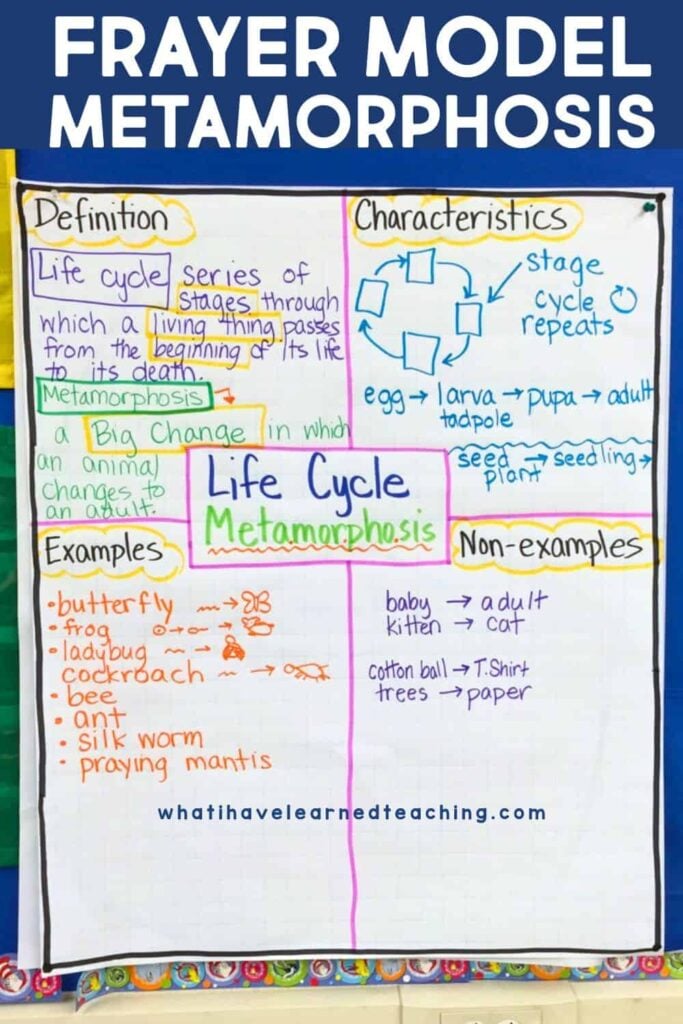
A Frayer Model helps students deeply understand the word metamorphosis by including:
- Definition
- Characteristics
- Examples
- Non-examples
For example:
Examples
- Frog
- Butterfly
- Ladybug
Non-examples
- Kitten to cat
- Seed to plant
- Cotton to t-shirt
This strategy helps students see that metamorphosis involves dramatic body changes — not just growing bigger.
Grab the Free Life Cycle of a Frog Printable Article
You can download the free frog reading passage below and pair it with the full life cycle resource.
This combination gives you a complete, ready-to-use science lesson that supports both NGSS and literacy standards.
Jessica BOschen
Jessica is a teacher, homeschool parent, and entrepreneur. She shares her passion for teaching and education on What I Have Learned. Jessica has 16 years of experience teaching elementary school and currently homeschools her two middle and high school boys. She enjoys scaffolding learning for students, focusing on helping our most challenging learners achieve success in all academic areas.