
Narrative Graphic Organizer Example for Small Moment Writing
A narrative graphic organizer gives students a place to plan their story before they start drafting. When students are asked to write a personal narrative, many try to write about an entire day, a vacation, or a big event. The organizer helps them narrow the story to one small moment and think through the details they need before writing.
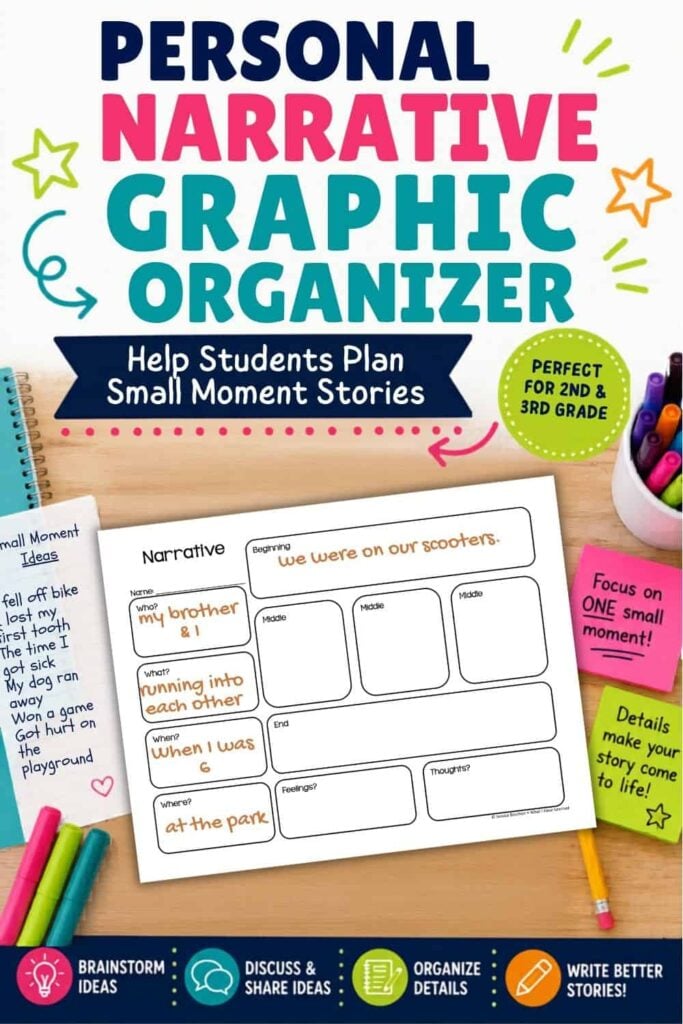
This narrative prewriting activity guides students through choosing a small moment, brainstorming details, and using a simple organizer to plan the story’s beginning, middle, and end. It works especially well for 2nd, 3rd, and 4th grade writers who need a concrete bridge between talking about a story and writing a full draft.
Why Students Need a Narrative Graphic Organizer
Young writers often have plenty to say, but they do not always know how to shape their ideas into a story. A student may choose a topic like “my birthday” or “going to the park” and then list every part of the day. That usually results in a summary rather than a focused personal narrative.
A narrative graphic organizer slows down the planning. Students choose one moment, name the people and place, think about what happened first, next, and last, and add the details that will help a reader picture the event.
This kind of planning also aligns with the writing expectations students meet across the elementary grades. Students are expected to recount events, include details, and create a sense of order in their narrative writing. A graphic organizer gives them a visual way to practice those skills before they draft.
Step 1: Brainstorm Small Moment Story Ideas
Before students can use a narrative organizer, they need a story idea focused enough to write about. We started by brainstorming small moments from students’ lives. A small moment is one short event, not an entire day or a long list of everything that happened.
Examples of small moment story ideas include:
- losing a tooth
- falling off a bike
- scoring a goal in a game
- getting a new pet
- learning to ride a scooter
- getting hurt on the playground
I model my thinking first by naming a few moments from my own life. Then, students spend a few minutes writing as many ideas as they can remember. A short time limit helps students write quickly without worrying about choosing the perfect topic right away.
If your students need more support in generating ideas, this companion post on small-moment story ideas offers more examples and uses the watermelon vs. seed strategy to help them narrow big topics.
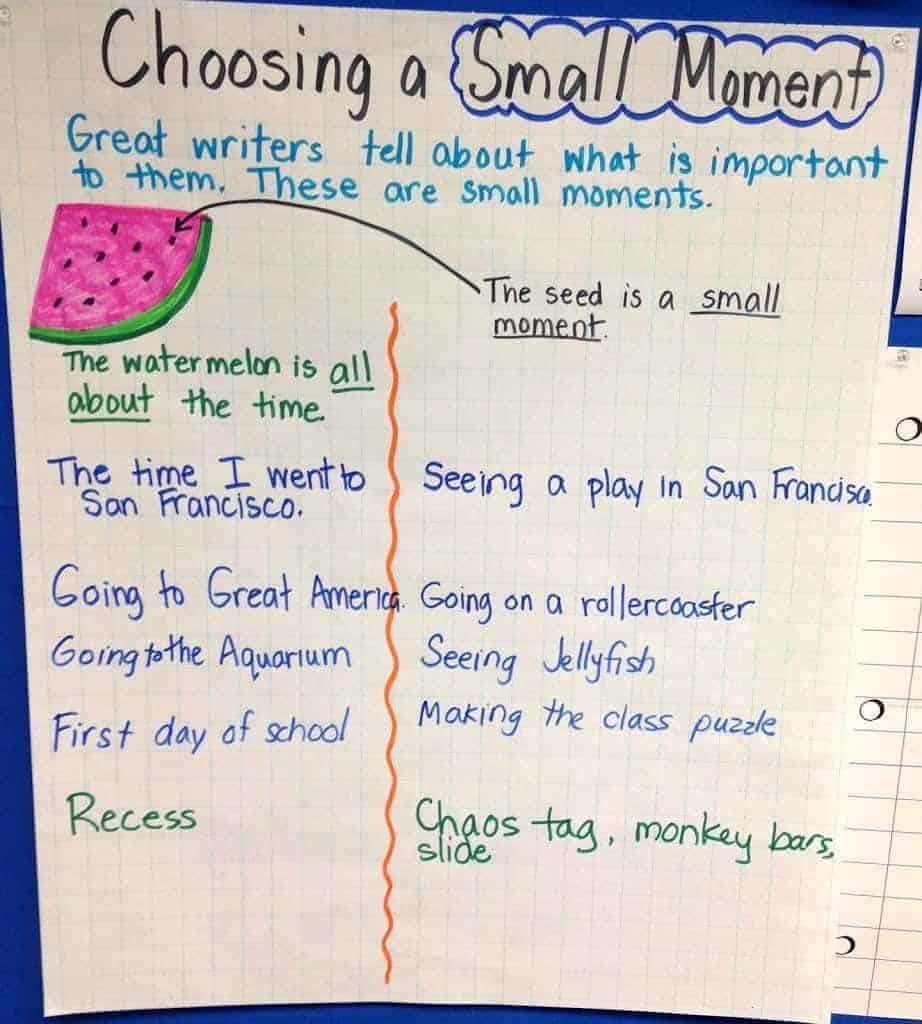
Step 2: Choose One Small Moment to Develop
After students have a list of possible topics, they choose one moment to develop. For this lesson, I asked students to think about a time they got hurt. This topic works well because most students can recall multiple examples, and the stories often include vivid feelings, actions, and details.
First, I modeled my own list. Then, students had three minutes to write their own ideas. Some wrote about scraped knees, sports injuries, or playground accidents. By the end of the activity, every student had several possible small moments to choose from.

Use Give One, Get One to Build More Ideas
Students then used a Give One, Get One discussion. They shared one idea with a partner, listened to a new idea, and wrote down any idea that helped them remember another possible story from their own life.
- Share one possible story idea with a partner.
- Listen to your partner’s idea.
- Record any new idea that comes to mind.
Students rotated through several partners and collected more ideas. When they returned to their seats, they reread their lists and circled one small moment they wanted to turn into a personal narrative.
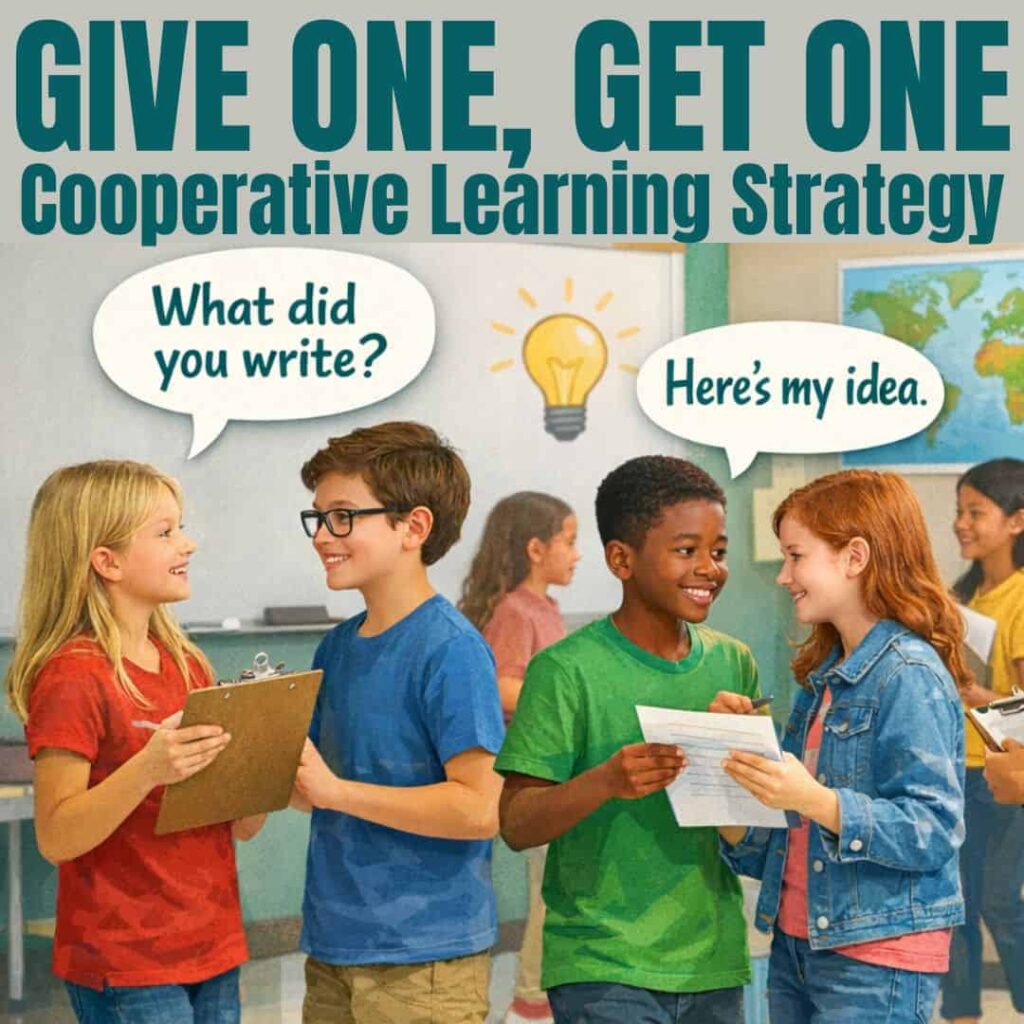
Learn more about the give one, get one cooperative learning strategy to use with your students.
Narrative Graphic Organizer Example
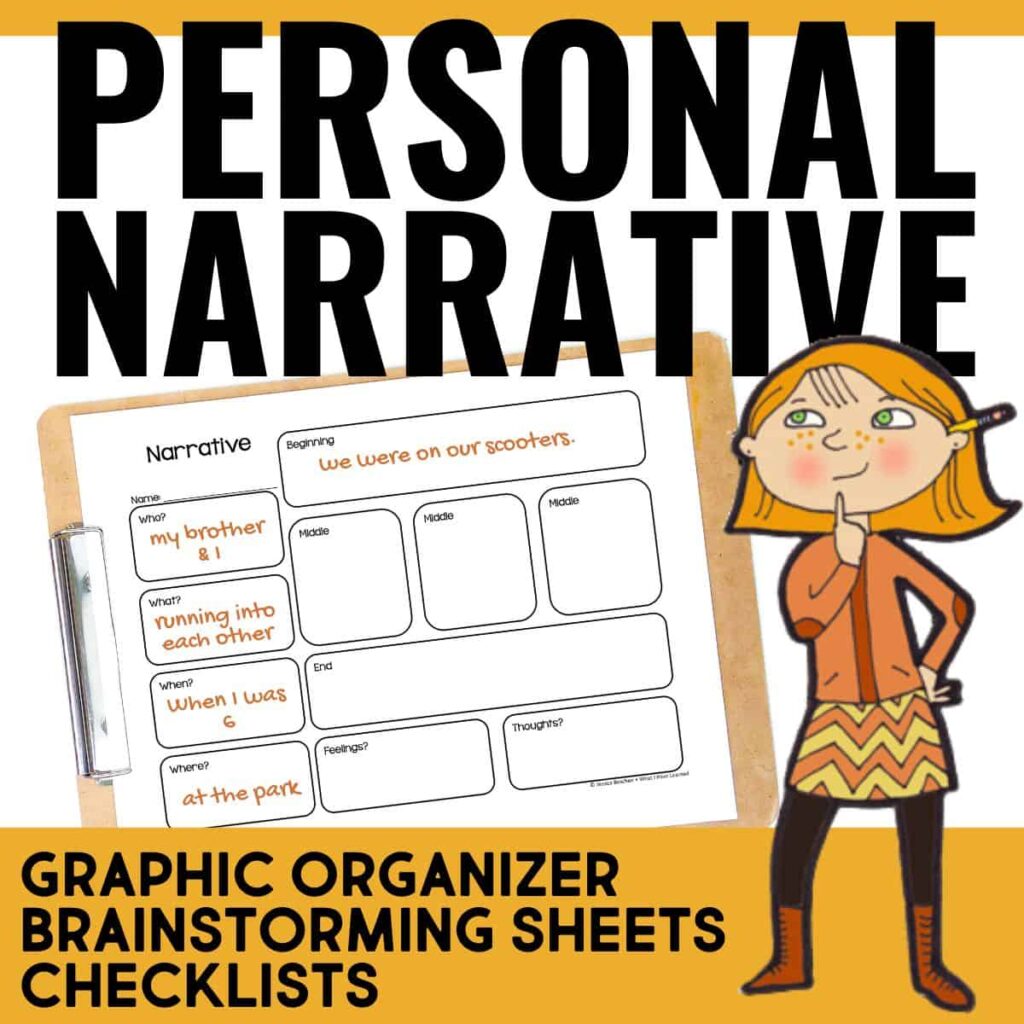
Once students selected a small moment, we filled in a narrative graphic organizer. The organizer helped students move from a general idea to a plan for their story.
For this narrative organizer example, students wrote their topic in the center and then added the basic story details:
- Who was involved in the moment
- What happened during the event
- When the event happened
- Where the story took place
- Feelings the narrator had before, during, or after the event
- Details that help the reader picture the moment
After students added those details, I modeled how to plan the story in order. We talked about what happened at the beginning, what happened in the middle, and how the moment ended. Students used the back of the paper if they needed more room for the middle of the story.

Narrative Writing Tools for Small Moments & Personal Narratives | Grades 1–5
Help students master personal narrative writing with these engaging Narrative Writing Tools! Designed for grades 1–5, this resource includes small moment activities, brainstorming pages, graphic organizers, narrative checklists, mentor tools, and student writing samples to guide young writers through the entire writing process. Perfect for writing workshop, literacy centers, and whole-group instruction.
What to Include on a Personal Narrative Graphic Organizer
A personal narrative graphic organizer should give students enough structure to plan clearly without turning the writing into a fill-in-the-blank assignment. For 2nd and 3rd grade, I like to keep the organizer focused on the parts students need most before drafting.
Characters and Setting
Students’ names who were there and where the moment happened. This keeps the story grounded and helps the reader understand the scene.
Beginning, Middle, and End
Students plan the order of events before they draft. This is especially helpful for writers who tend to skip from one idea to another or end the story too quickly.
Feelings and Reactions
Personal narratives need more than actions. Students should think about how they felt, what they thought, and how they reacted during the moment.
Sensory Details
Students can add what they saw, heard, felt, or noticed. These details help them stretch a small moment into a fuller story.
Step 3: Move From Organizer to Draft
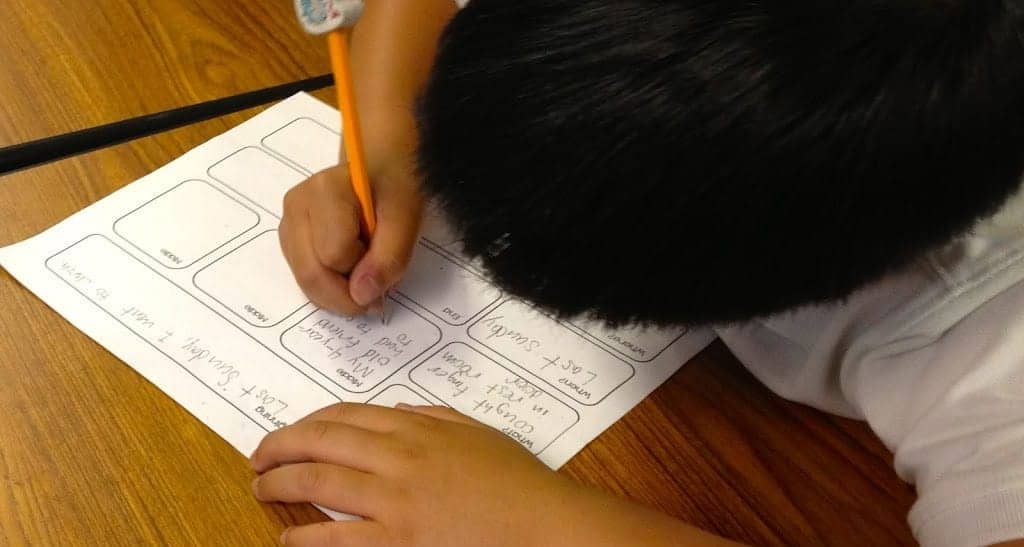
During this lesson, we focused entirely on prewriting. Students spent time expanding their ideas, adding details, and making sure their story had a clear order before drafting.
The next day, students used their completed narrative graphic organizers to begin writing. Because the main parts of the story were already planned, students could focus on turning notes into sentences and adding more detail where the story needed it.
Why This Narrative Prewriting Activity Works
This narrative prewriting activity works because it gives students a path from idea generation to organized planning. They do not have to hold the entire story in their heads before they write.
Small moment writing and graphic organizers help students:
- choose one focused event instead of a large topic
- organize the beginning, middle, and end before drafting
- add details that make the story easier to picture
- include feelings, reactions, and reflection
- move from oral storytelling to written storytelling
For many elementary writers, planning first makes the drafting process feel much more manageable.
Narrative Writing Tools for Small Moments & Personal Narratives | Grades 1–5
Help students master personal narrative writing with these engaging Narrative Writing Tools! Designed for grades 1–5, this resource includes small moment activities, brainstorming pages, graphic organizers, narrative checklists, mentor tools, and student writing samples to guide young writers through the entire writing process. Perfect for writing workshop, literacy centers, and whole-group instruction.
More Personal Narrative Writing Support
If students are ready to draft but need help starting sentences, these personal narrative sentence starters can support leads, transitions, dialogue, and reflection.
If you want more support for choosing story ideas before students use the organizer, the companion post on small moment story ideas gives students more examples and practice with the watermelon vs. seed strategy.
If you want the planning pages and supports shown in this post, the Narrative Writing Tools include organizers and writing supports that students can use with any personal narrative topic.

Nice lesson. :)The organizer is great.
Brandee @ Creating Lifelong Learners
Love your graphic organizers. I looked in your TpT store and didn’t see them. Would you be willing/able to send those to me??
I love this graphic organizer. I would love to see the story that you or a student wrote using the graphic organizer.
Hi Jessica!! I teach 2nd grade and my team and I love your products! We were wondering if you could send us an example of a student’s prewriting sheet and then a copy of their draft or possibly even a final draft? We would love to see the connection between their writing process and the final product. Thank you!
Hi, Hilary,
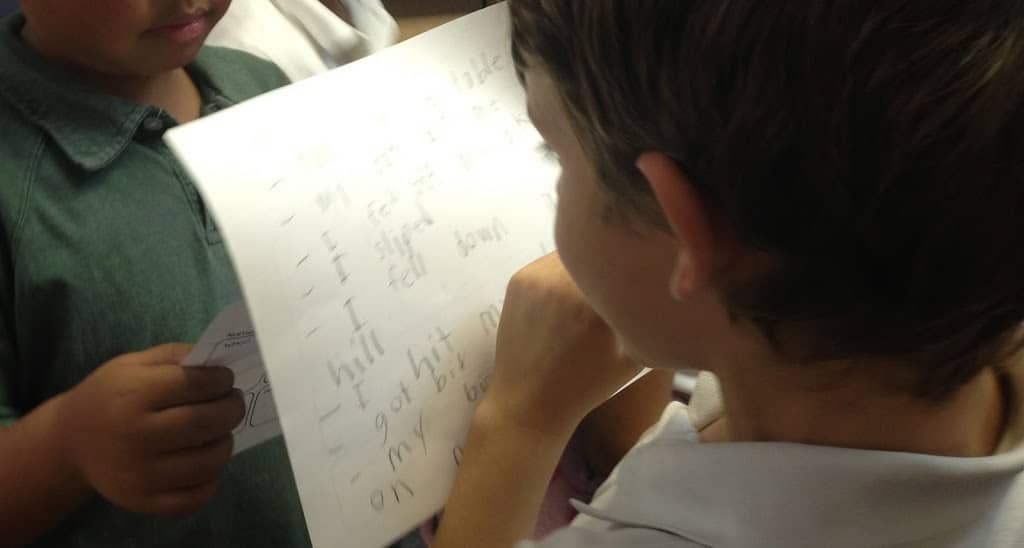
Thank you so much for your interested in the Narrative Writing Products. The only prewriting photo I have is the one is the post with the boy bent over his writing sheet. I can email you some drafts that students wrote from their prewriting sheet.