
Science Vocabulary Cards with Pictures for Elementary NGSS (2nd–5th Grade)
Science vocabulary cards give students a concrete way to connect science terms with pictures, definitions, and examples. When students can see a word, talk about it, match it to a visual, and use it during a unit, those technical science terms become much easier to remember and apply.
These Science Vocabulary Cards and Big Idea Posters are aligned with the Next Generation Science Standards and can be used in second, third, fourth, and fifth grade classrooms. They work well for science word walls, small-group centers, review activities, and unit displays.
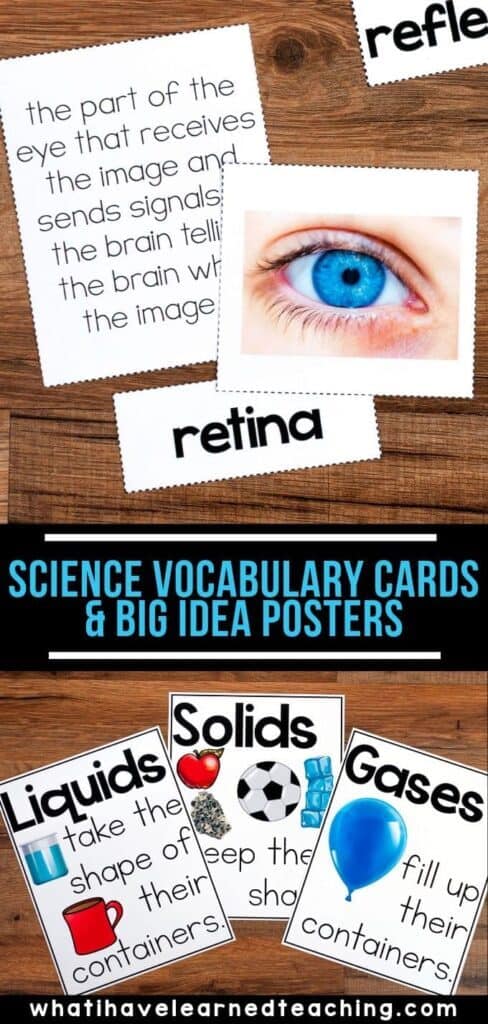
These Science Vocabulary Cards and Big Idea Posters are available for second grade, third grade, fourth grade and fifth grade. They include two sets of vocabulary cards and big idea posters.


Science Vocabulary Cards
The Science Vocabulary Cards come in two formats: larger cards with just the word and definition and three-part cards that include a picture.
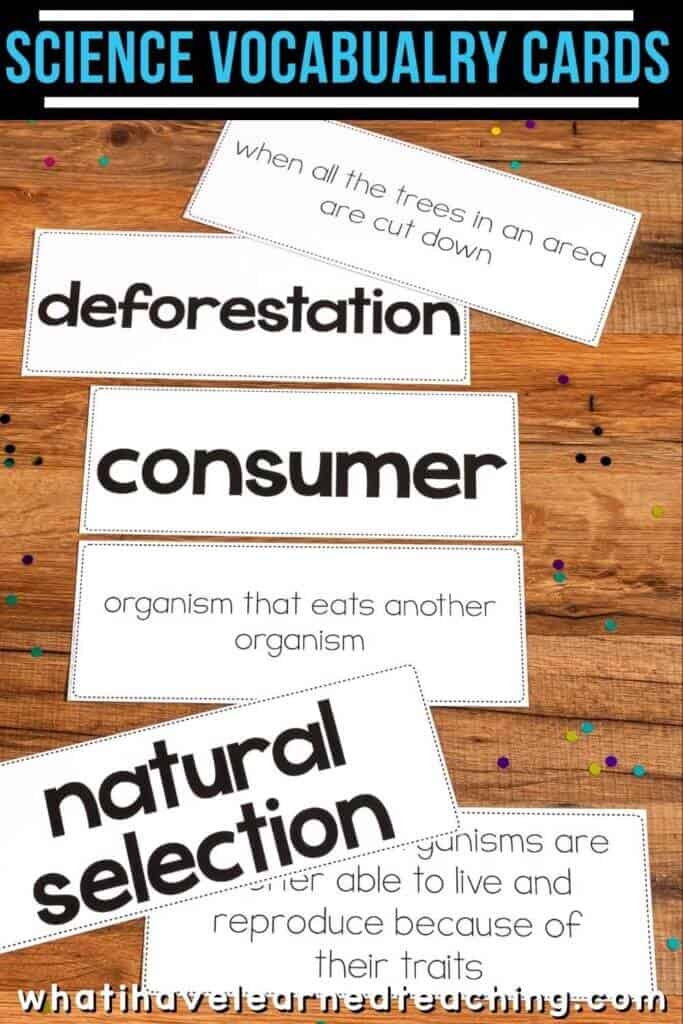
The larger cards have the word and definition on separate cards. You can choose to display just the words or match both the word and definition on your display.

The three-part cards are smaller. They include the word, a definition, and a picture.

The three-part cards can also support deeper word work. After students match the word, definition, and picture, choose one important term for a Frayer Model so students can add examples, non-examples, and characteristics in their own words.


The above images show vocabulary cards from second grade, third grade, and fourth-grade science topics aligned with the NGSS.
For example, weather and climate units are full of words students need to use with precision. If you are teaching those concepts, the weather vocabulary activities and climate vocabulary activities posts show how to move students from recognizing terms to using them in discussions, writing, and data-based explanations.
Ways to Use Science Vocabulary Cards in the Classroom
Once students have been introduced to the words in a unit, the cards can become much more than a display. Here are ways to use them across a unit:
Word wall reference. Post the large cards on a science word wall at the start of the unit. Students refer back to them during reading, writing, and discussions throughout the weeks.
Three-part card matching. Give students the word, definition, and picture cards in a mixed pile. Partners sort and match them as a center activity or warm-up.
Open sort. Remove the picture cards and ask students to sort words into categories they create. This works well mid-unit when students have enough background knowledge to see connections between terms.
Partner quiz. One student holds up the word card, the other recalls the definition. Switch roles. This takes three minutes and works as an exit routine before moving to the next part of the lesson.
Exit ticket. Pull three word cards at the end of a lesson. Ask students to write one sentence connecting two of the three terms. A quick way to check whether key vocabulary is sticking.
Review before reading or writing. Flip through the cards as a class before students read a science text or write an explanation. Activating vocabulary before the task reduces the cognitive load during it.
If you want more structured activities that extend beyond card matching, the science vocabulary activities post covers sorting routines, speaking frames, and writing tasks that work across life, earth, and physical science units.
Big Idea Posters for the NGSS Standards
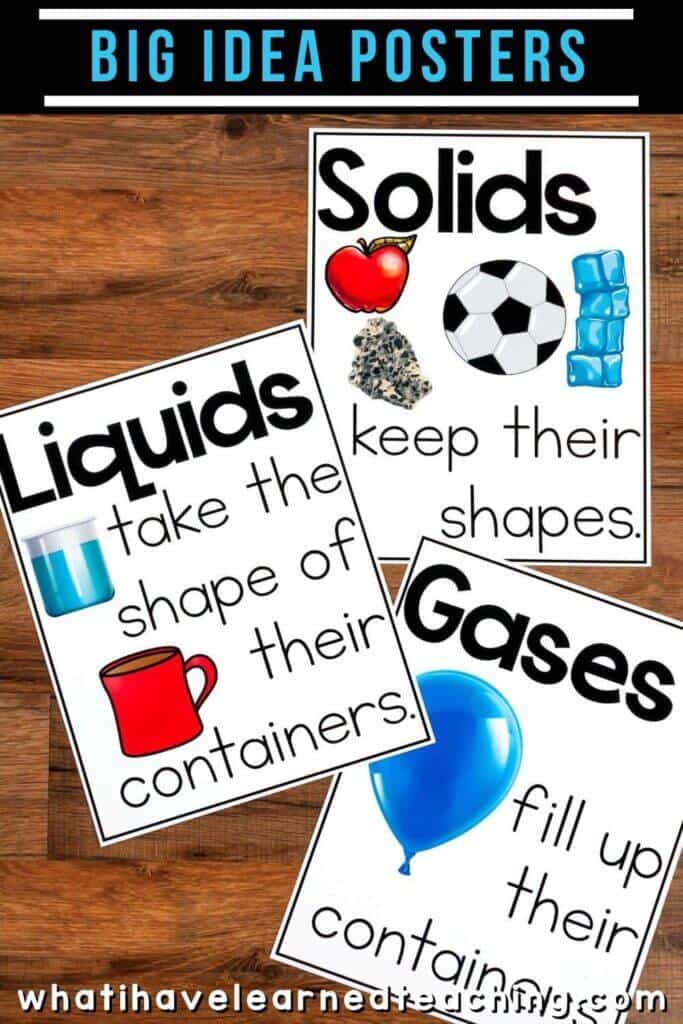
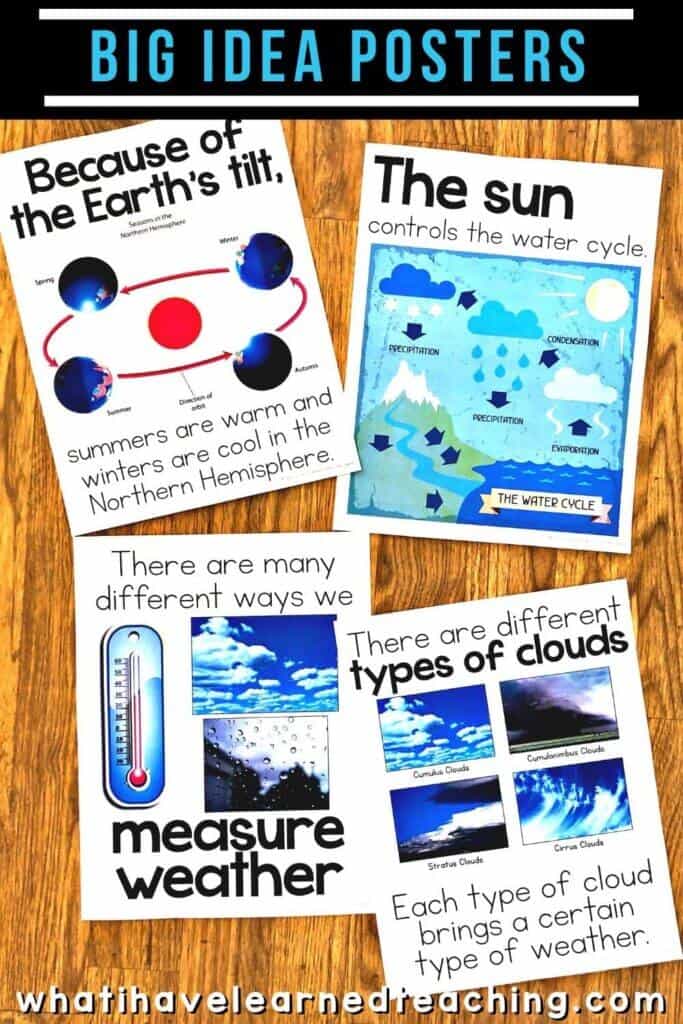
The Big Idea Posters are created around the central ideas of each of the Next Generation Science Standards. On the posters is a bold word or phrase that is the subject of the poster and the remaining sentence that explains the idea. There is also one or more images on each poster.

What Vocabulary Is Covered by Grade Level
The vocabulary cards and posters span the core NGSS disciplinary ideas at each grade level. Here is a sample of what is included:
Second grade — habitats, animal adaptations, plants and their needs, properties of matter, wind and water
Third grade — life cycles and traits, ecosystems and food webs, weather and climate, forces and motion, magnets
Fourth grade — energy and waves, the rock cycle, Earth’s surface processes, plant and animal structures and functions
Fifth grade — matter and its interactions, ecosystems, Earth’s systems, gravity and orbital motion, chemical reactions
Each grade level includes vocabulary aligned with that grade’s NGSS performance expectations, so the words match what students are expected to understand and use at that level.
Take a Look at the Big Idea Posters for Third-Grade
How to Purchase These Vocabulary Cards and Big Idea Posters
The Science Vocabulary Cards and Big Idea Posters are available on my website and on Teachers Pay Teachers. They are available by grade level and as a larger bundle.
More Information about the NGSS
All of these science materials are aligned to the Next Generation Science Standards. Below is some information about how we wrote our science curriculum and other information to get you started with teaching the NGSS, science stations and our 5E units.
- Free Science Station for Second Grade, Third Grade, Fourth Grade
- How to Read the Next Generation Science Standards
- 4 Tips for Successful Science Stations
- 5E Unit Plans for Third Grade

Jessica BOschen
Jessica is a teacher, homeschool parent, and entrepreneur. She shares her passion for teaching and education on What I Have Learned. Jessica has 16 years of experience teaching elementary school and currently homeschools her two middle and high school boys. She enjoys scaffolding learning for students, focusing on helping our most challenging learners achieve success in all academic areas.