
Helping students choose a research topic can be one of the trickiest parts of a classroom research project, especially when you’re trying to provide meaningful research topics for students that are both engaging and manageable. Give students a blank sheet of paper, and the room suddenly fills with questions like, “Can I research Minecraft?” or “What if I just write about dogs?”
Elementary students often want to research something interesting, but they don’t always know where to start. A clear list of research topics helps kids narrow their ideas and choose something they are excited to learn about.

This guide shares a variety of research topics for students that work well in elementary classrooms. These ideas support biography projects, animal reports, and other science and social studies research assignments. Whether students are writing a short report, creating a poster, or preparing a presentation, these topics give them a strong place to begin.
How to Help Students Choose Research Topics
When students are selecting research topics, it helps to guide them toward subjects that are:
- focused enough for a short report
- interesting and age-appropriate
- easy to find information about
In elementary classrooms, the most successful research projects usually fall into a few familiar categories:
- animals
- famous people
- science topics
- geography or cultures
- inventions and technology
Many teachers start with one category (such as biographies or animals) and let students choose from a list of topics. This keeps projects manageable while still giving students choice.
Top 10 Research Topics for Elementary Students
Not sure where to start? These ten topics are classroom favorites — each one has plenty of information available in books and online, and they work well for reports, posters, and presentations at any elementary grade level.
- Wolves
- Sea turtles
- Frogs
- The solar system
- Volcanoes
- Martin Luther King Jr.
- Harriet Tubman
- Ancient Egypt
- The water cycle
- Penguins
All of these topics appear in the sections below with more options in the same category.
Biography Research Topics for Kids
Biography projects are one of the most common research assignments in elementary school. Students learn how to gather information about a person’s life, organize their notes, and write about important accomplishments.
If you are planning a biography project, you may find these helpful:
- Historical leaders
- Martin Luther King Jr.
- Abraham Lincoln
- Eleanor Roosevelt
- Harriet Tubman
- Scientists and inventors
- Albert Einstein
- Thomas Edison
- Marie Curie
- George Washington Carver
- Explorers
- Amelia Earhart
- Neil Armstrong
- Jacques Cousteau

Need more ideas for biographical people kids can research? Take a look at this list of 101 people.
Students can research topics such as:
- early life
- important accomplishments
- challenges the person faced
- how their work changed the world
If you are looking for structured ways to guide student research, you can use biography research questions to help students gather and organize information.


Biography Report & Biography Project – Research and Writing Activities (Grades 2–5)
Make biography projects meaningful and engaging with this Biography Report & Research Project for grades 2–5! This flexible resource includes graphic organizers, genre posters, multiple report formats, lapbook templates, trifold reports, and construction paper people so students can research and present any historical figure.
Animal Research Topics for Kids
Animal reports are another favorite research project in elementary classrooms. Students enjoy learning about animals while practicing nonfiction reading and writing skills.
Common animal research topics include:
Mammals
- elephants
- dolphins
- tigers
- polar bears
Birds
- owls
- penguins
- bald eagles
- parrots
Reptiles and Amphibians
- sea turtles
- snakes
- frogs
- chameleons
Ocean Animals
- sharks
- octopuses
- whales
- jellyfish
Students often research:
- habitat
- diet
- physical adaptations
- predators and prey
- life cycle
Animal research projects work well for informational writing units or science integration.

This organized list of animals to research makes it easy for students to choose which animal they want to learn about.
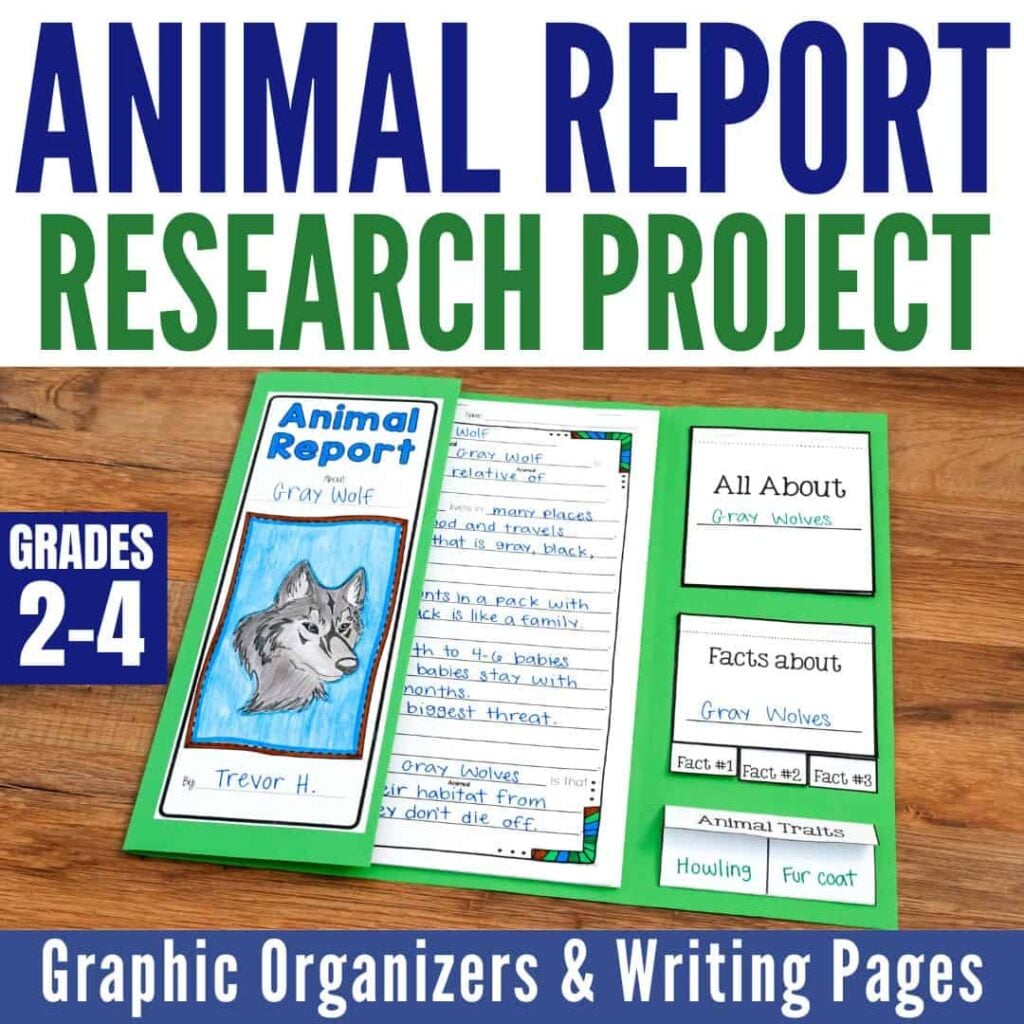
Animal Report Templates, Graphic Organizers, Rubric, Lapbook, Trifold
This animal report project helps students research and write about any animal. The resource includes graphic organizers, research pages, report templates, and project options such as booklets, trifolds, lap books, and interactive notebooks.
Science Research Topics for Students
Science research topics help students explore how the natural world works. These topics work well during science units or STEM activities.
Here are some easy topics to research in science:
- the water cycle
- volcanoes
- earthquakes
- the solar system
- weather and storms
- plant life cycles
- bird beak adaptations
- animal camouflage
- the rock cycle
- renewable and nonrenewable energy
Students might research:
- how the process works
- why it happens
- real-world examples
Science topics help connect research projects to NGSS science units.
Social Studies Research Topics for Kids
Social studies research helps students learn about history, geography, and cultures around the world.
Possible topics include:
Communities and Government
- how local government works
- community helpers
- national parks
Geography
- deserts
- rainforests
- mountains
- rivers
History Topics
- ancient Egypt
- the Wright brothers
- early transportation
- famous inventions
These topics often lead to strong cross-curricular projects that combine reading, writing, and social studies content.
Fun and Interesting Research Topics for Kids
Sometimes students simply want to research something fun or unusual. Allowing a few creative topics can increase engagement with the research process.
Here are some cool things to research that students often enjoy:
- the tallest mountains in the world
- unusual animals
- space missions
- deep ocean creatures
- how airplanes fly
- extreme weather events
- national parks
These topics still support important research skills such as reading informational text, summarizing facts, and organizing ideas.
Easy Topics to Research for Younger Students
Younger students and first-time researchers benefit from topics with clear, easy-to-find information.
Some simple research topics include:
- frogs
- butterflies
- sea turtles
- wolves
- the sun
- rainbows
- plants
- ants
These topics let students practice basic research skills without getting overwhelmed by complicated information.
Research Topics by Grade Level
Different grade levels can handle different levels of complexity. Here’s a quick guide to help you match topics to your students.
2nd Grade Research Topics
Second graders do well with familiar animals, local weather, and simple science topics. A focused topic with clear, readable information works best at this age.
Good options for 2nd grade:
- Frogs
- Butterflies
- Ants
- The sun
- Rainbows
- Community helpers
- Plants and how they grow
3rd Grade Research Topics
Third graders are ready to go deeper on animals, famous people, and science concepts. They can handle multi-paragraph reports and graphic organizers with several categories.
Good options for 3rd grade:
- Wolves
- Owls
- Martin Luther King Jr.
- Harriet Tubman
- Volcanoes
- The water cycle
- Rainforests
4th Grade Research Topics
Fourth graders can research historical figures, science phenomena, and geography topics that require reading multiple sources.
Good options for 4th grade:
- Neil Armstrong
- Amelia Earhart
- Albert Einstein
- The solar system
- Earthquakes
- Ancient Egypt
- National parks
5th Grade Research Topics
Fifth graders are ready for topics that involve cause and effect, comparing perspectives, or understanding systems.
Good options for 5th grade:
- Marie Curie
- George Washington Carver
- Renewable and nonrenewable energy
- The rock cycle
- Weather and storms
- Animal camouflage
- Geography: deserts vs. rainforests
Tips for Managing Research Projects in the Classroom
Elementary research projects work best when students follow a clear process.
A simple structure might look like this:
- Choose a research topic
- Gather information from books or articles
- Take notes using a graphic organizer
- Write a short report
- Share learning through a presentation or poster
Breaking the project into smaller steps helps students focus on one part of the research process at a time.
Many teachers use research templates or guiding questions to help students organize their notes before writing.
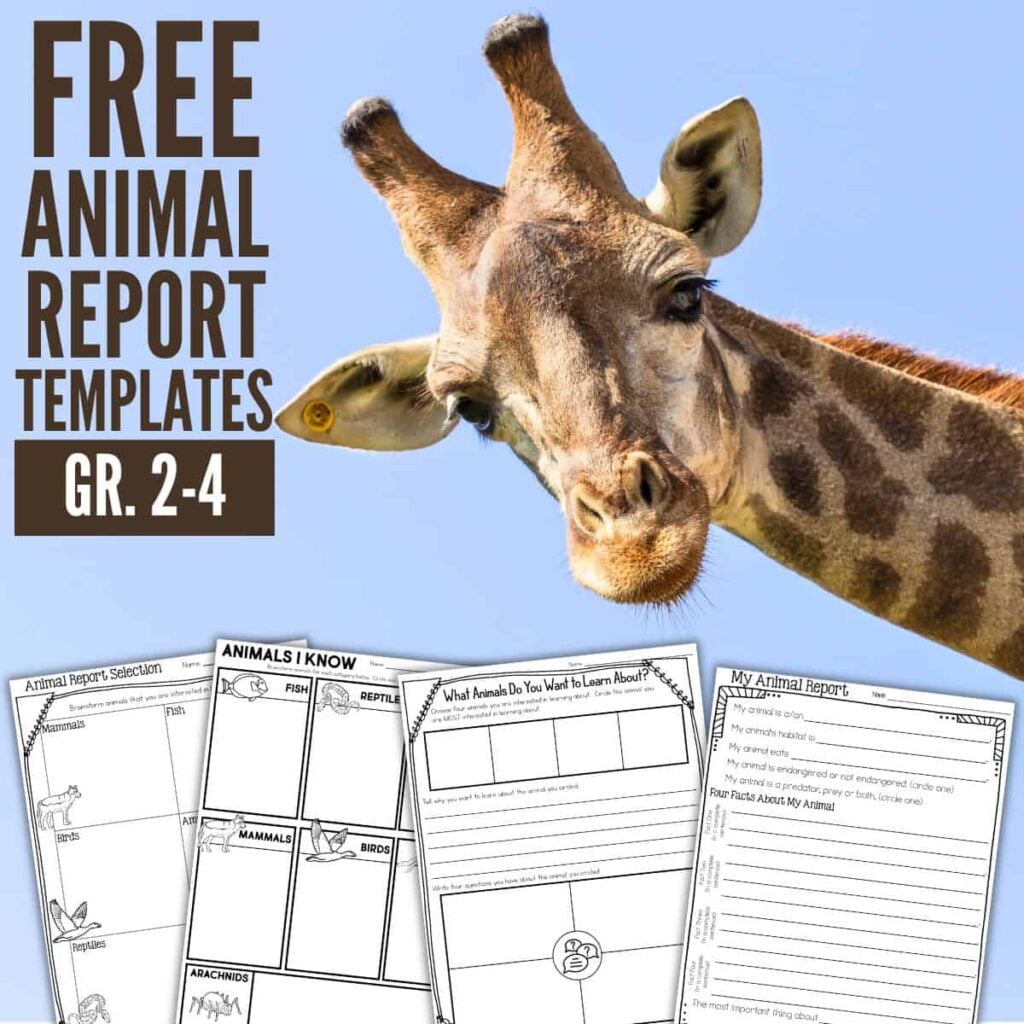
Want a free template to get started? Grab these free animal report templates. They give students a structured place to record their research notes, sources, and key facts before writing.
Helping Students Become Curious Researchers
Research projects let students ask questions, explore new ideas, and learn about the world around them. Whether students study animals, famous people, science topics, or history, the goal is the same: to help them develop curiosity and confidence as learners.
Providing a list of research topics for kids makes the process easier for both teachers and students. With clear choices and structured support, students can move from wondering about a topic to sharing what they have learned with others.
Once students realize that researching something interesting can lead to posters, presentations, or even a “living museum,” they often discover research is much more fun than they expected.
Jessica BOschen
Jessica is a teacher, homeschool parent, and entrepreneur. She shares her passion for teaching and education on What I Have Learned. Jessica has 16 years of experience teaching elementary school and currently homeschools her two middle and high school boys. She enjoys scaffolding learning for students, focusing on helping our most challenging learners achieve success in all academic areas.