
When February arrives, most of us want a clear, trustworthy list of African American historical figures we can actually teach, not a wall of names to research one by one.
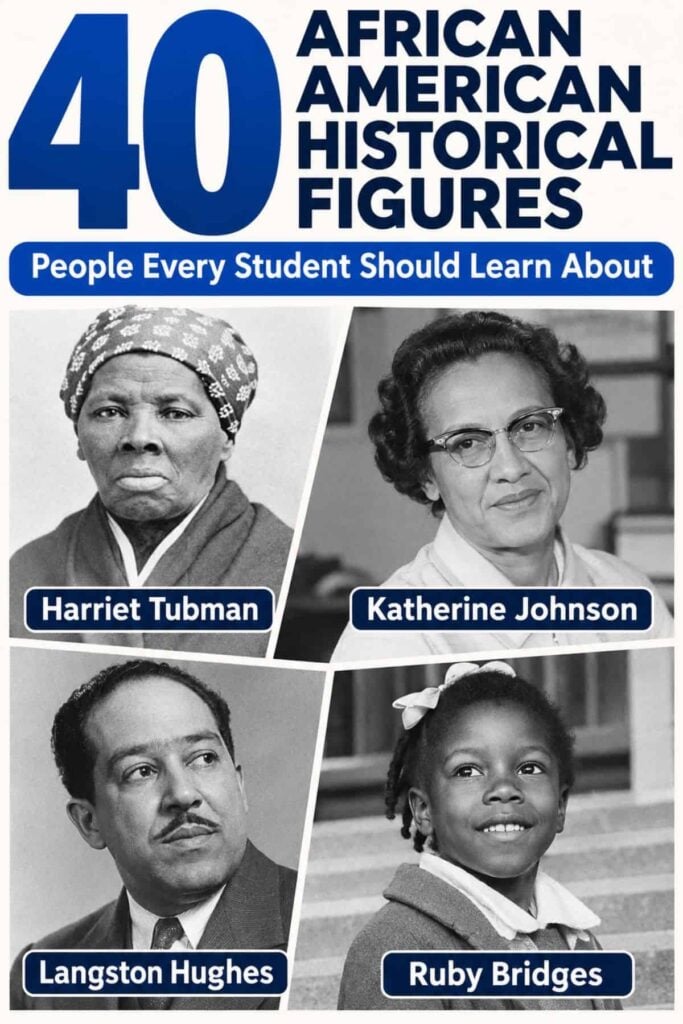
This post is that list: roughly 40 African American historical figures grouped by category, each with a one-line bio that tells you who they were and why they matter, plus a quick way to use them in a lesson. Built for Black History Month in February, these figures also work as social studies content all year.
If you also want a single surprising fact to share each school day, my post with 50 Black History facts for elementary students does that; this one focuses on the people themselves, organized so you can pick who to teach.
Why These African American Historical Figures Belong in Your Classroom
A good lineup does two things for a busy teacher: it gives you range and a reason to teach each person. The figures below reach across civil rights, science, the arts, politics, and history being made right now, so you can match a person to the subject you are already teaching. A name alone does not stick with students, but a name plus a short story and one memorable detail does. That is why every figure here comes with a bio and a classroom use, so you can move straight from this list to a lesson.
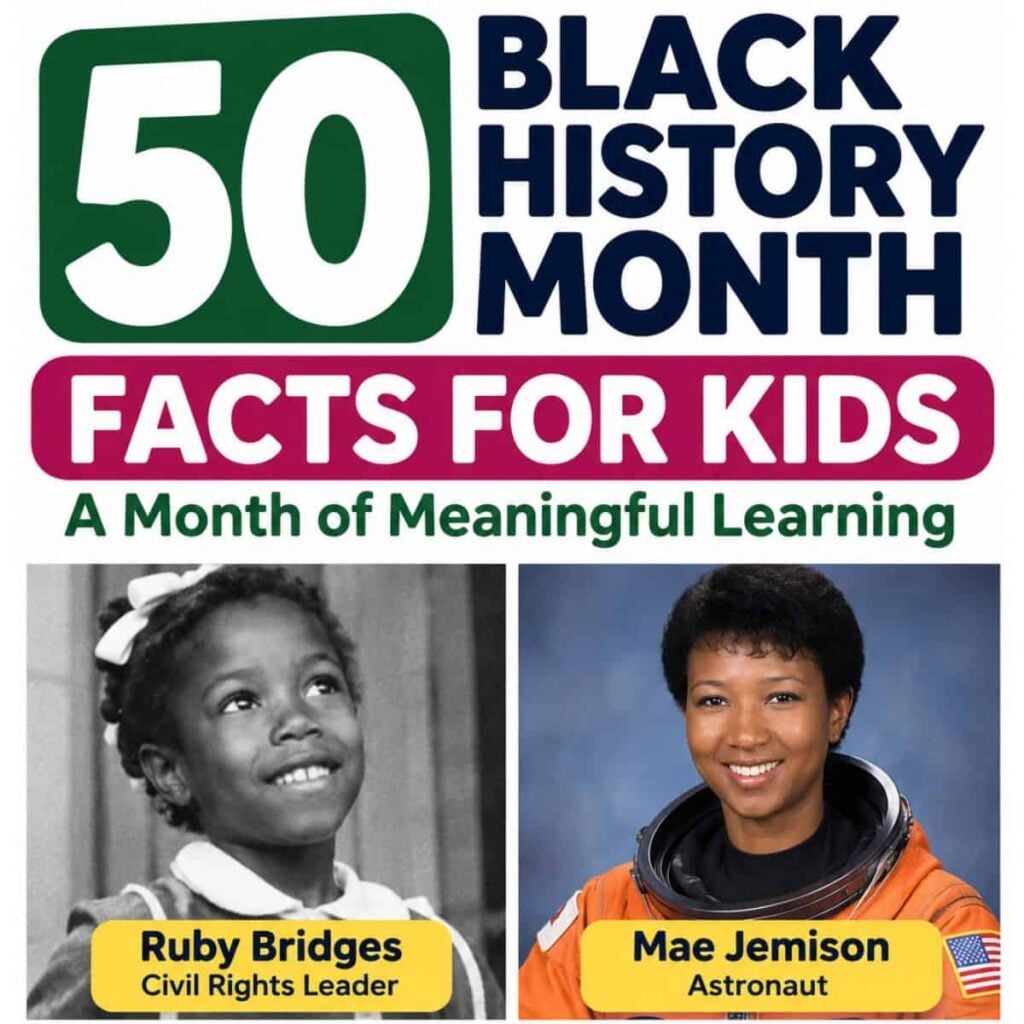
Want a fact a day to go with these figures? My 50 interesting Black History facts post gives you one surprising fact for every school day in February.
How to Use This List in Your Classroom
The same set of figures works in several formats, so pick what fits your week:
- Person of the day. Read one figure’s bio aloud each day in February and post their picture on a growing wall.
- Bulletin board. Give each student a figure to illustrate with one fact underneath, and you have a class display by the end of the week.
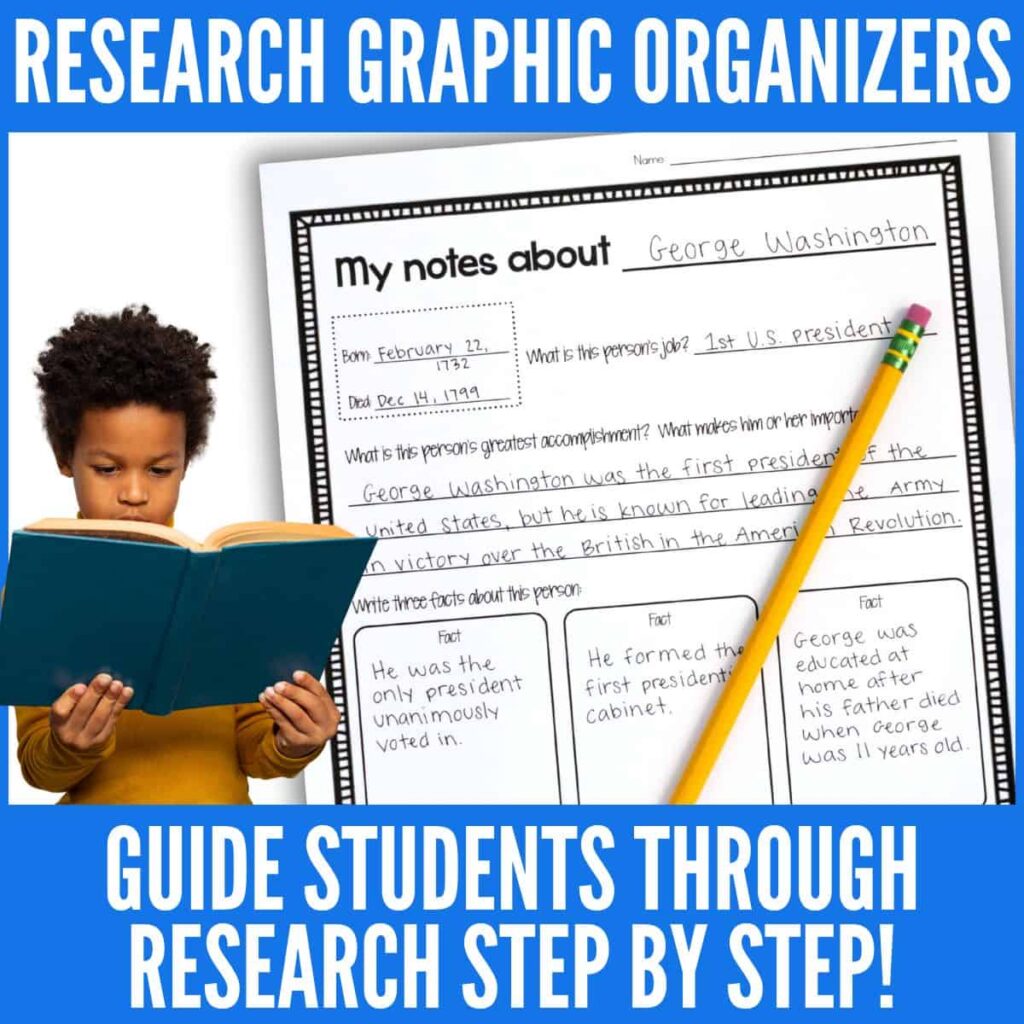
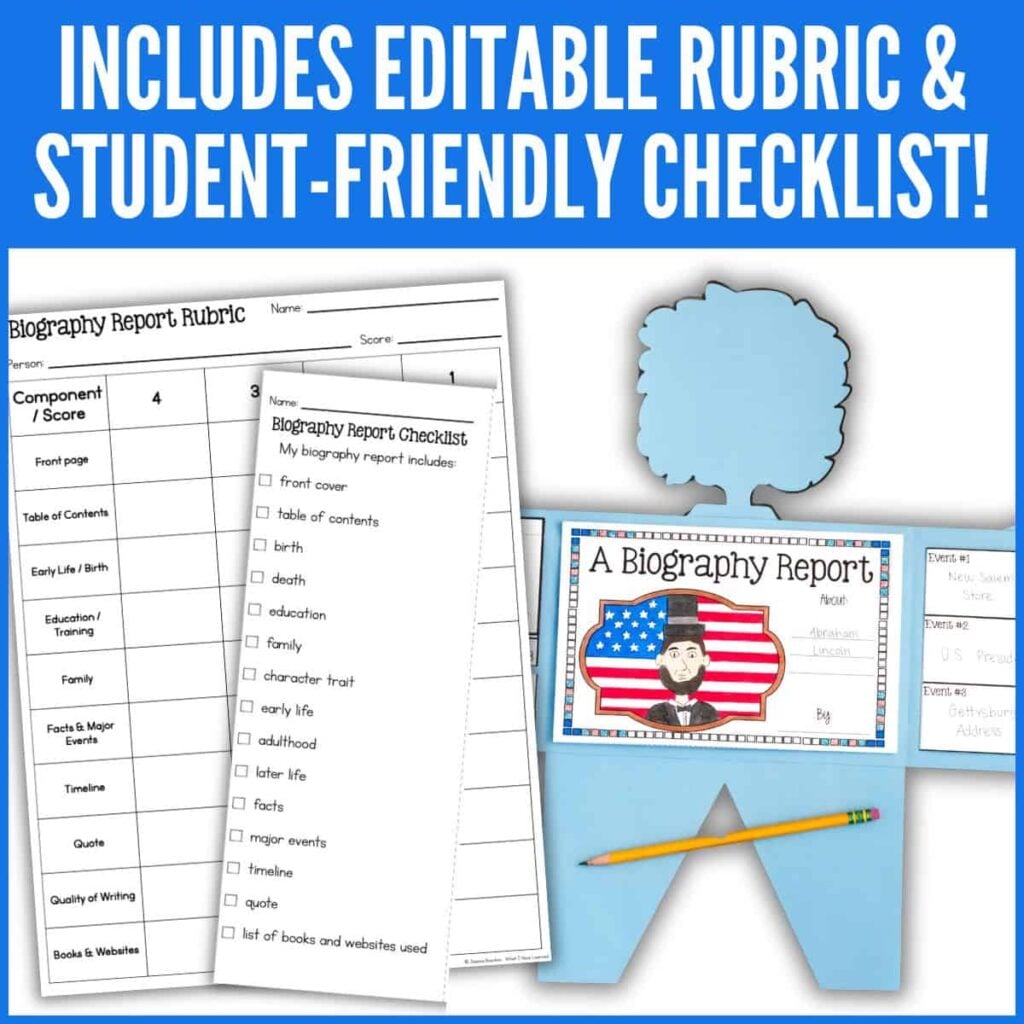
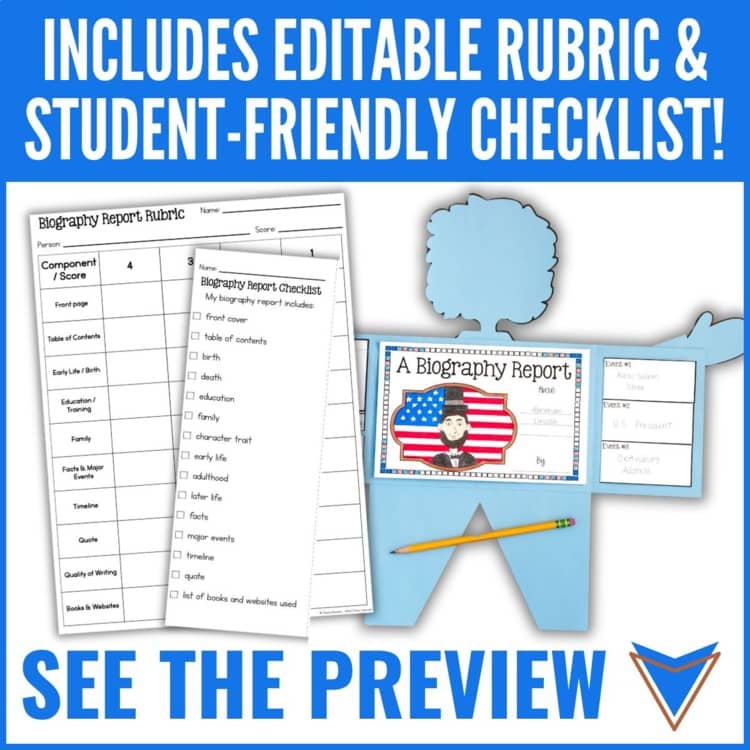
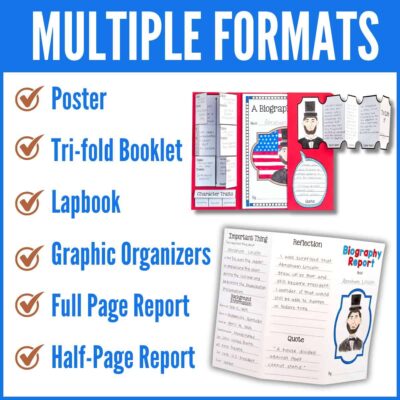
- Quick biography report. Assign one figure per student and use a simple template so everyone researches the same way. My biography research templates give you graphic organizers and report pages for any person on this list, and my list of historical figures for biography research adds even more names if you want to widen the pool.
- Read aloud and respond. Pair a figure with a short passage, like my Ruby Bridges reading comprehension activity, then have students write what they learned.

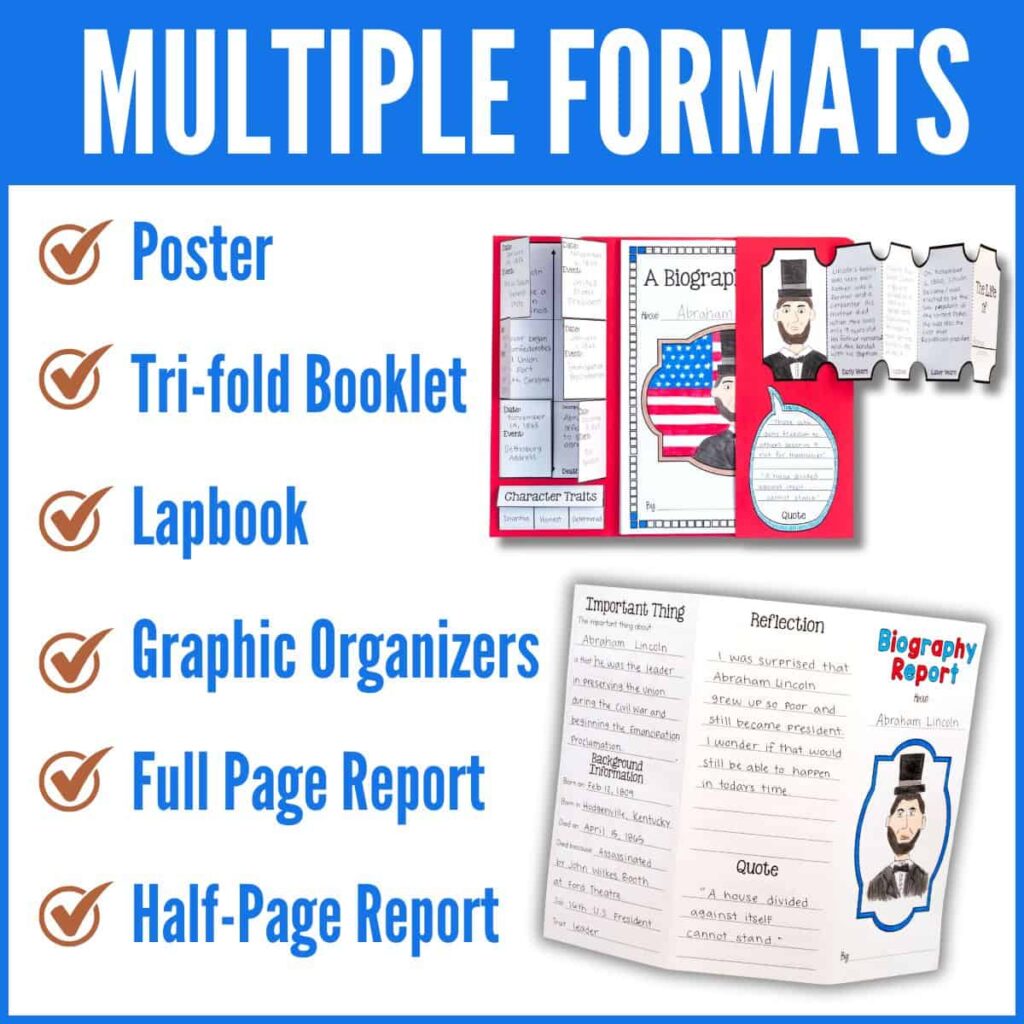
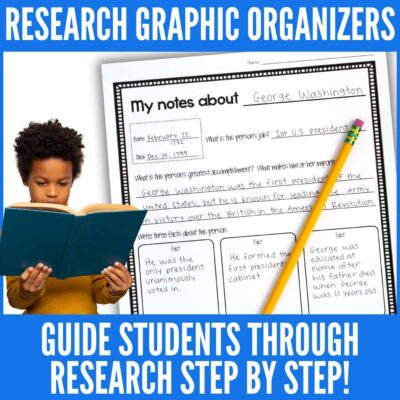
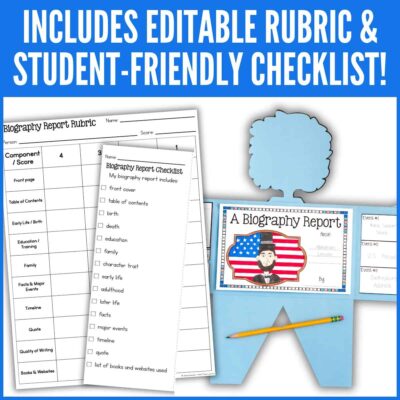
Biography Report & Biography Project – Research and Writing Activities (Grades 2–5)
Make biography projects meaningful and engaging with this Biography Report & Research Project for grades 2–5! This flexible resource includes graphic organizers, genre posters, multiple report formats, lapbook templates, trifold reports, and construction paper people so students can research and present any historical figure.
Civil Rights Leaders and Activists
These are the figures most students meet first, the leaders who pushed the country toward equal rights. Each one connects to a lesson on fairness, courage, and standing up for what is right.
- Martin Luther King Jr. was the minister who led the civil rights movement with nonviolent protest and gave the 1963 “I Have a Dream” speech. In the classroom: read a short excerpt and have students describe their own dream for the world.
- Rosa Parks refused to give up her bus seat in 1955, sparking the Montgomery Bus Boycott. In the classroom: map the boycott on a map of Montgomery and discuss why walking for a year took courage.
- Malcolm X was a civil rights leader who urged Black Americans to take pride in their heritage and stand up for themselves. In the classroom: compare his approach with Dr. King’s on a simple T-chart.
- John Lewis helped lead the 1965 Selma march and later served in Congress for more than 30 years. In the classroom: read a panel from his graphic novel March and talk about peaceful protest.
- Medgar Evers was an NAACP leader in Mississippi who helped Black citizens register to vote. In the classroom: discuss what it means to help others claim their rights.
- Thurgood Marshall was the lawyer who won the case that ended school segregation, then became the first Black Supreme Court Justice. In the classroom: act out a short, kid-friendly courtroom about a fairness question.
- Fannie Lou Hamer was an activist who fought for Black voting rights and famously said she was “sick and tired of being sick and tired.” In the classroom: discuss why the right to vote matters.
- Bayard Rustin was the lead organizer of the 1963 March on Washington. In the classroom: list the steps it takes to plan a big event, then connect them to his work.
Inventors and Scientists
If you are looking for ten famous African American inventors and scientists, start here. These figures shaped the tools, medicine, and space travel students benefit from every day, and they pair naturally with science lessons.
- George Washington Carver was an agricultural scientist who found more than 300 uses for the peanut and taught farmers to protect their soil. In the classroom: list everyday products that come from peanuts.
- Garrett Morgan invented an early three-position traffic signal and a safety hood that helped firefighters breathe in smoke. In the classroom: have students design their own traffic signal.
- Lewis Latimer improved the lightbulb with a longer-lasting carbon filament, helping bring electric light to everyday homes. In the classroom: discuss how inventors improve on each other’s work.
- Dr. Charles Drew figured out how to store blood plasma and helped create the first blood banks. In the classroom: learn how donated blood saves lives.
- Katherine Johnson was a NASA mathematician whose calculations helped send astronaut John Glenn safely around the Earth. In the classroom: solve a simple “get the rocket to orbit” math problem.
- Dorothy Vaughan was a NASA mathematician who became the agency’s first Black supervisor and an early computer programmer. In the classroom: explain what a “human computer” did before machines took over.
- Mary Jackson became NASA’s first Black female engineer, testing aircraft and spacecraft designs. In the classroom: fold and test paper airplanes the way an engineer tests a design.
- Mae Jemison became the first Black woman to travel into space in 1992, after training as a doctor and engineer. In the classroom: have students write what they would pack for space and why.
- Granville Woods held dozens of patents, including a telegraph that let moving trains communicate and avoid crashes. In the classroom: discuss inventions that keep people safe.
- Dr. Patricia Bath invented a laser device that made cataract surgery more accurate, helping people worldwide keep their sight. In the classroom: talk about inventions that help the human body.
Writers, Artists, and Entertainers
These figures shaped American culture through words, paint, and music. They fit beautifully into reading, writing, and art blocks.
- Phillis Wheatley was the first African American to publish a book of poetry in 1773, while still enslaved. In the classroom: read one short Wheatley poem together and notice her word choices.
- Langston Hughes was a leading poet of the Harlem Renaissance who wrote about everyday Black life. In the classroom: read his poem “Dreams” and have students write their own.
- Zora Neale Hurston was a writer and folklorist who collected and retold Black stories from the South. In the classroom: have students gather a family story like a folklorist.
- Maya Angelou was a poet and memoirist whose poem “Still I Rise” became an anthem of resilience. In the classroom: read an uplifting stanza aloud and talk about what it means.
- James Baldwin was a writer whose essays helped readers understand race and identity in America. In the classroom: discuss how a writer can change the way people think.
- Jacob Lawrence was a painter whose Migration Series told the story of Black families moving north in bold, simple shapes. In the classroom: study one panel and have students describe the story it tells.
- Duke Ellington was a composer and bandleader who shaped the sound of jazz over a 50-year career. In the classroom: play a short clip and have students describe the mood in a few words.
Political Leaders and Trailblazers
These figures broke barriers in leadership and learning, and many hold a “first” that makes a strong hook for students.
- Frederick Douglass escaped slavery and became one of the nation’s most powerful abolitionist writers and speakers. In the classroom: discuss why he believed learning to read was the path to freedom.
- Booker T. Washington was an educator who founded the Tuskegee Institute to teach skills and trades. In the classroom: talk about how education opens doors.
- W.E.B. Du Bois was a scholar and writer who helped found the NAACP in 1909. In the classroom: introduce what the NAACP does and why it was needed.
- Shirley Chisholm became the first Black woman elected to Congress in 1968 and the first to run for president from a major party. In the classroom: build a short timeline of her “firsts.”
- Barack Obama was elected the first Black president of the United States in 2008 and served two terms. In the classroom: place his election on a timeline of historic firsts.
Pioneering Women in Black History
These Black women deserve their own spotlight. Each one changed history through courage, business, or the written word.
- Harriet Tubman escaped slavery and then risked her life again and again to lead others to freedom on the Underground Railroad. In the classroom: trace a route on a map of the Underground Railroad.
- Sojourner Truth was a formerly enslaved woman who became a powerful speaker for abolition and women’s rights. In the classroom: discuss her question “Ain’t I a Woman?” and what it asked people to see.
- Ida B. Wells was a journalist who investigated and exposed injustice when few others would. In the classroom: discuss what makes a brave and careful reporter.
- Madam C.J. Walker built a hair-care business from nothing and became one of America’s first self-made female millionaires. In the classroom: have students design a product and a simple ad for it.
- Bessie Coleman earned her pilot’s license in 1921, becoming the first Black woman to fly a plane. In the classroom: have students write about a goal worth training hard for.
Young and Lesser-Known Figures Worth Teaching
Some of the most memorable Black historical figures are the ones students rarely hear about, including children their own age. These names bring surprise and connection to a February lesson.
- Ruby Bridges was just six years old in 1960 when she became one of the first Black children to integrate an all-white elementary school. In the classroom: read her story and talk about everyday bravery. My Ruby Bridges reading comprehension activity makes a ready-to-teach unit.
- Claudette Colvin was 15 when she refused to give up her bus seat, nine months before Rosa Parks. In the classroom: compare her story with Rosa Parks and ask why one became famous.
- Bessie Stringfield is believed to be the first Black woman to ride a motorcycle solo across the United States, back in the 1930s. In the classroom: map her cross-country route.
- Robert Smalls was born into slavery and escaped by secretly steering a Confederate ship to freedom, then served in Congress. In the classroom: sequence his escape as a story map.
- Matthew Henson was an explorer who helped lead the 1909 expedition credited with reaching the North Pole. In the classroom: find the North Pole on a globe and talk about what polar exploration took.
Modern and Current Black History Figures
Black history is not only in the past. These current figures show students that history is being made right now, which helps them see themselves in it.
- Barack Obama, introduced above, remains a landmark modern figure as the first Black U.S. president. In the classroom: connect his 2008 election to the firsts that came before him.
- Kamala Harris was sworn in during 2021 as the first Black woman and first South Asian woman to serve as Vice President. In the classroom: add her to a class timeline of firsts.
- Stacey Abrams is an organizer and former lawmaker who has worked to help more people register and vote. In the classroom: discuss why making voting easier matters.
- Simone Biles is one of the most decorated gymnasts in history and a strong voice for athletes’ well-being. In the classroom: talk about setting big goals and taking care of yourself along the way.
Frequently Asked Questions
More Black History Resources for Your Classroom
Once you have picked your figures, the next step is giving students something to read, write, and research. For a surprising fact to share each day of February, my 50 interesting Black History facts post is a natural companion to this collection of figures. When you are ready to assign a report on any figure from this list, my biography research templates give you organizers and report pages that work for any person, and my U.S. historical figures for biography projects post rounds out the roster with leaders, inventors, and women from across American history. For more primary sources and exhibits to pull from, the Smithsonian’s National Museum of African American History and Culture is a rich, teacher-friendly resource.
Jessica BOschen
Jessica is a teacher, homeschool parent, and entrepreneur. She shares her passion for teaching and education on What I Have Learned. Jessica has 16 years of experience teaching elementary school and currently homeschools her two middle and high school boys. She enjoys scaffolding learning for students, focusing on helping our most challenging learners achieve success in all academic areas.