
Historical Figures for Biography Projects: U.S. Grades 2-5
Choosing the right person for a biography project can feel harder than the actual writing. Students want someone interesting. Teachers want someone meaningful. And everyone wants a topic that connects to social studies standards without turning into a late-night Google rabbit hole.
If you’re looking for influential U.S. historical figures for biography projects, this list gives you options across time periods, careers, and impact. These are people who shaped American history in powerful ways, and all of them translate well into upper elementary research and writing projects.
At the end of this post, I’ll show you how to structure the research and writing process so students move beyond copying facts and actually understand the person they are studying.
Need a broader global list? See 101 historical figures.
U.S. Historical Figures by Category
This list covers 25 figures across five groups:
- Presidents and Founding Leaders: George Washington, Thomas Jefferson, Abraham Lincoln, Theodore Roosevelt, Franklin D. Roosevelt
- Civil Rights Leaders: Martin Luther King Jr., Rosa Parks, Ruby Bridges, Frederick Douglass, Cesar Chavez
- Scientists and Inventors: Thomas Edison, The Wright Brothers, Alexander Graham Bell, George Washington Carver, Benjamin Franklin
- Business and Entertainment: Walt Disney, Henry Ford, Oprah Winfrey, Madam C.J. Walker, Steve Jobs
- Women in American History: Harriet Tubman, Eleanor Roosevelt, Susan B. Anthony, Amelia Earhart, Sally Ride
Each section below includes notes on how each group connects to curriculum and which figures work best for specific grades.
Why Focus on U.S. Historical Figures?
For grades 2-5, U.S. historical figures often align directly with curriculum pacing — which makes them easier to weave into existing social studies units. A student researching Thomas Edison can connect to your science unit. A student writing about Rosa Parks fits naturally into a civil rights discussion. That cross-curricular fit is what makes biography projects worth the time investment.
Presidents and Founding Leaders
These figures are foundational to U.S. history and work well during early American history units.
- George Washington
- Thomas Jefferson
- Abraham Lincoln
- Theodore Roosevelt
- Franklin D. Roosevelt
George Washington, for example, allows students to study leadership during the Revolutionary War and the formation of the new government. If you’re using a structured reading passage, timeline, and comprehension activities, students can dig deeper into his accomplishments without getting overwhelmed.
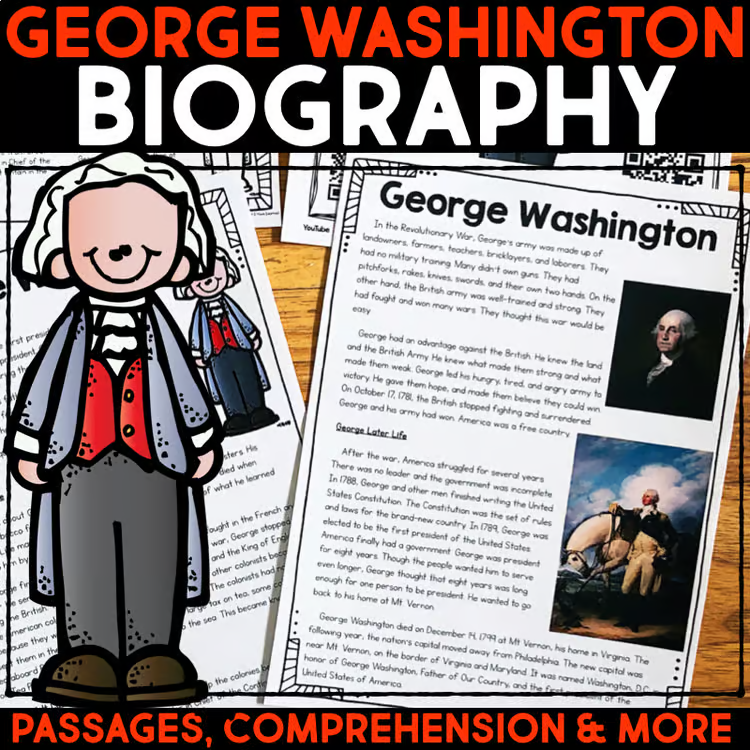
Reading passage, comprehension activities, timeline, and biography report pages for George Washington — designed for grades 2-4.
Civil Rights Leaders and Changemakers
These figures help students understand justice, equality, and courage.
Ruby Bridges is especially powerful for upper elementary. Students can explore her role in school integration, discuss perseverance, and connect biography writing to discussions about fairness and bravery. A structured passage with comprehension questions and writing pages makes it much easier for students to move beyond surface-level facts.
This Ruby Bridges biography resource walks through her story with comprehension and writing activities built right in.
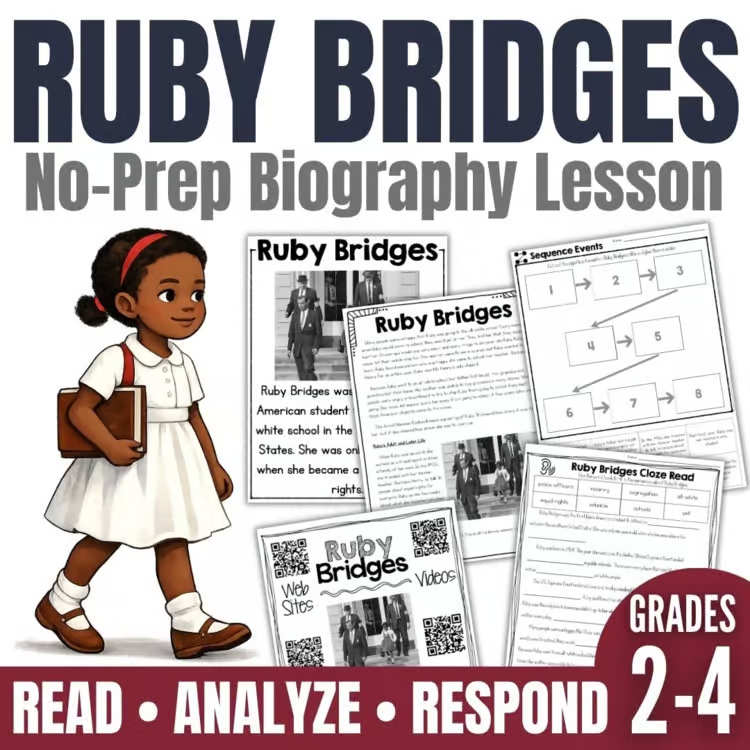
Reading passage, vocabulary activities, comprehension questions, and biography report pages for Ruby Bridges.
Scientists and Inventors in U.S. History
Perfect for cross-curricular science connections.
Thomas Edison and the Wright Brothers are strong options when you want to connect biography writing to innovation and problem-solving. Students can examine inventions, persistence through failure, and how new ideas changed everyday life.
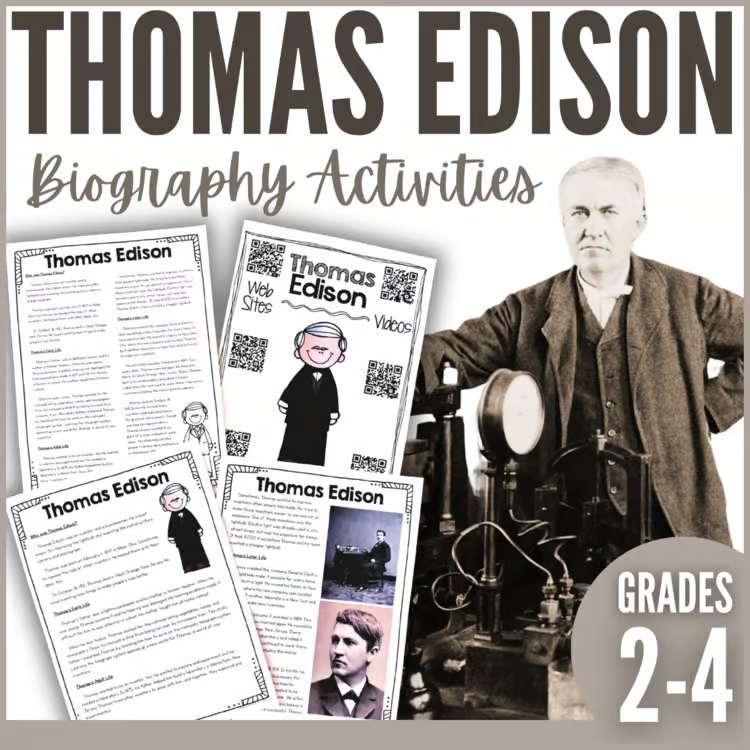
Reading passage, fact sort, comprehension activities, and biography report pages for Thomas Edison.
Business and Entertainment Influencers
These figures often hook reluctant writers.
- Walt Disney
- Henry Ford
- Oprah Winfrey
- Madam C.J. Walker
- Steve Jobs
Walt Disney is a favorite in many classrooms. Students can examine his early life, setbacks, the creation of Mickey Mouse, and the development of Disneyland. In a complete biography unit, students might work through:
- Vocabulary activities
- Comprehension questions
- Fact sorting
- Timeline sequencing
- Summary writing
- Full-page biography reports
A structured resource like this makes biography projects manageable instead of chaotic.
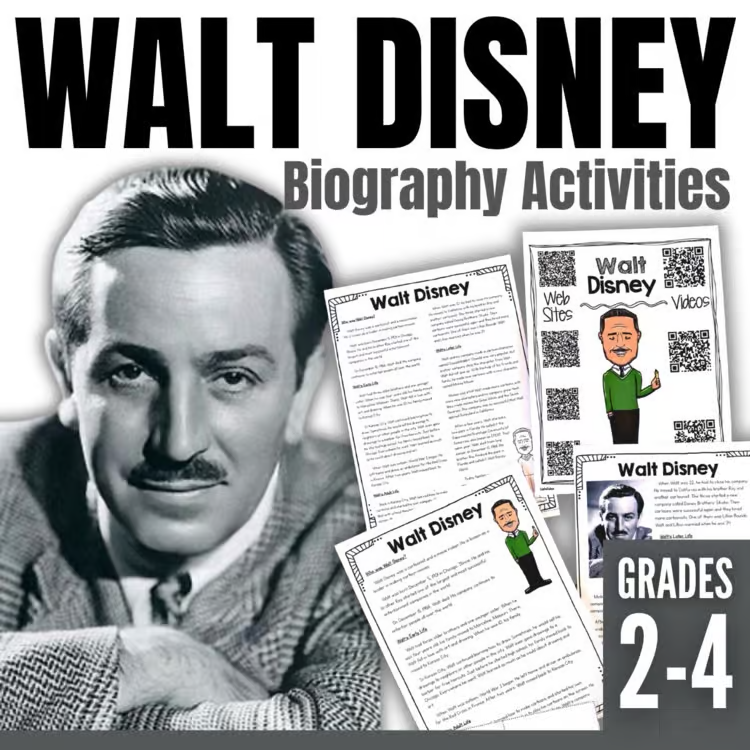
Reading passage, vocabulary, comprehension questions, and biography report pages for Walt Disney.
Women Who Shaped American History
These figures add important representation to your biography projects.
These topics allow for discussions about leadership, advocacy, and determination. They also fit beautifully into Women’s History Month or broader American history studies.
How to Help Students Write Strong Biography Reports
Once students choose a historical figure, the writing part can quickly become overwhelming.
Many students struggle with:
- Organizing information logically
- Separating early life from later accomplishments
- Writing summaries instead of copying text
- Identifying meaningful character traits
- Explaining why the person was important
This is where instructional structure makes all the difference. Instead of sending students straight to a blank report page, build the report in stages.
If your students need a refresher on the parts of a biography before diving in, start there.
Before students write their final biography, they benefit from working through:
- A student-friendly reading passage
- Vocabulary preview and review
- Graphic organizers to sort information
- Comprehension questions
- Cloze reading for reinforcement
- Fact sorts (early life, adulthood, accomplishments)
- Timeline sequencing
- Guided summary writing
These supports aren’t part of the final report. They are the scaffolding that helps students understand the person deeply before they begin writing.
When students move through guided reading and structured note-taking first, their final biography reports are more organized, more detailed, and much less copied from source material.
If you’re using person-specific biography resources, like those for George Washington, Ruby Bridges, the Wright Brothers, Thomas Edison, or Walt Disney, students can work through comprehension, vocabulary, and sorting activities before completing their full-page or half-page biography report.
That step-by-step progression transforms biography projects from stressful to manageable.
Want a Flexible Biography Report for ANY Person?
If your students are researching different historical figures, keeping everyone organized can quickly become overwhelming. A flexible biography report framework allows every student to research a different person while still following the same structured process.
With a Biography Report for ANY Person resource, you can maintain consistency in expectations while giving students full choice in their topic.
Students can use the activities and report pages to complete a presentation, create a written biography, or participate in a full genre study. The resource includes research graphic organizers, genre posters, full-page and half-page report templates, trifold reports, lapbooks in two sizes, and construction paper person options for creative display.
That flexibility allows you to use the same framework whether students choose George Washington, Ruby Bridges, Thomas Edison, or Walt Disney.

Biography Report & Biography Project – Research and Writing Activities (Grades 2–5)
Make biography projects meaningful and engaging with this Biography Report & Research Project for grades 2–5! This flexible resource includes graphic organizers, genre posters, multiple report formats, lapbook templates, trifold reports, and construction paper people so students can research and present any historical figure.
Choosing the Right Historical Figure for Your Class
When narrowing the list, ask a few questions: What time period are you studying? Do you want cross-curricular science connections, or are you focusing on civil rights? Are you looking for high-interest modern figures, or foundational American history? And what reading level support do your students need?
Sometimes the most successful biography projects happen when students feel ownership over their topic, but still have clear scaffolding.
Grade-level guidance: For second and third grade, figures with clear narratives and plenty of kid-friendly sources work best — George Washington, Ruby Bridges, Thomas Edison, and Harriet Tubman are all manageable for younger researchers. Fourth- and fifth-graders can handle more complex figures and nuanced topics: Frederick Douglass, Eleanor Roosevelt, Cesar Chavez, and Madam C.J. Walker all reward deeper investigation and support stronger analytical writing.
Final Thoughts
U.S. historical figures make excellent biography project topics because they combine reading, writing, and social studies in one meaningful assignment. With the right structure, students move beyond copying facts and begin analyzing impact, character traits, and historical significance.
Biography units work best when students choose someone they actually want to learn about. This list gives them enough options to find a topic that feels like theirs — and enough variety to fit whatever your social studies unit requires.
Looking for meaningful informational texts that your elementary students will stay engaged with?
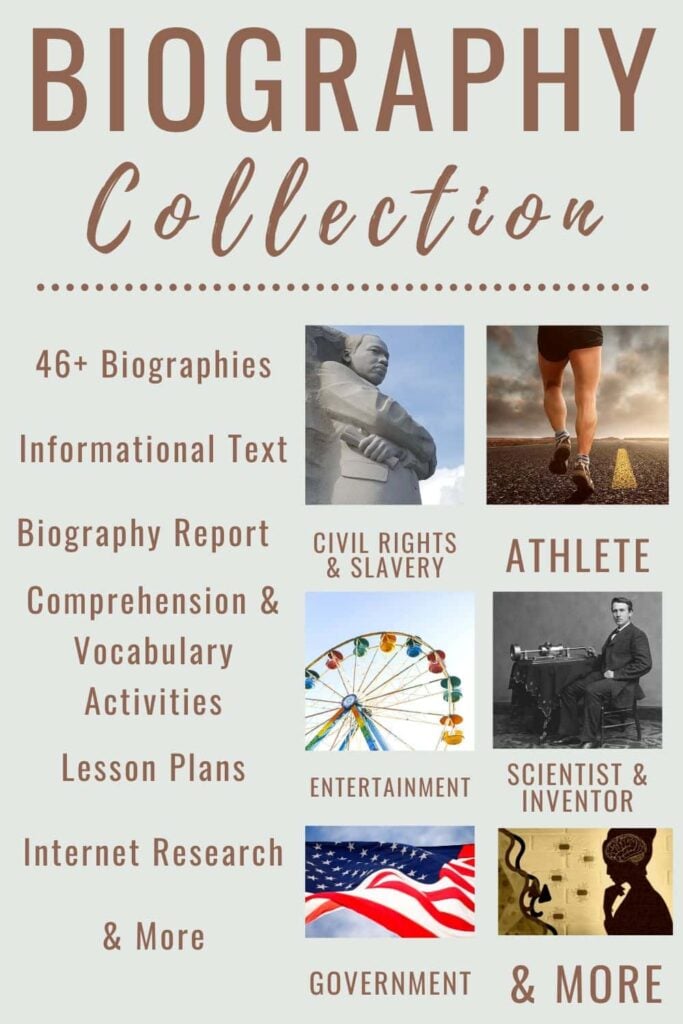
The Biography Bundle includes 46+ biographies on topics such as civil rights, athletes, scientists, government leaders, and more. Each biography has reading comprehension, vocabulary, and structured writing activities.
Students build skills in informational reading, research, and biography report writing while learning about influential people from history and today.
Jessica BOschen
Jessica is a teacher, homeschool parent, and entrepreneur. She shares her passion for teaching and education on What I Have Learned. Jessica has 16 years of experience teaching elementary school and currently homeschools her two middle and high school boys. She enjoys scaffolding learning for students, focusing on helping our most challenging learners achieve success in all academic areas.