
Women’s History Month Activities and Teaching Ideas
March is Women’s History Month, a time to honor and celebrate the contributions of women throughout history and in contemporary society. In elementary classrooms, this month offers a rich opportunity to explore the stories, achievements, and impacts of women across various fields and eras. In this post, we’ll share classroom activities and teaching ideas that teachers can use to celebrate Women’s History Month.
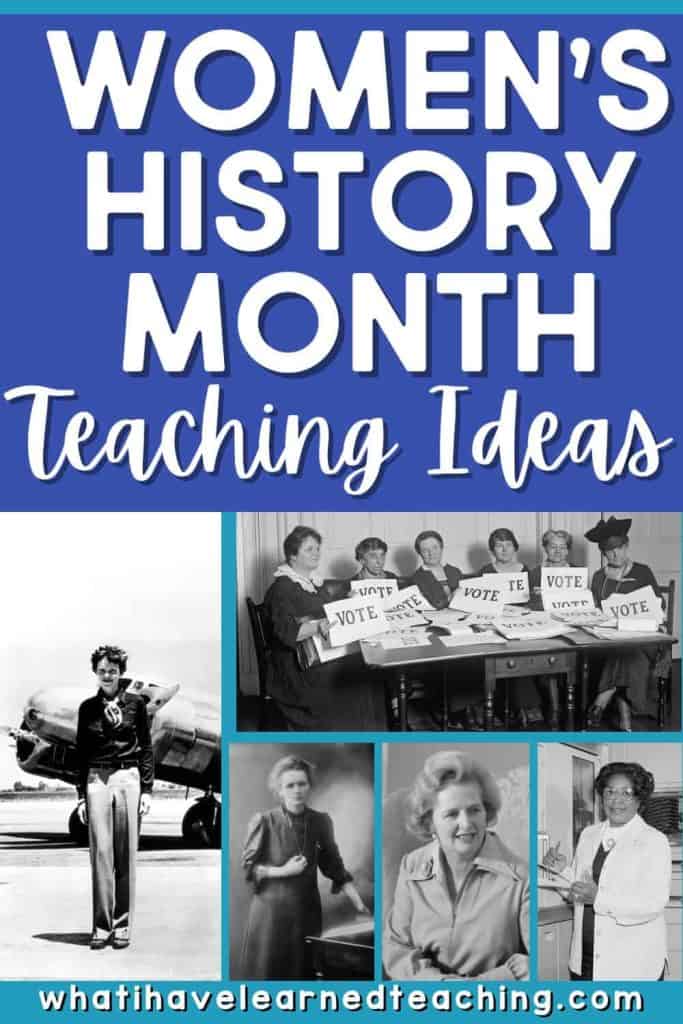
Who Started Women’s History Month?
Women’s History Month originated from a weeklong celebration organized by the school district of Sonoma, California, in 1978. This event was designed to challenge the exclusion of women from traditional historical narratives.
The idea gained momentum, and in 1980, President Jimmy Carter issued a presidential proclamation declaring the week of March 8th as National Women’s History Week.
The movement continued to grow, and in 1987, after lobbying by the National Women’s History Project, Congress passed a law designating March as Women’s History Month.
Why is Women’s History Month important to celebrate in elementary classrooms?
Celebrating Women’s History Month in elementary classrooms is crucial for fostering an understanding of gender equality and diversity from a young age. It highlights women’s significant contributions to society, science, arts, and more, challenging traditional narratives that often overlook these achievements.
This celebration helps build a more inclusive curriculum, promotes role models for all students, and encourages critical thinking about societal structures, paving the way for a more equitable future.
What Activities can I do with Elementary Students to Celebrate Women’s History Month?
Here are some engaging activities and ideas to bring Women’s History Month to life for your students.
Read and Learn about Influential Women Leaders
Allow your students to explore and develop an understanding of notable women through biographies written just at student’s reading levels. Also included are comprehension activities that practice sequencing events and organizing facts and pages where students can produce their biographical reports.
We have biographies for the following women:
- Ruth Bader Ginsburg
- Marie Curie
- Juliette Gordon Low
- Annie Oakley
- Eleanor Roosevelt
- Althea Gibson
- Mother Teresa
- Margaret Thatcher
- Susan B. Anthony
- Sally Ride
- Malala Yousafzai
- Jane Goodall
- Helen Keller
- Dolores Huerta
- Anne Frank
- Sarah E. Goode
- Sojourner Truth
- Ruby Bridges
- Rosa Parks
- Maya Angelou
- Bessie Coleman
- Harriet Tubman
- Betsy Ross
- Clara Barton
- Amelia Earhart

Biography Project about a Significant Woman Leader
Assign each student a woman who has significantly contributed to society, science, politics, arts, or sports. Students can create presentations, posters, or biography pages to share their findings.
This activity not only teaches students about important women in history but also encourages research skills and public speaking.
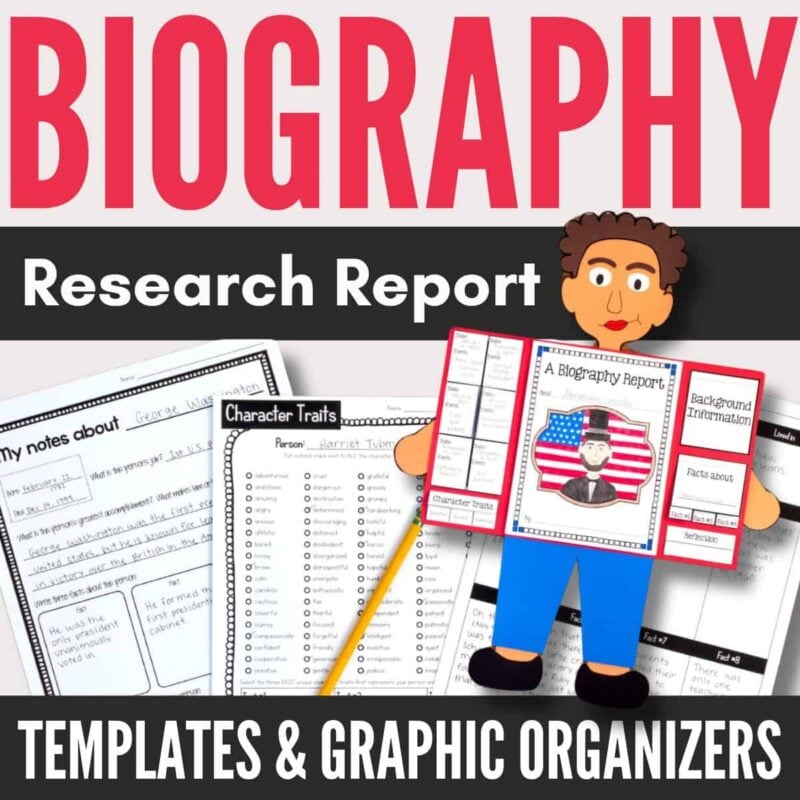
Biography Report & Biography Project – Research and Writing Activities (Grades 2–5)
Make biography projects meaningful and engaging with this Biography Report & Research Project for grades 2–5! This flexible resource includes graphic organizers, genre posters, multiple report formats, lapbook templates, trifold reports, and construction paper people so students can research and present any historical figure.
Other Ways to Celebrate Women’s History Month at School
Women have played a crucial role throughout history, yet men often overlook or overshadow their contributions. It is important to recognize and celebrate the achievements of women in all fields, from science to politics to arts and sports.
Here are some more ways teachers can focus students’ attention on women this month:
- Women’s History Month Reading Corner: Curate a selection of books that highlight women’s achievements. Include a range of genres, such as biographies, fiction, and picture books, to cater to different reading levels and interests.
- Inspirational Quotes Poster: Create a classroom poster filled with inspirational quotes from notable women throughout history. Involve your students by having them research and contribute their favorite quotes.
- Timeline Activity: Develop a timeline in your classroom showcasing key events and milestones in women’s history. This can include moments like the Women’s Suffrage Movement, the appointment of women to significant political positions, and achievements in various fields.
- Role-Playing and Skits: Encourage students to engage in role-playing activities or skits based on important moments in women’s history or the lives of influential women. This can help students understand the context and significance of these events and figures.
- Art Projects: Invite students to create art projects inspired by influential women artists or to depict significant events in women’s history. This could range from painting and drawing to digital art projects.
- Discussion Circles: Host regular discussion circles where students can discuss what they’ve learned about women’s contributions and the importance of gender equality. This fosters an environment of respect and understanding.
- Community Contributions: Highlight local women who have significantly contributed to your community. This could involve inviting guest speakers, organizing field trips, or students conducting interviews.
Incorporating these activities into your curriculum not only educates students about the vital role women have played and continue to play in our world but also inspires them to think critically about gender equality and their own potential to make a difference.
Jessica BOschen
Jessica is a teacher, homeschool parent, and entrepreneur. She shares her passion for teaching and education on What I Have Learned. Jessica has 16 years of experience teaching elementary school and currently homeschools her two middle and high school boys. She enjoys scaffolding learning for students, focusing on helping our most challenging learners achieve success in all academic areas.