
Inheritance, Variation of Traits & Environment – 3rd Grade NGSS
Inheritance of traits and variation of traits are foundational life science concepts in the 3rd grade. Students learn that traits are passed from parents to offspring, that individuals within the same species show variation, and that environmental factors can influence how traits develop over time. Inheritance and variation of traits is a core elementary life science topic, building on what students already know about life cycles and pointing forward to ecosystems and adaptations.
This guide explains inheritance, variation, and environmental influence in clear, teacher-friendly language. You’ll find classroom activities, lesson ideas, and structured teaching resources aligned to NGSS 3-LS3 to help you confidently teach heredity in 3rd grade.
What Is Inheritance and Variation of Traits?
Inheritance of traits refers to the way characteristics are passed from parents to their offspring. Traits such as fur color, eye color, beak shape, or leaf shape are determined by genetic information carried in genes. Offspring often resemble their parents because they inherit these traits, but they are not exact copies.
Variation of traits describes the differences that exist among individuals of the same species. Even siblings from the same parents can look or behave differently. This variation is important because it helps populations survive and adapt over time.
Inheritance and variation explain much of what we see in living organisms, but environmental factors also play an important role in how traits are expressed. Diet, climate, sunlight, experience, and other external conditions can affect how organisms grow and function. Many characteristics are shaped by both inherited traits and environmental influence.
Now that we’ve defined inheritance and variation, let’s take a closer look at each concept individually.
Inheritance of Traits – 3rd Grade Explanation
Inheritance of traits is the process by which characteristics are passed from parents to offspring. In 3rd grade, students learn that plants and animals receive genetic information from their parents through genes. This inherited information determines many physical traits, such as fur color, eye color, leaf shape, or the shape of a bird’s beak.
When teaching inheritance of traits, it is helpful to emphasize that offspring usually resemble their parents, but they are not exact copies. Students should understand that genes carry the instructions for traits, and those instructions are passed from one generation to the next.
Classroom Focus Ideas for Teaching Inheritance of Traits
- Compare traits among classmates (eye color, hair texture, dimples)
- Observe inherited traits in plants grown from the same seed type
- Use picture cards to match parent organisms with offspring
- Analyze simple data tables showing trait patterns
- Create a class discussion around family resemblances
These activities help students see real-world examples of inheritance of traits and connect science concepts to their own experiences.
Variation of Traits
Variation of traits refers to the differences that exist among individuals of the same species. Even when organisms share the same parents or belong to the same group, they do not look or function exactly alike. This variation is a key part of 3rd grade life science and helps students understand how populations survive and adapt over time.
Variation Within a Group
Students can observe variation by comparing members of the same species. For example, not all dogs have the same fur color, and not all sunflowers grow to the same height. These differences show variation of traits within a population.
Why Siblings Differ
Even siblings from the same parents inherit different combinations of genetic information. This is why brothers and sisters may share some traits but look different from one another. Discussing sibling similarities and differences is an accessible way to explain variation in inherited traits.
Patterns Across Generations
Students can also look for patterns of traits across generations. When observing family members, they may notice certain traits appear frequently, while others vary. This helps students practice analyzing data and recognizing patterns in inheritance.
Classroom Activities to Teach Variation of Traits
- Create a family traits bar graph using observable characteristics
- Survey the class for a specific trait (such as dimples or hair curl) and graph the results
- Compare plant growth data to identify differences
- Analyze pictures of animals in the same species and identify variations
These activities reinforce the concept of variation of traits while building data analysis skills required in 3-LS3-1.
Inheritance explains how traits are passed from parents to offspring, and variation of traits explains why individuals within a species differ. However, genes are only part of the story. Many traits are also influenced by environmental factors.
How the Environment Influences Traits
In addition to inheritance, many traits are influenced by environmental factors. This concept is often described as “traits influenced by environment” and is a required component of NGSS 3-LS3-2. While genes provide the instructions, the environment can shape how those instructions are expressed.
Examples of traits influenced by environment include:
- Diet affecting an animal’s size or health
- Climate influencing fur thickness
- Sunlight affecting plant growth
- Experience shaping behavior
- Access to resources impacting survival
For example, two plants may inherit the same genetic traits, but differences in water, soil, or sunlight can cause them to grow differently. Similarly, animals may inherit instincts, but experience strengthens learned behaviors over time.
When teaching environmental influence on traits, emphasize that many characteristics involve both heredity and environment. Helping students understand this interaction builds a strong foundation for later study of genetics and adaptation.
Difference Between Inherited Traits and Learned Behaviors
Inherited traits are characteristics passed from parents to offspring through genes and are present at birth. Learned behaviors develop after birth through experience, practice, or observation. Understanding the difference between inherited traits and learned behaviors helps students see how both heredity and environment shape living organisms.
This distinction supports both 3-LS3-1 and 3-LS3-2 and helps students separate inherited traits from behaviors shaped by experience. Clarifying this difference prevents common misconceptions, such as assuming all behaviors are learned or all traits are genetic.
How to Teach Inheritance, Variation of Traits, and Environmental Influences on Traits in 3rd Grade
Teaching inheritance of traits, variation of traits, and environmental influence is most effective when instruction follows a clear progression. When students first build background knowledge, then explore through investigation, and finally apply and assess their understanding, the concepts stick.
Below is a simple teaching pathway that moves students from introduction to mastery of inheritance, variation, and environmental influence in 3rd grade.
Step 1: Build Background Knowledge with Daily Warm-Ups
Daily science warm-ups help students revisit key ideas about heredity, variation, and environmental influence in small, manageable chunks. Because heredity and environmental influence are closely connected, rotating between both concepts strengthens understanding over time.

These Inheritance of Traits Warm-Ups are designed for 3rd grade and aligned with NGSS 3-LS3-1, helping students explore how traits are inherited and why variation matters for survival.

Help your students see how the environment influences traits and survival with these daily Science Warm-Ups!
Step 2: Teach Core Concepts with a 5E Unit
The 5E model allows students to explore inheritance and environmental influence through investigation, explanation, and application. Teaching both concepts within a 5E structure helps students see how genes and environment interact rather than viewing them as separate topics.
Inheritance of Traits 5E Unit Plan for Third Grade
This Inheritance of Traits 5E Unit Plan is an inquiry-based unit that focuses on providing evidence that plants and animals have traits inherited from parents. Variation of traits is also explored within groups of similar organisms.
Environment and Traits 5E Unit Plan for Third Grade
This Environment and Traits 5E Unit Plan is an inquiry-based unit that focuses on investigating acquired and learned traits from the environment.
Step 3: Reinforce Through Science Stations
Science stations provide hands-on opportunities to apply understanding of variation, heredity, and environmental influence through reading, modeling, sorting, and investigation.

Inheritance & Variation of Traits Third Grade Science Stations
The focus is on NGSS 3-LS3.A and 3-LS3.B and include concepts such as plant identification, seed dispersal, changing leaves, animal survival and growth, classification of organisms, and warm-blooded and cold-blooded animals.
Step 4: Assess and Review with Exit Tickets
Daily review and exit tickets help identify misconceptions and reinforce understanding of inheritance patterns, variation, and environmental influence.

This three-week collection of daily science reviews helps students explore how traits are passed from parents to offspring, why offspring resemble their parents but aren’t exact copies, and how patterns and variations in traits appear across generations.
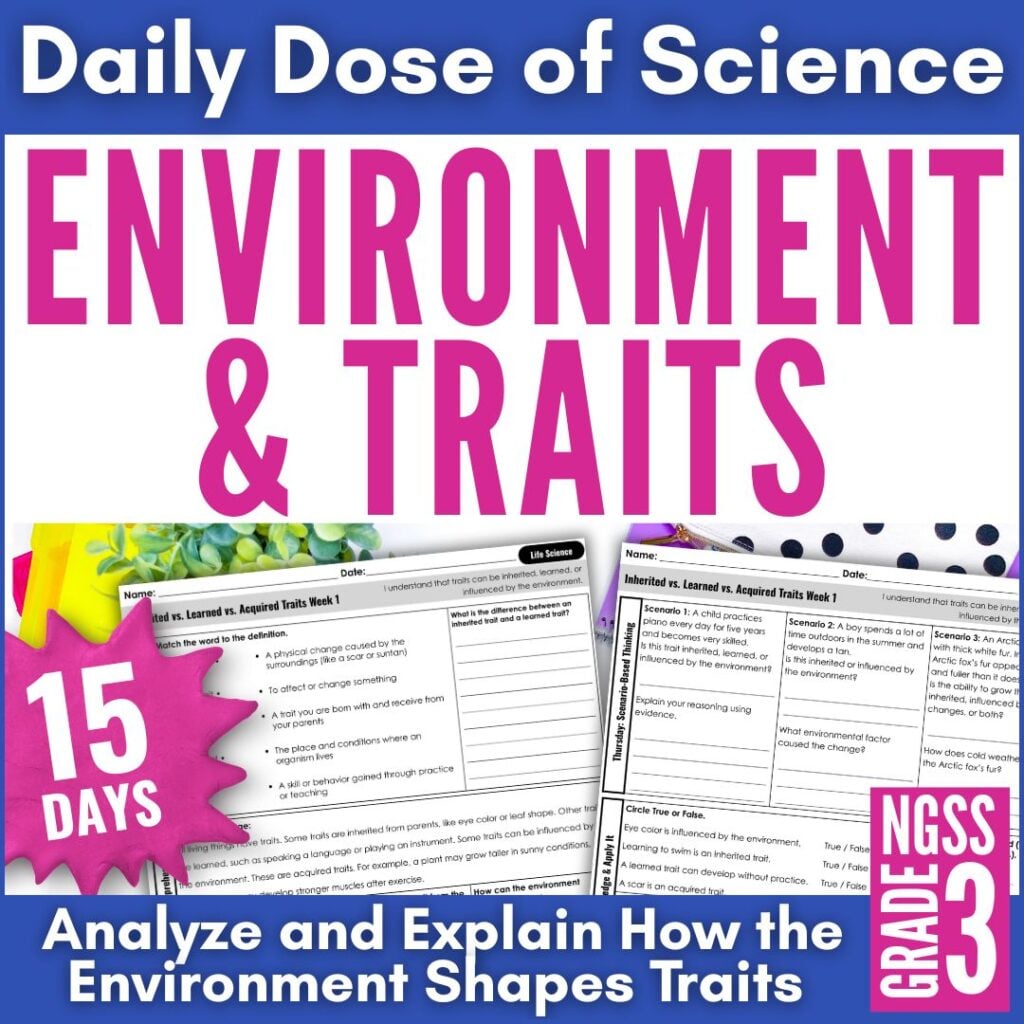
Through structured daily practice, students distinguish between inherited traits, learned traits, and acquired traits, analyze data, interpret real-world scenarios, and use evidence to explain how traits can be influenced by the environment.
Additional Activities and Extensions
1. Concept Clarification Activities
These reinforce core understanding.
Venn Diagram Activity
Use a Venn diagram to compare inherited traits and learned behaviors. This helps students visually distinguish instincts from behaviors shaped by experience.
Modeling Trait Variation
Use visual models or colored counters to show how offspring inherit different combinations of traits. This reinforces variation within a species.
Books to Support Understanding Animal Traits
Picture books and narrative nonfiction can make abstract concepts like traits, heredity, and variation much more concrete for young learners. Use read-alouds, paired discussion prompts, or partner activities to reinforce key ideas alongside your lessons on inheritance and variation.
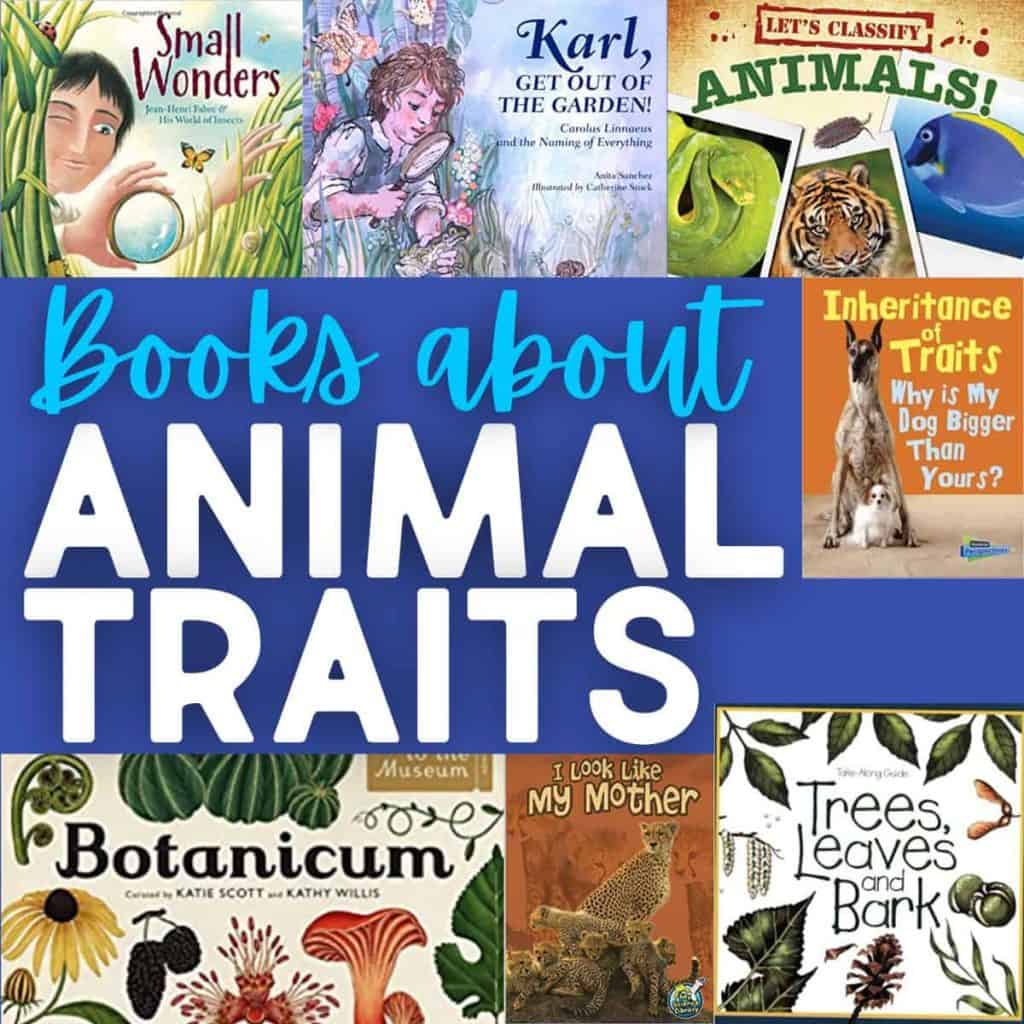
Books about Animal Traits
Explore these animal trait books for elementary students to deepen understanding and spark curiosity.
2. Investigation and Research Projects
These deepen understanding and support NGSS data practices.
Research Project: Inherited Behavioral Traits
Have students investigate behaviors such as:
- Nest-building
- Web-building
- Defense tactics
- Care of young
- Predator/prey interactions
Students present findings and explain whether behaviors are inherited or influenced by the environment.
Family Traits Data Investigation
Create a class chart of observable traits (eye color, hair texture, dimples, etc.). Use the data to create bar graphs and analyze variation.
3. Environmental Influence Investigations
These support 3-LS3-2.
Environmental Influence Investigation
Design simple experiments such as:
- Growing plants under different light conditions
- Observing how nutrition affects growth
Students discuss how the environment influences development.
4. Hands-On Extensions
These are enrichment activities.
Extract DNA from Fruit
Strawberries and bananas provide a visual way to explore the physical basis of inheritance.
Media Resources
Incorporate short heredity videos to reinforce concepts of genetic inheritance and environmental influence.

5. Assessment Ideas for Inheritance and Variation
Use formative and summative assessments such as:
- Exit tickets explaining heredity
- Compare and contrast writing
- Data interpretation questions
- Claim-evidence-reasoning prompts
Related: Elementary Life Science Activities and Resources — see how inheritance fits with the rest of the K–5 life science scope.
Teaching inheritance of traits, variation of traits, and environmental influence together helps students build a complete understanding of heredity in 3rd grade. When students explore data, observe patterns, and investigate real-world examples, these abstract concepts become concrete and meaningful. A structured approach ensures they leave the unit with both conceptual clarity and scientific reasoning skills.
Jessica BOschen
Jessica is a teacher, homeschool parent, and entrepreneur. She shares her passion for teaching and education on What I Have Learned. Jessica has 16 years of experience teaching elementary school and currently homeschools her two middle and high school boys. She enjoys scaffolding learning for students, focusing on helping our most challenging learners achieve success in all academic areas.