
Teach Inherited vs. Learned Traits with a Fun Sorting Activity
Helping students understand the difference between inherited traits and learned behaviors can feel like a big task, especially for third or fourth graders who are just starting to explore life science. Fortunately, there’s a hands-on way to make this concept easier to grasp: a sorting activity that challenges students to classify real-world animal examples! I created this hands-on inherited vs. learned traits activity to help students think critically about an animal’s behavior and determine whether it was inherited or acquired.
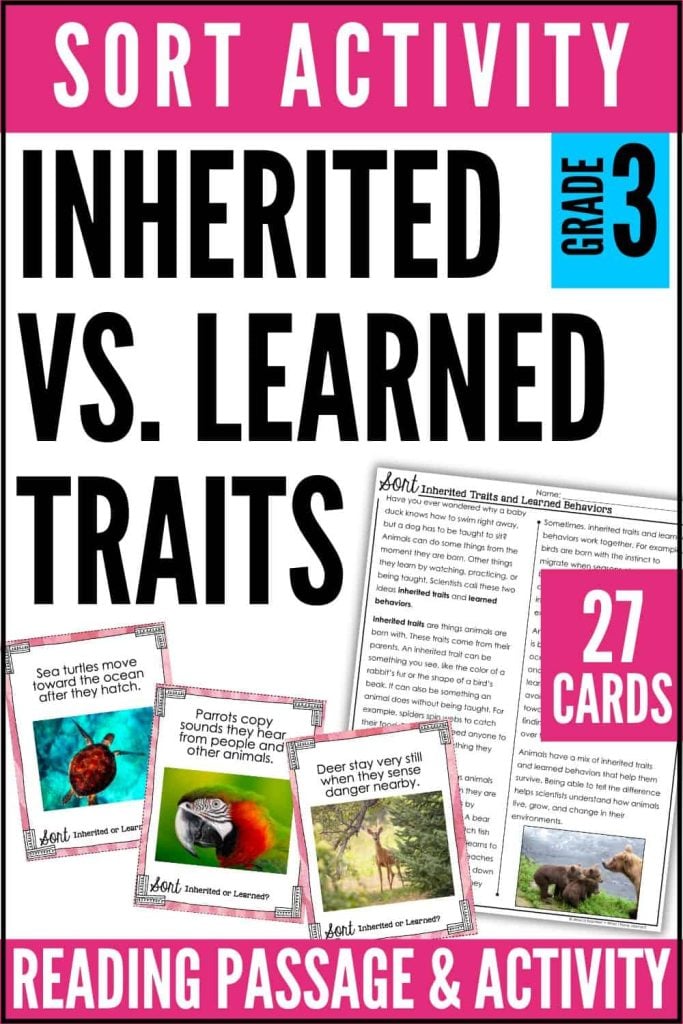
Whether you’re planning a science station, a small group activity, or an early finisher task, this Inherited vs. Learned Traits Sorting Activity is a simple, low-prep tool that fits perfectly into your classroom.
Why Teach Inherited and Learned Traits Through Sorting?
Sorting activities provide students with a clear and active way to practice critical thinking. Instead of passively hearing about traits, students have to read, think, and decide whether an example describes an inherited trait or a learned behavior. By applying what they know, students solidify their understanding in a meaningful way. Plus, the discussion and reasoning involved can lead to some incredible “aha!” moments.
Understanding the difference between what animals are born knowing and what they learn over time is not only a science standard—it also ties into how we observe patterns, explain animal behavior, and even explore the nature vs. nurture concept in a simple way. Third and fourth graders love sorting real-world examples, and this activity keeps them engaged and thinking.
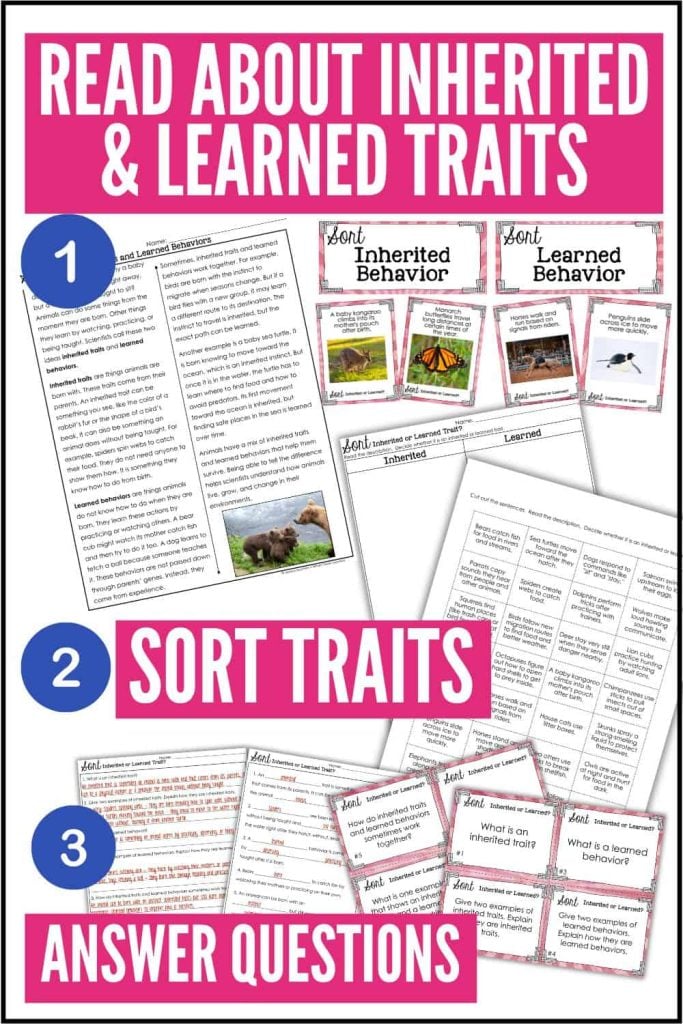
What’s Included in This Inherited vs. Acquired Traits Sorting Activity?
This resource includes everything you need to introduce and practice the concepts of inherited traits and learned behaviors:
- Engaging Reading Passage: Students begin by reading a short, easy-to-understand passage that explains inherited traits and learned behaviors, using relatable examples such as sea turtles, ducks, and lions.
- Large Sorting Cards: Featuring real-world animal actions, these cards help students classify examples without giving away the answer.
- Cut-and-Paste Sorting Worksheet: A great independent practice option for reinforcing learning.
- Short-answer and Multiple-Choice Questions: These assessments provide a quick way to check for understanding.
- Answer Keys: Easy grading for busy teachers.
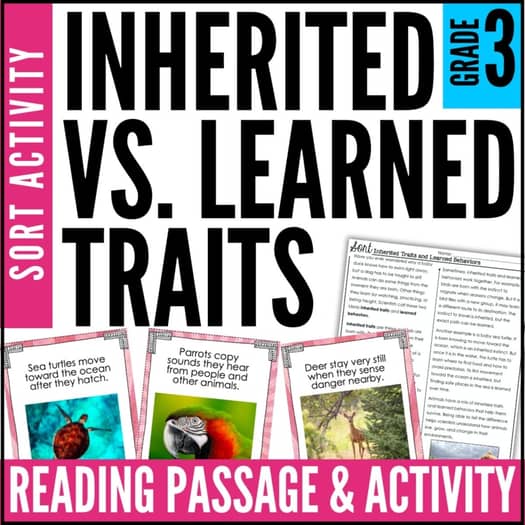
Help your students easily understand the difference between inherited traits and acquired behaviors with this engaging, hands-on sorting activity!
How to Use the Inherited vs. Learned Traits Sort
This sorting activity can be used in many ways. Use it in:
- Science Centers: Set up the cards at a center and have students sort them into two categories.
- Partner or Small Group Activity: Students can discuss their choices with a partner or small team, building academic conversation skills.
- Early Finishers: Keep engaged learners busy with the cut-and-paste worksheet after finishing other assignments.
- Whole Group Lesson: Introduce or review the concept by sorting a few cards together on a pocket chart.
You can also extend the activity by having students write their own inherited vs. learned examples using animals they know, or create a quick journal entry reflecting on human traits and behaviors they’ve observed in their own families.
Key Science Standards Addressed
This activity is designed to align with Next Generation Science Standards (NGSS) for third grade, particularly 3-LS3.A (Inheritance of Traits) and 3-LS3.B (Variation of Traits), as well as informational text standards RI.3.1, RI.3.4, and RI.3.8. It also aligns with the new TEKS 4.13B.
Making science interactive helps students retain what they learn. By giving them real-world examples and challenging them to think carefully about inherited traits and learned behaviors, you build both their science understanding and their confidence. This Inherited vs. Learned Traits Sorting Activity is a ready-to-go solution that brings science to life in your classroom.
Want to try it out or learn more? You can find the full resource in my TpT store here:
Help your students easily understand the difference between inherited traits and acquired behaviors with this engaging, hands-on sorting activity!
Looking for more science center ideas and print-and-go activities? Join my email list and grab a free science resource to get started.

Jessica BOschen
Jessica is a teacher, homeschool parent, and entrepreneur. She shares her passion for teaching and education on What I Have Learned. Jessica has 16 years of experience teaching elementary school and currently homeschools her two middle and high school boys. She enjoys scaffolding learning for students, focusing on helping our most challenging learners achieve success in all academic areas.