
How to Teach Place Value in Elementary School
Every elementary teacher has watched a student read the number 42 as “four, two” instead of forty-two. That small moment is the whole reason place value matters, and it’s why knowing how to teach place value well shapes almost everything else students do in math. Place value is the foundation under addition, subtraction, rounding, multiplication, and decimals, so when it’s shaky, those skills wobble too.
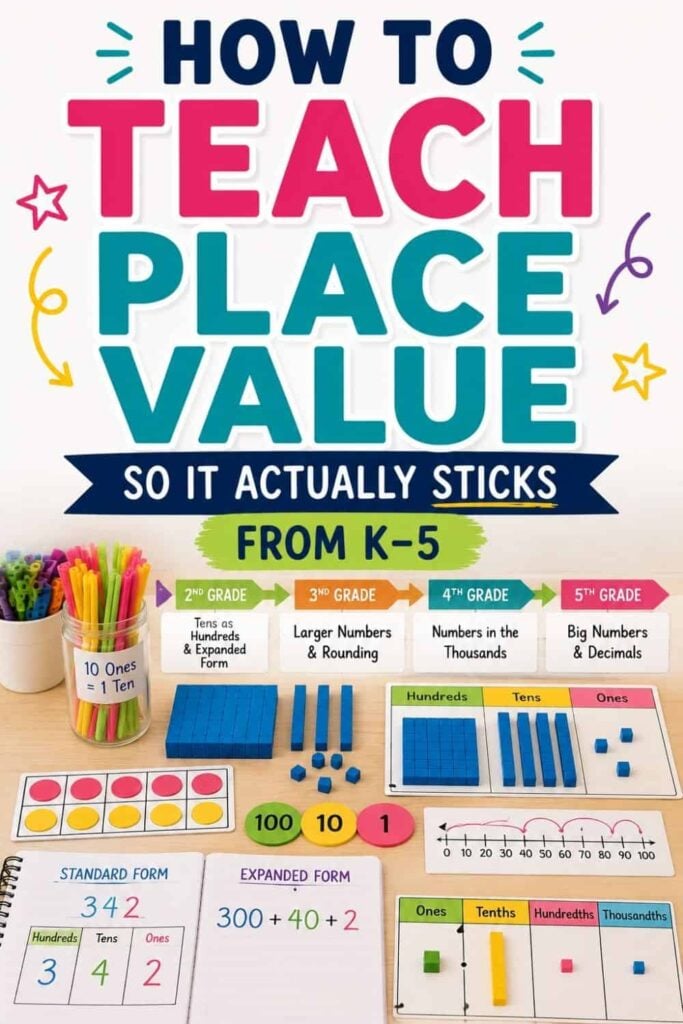
This guide walks through how place value develops from kindergarten through fifth grade, the hands-on strategies that build real understanding, the misconceptions to watch for, and the activities I reach for at each stage.
What Is Place Value and Why Does It Matter
Place value is the idea that the position of a digit in a number determines its value. The 4 in 42 is worth forty, not four, because it sits in the tens place. It sounds simple to us, but it is one of the biggest conceptual leaps young students make. Our number system is built on groups of ten, and understanding that a single digit can represent ten of something, a hundred, or a thousand lets students work with large numbers, regroup when they add and subtract, and later make sense of decimals.
When students truly understand place value, the rest of the number system stops feeling like a set of disconnected rules. When they don’t, they fall back on memorized procedures that break down the moment a problem looks unfamiliar. That is why place value is worth slowing down for.
How to Teach Place Value Across the Grades
Place value isn’t a single lesson. It’s a thread that runs through every elementary grade, getting a little deeper each year. Knowing where your students have been and where they’re headed helps you pitch instruction at the right level.
Kindergarten and First Grade: Tens as a Unit
This is where the foundation gets poured. Young students first learn to count, then to see that ten ones can be bundled into a single group of ten. Teen numbers are the first real test: students need to understand that 14 is one ten and four ones, not just a “1” and a “4” sitting next to each other. Ten frames, linking cubes, and bundling straws make this concrete.
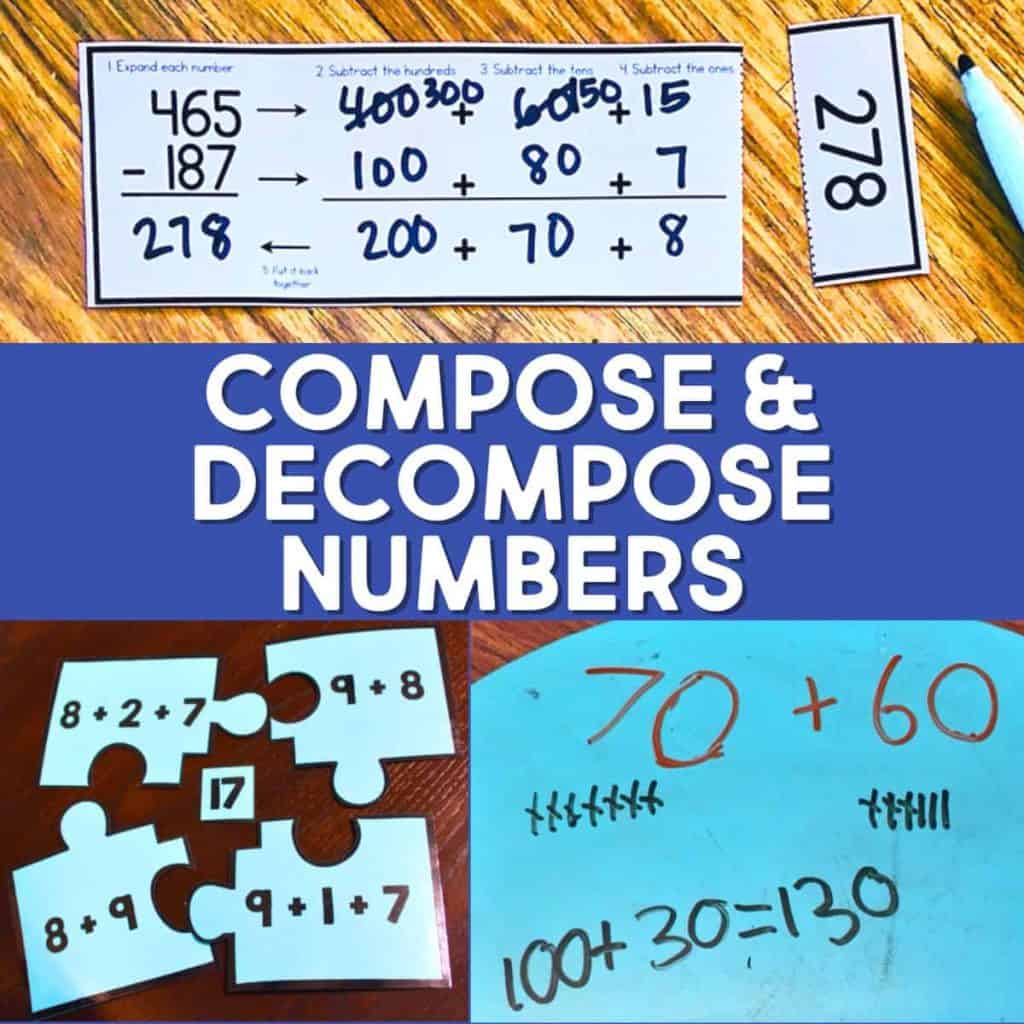
Composing and decomposing numbers is the key skill here, and I dig into it in my post on composing and decomposing numbers in K-2.
Second Grade: Hundreds, Standard Form, and Expanded Form
Second graders extend their understanding of place value to three-digit numbers and begin representing numbers in more than one way. They learn to read and write numbers in standard form and expanded form, to compare numbers, and to see 100 as ten tens. This is also the year place value starts powering two- and three-digit addition and subtraction.
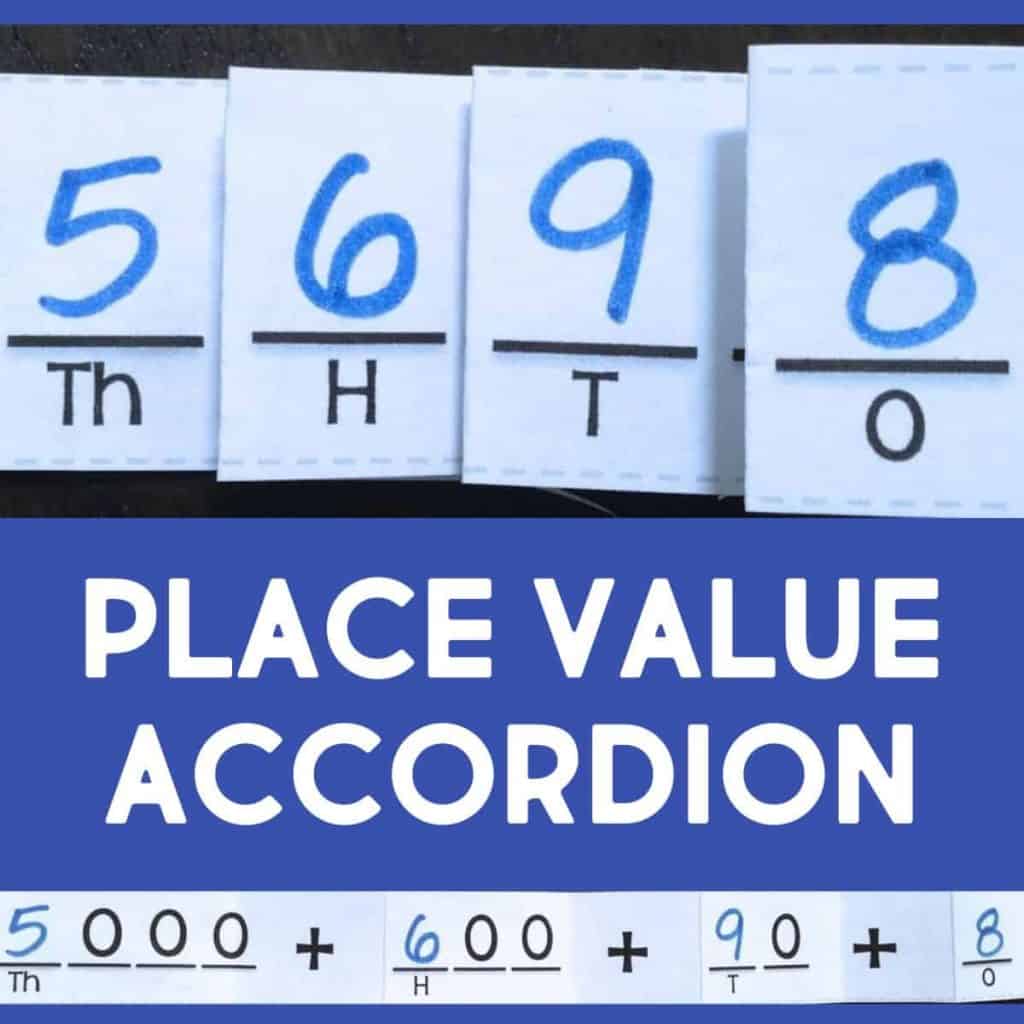
A hands-on tool like my place value accordion helps students physically see how standard and expanded form connect.
Third Grade: Larger Numbers and Rounding
By third grade, students work with numbers into the thousands, round to the nearest ten and hundred, and lean on place value to add and subtract fluently. Rounding, in particular, depends on a solid understanding of place value, because students have to know which digit they’re rounding and what the surrounding digits mean.
Fourth and Fifth Grade: Big Numbers and Decimals
Upper elementary students push into numbers in the hundreds of thousands and millions, and they learn that each place is ten times the value of the place to its right. In fifth grade, place value extends in the other direction into decimals, where the same ten-times relationship holds. Expanded notation becomes important here, and the difference between expanded form and expanded notation trips up a lot of students.
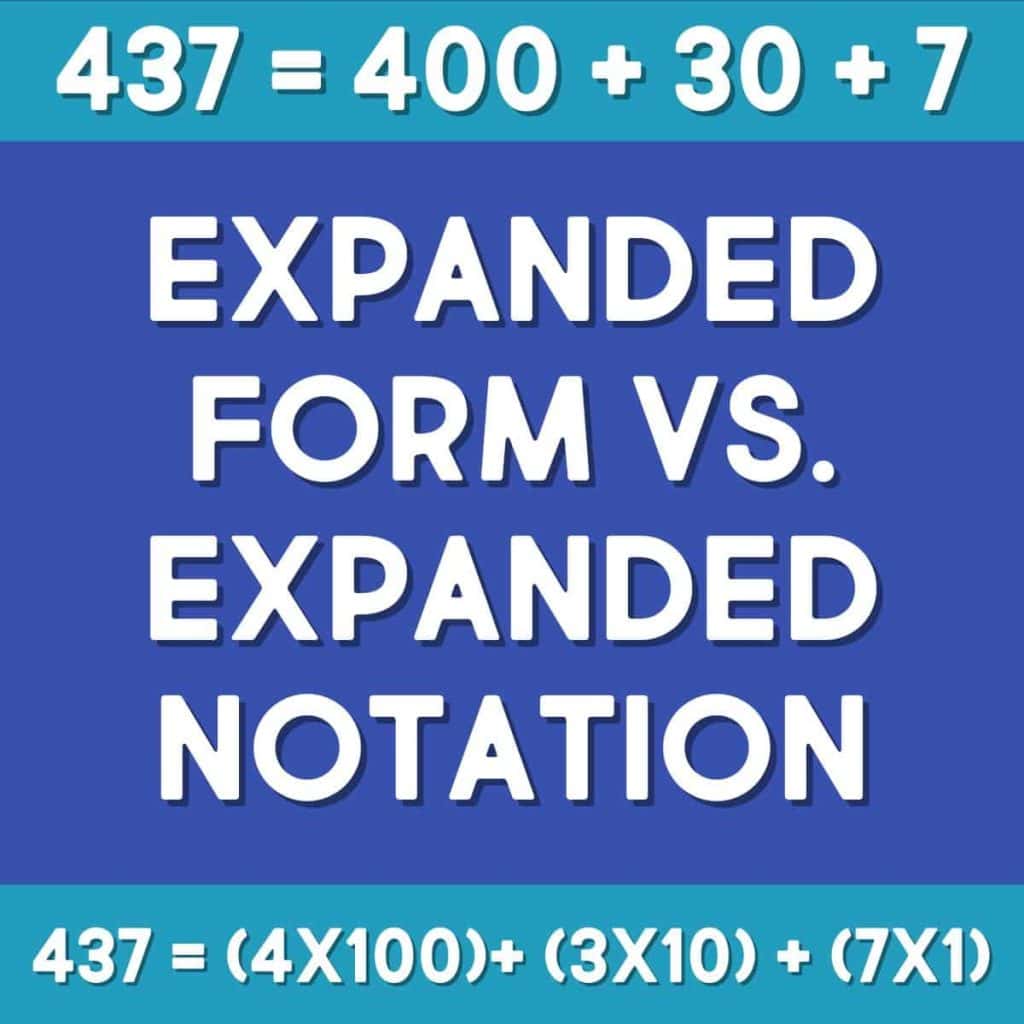
I break it down with examples in my post on expanded notation versus expanded form.
Hands-On Strategies for Teaching Place Value
Place value is abstract, so it has to start with concrete examples. The most reliable approach is to move students through hands-on manipulatives, then drawings or models, and only then the numbers on their own. Rushing straight to the digits on a worksheet and understanding stays thin. A few tools that earn their place in the rotation:
- Base ten blocks. The workhorse of place value. Students physically trade ten units for a rod and ten rods for a flat, which makes regrouping easier to understand later.
- Bundling straws or craft sticks. Wrapping ten loose straws into a bundle shows students that a ten is literally ten ones grouped together, something pre-made blocks can hide.
- Place value charts and disks. These help students organize digits by place value and see what happens when a place value “fills up” and rolls over.
- Number lines. A number line builds the sense of magnitude that blocks alone miss, and it carries straight into addition and subtraction. My guide to using a second-grade number line for addition and subtraction shows how.
Whatever tools you use, keep connecting them back to the written number. The goal is for students to look at 305 and picture three hundreds, zero tens, and five ones, not just three digits in a row.
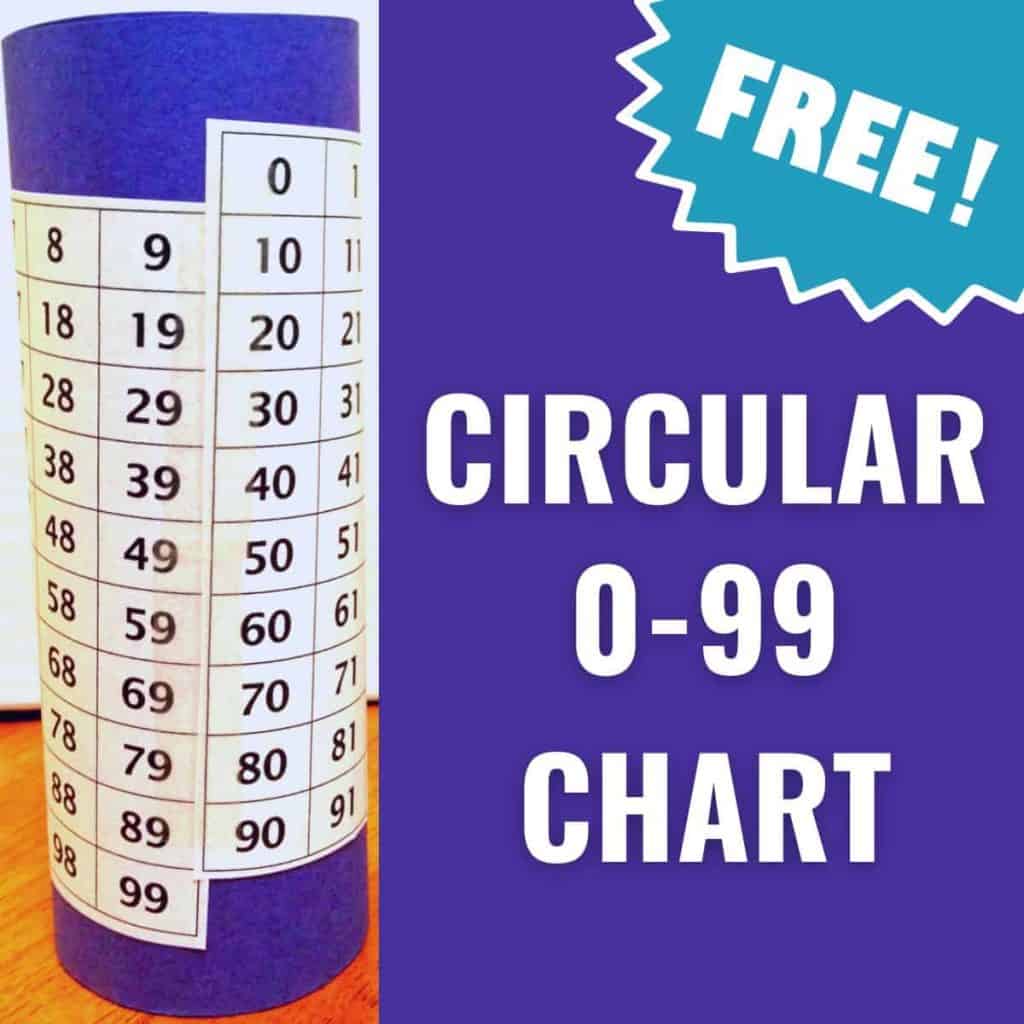
For kids who are struggling to cross a 10 on a regular hundreds chart, try this circular hundreds chart or a 0-99 chart.
Common Place Value Misconceptions
Knowing where students stumble lets you teach ahead of the problem. These are the misconceptions I see most often:
- Reading digits separately. Saying “four, two” for 42 means a student sees two digits rather than a quantity. Go back to bundling and ten frames.
- Confusing digit and value. A student may say the 4 in 42 “is four.” Naming the place out loud, four tens, helps separate the digit from what it’s worth.
- The zero placeholder. Writing 305 as 3005 happens when students translate expanded form digit by digit. They need to understand that the zero is holding the tens place open.
- Lining up the wrong way. When students line up multi-digit problems by the left instead of by place, it’s a place value gap, not a careless mistake.
Place Value Activities and Games
Once students have the concept, they need lots of low-stakes practice to make it automatic. Games and centers are ideal because they keep students reasoning about numbers without it feeling like a worksheet. A few that work well in stations:
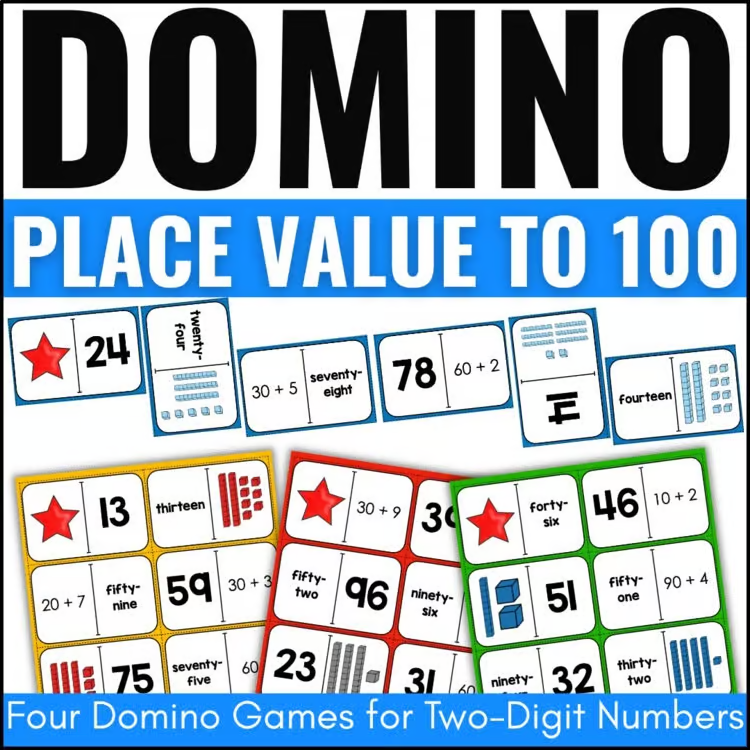
- A two-digit place value domino game for grades 1-2, where students match numbers to their tens-and-ones representations.
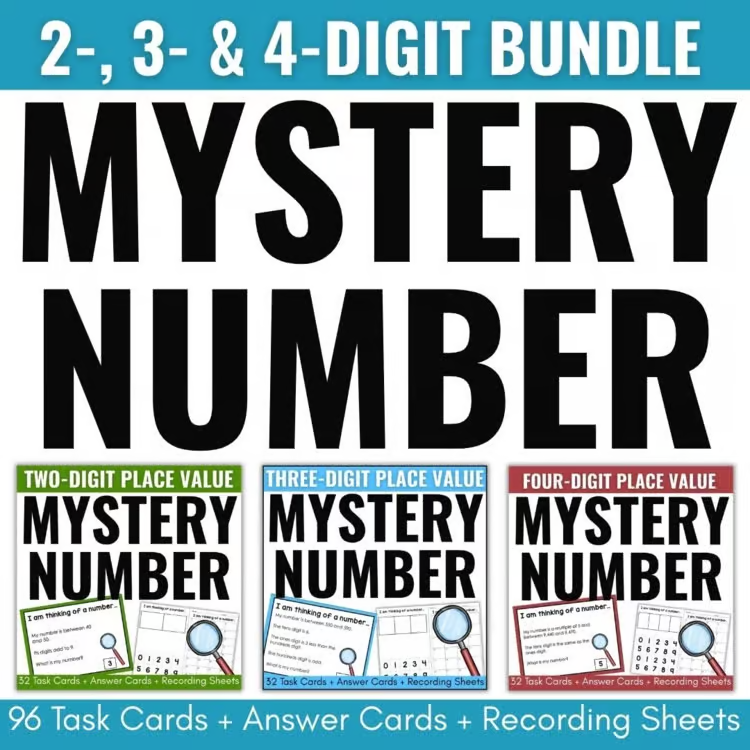
- Three-digit mystery number task cards, where students use place value clues to figure out a number.
- Build-a-number games with digit cards, where students arrange digits to make the largest or smallest number they can and then read it aloud.
Activities like these are where the National Council of Teachers of Mathematics’ emphasis on reasoning over rote memorization really shows up, and you can read more about that approach at NCTM.
How to Teach Place Value Within Addition and Subtraction
Place value really proves its worth when students start adding and subtracting multi-digit numbers. Regrouping, partial sums, and number line strategies all rest on understanding that you can only combine like places and that ten in one place becomes one in the next. When students struggle with borrowing or carrying, the fix is almost always to go back to place value.
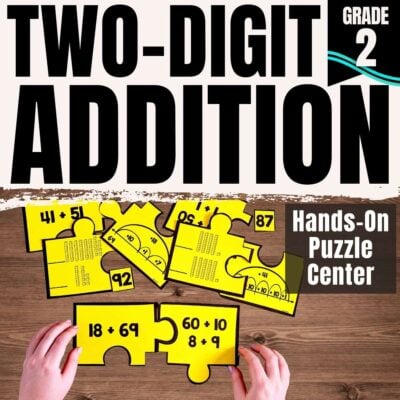
I teach students more than one way to get there so they can reason instead of memorize. My posts on two-digit addition and subtraction strategies and models, and four strategies to solve multi-digit addition, both build directly on place value, and the make 100 and make 1000 strategies show students how to use friendly, place-value-based numbers to compute flexibly. Specifically for subtraction, my guide to teaching subtraction with regrouping walks through the place-value thinking step by step.
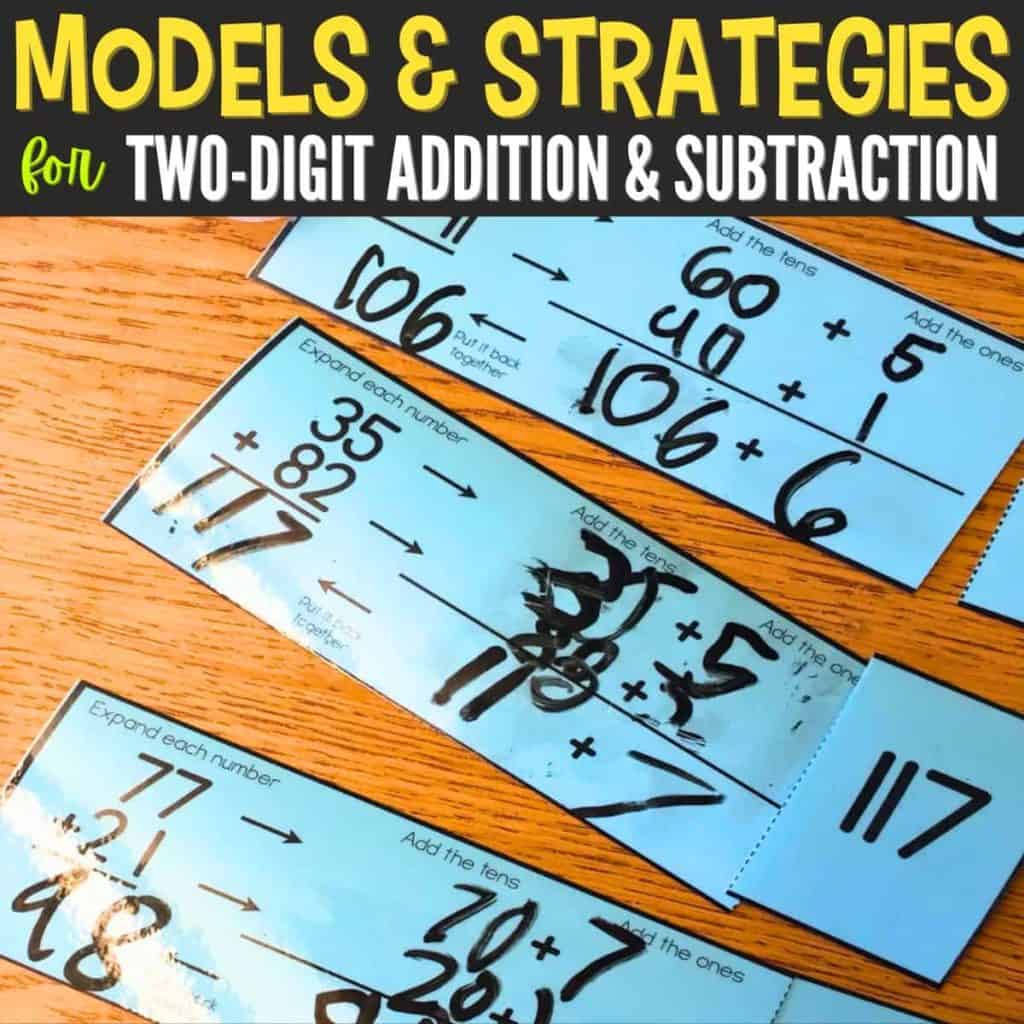
These models and strategies rely on place value and strengthen students’ number sense.
Frequently Asked Questions
Final Thoughts
Place value is slow, foundational work, and it pays off across every other math skill your students will learn. If you take one thing from this guide, let it be the progression from concrete to written, because that is where deep understanding comes from. Build the foundation well in the early grades, and keep connecting back to it as numbers grow; your students will carry that number sense all the way through elementary school.
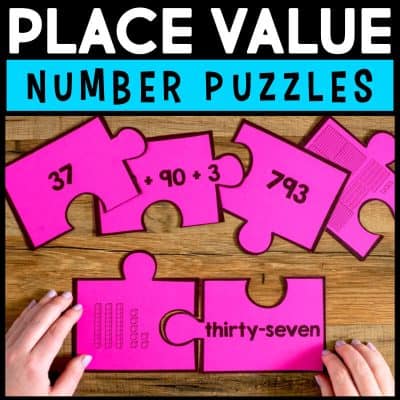
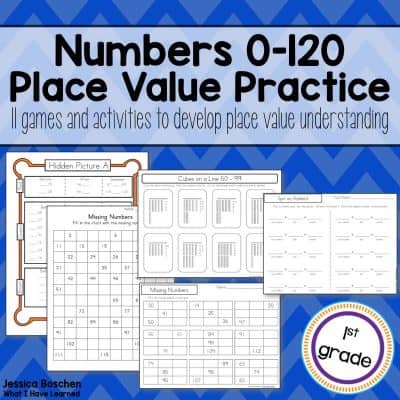
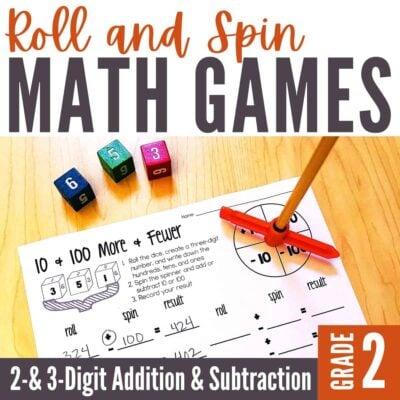
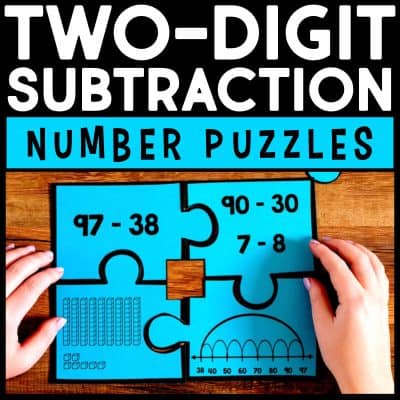
Looking for ready-to-use resources? My place value and NBT cut-and-paste activities give students hands-on practice with tens, ones, and expanded form, and my place value games and task cards, like the two-digit domino game and the three-digit mystery number task cards, keep that practice going in your math centers. You can find them in my TPT store or below.
Jessica BOschen
Jessica is a teacher, homeschool parent, and entrepreneur. She shares her passion for teaching and education on What I Have Learned. Jessica has 16 years of experience teaching elementary school and currently homeschools her two middle and high school boys. She enjoys scaffolding learning for students, focusing on helping our most challenging learners achieve success in all academic areas.