
41 Math Manipulatives for Elementary Students Organized by Math Topic
Have you ever watched a child’s face light up when he finally grasps a concept? That “Aha!” moment is what we live for as educators!
Some students need hands-on, tactile tools to spark these breakthroughs in young learners. Math manipulatives, tangible objects, often colorful and intriguing in their design, are not just toys, but powerful vehicles for understanding and mastering mathematical concepts.
From counting to fractions and even geometry, manipulatives enable elementary students to visualize and physically interact with abstract ideas, making math more engaging, accessible, and fun.
Let’s explore the magic that happens when we bring math manipulatives into the elementary classroom, where math becomes a hands-on adventure!

Some of the links below are affiliate links. See my disclosure policy for more information.
What are Considered Math Manipulatives?
Math manipulatives refer to tangible objects that empower students to engage with ideas through active, hands-on exploration. These materials can encompass a wide range of items, such as blocks, shapes, spinners, or even cut and folded paper.
By providing students with these hands-on resources, we encourage a dynamic learning experience that enhances mathematical comprehension and fosters creativity.
What Makes a Good Manipulative?
Good manipulatives are those that are age-appropriate, engaging, and effectively facilitate comprehension of mathematical concepts. They should be safe, sturdy, and easy for young hands to manipulate.
Effective math manipulatives not only aid students in their learning process but also encourage them to progress beyond dependency on these tools. The ultimate goal is for students to transition from using manipulatives to creating representational drawings as they develop a solid understanding of mathematical concepts. Manipulatives should be utilized only until they are no longer necessary for the specific concept being taught. It is important to note that as new concepts emerge, the introduction of new math manipulatives or alternative methods of employing existing manipulatives may be required.
Can Older Students in Upper Elementary Grades Use Manipulatives?
Yes! Math manipulates should not be used in only primary classrooms. Older students need tactile hands-on experiences in math just as much as younger students. In fact, I often see a breakdown in mathematical understanding in older students because of a lack of hands-on experience. One difference is that older students will generally move from manipulatives to representational drawings faster than younger students.
Take counters, for example. Counters are often used in primary classrooms to establish one-to-one correspondence, but they can be a powerful tool in upper-grade classrooms, even though they might seem like a resource primarily for younger learners. Their tactile and visual nature can make abstract concepts more concrete and comprehensible, fostering a deeper understanding among students.
Here are some ways that counters can be effectively used in upper-grade classrooms.
- Understanding Fractions and Decimals: Counters can be used to represent parts of a whole, making the concept of fractions and decimals more tangible. For example, if you have ten counters, each counter represents 0.1 or 1/10th of the whole set. This visual representation can help students better grasp these concepts.
- Algebraic Equations: Counters can be used to symbolize variables and constants in algebraic equations. For instance, one color of counters can represent ‘x’ while another color can represent ‘y’. This manipulation of counters can help students understand how to balance equations and solve for unknowns.
- Probability and Statistics: Counters can serve as physical representations of data points. Students can use them to simulate random events, calculate probabilities, and construct graphs and charts. This hands-on approach can make these topics more engaging and relatable.
- Geometry: Counters can be arranged to form geometric shapes, helping students visualize properties and relationships between different shapes. They can also be used to explore concepts like area and perimeter.
In my own teaching experience, I’ve seen how counters can light up the eyes of students who were previously struggling with a concept. There’s something about physically moving pieces around that clicks for many learners. It takes the abstractness out of math and makes it a tactile, engaging experience.
Remember, the goal isn’t just to teach students how to solve problems, but to help them understand why the solution works. That’s the beauty of using counters – they provide a visible and hands-on way to explore the ‘why’ behind mathematical concepts. Don’t be quick to put away those counters as your students advance in their mathematical journey. They can be just as valuable in upper grades as they are in the early ones.

What are Examples of Math Manipulatives that Can be Used for a Variety of Math Topics?
There is a range of math manipulatives that can be utilized throughout the year, serving as valuable tools for various math topics. By incorporating these interactive materials into your math instruction, you can enhance student engagement, foster conceptual understanding, and promote hands-on exploration of mathematical concepts. Here are a few examples:
- Pattern Blocks: These colorful-shaped math manipulatives help students explore concepts like symmetry, area, and fractions. They also stimulate creativity and spatial reasoning.
- Counters: Anything that can be used for counting or representing a value will be able to span all math topics. In younger grades, small, colorful bears captivate young learners as they count, sort, pattern, and explore basic arithmetic. Read below for how counters can be used in upper grades!
- Geoboards: With a grid of pegs and elastic bands, students can create shapes and explore geometric concepts. Geoboards are also great for fractions.
- Cuisenaire Rods: These rectangular rods of varying lengths enable the exploration of multiple mathematical topics, including fractions, ratios, and algebraic thinking.
- Dice and Dominoes: Dice and dominoes are great for games, but are also for furthering understanding of probability and sequencing.
Remember, the most effective manipulatives are those that ignite a child’s curiosity and excitement, turning abstract concepts into tangible experiences.

Examples of Math Manipulatives Organized by Math Topic
Here are examples of math manipulatives that can be used in your elementary classroom. We have organized the below suggestions by math topic.
Number and Operations: Addition, Subtraction, Multiplication and Division
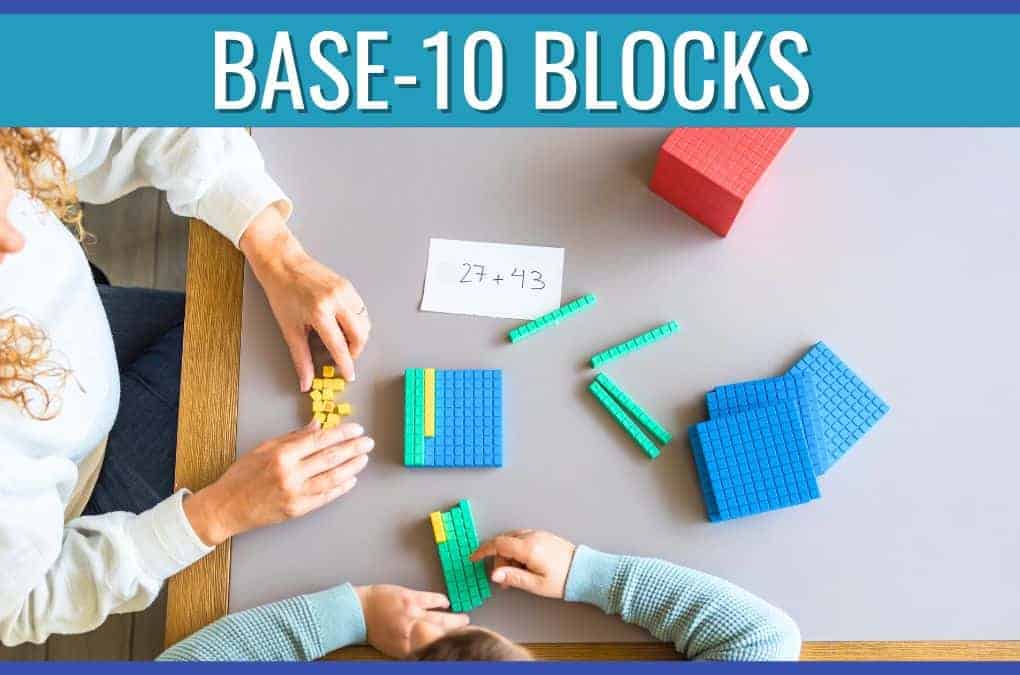
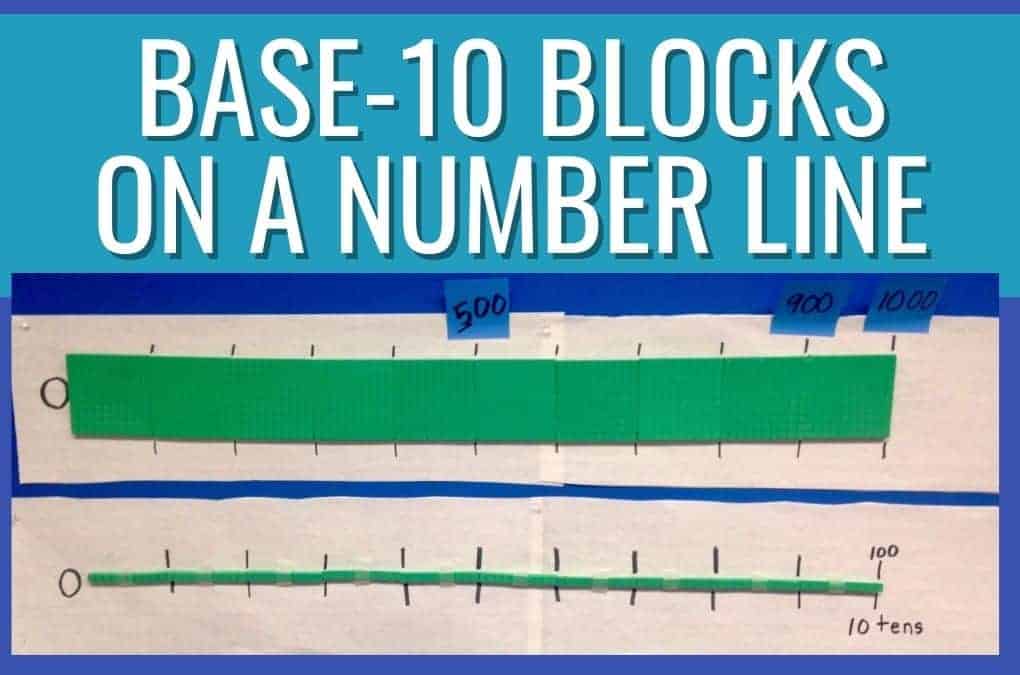
- Base 10 Blocks: These blocks are great for teaching place value, addition, subtraction, and more.
- Place Value Counters: These are grouped by place value, like base-10 blocks, but require much less pace.
- Ten Frames: These visual tools reinforce the base 10 system and help students learn to count, add, subtract, and even recognize double numbers.
- 100s Chart: A 100s chart is an essential tool for helping students recognize patterns and understand place value. Here is an example of a circular number chart.
- Linking Cubes: Linking cubes have a unique connection design that interlocks on all six sides. They can be used for counting, sorting, addition, subtraction, multiplication, and visualizing fractions.
- Unifix Cubes: Unifix cubes are plastic cubes that connect to each other on two opposing sides. They can be used individually or linked together to form stacks of ten.
- Rekenrek: A Rekenrek is a counting frame that helps students develop number sense. It is similar to an abacus, but the structure of a Rekenrek is based on fives rather than tens. They help students visualize addition and subtraction strategies.
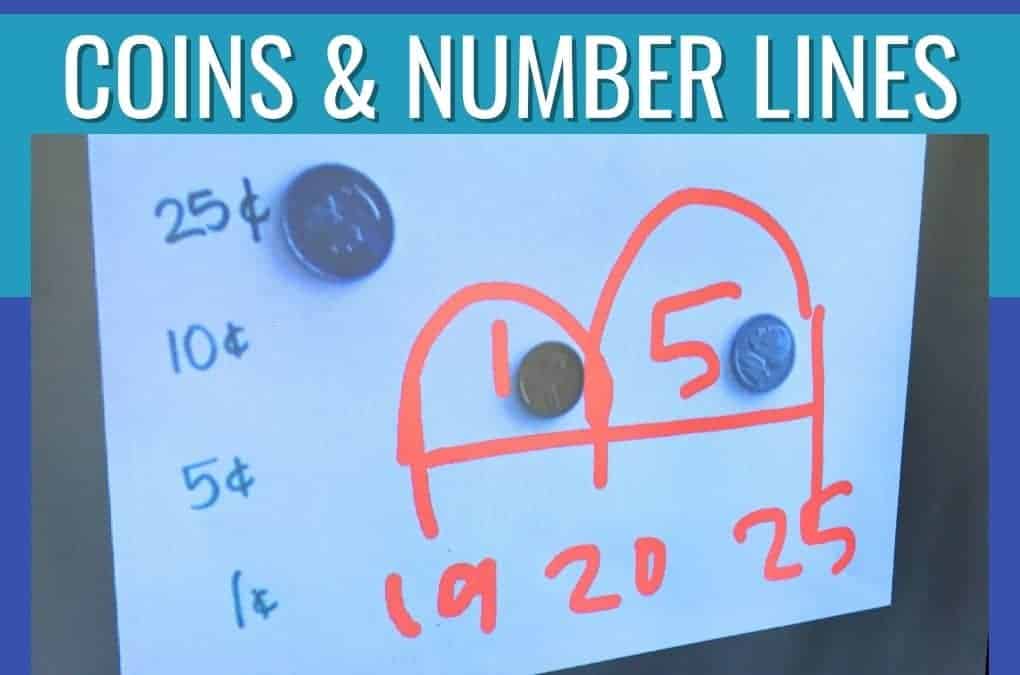
- Number Lines: Number lines are a great tool for teaching addition, subtraction, skip counting (multiples of numbers), place value, and more. A physical number line can help with understanding sequencing and addition/subtraction. Have you thought of using a vertical number line?
- Abacus: This ancient tool is still a powerful way to visualize arithmetic operations, especially addition and subtraction.
Here are some of the current most popular math manipulatives for addition and subtraction:

- MASTER ADDITION AND SUBTRACTION – Help kids ages…
- BOOST PROBLEM-SOLVING SKILLS – Includes ten-frame…


- FUN LEARNING EXPERIENCE – Turn math practice into…
- BUILDS MATH CONFIDENCE – Children practice…

- INTERACTIVE MATH LEARNING TOOL: Engage kids in…
- EDUCATIONAL FOR MULTIPLE AGE GROUPS: Suitable for…

- Value Pack: It comes with 1 reusable double-sided…
- Easy to Use: Ten colorful counting squares can be…
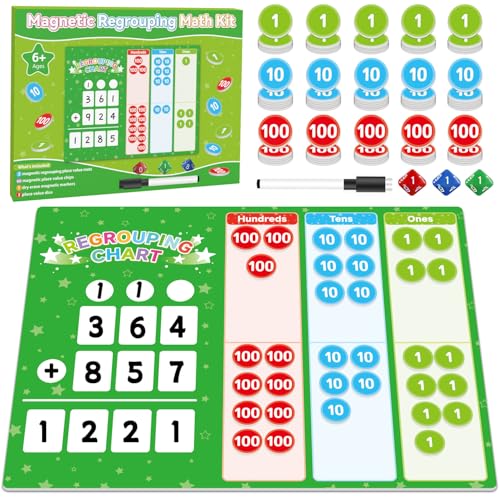
- 🟢【66PCS Upgraded 4-Digit Grids Place Value…
- 🔵【Hands-on Learning Addition…
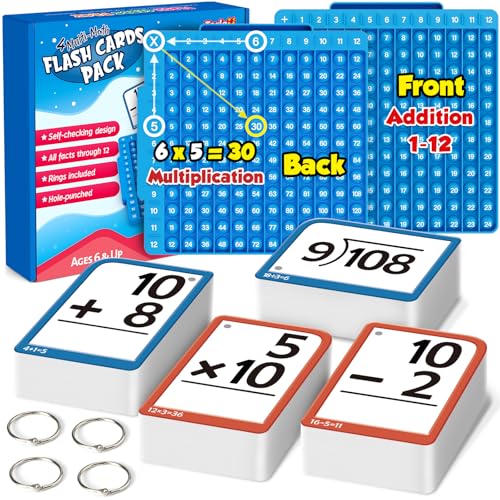
- Make Learning Math Interesting: This math flash…
- Multiplication & Division & Addition…

- EDUCATIONAL FUN – Transform basic math practice…
- MULTIPLE PLAY OPTIONS – Different ways to play…
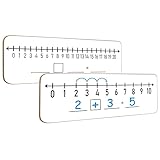
- DOUBLE SIDED DRY ERASE NUMBER LINE PRACTICE BOARD…
- STURDY MASONITE CONSTRUCTION WHITEBOARD FOR…
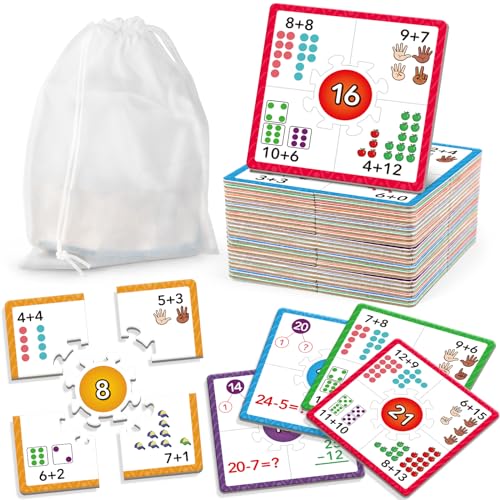
- 【What’s included】There are a total of…
- 【Learning through play】Kids just match the…
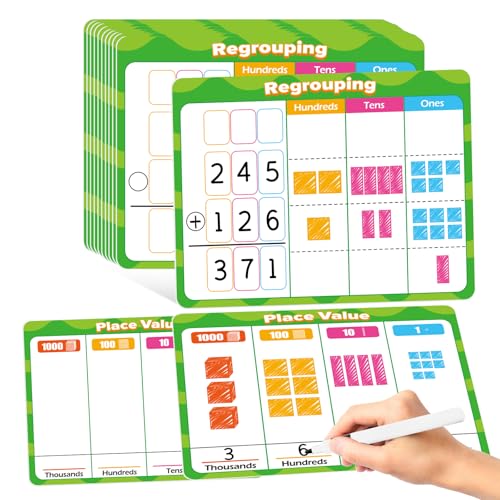
- Make Learning Fun: Includes 12 place value…
- Double-Sided Design: One side is designed for…
Algebraic Thinking
This section is a little shorter because many of the math manipulatives that are great for algebraic thinking also work for other math topics. Cuisenaire Rods, Linking Cubes, and Pattern blocks are all great tools for representing equations, the distributive property, variables, and more!
Beyond the list above, also consider:
- Algebra Tiles: Algebra tiles are square and rectangle-shaped tiles that represent numbers and variables. They’re incredibly useful for visualizing and solving equations, simplifying expressions, and understanding the concept of variables.
- Balance Scales: These provide a hands-on way to explore equations and inequalities.

Geometry
- Geometric Solids: 3D models of different shapes can assist in understanding volume and surface area.
- Tangrams: These puzzles can help students learn about area, fractions, and spatial relationships.
- Building Blocks: An excellent tool for developing spatial awareness, geometrical understanding, and creativity.
- Origami: Paper folding activities can help students understand geometric concepts and spatial relationships in a fun and creative way.
- Reflective Mirrors or Dividers: Great for teaching symmetry and reflections.
Here are some best selling math manipulatives for geometry:
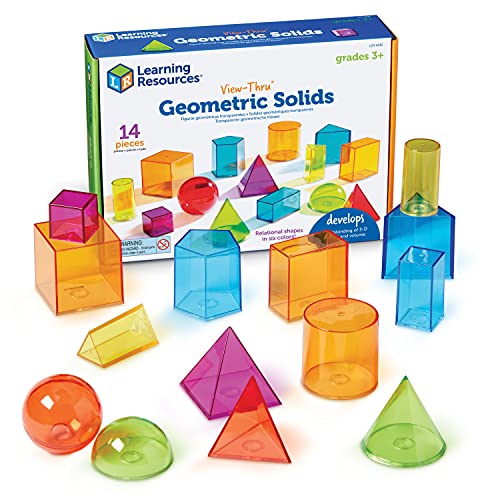
- VISUALIZE GEOMETRIC CONCEPTS – Transparent…
- EXPLORE VOLUME & MEASUREMENT – Removable bases and…
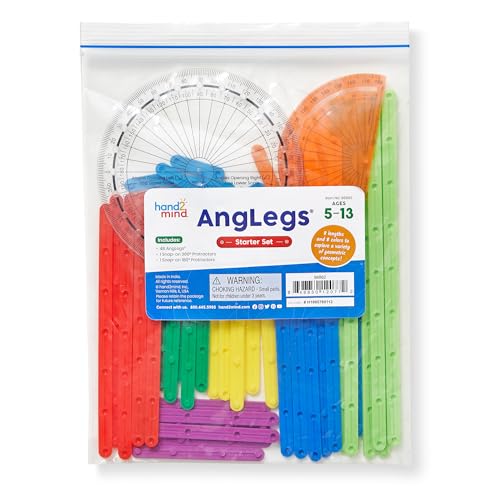
- ANGLEGS MATH MANIPULATIVES: AngLegs are…
- MATH TOOLS FOR KIDS: Simply snap the AngLegs…

- 250-PIECE GEOMETRY SET: Includes 250 colorful…
- BUILD MATH & CRITICAL THINKING SKILLS: Use pattern…

- LEARN AND CONSTRUCT SHAPES — An ideal hands-on…
- INTRODUCE ANGLE MEASUREMENT — Kids will learn how…
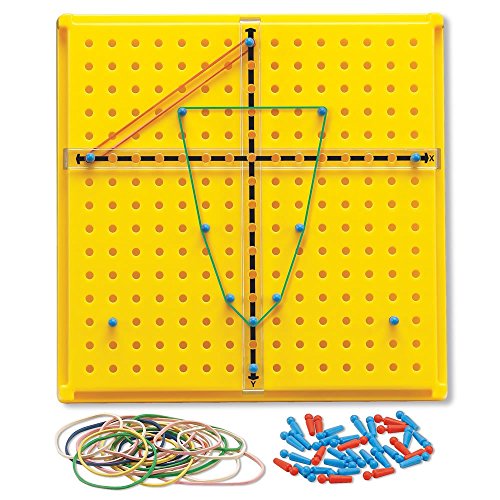
- CLASSROOM MANIPULATIVES: Students can use this…
- GEOBOARD ACTIVITIES: 15 x 15 grid and sliding axes…
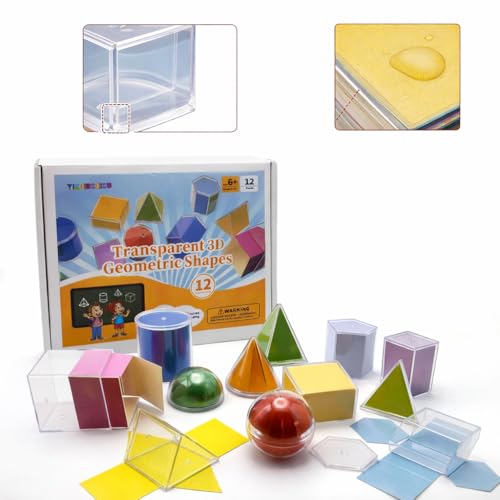
- 🎓 【TRANSFORM 2D TO 3D VISUALIZATION】 Master…
- 🏡 【THICKENED MATERIAL & STURDY STRUCTURE…
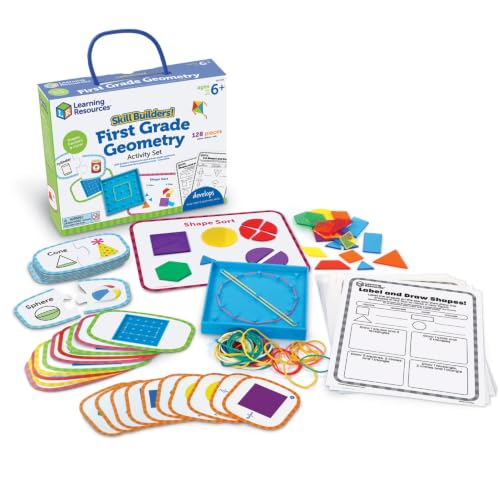
- SKILL-BUILDING MATH SET: Get your little ones…
- START LEARNING SHAPES, FRACTIONS, AND MORE: A mix…

- EDUCATIONAL PLAY: Builds essential geometric…
- CREATIVITY BOOSTER: Encourages creative thinking…
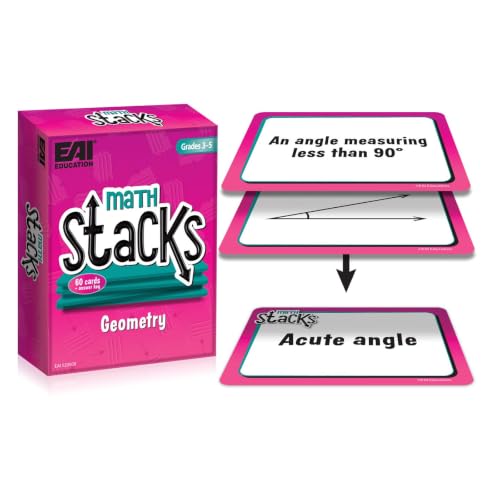
- Students take turns drawing match cards and using…
- Once a three-card stack is made, it can be…

- Including: a set of magnetic cards, featuring 3D…
- Teacher Demonstration Tool: Clear graphics and…

Measurement and Data
- Rulers and Measuring Tapes: These are essential for teaching length and distance measurements.
- Measuring Cups/Spoons: These everyday items are an easy way to introduce measurement concepts in the classroom. Students can use them to measure liquids
- Thermometers: A great tool to introduce temperature measurement concepts.
- Clocks: Hands-on clocks can help students learn to tell time.
- Yardsticks: For teaching how to measure the length of an object or can be used as number lines for addition and subtraction of length
- Compasses and Protractors: These tools help teach students about angles and circles.
- Recipe Cards: Real-world examples such as cooking recipes can help students apply fractions, measurements, and ratios.
- Calendar: Helps students understand the concept of days, weeks, months, and years.
- Sand Timers: These can be used to introduce the concept of elapsed time.
Fractions
- Fraction Bars: These are very helpful for teaching fraction concepts, from basic recognition to addition and subtraction of fractions. Here is a great game to play with homemade fraction bars.
- Pizza Fractions: These models help to visualize fractions in a fun and engaging way.
- Fraction Circles: These are perfect for teaching fractions, equivalent fractions, and operations with fractions.
Probability and Statistics
- Dice and Spinners: These can be used to teach probability concepts, allowing students to conduct experiments and gather data.
- Graphing Mats: These can help students learn data representation and interpretation in graphical forms.
Money and Financial Mathematics
- Play Money: This provides a direct, tactile way to teach students about money, value, and basic financial transactions.
- Cash Registers: A more complex tool that can be used to teach addition, subtraction, and the basics of commerce.
- Grocery Store Flyers: These can be used to teach price comparison, addition, subtraction, and basic financial literacy.
Mathematical Reasoning
- Logic Puzzles: These puzzles stimulate critical thinking and help students understand logical sequencing and problem-solving techniques.
- Sudoku: Sudoku puzzles can enhance a student’s logical reasoning skills and introduce them to the concept of variables.
Mathematics is an integral part of our daily lives, and the use of manipulatives can significantly enhance understanding and engagement. The above math tools, which range from basic objects like linking cubes and rulers to more complex items like algebra tiles and grocery store flyers, allow learners to visualize, explore, and make sense of mathematical concepts in a hands-on, tangible way.
Whether you’re an educator, a parent, or a self-guided learner, incorporating these resources into your learning environment can transform the way you approach math, turning it from an abstract, often daunting subject into a vibrant, accessible, and enjoyable field of study. Remember, the goal is not just to learn math, but to love it.
Jessica BOschen
Jessica is a teacher, homeschool parent, and entrepreneur. She shares her passion for teaching and education on What I Have Learned. Jessica has 16 years of experience teaching elementary school and currently homeschools her two middle and high school boys. She enjoys scaffolding learning for students, focusing on helping our most challenging learners achieve success in all academic areas.