
Earth and Human Activity Teaching Ideas
How does the use of natural resources affect the environment? What steps can people take to protect themselves against natural disasters?
In this post, you will find fun and engaging activities that will teach your students about the differences between renewable and non-renewable resources and how their uses can change the world around us. Students will also learn what engineers are doing all over the world to mitigate the damages and dangers natural disasters pose against humanity.

This post contains links to affiliate websites, such as Amazon, and we receive an affiliate commission for any purchases made by you using these links. We appreciate your support!
As always, we design our Science Stations and the information in our teaching-ideas blog posts to align with the Next Generation Science Standards.
This post is one stop on a bigger journey. Head to the Earth Science Guide for Elementary Students to see the full 2nd–5th grade progression.
NGSS 4th GRADE SCIENCE STANDARDS FOR EARTH’S SYSTEMS
If teaching with the NGSS is new for you, we have a couple of great blog posts to help you get started. How to Read the Next Generation Science Standards outlines where to start reading, interpreting, and teaching the NGSS. For 4th Grade Science, things can get a little more complicated, so we wrote Unpacking the 4th Grade Next Generation Science Standards. Give them both a look if you need help.
The ideas in this blog post align with the Next Generation Science Standards for Fourth Grade 4-ESS3-1, Energy and Fuels, and 4-ESS3-2, Natural Hazard Mitigation. We cover 4-ESS3.A (Natural Resources), 4-ESS3.B (Natural Hazards), and 4-ETS1.B (Designing Solutions to Engineering Problems).
Below is a description of how each individual Performance Expectation (PE) and Disciplinary Core Idea (DCI) align and relate to each other.
NGSS 4TH GRADE SCIENCE STANDARDS FOR EARTH’S SYSTEMS
If teaching with the NGSS is new for you, we have a couple of great blog posts to help you get started. How to Read the Next Generation Science Standards outlines where to start reading, interpreting, and teaching the NGSS. For 4th Grade Science, things can get a little more complicated, so we wrote Unpacking the 4th Grade Next Generation Science Standards. Give them both a look if you need help.

Below is a description of how each individual Performance Expectation (PE) and Disciplinary Core Idea (DCI) align and relate to each other.
4-ESS3 Earth and Human Activity
4-ESS3-1 Energy and Fuels: Obtain and combine information to describe that energy and fuels are derived from natural resources and their uses affect the environment.
Aligns with the first DCI:
- ESS3.A: Natural Resources
- Energy and fuels that humans use are derived from natural sources, and their use affects the environment in multiple ways. Some resources are renewable over time, and others are not.
4-ESS3-2 Natural Hazard Mitigation: Generate and compare multiple solutions to reduce the impacts of natural Earth processes on humans.
Aligns with the second and third DCIs:
- ESS3.B: Natural Hazards
- A variety of hazards result from natural processes (e.g., earthquakes, tsunamis, volcanic eruptions). Humans cannot eliminate the hazards but can take steps to reduce their impacts.
- ETS1.B: Designing Solutions to Engineering Problems
- Testing a solution involves investigating how well it performs under a range of likely conditions.
SCIENCE STATIONS ABOUT THE EARTH AND HUMAN ACTIVITY
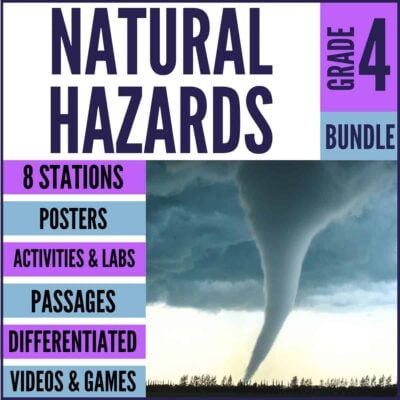
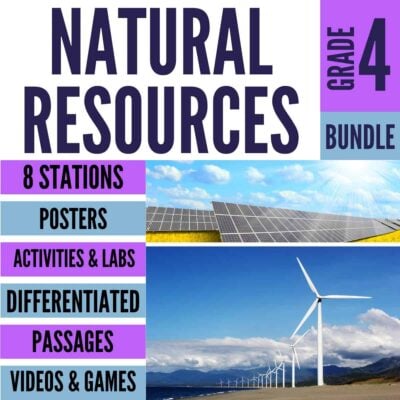
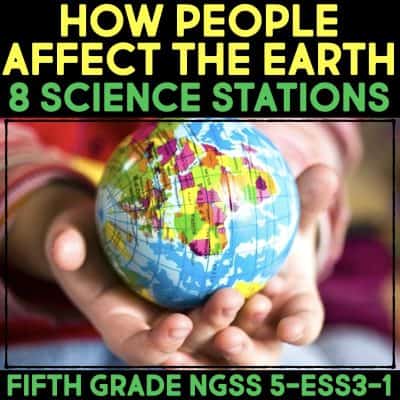
We have three bundles that cover all of the related standards and concepts for Earth and Human Activity. Each one contains eight stations with hands-on activities designed to engage students on a deeper level in understanding natural resources, natural hazards, and how people affect the environment. The bundles also include vocabulary cards and checklists to help students with core concepts.
Natural Resources – Fuel For the Future Bundle includes the following stations:
- Watch one of two videos
- Play a game about Natural Resources
- Investigate wind power
- Diagram the formation of fossil fuels
- Read about renewable and nonrenewable energy sources
- Model solar energy
- Explore the history of the water wheel and hydropower
- Sort sources of energy into different categories
The Natural Hazards – Wild Weather and Shifting Plates Bundle includes the following stations:
- Watch one of two videos
- Play a game
- Investigate earthquakes and earthquake-safe buildings
- Diagram tsunamis
- Read about winter storms
- Model convection currents
- Explore flood mitigation techniques
- Sort natural disasters and mitigation solutions
How People Affect the Earth Science Station Bundle includes the following stations:
- Watch one of two videos
- Play a game
- Investigate how people affect the ocean
- Diagram reduce, reuse, and recycle
- Read about how people affect the different spheres
- Model sustainable agriculture
- Explore water contamination
- Sort examples of problems and/or solutions on how people affect the Earth

This is an example of the Investigate Wind Power Station. In this INVESTIGATE science station, students read about wind power. They will participate in a windmill design challenge to study it further. Students then answer questions to reinforce the concepts learned.
ADDITIONAL LESSON IDEAS FOR TEACHING ABOUT THE EARTH AND HUMAN ACTIVITY
Need more great ideas to make sure your students understand all of the standards for the Earth and Human Activity? Look no further, we’ve got you covered! Below are ideas for demonstrations and experiments, books, and videos to enhance your science lessons. And the best part, they’re free!
DEMONSTRATIONS AND EXPERIMENTS FOR LEARNING ABOUT THE EARTH AND HUMAN ACTIVITY
RESEARCH A LOCAL NATURAL DISASTER
Work with your students to research a local natural disaster. Have them find out what damage was caused and how the local community was able to reduce the amount of damage. Help students discover ways the community could have reduced the damage more.

IDENTIFY A NATURAL DISASTER
Along with the research of a local natural disaster that has happened in the past, students can try and identify natural disasters that could happen locally. What would it take for the natural disaster to occur? What can they do for their family and friends to prepare for the disaster? What can the community do to make sure everyone is prepared?
NATURAL DISASTER PREVENTION
Teach Engineering provides this lesson plan to help students understand natural disaster prevention. The lesson explains the causes of many natural disasters and what engineers are doing today to mitigate the devastation.
INTERVIEW A METEOROLOGIST
Here’s a fun idea that your students might enjoy — have the class as a whole, or each student individually, interview a local meteorologist. Ask them questions about potential natural disasters and what people are doing — or can do — to reduce the impact of the disasters.
FIELD TRIP
If you live near a USGS field office, field trips are always a good idea. Students enjoy the break from the classroom, and they’ll get to learn all about natural disasters and weather from the experts.
RENEWABLE V. NONRENEWABLE RESOURCES
This fun activity is a great way to help your students grasp the differences between renewable and nonrenewable energy resources. It’s easy to set up, engages your students quickly, and will have them asking questions early in the game.
WATER POLLUTION SCIENCE
We all know pollution is a bad thing, but what can we do about it? This in-depth activity with a fun tie-in book to read will inspire your students to stop wondering and start doing.
CHOCOLATE CHIP MINING
Who knew mining could be so…delicious? Unfortunately, like any fossil fuel, chocolate chips do not last forever. This activity will have students mining coal (chocolate chips) out of the ground (cookies) to find out what happens to the surrounding environment.

WATER POWER
This full lesson plan will have students studying how dams and waterwheels generate power. They will design a waterwheel and test what they have learned.
TSUNAMI GENERATOR
With this lesson plan from Teach Engineering, students will develop their own small tsunami generator to observe the devastating effects and devise ways to help people survive.
CONVECTION CURRENTS
Convection currents are in the air and in the water. This activity will show students how these currents move. This provides a great opportunity for discussion on how human activity affects convection currents and how that can affect our weather.
BOOKS TO TEACH ABOUT THE EARTH AND HUMAN ACTIVITY
The Boy Who Harnessed the Wind
The inspiring true story of William KamKwamba and his dream of building a windmill to bring electricity and running water to his family farm is a must-read for everyone. Not only will students learn about the concepts of wind energy and electricity, but they will experience William’s dreams and hope that drove him to never give up. His determination changed his world, and it might change your students’ world, too.


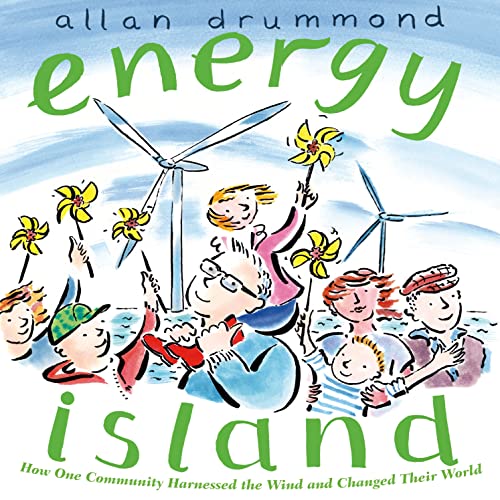
The little Danish Island of Samso has become almost entirely energy independent in only 10 years. Not only that, but they accomplished something the rest of the world hopes to achieve one day – they reduced their carbon emissions by 140%! Students will be inspired by this true story about how one windy island became known as Energy Island.
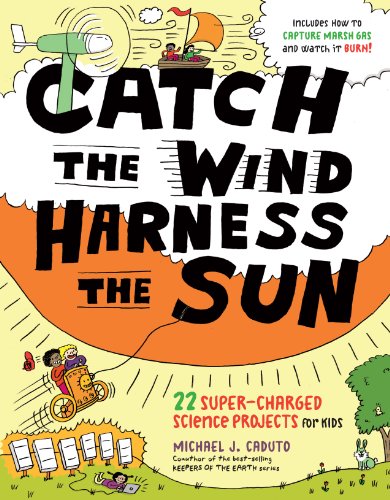
Catch the Wind Harness the Sun: 22 Super-Charged Projects for Kids
22 exciting projects to engage students in learning about and using renewable energy. The experiments will have students fighting climate change in practical, hands-on ways.
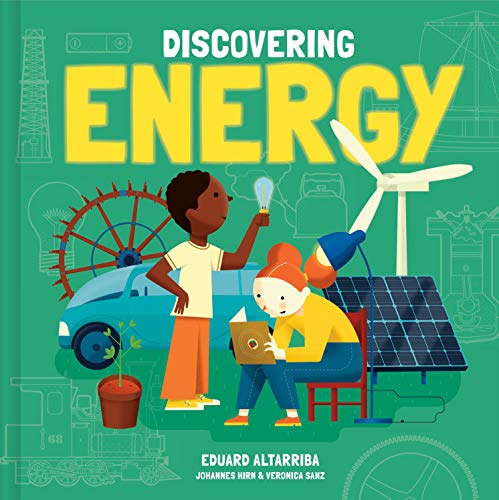
Discovering Energy (Discovering Big Ideas)
This in-depth exploration of energy is great for students ages 8-12. The wonderful illustrations and simple explanations cover a multitude of energy concepts including solar, potential and kinetic, wind, water, electricity, muscle movement, thermal, steam, fossil fuels, engines, electromagnetism, and more.
Magic School Bus Presents: Volcanoes and Earthquakes
The Magic School Bus – need I say more? Students love learning alongside Ms. Frizzle’s class. Packed with detailed photos and facts about volcanoes and earthquakes, this book is a must-have addition to any reading list for studying the Earth.

The Big Ones: How Natural Disasters Have Shaped Us (And What We Can Do About Them)
Throughout history, natural disasters have driven people to take action. Nature has shaped how we build our cities and how we live. This book is a look back at history and a look forward to how we can be prepared for the disasters that will come.
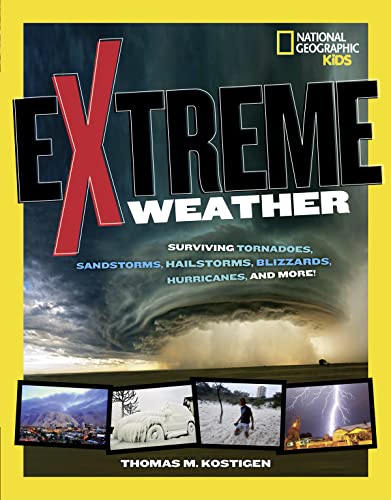
We may not like living through extreme weather, but we love to read about it – and Nat Geo Kids knows that we do. Jam-packed with true stories and the latest science, this book will not only entertain your students but prepare them in case they face natural disasters in their own lives.
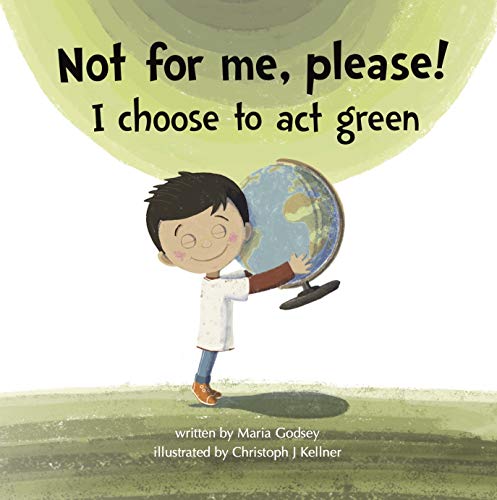
Not for Me, Please! I Choose to Act Green
This is a story that your students will enjoy as they join Luke in learning how they can protect the Earth. There are many valuable lessons on what can be done to recycle, reduce, and reuse. Together, we can make a difference.
VIDEOS ABOUT THE EARTH AND HUMAN ACTIVITY
We have included videos and activities for the Earth and Human Activity in our Science Stations. Those activities include differentiated questions and ways for students to respond to the videos.
Here are links to other great videos that your students will enjoy as they learn more about the earth and human activity.
Generation Genius
Generation Genius delivers again, offering videos to help students understand the relationship we have with this world we call home.
National Geographic
National Geographic offers several videos on individual natural disasters. If you click on this link, it’ll take you to a page where you can find videos on earthquakes, tornadoes, avalanches, floods, and more. There is no shortage of information found here.
SciShow Kids
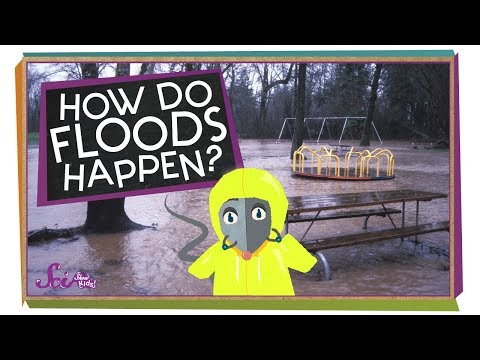
SciShow Kids offers a great compilation video called Earth Day compilation. In it, students can learn a variety of ways they can positively impact the Earth.
They also offer other videos, such as:

Crash Course Kids
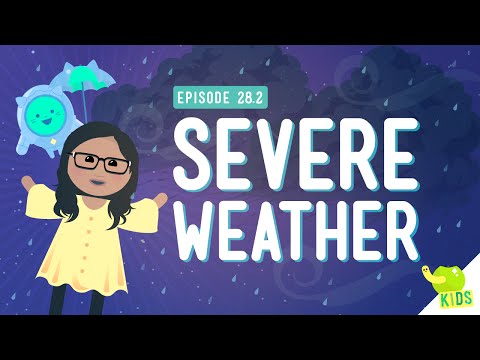
Crash Course Kids offers some great videos to help us understand how weather can become severe, how weather works in the first place, and how small changes can have big impacts on ecosystems.
QUICK LINKS for Resources Above
We hope the information presented here is helpful to you and that you feel both empowered and inspired to bring the world of the earth and human activity to life for your 4th-graders. Below is a list of quick links to the material presented, including our science stations:
How to Purchase our Science Stations
If you want some ready made teaching resources for your students to learn about these Earth Systems NGSS Standards, we have two bundles full of engaging hands-on activities. Click below to check them out!
Jessica BOschen
Jessica is a teacher, homeschool parent, and entrepreneur. She shares her passion for teaching and education on What I Have Learned. Jessica has 16 years of experience teaching elementary school and currently homeschools her two middle and high school boys. She enjoys scaffolding learning for students, focusing on helping our most challenging learners achieve success in all academic areas.