
Classroom Community Anchor Charts for the First Weeks of School
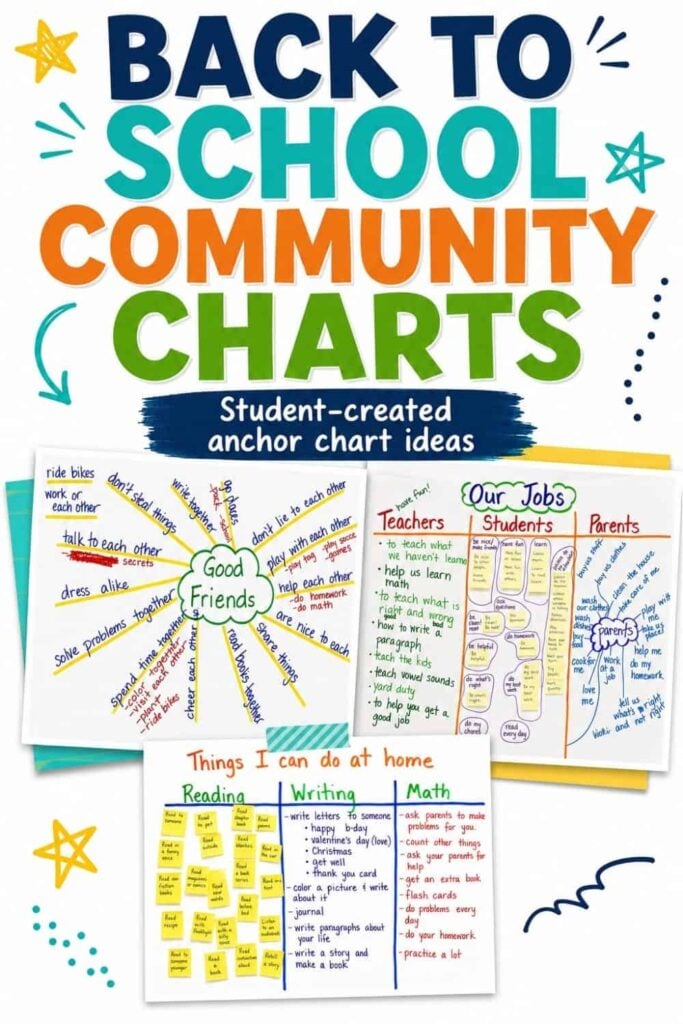
Classroom community anchor charts do something that a list of rules posted on the wall cannot: they capture what students actually said, in their own words, about what it means to be a good classmate, a responsible student, and a member of a class that works together. These anchor charts come from my first several years in the classroom, and I still come back to the same basic activities year after year because they work. Students take ownership of what they helped create, and the charts become reference points that mean something because everyone contributed to them.
Why Anchor Charts Work for Building Classroom Community
The value of classroom community anchor charts isn’t the chart itself — it’s the conversation that creates it. When students brainstorm what a good friend looks like, or what their job as a student actually is, they’re thinking critically about expectations rather than just receiving them. That shift from “the teacher told us” to “we decided together” matters for how students internalize and follow through.
These anchor charts are also useful beyond the first week. Returning to them after a holiday break, during a rough patch in the classroom dynamic, or at the start of a new semester gives students a chance to reconnect with expectations they helped create rather than feeling like they’re being lectured.
What Makes a Good Friend Anchor Chart
This is usually the first community anchor chart I create with a new class. Students brainstorm what it means to be a good friend, and I record their answers in a web format with “Good Friends” in the center. The answers are almost always thoughtful: share things, listen to each other, include people who are left out, say nice things, and don’t make fun of people.
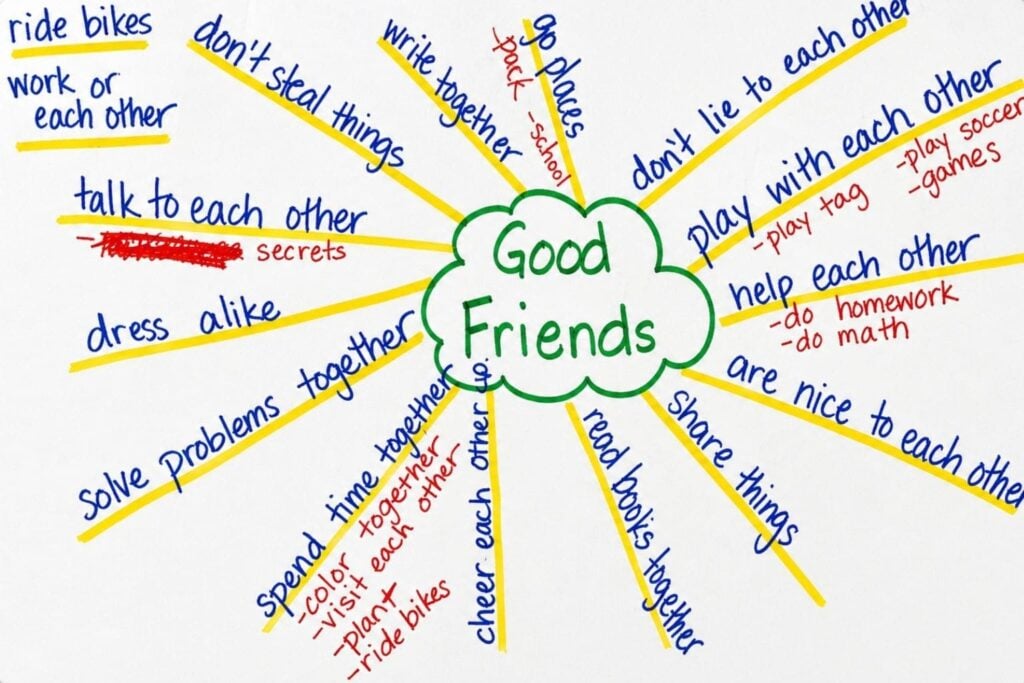
What I love about this activity is that students already know the answers. They know what makes a good friend because they’ve experienced good friendship and its absence. The anchor chart just makes it visible and shared.
This chart connects easily to writing. Use it as the brainstorm for an opinion paragraph on the best qualities of a good friend — each branch of the web becomes a reason, and students can generate examples from their own experience. For upper elementary students, have each student create their own web independently first, then compare with a partner before contributing to the class chart. You’ll get a richer vocabulary and more diverse ideas.
Roles and Responsibilities Anchor Charts
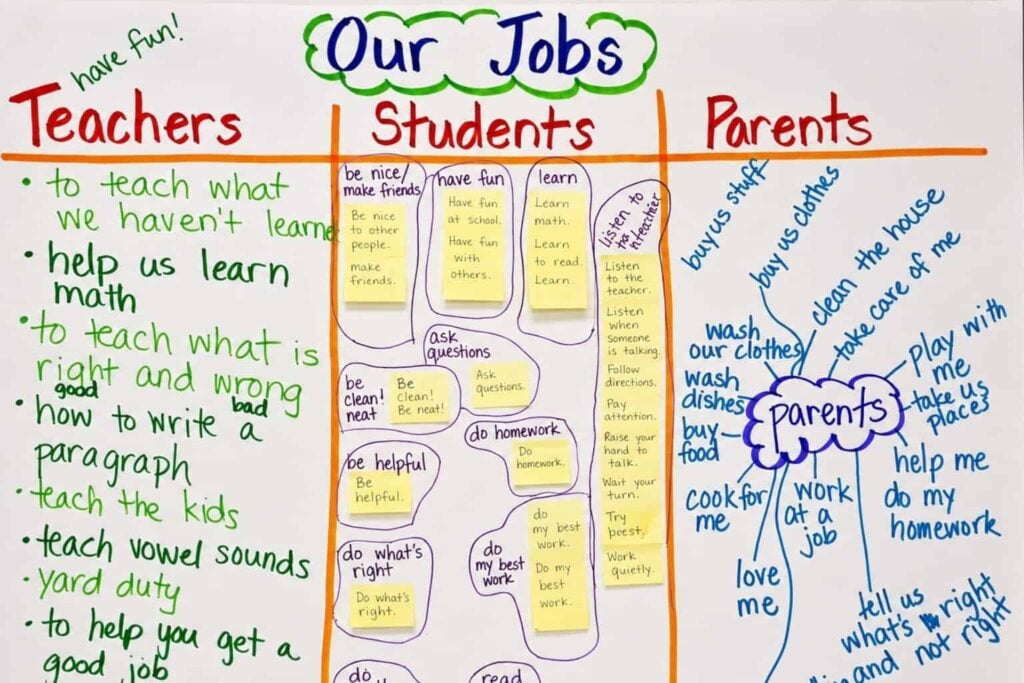
This is a three-day series that explicitly defines what each person in the school community is responsible for. It takes longer than a single anchor chart activity, but the payoff is significant — students come away understanding that learning is a shared responsibility, not something that happens to them.
Day One: The Teacher’s Job
On day one, students brainstorm the teacher’s job. This one is easy to launch — students have opinions — and it tells you something useful right away. What do students expect from a teacher? What do they most want you to do? Each class will emphasize different things, and the answers give you a window into their prior school experiences. Some classes focus on teaching and explaining; others prioritize a teacher who is kind, patient, or fair. Both are worth knowing.
Day Two: The Student’s Job
Day two is the most powerful of the three charts. Give each student a sticky note and ask them to write one idea about their job as a student. One idea per note. Then have students share with their table group, and each group selects a few notes to share with the class. As ideas are shared, organize the notes by theme on the anchor chart — even if the wording is slightly different, the underlying idea may be the same.
Year after year, the same things rise to the top: listen and pay attention, do my best work, be kind, make friends, and try even when it’s hard. Students know what the job is. They just haven’t always been asked to articulate it. This process gives them authorship over the expectation.
The sticky note format matters here. It ensures every student contributes an idea rather than a few vocal students driving the conversation. It also allows you to group and sort ideas physically, which is a concrete, visual way to show students how their individual thinking connects to the class as a whole.
Day Three: The Parents’ Job
On day three, students brainstorm what parents and families do to support their learning at home. This chart acknowledges that education isn’t just what happens in the classroom. Common answers include: help with homework, read together, make sure I get enough sleep, ask about my day, and come to conferences.
Not all students have parents who can do all of these things, and that’s worth acknowledging gently. The value of this chart for those students is that it gives them language to recognize what support might look like and to ask for it from whoever is in their corner — a grandparent, an older sibling, a neighbor. It also surfaces gaps that a teacher might be able to partially fill. After a conference season, this chart can be photographed and shared with families as a starting point for conversation.
Additional Classroom Community Anchor Chart Ideas
Beyond the core three-day series, these anchor charts are worth building into the first few weeks of school. Each one addresses a specific aspect of classroom community that students benefit from thinking through explicitly rather than just being told about.
What Makes a Good Partner Anchor Chart
Before you launch partner work or cooperative learning activities, create this chart together. Ask students: What does a good partner do? Listen to your partner’s ideas. Take turns talking. Stay on topic. Help without doing everything yourself. Ask questions when you don’t understand. This chart serves as a reference point every time you ask students to work together—”Let’s take a look at our good partner anchor chart before we start” is a simple reminder that frames collaborative work positively. For more cooperative learning activities to use alongside this chart, see Five Cooperative Learning Activities for the First Day of School.
What Makes a Good Listener Anchor Chart
Being a good listener is a skill students need to be taught, not a character trait they either have or don’t. A good listener anchor chart created with students — eyes on the speaker, body still, waiting for your turn, thinking about what’s being said — makes the expectation concrete and shared. Refer to it during read-alouds, class discussions, and any time you’re asking students to listen to each other rather than just to you.
How We Solve Problems Anchor Chart
Conflict happens in every classroom. A problem-solving anchor chart created before any conflict occurs gives students a framework for handling it when it does. Walk through the steps: identify the problem, listen to both sides, think of possible solutions, choose one and try it. Students can contribute ideas for each step. Having the process visible on the wall means you can refer to it calmly in the moment rather than trying to mediate from scratch every time two students disagree.
Our Class Promise or Mission Statement Anchor Chart
After completing the roles and responsibilities series and the good friend chart, students have enough language to help draft a class promise or mission statement. This is a short, shared statement that summarizes who the class wants to be as a group — something students can recite at the start of each day or return to when the community needs a reset. The process of writing it together is as valuable as the statement itself. Students who helped write it feel a sense of ownership over it in a way that a teacher-created poster simply can’t. This activity connects naturally to student goal setting — once students define who they are as a class, they can set goals that align with it.
Things I Can Do at Home Anchor Chart
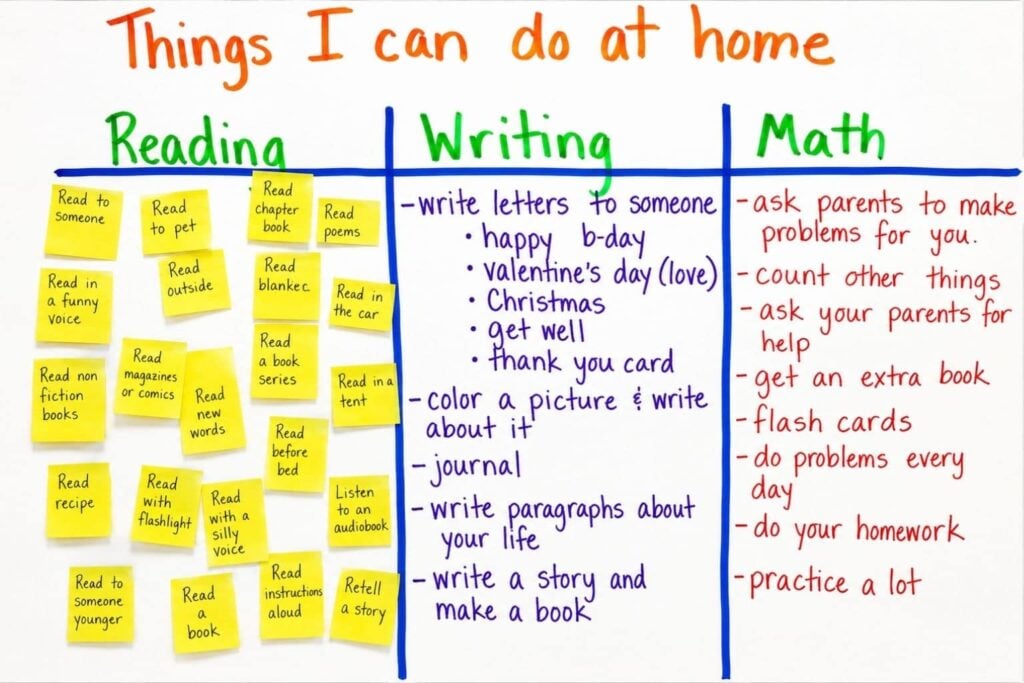
A little further into the school year, this chart asks students to brainstorm ways they can support their own learning at home—in reading, writing, and math. Using sticky notes for the reading section and open brainstorming for the others gives students multiple ways to contribute. The result is a chart generated by students, not handed down by a teacher, which makes it more credible to them and more useful to share with families at conference time.
Using Community Anchor Charts Beyond the First Week
The biggest mistake with anchor charts is treating them as first-week decorations that become invisible by October. Return to your classroom community anchor charts intentionally throughout the year.
After a holiday break, pull out the Roles and Responsibilities chart and spend five minutes reviewing it together. After a conflict or a rough stretch, revisit the problem-solving chart or the good partner chart rather than lecturing. In the spring, have students revisit the good friend web they created in September and add to it: what did they learn about friendship over the year that they didn’t know in August?
The charts that stay useful are the ones that get used. Laminate them, hang them at the student’s eye level, and point to them specifically. “Let’s look at our class promise” is more powerful than “remember what we talked about at the beginning of the year.”
Final Thoughts on Classroom Community Anchor Charts
The anchor charts in this post are not decorations. They’re records of what students said, evidence of conversations that happened, and agreements the class made together. That’s what gives them staying power. Students who contributed to these charts are more likely to hold themselves and each other to the expectations on them — because they’re not someone else’s rules. They’re theirs.
For more activities to build community in the first weeks of school, see 10 Interactive Icebreaker Games for Elementary Classrooms, Find Someone Who Activities, and the Community Building Puzzle.

I love what i read. Very interesting stuff. I am planning the questionnaire with my grade 5.Hopefully it will be a success. Thank you