
10 Icebreaker Games for Elementary Students
Icebreaker games for elementary students are one of the best tools you have during the first week of school. A quick game paired with kid-friendly questions breaks the silence and sparks real conversation. The ten games below need minimal supplies, run in just a few minutes, and work well during Morning Meeting, brain breaks, or transition times throughout the year.
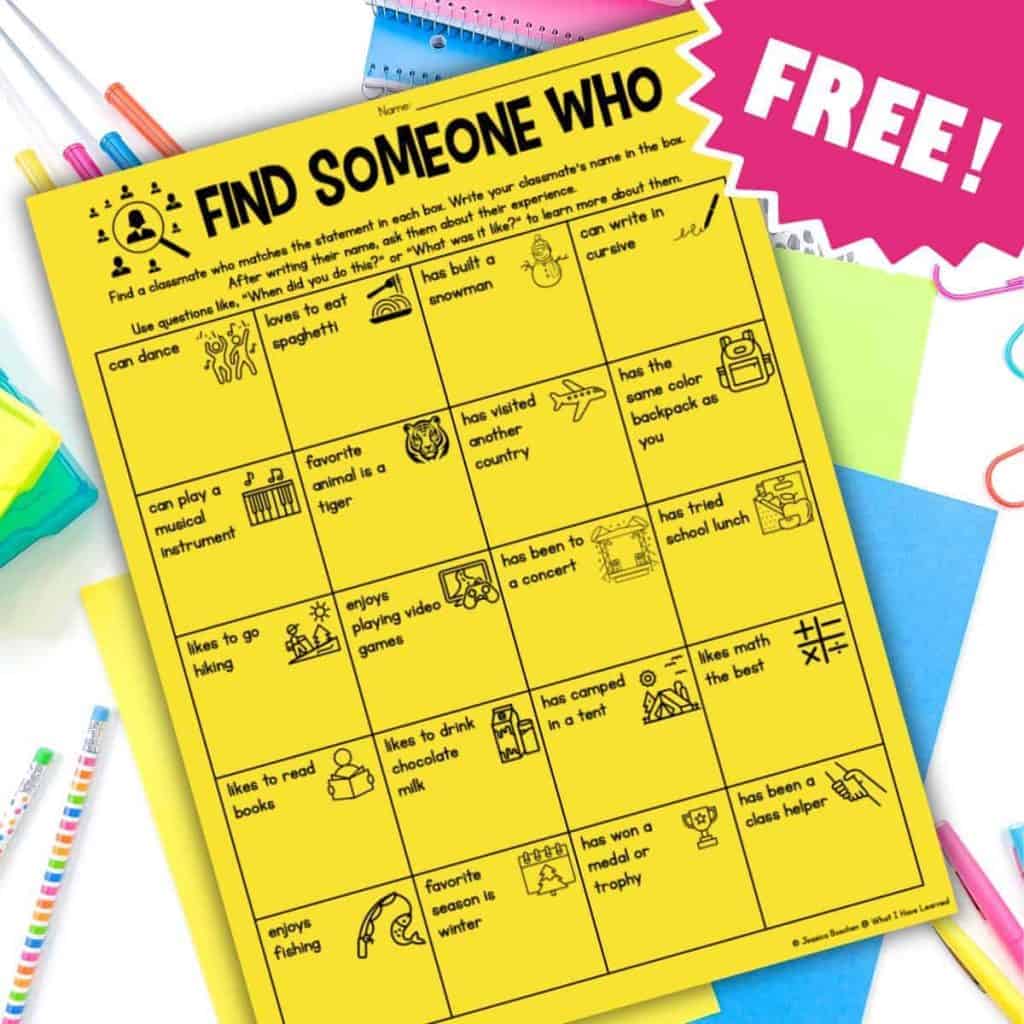
Before we get into the icebreaker games, you might need some questions to go with them. I have a list of 100 icebreaker questions that can be used for any of these games.
But it doesn’t end there.
I also have 80+ Community Building Questions and a set of Would You Rather Questions that can be used for many of these games, too!
10 Icebreaker Games for Elementary Classrooms
I’ve included 10 of these games below. I suggest you choose a couple to use during the first week of school. Schedule some into your school day, but have a few in reserve in case you need to fill an extra 5-15 minutes. Kids often finish activities faster than you planned. These make great quick activities to fill those little bits of time.
1. Question Toss Ball
A soft ball covered in numbers turns every catch into a chance to share.
Materials
- Soft foam or beach ball
- Permanent marker
- Printed question list
Steps
- Write question numbers all over the ball.
- Students stand in a circle and toss the ball.
- The catcher answers the number nearest their right thumb, then throws to someone new.
Class tip: Let students decorate the ball before the first round.
2. Stand Up–Sit Down
A lively way to learn quick facts about one another.
Materials
- Chairs or floor spots
Steps
- Read a statement based on a question (e.g., “Stand up if you have a pet”).
- Students who agree stand; the rest stay seated.
- Invite two volunteers to share extra details, then move to the next statement.
3. Four Corners
Movement plus choice equals instant engagement.
Materials
- Labels for the four corners (A, B, C, D or pictures)
Steps
- Turn a question into four options (favorite snack, animal, color, etc.).
- Students move to the corner that matches their answer.
- Ask a few in each group to explain why they picked it.

4. Snowball Scoop
Perfect for mixing the class and reading names.
Materials
- Scrap paper cut into slips
- Basket or bin
Steps
- Each student writes their name and a question number on a slip, then crumples it.
- Toss the “snowballs” into a basket and mix.
- Students draw one, find the person named, and ask the matching question.
- Repeat with fresh slips if time allows.
5. Question Jenga
A quiet game turns into a chatter session.
Materials
- Jenga blocks
- Adhesive dots and marker
Steps
- Number the dots and stick one to each block.
- Build the tower.
- On a turn, a student pulls a block, reads the number, and answers that question before stacking the block on top.
6. Speed Chat Circle
Fast-paced sharing that keeps everyone moving.
Materials
- Timer or bell
Steps
- Form two concentric circles, students facing a partner.
- Read a question. Partners talk for 30 seconds, then the bell rings.
- Inside circle shifts one spot right, and a new question is read.
7. Roll & Respond
Simple dice add a dash of suspense.
Materials
- One die per small group
- Chart showing six question numbers
Steps
- A student rolls, checks the chart, and answers the matching question.
- Pass the die clockwise.
- Continue until each student has spoken several times.
8. Musical Questions
Music creates a game-show vibe.
Materials
- Device to play music
- Stack of cards with questions
Steps
- Students pass the stack while music plays.
- When the music stops, the holder reads and answers the top card.
- Start the music again and repeat.
9. Question Bingo
Listening, speaking, and the thrill of calling “Bingo!”
Materials
- Custom Bingo boards with short question stems
- Markers or chips
Steps
- Hand out boards.
- Read full questions; if a stem appears on a board, the student answers aloud and covers that square.
- Five in a row wins. Change callers to keep things fresh.
10. Hot Seat
Rapid-fire Q&A that builds confidence.
Materials
- One chair at the front
- Jar of question cards
Steps
- A student sits in the “hot seat.”
- Classmates draw cards and fire off questions for one minute.
- Switch seats and repeat with a new volunteer.
- End each round with the class sharing one kind comment about the student in the seat.
Whether you pick one game for the first week or rotate several throughout the year, each activity turns icebreaker questions into genuine connections. A few minutes of structured fun sets a welcoming tone, helps shy voices grow stronger, and lays the groundwork for a supportive classroom community.
Jessica BOschen
Jessica is a teacher, homeschool parent, and entrepreneur. She shares her passion for teaching and education on What I Have Learned. Jessica has 16 years of experience teaching elementary school and currently homeschools her two middle and high school boys. She enjoys scaffolding learning for students, focusing on helping our most challenging learners achieve success in all academic areas.