
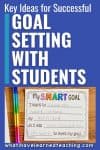
Are you considering the implementation of goal setting with students in your classroom? Do you want to know how to set goals for your students effectively? Incorporating goal setting in children’s lives can yield significant rewards. This blog post will explore the importance of student goal setting and how it can positively impact their academic journey and future adulthood.

The start of a new school year (or calendar year) presents a fresh opportunity to ignite a passion for learning, encourages students to give their best, and instills a strong work ethic. As educators, we have our own set of goals to achieve throughout the year, week, day, and even within each class period.
But how do you teach something as complex as goal setting when working with younger students? Just as much as we want to work hard to achieve our own individual goals, it is important to encourage our students, no matter what age, to create their own, too!
When students have a clear sense of purpose and can establish achievable goals, it not only boosts their self-esteem but also paves the way for greater academic achievements. While goal setting with elementary students can take many different forms and varying degrees of depth, a few things need to be in place to help students successfully set goals.
Creating goals can seem like a daunting task for elementary-aged students. They might think, “Where do I start?” or “What can I do better this year?”
Taking time for goal-setting with students is a great way to have them think about what they would like to achieve throughout the school year, month, or week.
Here are some important aspects to keep in mind when implementing student goal-setting in the classroom:
Figure out what is important for students
Each student should think about what is important to them. This is their goal, something they want to be able to achieve. As teachers, we need to help students realize that our goals can be their goals. These can be a classroom behavior goal, reading or studying goal, and so on.
The ideas are endless as to what a student would like to achieve. To help kick-start ideas for students, provide examples, models, and stories of students who have achieved multiple goals. This can help inspire your students to write their own.
Over the years, you will be able to gather a collection of examples of goals students have set and accomplished. Taking photos of goals, progress, and accomplishments gives future students examples as well.
Videos about Goal Setting for Students
Videos often provide a great visual for students. Here are some engaging videos that can motivate students to set goals they can accomplish this school year.

Students Need to Know Where They Are Right Now
Most teachers collect a ton of data. Some of that data is school-level assessment data. Other data is antidotal and observation-based. Figure out what skills you want your students to develop and where they are at right now with that skill, and communicate that with students.
Create a Classroom Data Wall
One idea is to create a classroom data wall. You can do this anonymously, which I highly suggest. Here is a great post filled with ideas for data walls. This post focuses on setting whole-class goals and ways to work together to accomplish those goals.
Brainstorm Goals & Action Steps
In my classroom, we often had impromptu brainstorming sessions when we would list all the skills and strategies we were working on in class, as well as behavior goals and other life goals. These brainstorming sessions helped students discover new goals and skills they wanted to work toward.
I wrote about this process in a Mapping Goals to Actions blog post. It gives you an idea of how to take what students are doing right now and write some goals and action steps around it.

One thing to keep in mind when goal setting with students is to help them think about and create realistic action steps. This is something many students miss.
Students Need to Know Where They Need to Go
When you drive to a destination, you generally know where you’re going, either because you’ve driven the route before or you’re following a map. As the teacher, you communicate the route your students can take to meet your high expectations.
Communicate Clear Expectations
When I taught kindergarten, I sat students on the carpet and talked about how we needed to learn all our letters. We talked about how many students knew all their letters, how many were almost there, and how many needed to work really hard. We talked about the letters that everyone knew and those I would teach over the next few weeks during whole-group instruction.
This is and example of clearly communicating my expectation that students know all their letters. That was a classroom goal.
I did the same thing in second grade when students were memorizing their math facts. My expectation was clear. Students knew where they were and where they needed to go.
Examples like this occur at every grade level in all different content areas. Students need to know what is expected of them in order to set goals.
Whether it’s a whole class goal, individual goal, or grade-level expectation, clearly communicate your expectations to students. Students need to have the end goal in mind.
Write Down Students’ Goals and Track Them
Writing down goals makes them more real for everyone, even for young students. Getting students’ goals onto paper can serve as a reminder each time they look back in their notebook or even on the classroom wall.
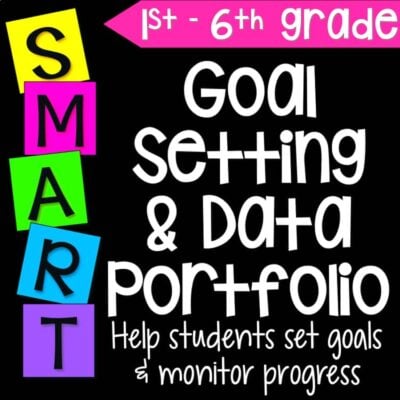
You can use a simple goal-setting form or a more comprehensive Goal Setting and Data Portfolio. It doesn’t need to be complex, but it does need to be written down so students can keep track of the goal and be reminded of it.
Writing down goals using the S.M.A.R.T. goal format is a great way to get students to think about their specific goals and how they will achieve them. Tracking goals can also help students see their growth while working toward their goals. This can help them maintain their enthusiasm.

For example, if a student is trying to memorize their math facts, each time they memorize a set of numbers or become fluent with a strategy, they can keep track of this in a log or a chart.
This can show the student how they have grown over time and help them see how much more they need to grow to reach their goal.
Data Tracking Sheets are a part of my Goal Setting & Data Portfolio Sets.
Students Need to KNow a Variety of Ways to Get There
Not all students will have the same pathway. That is actually very good for our students but challenging for us teachers.
We must help students determine the best pathway for them by giving them many options and seeing what resonates with them.
Here is a post where I explain how to set individual learning goals with a classroom of students.

Students Need to Win At Goal-Setting
Set students up for success and celebrate that success often. Make sure students are winning more in the goal-setting process than they are losing. How can you help students be successful with goal setting?
Encourage Short-Term Goals vs. Long-Term Goals
Setting both short-term and long-term goals is important for elementary students. If students only think about their long-term goals for the whole school year, they are more likely to get discouraged.
While my end of the year expectation is that students know all their letters and math facts, that isn’t their goal. Their goal was an individual bite-sized chunk of my whole expectation, a few letters or one set of math facts.
Setting short-term goals can help motivate students along the way. Short-term goals help students achieve their long-term goals. Help them think about what they can accomplish this week. And don’t forget to check back in with them in a week!
We use some of the goal-setting forms for our short-term goals. They are the perfect size to zero in on specific goals and actions to accomplish the goals.

Create Goals that You Know Students Will Accomplish
I had an email from a teacher who practiced goal setting with elementary students. It was about a goal one of her students had set. The goal was 0 late assignments in one month. The student wasn’t meeting the goal, and the teacher asked how to encourage the student.
There are two SMART things about this goal that could possibly be revised.
- Is the goal realistic?
- Is the goal time-bound enough?
Is a goal of 0 late assignments too hard? Maybe allow for one or two late assignments.
Is a month too long? Try a week, then two weeks. Move up to one month after the student has had success with shorter time periods.
Completing homework is also a goal in which you can involve parents or perhaps discover barriers at home that prevent the goal completion. If a barrier exists outside of your sphere of influence, consider choosing a different goal.
The goal – ha – is for students to be successful with their goal setting. Students need to win at goal setting. Set goals that you know they can easily accomplish.
Remember the ZPD that you learned in your teacher ed programs? The same thing applies to goal setting with elementary students. Find out where students are right now and move one step forward.
Create a System to Celebrate Achievements – Reward Students for Their Hard Work
CELEBRATE the accomplishments. Set goals you know your students will accomplish and then celebrate those wins! Develop a culture in your classroom where you praise students for the good work that they do.
You can put of of many different reward systems in place, such as monthly parties, weekly prizes, notes home, and more. The idea is that you are consistently celebrating with students. Students will want to create more goals and start the process all over again!
Any and every goal achieved should be acknowledged and rewarded in some way. The longer the goal takes to achieve, such as over the course of the year, the larger the reward might be. Smaller goals can be rewarded and acknowledged frequently!
Consider sending home a letter to parents and letting them know about the goal students achieved today. Another great resource is a laminated badge that says: “Ask me about the goal I met today.”
Through rewards like this, student can celebrate their success in a positive way with their families and students and teachers from around the school.
Overall, keeping in mind the different aspects of goal setting can help goal setting be a great experience for the class and each individual student. No goal is too small or too big for students to start dreaming about. Goal setting is a really great way to encourage and motivate students throughout the school year!
More Goal Setting with Students in Your Classroom
Here are some additional student Goal Setting Ideas that will take you further on this journey with your students:
- Goal Setting Arrows to Establish Classroom Routines
- Student Goal Setting in Elementary School
- How to Set Learning Goals with Students
- Mapping Goals to Actions
- 6 Ways to Use Data Walls Effectively
Student Goal Setting Resources for Your Classroom
The following are students goal-setting resources you can purchase and use in your classroom with your students. Check out the blog posts with the links below or go straight to the product page. Resources are also available on TpT.
- SMART Goal Setting Lessons
- Goal Setting Data Portfolio
- Goal Setting Arrow Craft
- New Year Goal Setting Flap Book


Would you like some FREE SMART Goal Setting Forms for your classroom?

Excellent resource. Thank you for sharing.