
Life Cycles & Metamorphosis: Articles & Graphic Organizers
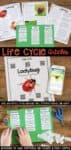
How do you teach students about life cycles? Below are some ideas and resources on how we build background knowledge and work with information about life cycles and animals that go through a metamorphosis. Metamorphosis is one of the most fascinating topics in elementary life science, and it’s a natural place to weave in reading, writing, and close observation.

This post contains links to affiliate websites, such as Amazon, and we receive an affiliate commission for any purchases made by you using these links. We appreciate your support!
We’ve had so much fun studying about Life Cycles, specifically about those animals that go through a metamorphosis. Students have studied about some of these animals in previous grades, but we take it to another level in second grade. The best way that I have found to teach life cycle has been through Science Stations and writing. Here is how we do it:
Build Background Knowledge about Life Cycles
Last week, the students and I created an anchor chart detailing the vocabulary and concept of a life cycle and metamorphosis.

I love using the Frayer Model to help students understand larger concepts. Thank you to my friends on Instagram and Facebook who helped me come up with some good non-examples! I was struggling to come up with good non-examples that were close to a life cycle and metamorphosis.
My big goal with this anchor chart was for students to understand that everything goes through a life cycle and that some animals undergo a metamorphosis during their life cycle. We discussed how metamorphosis is a big change and that there are stages in a life cycle that repeat. We came up with some examples and non-examples. The seed – seedling – the plant is totally in the wrong place, but that’s what happens sometimes!

Life Cycle Informational Articles and Comprehension Activities – BUNDLE
Life Cycle: Informational Article, QR Code Research Page & Fact Sort is a set of 7 informational articles all about animals that undergo a metamorphosis. These articles are full of interesting facts and details that students can use during reading and writing activities.
Life Cycles Stations
I’ve set my students up with eight different stations that they rotate through, one per day. Each station is set up similarly to this frog one, but some may have slightly different components.

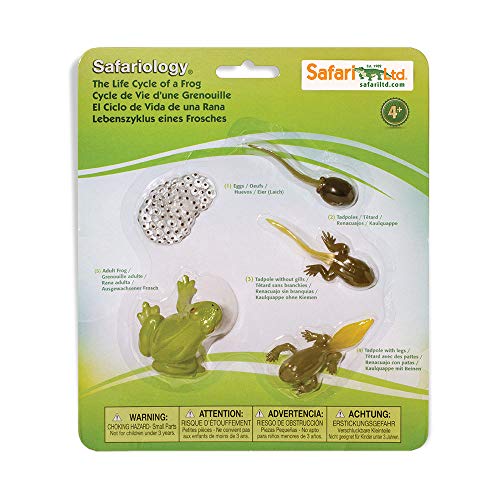
Each station generally has some books, two copies of an article about the animal, a page of QR codes for additional websites and videos, and these awesome models.
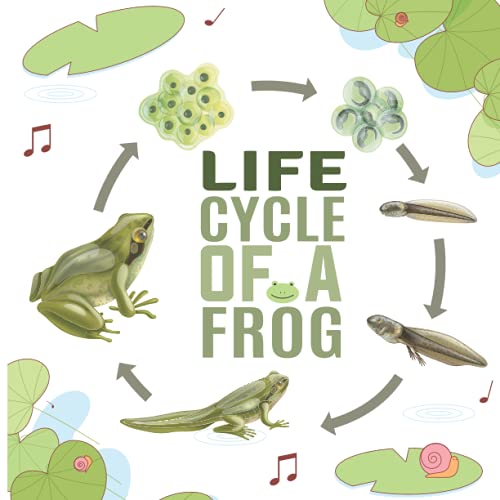



It is so fun to gross my girls out with butterflies that create a chrysalis and silk worms that spin a cocoon!
The articles and QR codes are from one of my newest products, Life Cycle Articles (also available on TpT). Included are articles for seven animals that go through a metamorphosis. Each animal has a two-page article with engaging photos, a one-page article with no photos, a page of QR codes, and a fact sheet that students can use for sorting and writing.
Looking for digital options? These animal life-cycle video games are a great addition to your life-cycle unit.
Student Accountability with Life Cycles Stations
To ensure that students are held somewhat accountable for the work they do at each station, I’ve created a set of Life Cycle Graphic Organizers where students draw a model of each animal’s stage and write a description about it.
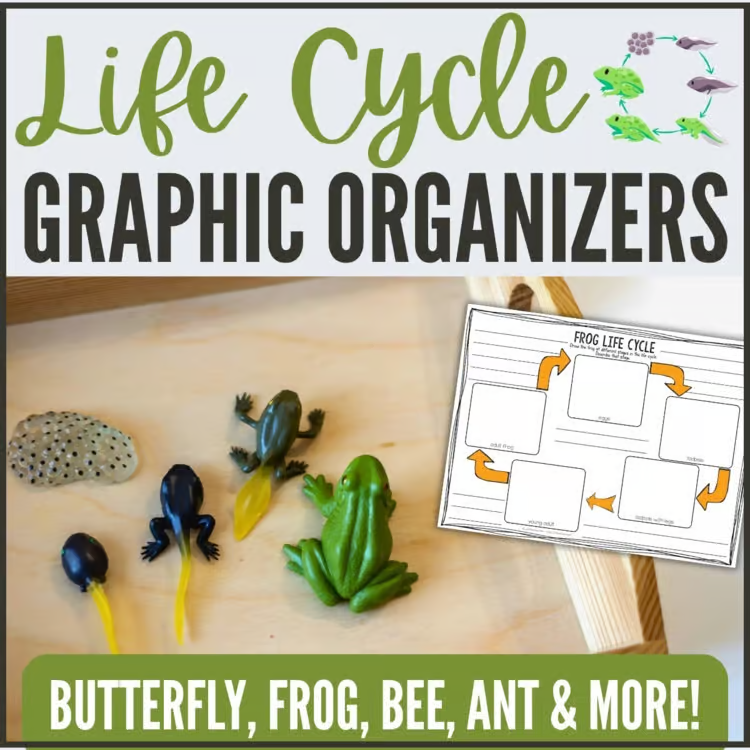
These graphic organizers help students visualize and describe the life cycles of eight different animals and insects through simple, hands-on drawing and writing activities.
There are eight graphic organizers for each of the listed animals. The graphic organizers all have a similar format with a space for a drawing and lines for a description. These are very simple. Once students do one, they’ll know how to do the rest. Perfect for an independent science station. For my students, I printed these two to a page, cut them in half, and stapled them together to make a booklet that students take to each station.
So far, we have done four days of Life Cycle Station rotations. I’m starting to hear my students tell one another, “I can’t wait until I get to ___ station!”. I love awakening their desire to learn and explore the world around them!
Related: Elementary Life Science Activities and Resources — your hub of K–5 life science teaching ideas.
How do you teach life cycles in your classroom? Do you have other great resources I can check out?
Do you need engaging informational texts that your elementary students will actually want to read?
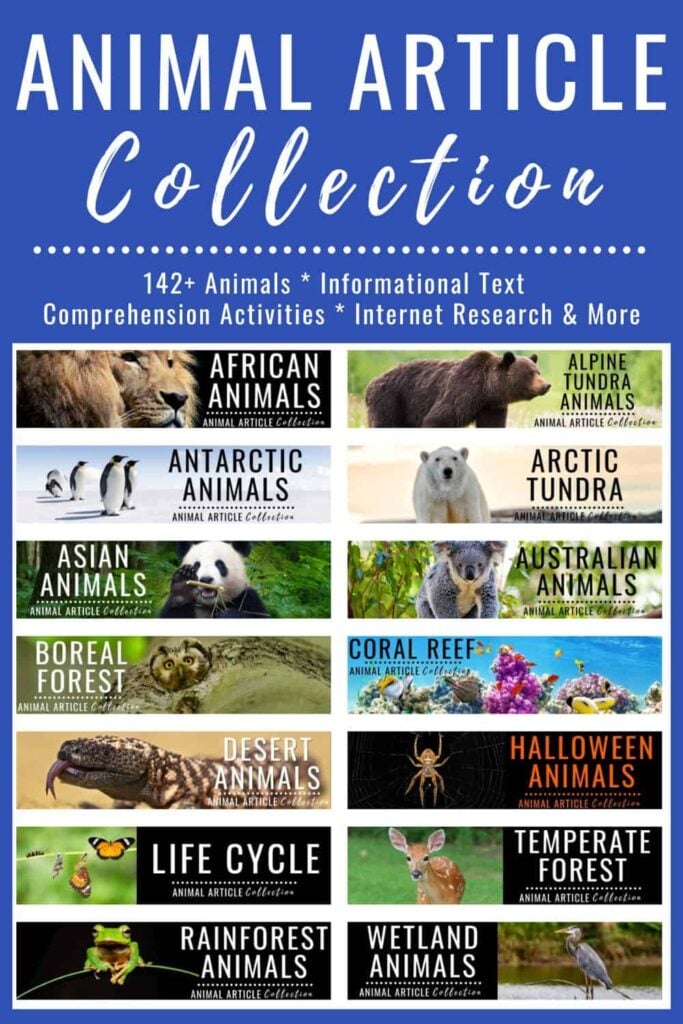
The Animal Article Collection includes 142+ animal articles spanning 14 ecosystems, complete with reading comprehension and structured writing activities. Students can choose their animal while building skills in informational text, research, and report writing.

Do you have a list of the books you used and the source for your models?
I don’t have a list of all of the books I used in these stations. I collected them over a period of years and didn’t make a list of them. But . . . I should! I’ll add it to the blog post soon. The books you see in the photos and the author were prominent ones. Others I just got from our libraries. The models were all Safari Life Cycle Models. I likely got them on Amazon: https://amzn.to/2Hqfmwd
This is such a fantastic resource and my class absolutely loved it! Do you have anything similar for animals?
I have animal articles for many ecosystems. You can read about them here: https://whatihavelearnedteaching.com/animal-articles-informational-articles-qr-codes-fact-sorts/
We are also creating more Animal Articles for other ecosystems in the Fall.